








How to Spend One Day in Gateway Arch National Park
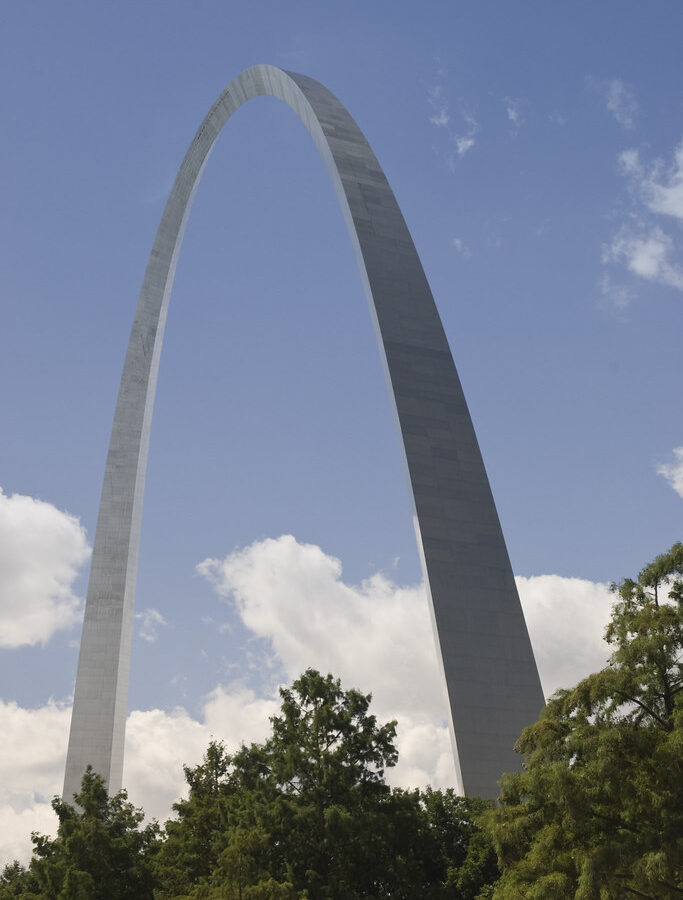
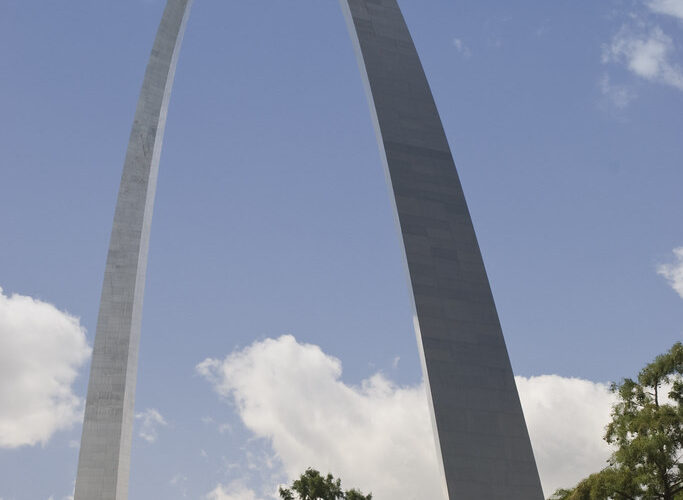
Photo: jeffweese via Flickr (CC BY 2.0)
How to Spend One Day in Gateway Arch National Park is easiest to answer with a simple sequence: reserve the tram first, explore the grounds before crowds build, tour the Museum at the Gateway Arch, ride to the observation deck, then continue to the Old Courthouse and downtown riverfront. Six to eight hours gives each stop enough time without turning the day into a race.
Gateway Arch National Park covers roughly 91 acres beside the Mississippi River in downtown St. Louis. Its compact footprint can be misleading. Security screening, tram check-in, museum galleries, river views, and the walk to the Old Courthouse fill most of a day. Our plan keeps the walking efficient while leaving room for weather or tram delays.
Understand the park before building your schedule
The park preserves the Gateway Arch, its landscaped grounds, the subterranean visitor center and museum, and the Old Courthouse several blocks west. These places interpret westward expansion, Indigenous history, the fur trade, migration, slavery, and the legal disputes that shaped nineteenth-century St. Louis. The Arch itself was designed by architect Eero Saarinen and completed in 1965.
A compact park with several distinct experiences
The stainless-steel Arch rises 630 feet, and its two legs stand 630 feet apart at ground level. Its weighted catenary curve narrows dramatically as it climbs, from 54-foot-wide triangular legs to a much tighter space near the top. The visitor center and museum sit underground between the legs, preserving the visual sweep of the monument and the surrounding lawns.
Most visitors enter from the west through the visitor center facing downtown. From there, the museum, tram departure areas, documentary theater, and monument store are within the same secured complex. The riverfront lies east of the Arch, down a broad set of monumental steps and across the park road.
How much time each stop deserves
| Experience | Useful time allowance | Walking or effort |
|---|---|---|
| Arch grounds and riverfront | 45 to 75 minutes | Mostly paved, with slopes and riverfront steps |
| Museum at the Gateway Arch | 60 to 90 minutes | Indoor, level gallery route |
| Tram and observation deck | 45 to 60 minutes | Confined tram pod, standing, and stairs |
| Old Courthouse | 45 to 75 minutes | About 0.4 mile west of the Arch |
| Lunch and schedule buffer | 60 to 90 minutes | Downtown walking varies by choice |
Make the tram reservation the fixed point of your day
Admission to the grounds and museum has traditionally been separate from the ticketed tram ride. The tram is the day’s least flexible component because departures use assigned times and each pod holds only a few passengers. Build the rest of the itinerary around that reservation rather than arriving and hoping for an immediate opening.
Choose a late-morning ascent
We recommend a tram time around late morning. That leaves enough time to park or arrive by rail, clear security, walk beneath the Arch, and see part of the museum without anxiety. It also preserves the afternoon for the courthouse, lunch, and any galleries skipped earlier. Visibility depends on haze, rain, and cloud height, so a higher floor does not guarantee distant views on every day.
Know what the tram requires
The ride uses small cylindrical pods that rotate as they climb through the curved structure. Riders must step into a confined compartment, sit close together, and manage stairs in the loading and observation areas. Wheelchairs cannot enter the pods, and visitors unable to transfer or climb the required steps should plan on the museum, documentary film, grounds, and riverfront instead.
Allow time for security and downtown arrival
There is no visitor parking lot directly beneath the monument. Downtown garages and surface lots place visitors several blocks from the entrance, while MetroLink serves the area through nearby downtown stations. Vehicle break-ins are a concern in many city centers, so leave bags, electronics, and luggage at your accommodation rather than visible inside a parked car.
The visitor center uses airport-style screening. Carrying fewer items makes entry faster, particularly on weekends and during school holidays. Tram tickets, operating hours, security restrictions, courthouse access, and current fees can change, so confirm current details on the official park site before departure.
Begin outside while temperatures are comfortable
Start on the grounds before entering the museum, especially from May through September. St. Louis summers are humid, exposed lawns retain heat, and thunderstorms can develop rapidly. Winter brings cold wind off the Mississippi, occasionally with ice on sloping walks. Spring and autumn generally provide the easiest conditions for a complete circuit.
Walk the west lawn and approach the Arch on foot
Approaching from the Old Courthouse side reveals Saarinen’s design gradually. The Arch appears broad and heavy near the ground, then thins as the curve closes overhead. Pause near the reflecting ponds to see how the geometric monument contrasts with bald cypress, pond edges, and the park’s open lawns. Paved paths cross gentle grades, although the route down toward the river is noticeably steeper.
Under the center of the Arch, pale paving stretches between the two legs while traffic and river sounds drift up from below. The stainless-steel surface changes from gray to bright silver as clouds move. Looking straight up compresses the 630-foot curve into a narrow seam overhead, and the scale is difficult to judge until people at the opposite leg shrink against its triangular base.
Descend to the Mississippi riverfront
From the Arch, walk east toward the monumental staircase and levee. The river here is a working transportation corridor rather than a landscaped urban canal. Barges, towboats, driftwood, and changing water levels reflect St. Louis’s position below the Missouri River confluence. Across the channel, the low Illinois floodplain emphasizes how sharply downtown rises from the western bank.
Watch the river level and weather
High water can cover parts of the levee, while summer sun makes the broad concrete riverfront considerably hotter than the lawns above. After heavy rain, debris and mud may remain even when the upper park paths are clear. If thunder is audible, return to the visitor center rather than lingering beneath an isolated tree or on the exposed steps.
Use the museum to understand what the monument represents
Enter the visitor center after the outdoor circuit and complete screening before the tram check-in window. The Museum at the Gateway Arch occupies a large circular space below ground. Its exhibits place the Louisiana Purchase and nineteenth-century expansion alongside the displacement of Native peoples, the expansion of slavery, overland migration, trade, and the growth of St. Louis.
Follow the galleries in chronological order
The museum is organized into thematic galleries rather than a single narrow corridor. Beginning with colonial St. Louis provides essential context for later exhibits about Lewis and Clark, trappers, steamboats, and emigrant trails. Maps are particularly useful because they show how rivers connected the city to the Great Lakes, Gulf of Mexico, Rocky Mountains, and continental interior.
Visitors short on time should prioritize the galleries covering Indigenous homelands, Jefferson’s expansion policies, and the design and construction of the Arch. Together, they explain the tension between the monument’s optimistic mid-twentieth-century symbolism and the far more complicated consequences of westward settlement.
Leave space for the construction story
The design exhibits explain how Saarinen won the 1947 architectural competition and how crews assembled prefabricated stainless-steel sections from both sides. The final section was inserted at the apex in 1965 after the two legs had been carefully aligned. Displays also clarify that the Arch functions structurally through its double-walled skin, with carbon steel inside and stainless steel forming the exterior.
Pack only what supports a city walking day
- Comfortable shoes: The itinerary combines hard museum floors, paved slopes, courthouse blocks, and riverfront steps.
- Refillable water bottle: Humidity and exposed pavement increase fluid needs even though the park is compact.
- Light rain layer: Mississippi Valley storms can arrive quickly, particularly in late spring and summer.
- Minimal day bag: A small load speeds security screening and fits more comfortably inside the tram pod.
- Sun protection: Shade is limited on the central lawn, monumental steps, and levee.
Finish the afternoon at the Old Courthouse
After the tram, return to any museum galleries you skipped, then walk west toward the Old Courthouse. The route crosses the landscaped park over Interstate 44 and continues through Kiener Plaza. Allow time for traffic signals and summer heat. This sequence prevents unnecessary backtracking and keeps the final indoor stop close to downtown restaurants, garages, and MetroLink stations.
Connect the courtroom to national history
The Old Courthouse served as a center of legal and civic life during the nineteenth century. Dred and Harriet Scott pursued freedom suits here before the case reached the United States Supreme Court, whose 1857 decision denied citizenship to African Americans and intensified the national conflict over slavery. Virginia Minor also brought her voting-rights case through this courthouse during the 1870s.
Look beyond the restored courtrooms
Stand beneath the cast-iron dome and examine how the circular galleries connect the building’s courtrooms. The current dome replaced an earlier structure during the 1860s, and its interior decoration reflects several restoration campaigns. Exhibits provide useful context, but the building itself shows how law, commerce, and public life converged in a rapidly expanding river city.
Plan lunch around your tram time
A late tram makes an early lunch sensible, while a late-morning ride works well with lunch before the courthouse. Downtown has counter-service restaurants, delis, and cafes within walking distance, but weekday business hours and weekend availability differ. Carry a small snack so a restaurant wait does not force you to abandon the courthouse or rush through the museum.
Build a workable backup plan
How to Spend One Day in Gateway Arch National Park depends partly on weather and tram availability. Preserve the museum and courthouse as your reliable indoor anchors. A thunderstorm can postpone the riverfront walk, while poor visibility may reduce the value of the observation deck without affecting the construction exhibits or historic courtrooms.
Adjust the order without losing the essentials
| Problem | Best adjustment | Keep in the plan |
|---|---|---|
| Heavy rain or lightning | Start with the museum and move outside after the storm | Tram check-in and courthouse |
| Extreme afternoon heat | Complete the riverfront walk early and use indoor stops later | West lawn approach |
| Low clouds or haze | Spend more time in the museum before the scheduled ride | Tram ride if the confined pod experience still appeals |
| Tram tickets unavailable | See the documentary, museum, grounds, and Old Courthouse | Architectural and historical interpretation |
If weather removes the riverfront from the day, use the saved time to study the museum’s maps and oral histories rather than waiting under the Arch. During winter, icy slopes deserve the same caution as severe summer heat. The upper lawn still provides strong views of Saarinen’s design without requiring a descent to the levee.
Avoid the mistakes that consume limited time
- Arriving at the ticket time: Tram times are departure appointments, so screening and check-in must happen beforehand.
- Leaving luggage in a vehicle: Store travel bags at your accommodation before parking downtown.
- Skipping the courthouse: The legal history gives necessary human context to the museum’s treatment of slavery and citizenship.
- Eating during the busiest part of the schedule: Place lunch on the side of the tram reservation with the larger buffer.
- Underestimating pavement: Hard surfaces and exposed slopes make supportive shoes more useful than the park’s small acreage suggests.
Frequently Asked Questions
A one-day visit works best when everyone understands the tram’s physical restrictions before arrival. Families should discuss the enclosed pods, short stairways, and observation deck in advance. Visitors who dislike confined spaces can have a complete day using the museum, documentary film, grounds, riverfront, and courthouse.
The park sits within an active downtown rather than an isolated natural area. Expect street crossings, city traffic, security screening, and changing river conditions. These questions address the practical details most likely to affect a short visit.
Can you visit Gateway Arch National Park without riding the tram?
Yes. The grounds, museum, riverfront, documentary exhibits, and Old Courthouse provide several hours of architecture and history without ascending the Arch.
How long should a first visit take?
Plan six to eight hours for the full itinerary. A museum-and-grounds visit without the tram or courthouse can fit into roughly three hours.
Can visitors walk to the top of the Gateway Arch?
No public staircase leads visitors to the observation deck. Ticketed visitors reach the top using the internal tram system.
Is the park suitable for children?
Yes, particularly for children interested in engineering, transportation, or American history. Adults should prepare younger riders for the small tram pods and keep them close near the riverfront steps and downtown streets.
Are dogs allowed?
Leashed pets can accompany visitors on outdoor grounds where posted rules permit, but pets generally cannot enter federal buildings. Trained service animals are treated separately under federal accessibility requirements.
What should you do if it rains?
Use the museum and courthouse during steady rain, then return to the lawns when conditions improve. Leave the exposed riverfront immediately when thunder is audible.
A complete day beneath the Arch
The strongest itinerary follows a clear order: outdoor grounds in comfortable morning temperatures, museum galleries before the reserved tram, lunch with a schedule buffer, and the Old Courthouse in the afternoon. That progression limits backtracking while connecting the monument’s engineering with the complicated history it was built to commemorate.
Keep the tram reservation fixed and treat everything else as adjustable. With comfortable shoes, a light day bag, and a weather backup, one day is enough to understand Saarinen’s 630-foot structure, examine St. Louis’s role in continental expansion, and see how the Mississippi shaped the city around it.
Want to keep exploring? Browse all our Gateway Arch guides and articles for more trip-planning tips and ideas.
Gear & Essentials
Tell us about your trip and we will add what else you will want:
The basics
Worth having in the car whatever the park.
For this trip
As an Amazon Associate we earn from qualifying purchases, at no extra cost to you.