

Essential Things to Do in Dry Tortugas National Park
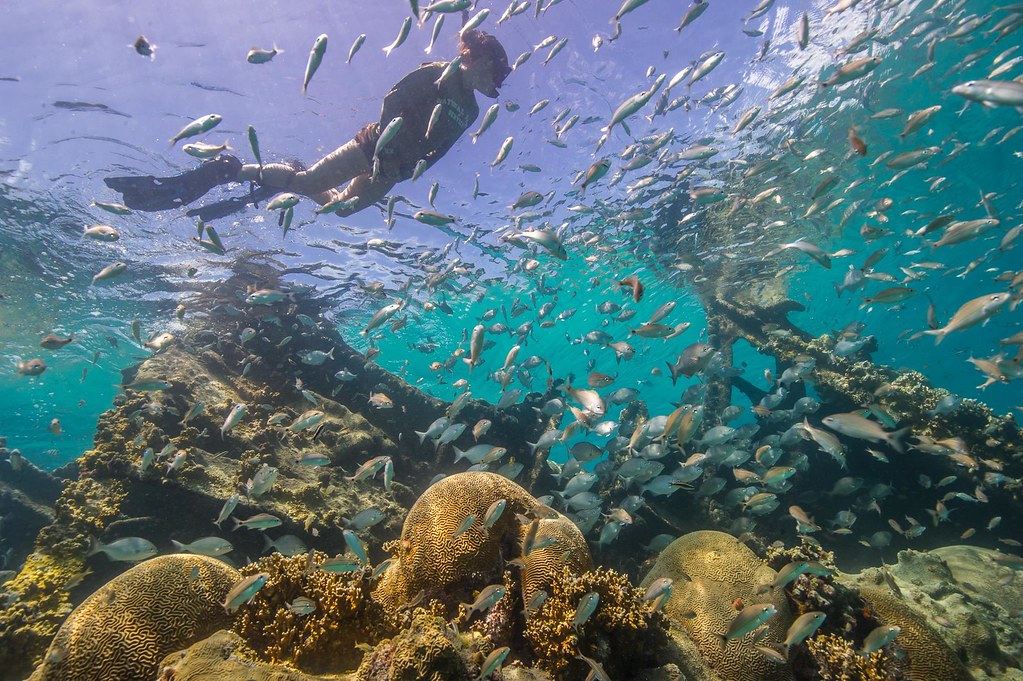
Photo: National Park Service via Flickr (Public Domain Mark)
Essential Things to Do in Dry Tortugas National Park begin 70 miles west of Key West, where Fort Jefferson rises from Garden Key above water that is usually clearer than the Florida Keys near shore. The park protects seven low coral islands, extensive seagrass beds, patch reefs, and historic shipwreck waters within nearly 100 square miles of the Gulf of Mexico.
Most visitors arrive for a single long day, so the order of your time matters. Fort Jefferson, the moat wall, South Beach, and the bird rich edges of Garden Key are close together, while Loggerhead Key and the more remote islands require a private boat or a trip planned around conditions. Start by understanding the park’s compact geography, then give the fort and the water equal attention.
A remote fort built on coral islands
Dry Tortugas is a place where geography dictates the visit. Garden Key, the main visitor area, is flat, sandy, and only a few feet above sea level. The islands are built from coral sand, limestone, and storm deposited material rather than bedrock hills. Fort Jefferson supplies the park’s most prominent vertical landmark, with brick walls rising roughly 45 feet above the island. There are no roads, cars, stores, or mainland services once you arrive.
Garden Key is the center of a seven island park
The seven named islands are Garden Key, Loggerhead Key, Bush Key, Long Key, Hospital Key, Middle Key, and East Key. Garden Key holds Fort Jefferson, the ferry dock, beaches, campground, and most day visitor activity. Loggerhead Key lies about 3 miles west and has the park’s largest beach area, a historic lighthouse, and waters that can be excellent for snorkeling from a private vessel. Bush Key connects to Garden Key by a sandy spit at low tide, although nesting birds often make it seasonally off limits.
Why the park feels different from the Florida Keys
These islands sit near the western end of the Florida reef tract, beyond the developed islands of the Keys. The surrounding water has fewer sources of sediment and runoff than nearshore areas, which helps sustain visibility when weather is calm. Sea turtles, nurse sharks, barracuda, queen conch, reef fish, and rays use the shallow waters around Garden Key. Migratory birds also concentrate here because the islands provide one of the first places to rest after a long crossing of the Gulf.
The journey is part of the day
Most people reach Garden Key by passenger ferry, seaplane, or private boat from Key West. Ferry travel commonly takes more than two hours each way, while a seaplane flight is far shorter and provides an aerial view of the reefs, sandbars, and ship channels. Private boats need careful fuel, weather, anchoring, and navigation planning because the park is open water from Key West rather than a casual island hop. Transportation reservations, landing rules, and current fees should be confirmed on the official park site before committing to a date.
Explore Fort Jefferson from the parade ground to the ramparts
Fort Jefferson is the largest all masonry fort ever built in the United States, constructed with more than 16 million bricks beginning in 1846. Its six sided plan was designed to control shipping lanes through the Florida Straits and Gulf of Mexico. The fort was never completed or tested in battle, but its massive casemates, gun positions, cisterns, and outer moat reveal how nineteenth century coastal defense depended on artillery range, supply routes, and fresh water storage.
Begin inside the fort’s shaded interior
Enter through the sally port and pause in the parade ground before heading into the arched casemates. These brick chambers once served as barracks, storerooms, workshops, kitchens, and artillery positions. Look for the differences between the lower casemate levels, designed to shelter guns and crews, and the open upper tier where cannon could fire across the water. Interpretive signs explain the fort’s construction problems, including salt exposure, hurricane damage, and the difficulty of maintaining a large garrison so far from reliable supplies.
Walk the upper level for the full scale of the site
The rampart route gives the clearest sense of how isolated the fort is. From the upper walls, Garden Key appears as a narrow strip of sand and scrub around a brick enclosure roughly 1,800 feet across. You can see the moat, the protected harbor side, the open Gulf side, and Bush Key to the south. Take this walk early if you arrive by ferry, since the exposed brick absorbs heat and shade is limited once you leave the interior arches.
Find the historic details many visitors pass
- Look for the large rainwater cistern system beneath the parade ground, which was vital because Garden Key has no natural freshwater source.
- Notice the unfinished sections of the fort, where changing military technology and rising costs stopped construction in 1875.
- Find the area associated with Dr. Samuel Mudd, imprisoned here for his role in treating John Wilkes Booth after President Lincoln’s assassination.
- Walk along the moat edge to see how the fort’s defensive water barrier now forms a protected snorkeling corridor.
Get in the water at the moat wall and Garden Key beaches
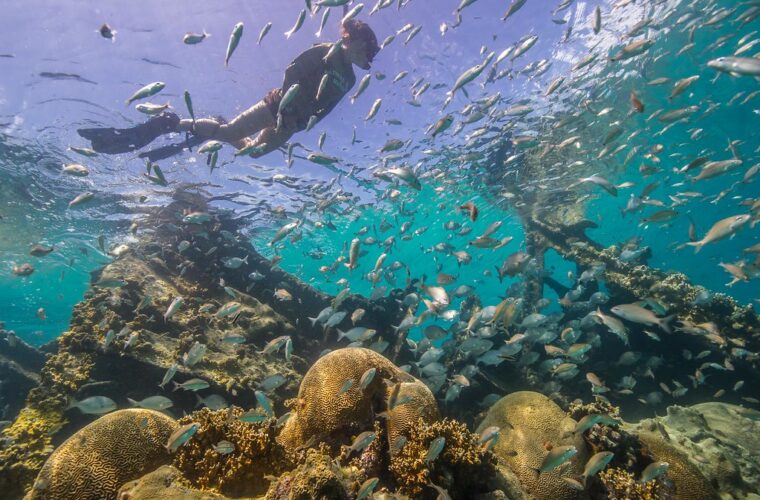
The essential water experience is snorkeling along the moat wall outside Fort Jefferson. This sheltered route runs beside submerged brickwork and coral growth, creating habitat for sergeant majors, blue tangs, yellowtail snapper, parrotfish, and larger cruising fish. It is an easy place to enter from the beach, but it still demands normal open water awareness. Currents can change, boats may pass beyond designated swimming areas, and coral, brick, and marine life should never be touched or stood on.
What the moat wall snorkeling route feels like
At the wall, the water shifts from pale sand colored shallows to a darker blue green edge where old brick disappears beneath algae and coral. Your fins stir over sand while schools of small fish hold position along the rough masonry, moving as one when a barracuda slides past. Above the surface, the fort fills your view like a red brick cliff, and the wind carries across an otherwise quiet horizon. A mask, snorkel, fins, sun protection, and a rash guard make this much more comfortable than trying to manage the exposure in swimwear alone.
Choose conditions, not just a spot on the map
Water clarity is commonly best during calmer weather, but wind direction can make one side of Garden Key more comfortable than another. Winter cold fronts can bring strong north winds and choppy seas. Late spring and early summer often bring warmer water and calmer intervals, while late summer and fall require close attention to tropical weather. The park’s shallow water warms quickly, yet long snorkeling sessions can still leave visitors chilled in winter.
| Season | Typical conditions | Best focus |
|---|---|---|
| December through February | Cooler water, frequent fronts, stronger wind possible | Fort exploration, birding, short snorkeling sessions |
| March through May | Warmer days, spring migration, generally improving water comfort | Fort ramparts, snorkeling, bird observation |
| June through August | Warm water, intense sun, afternoon storms possible | Early snorkeling and shade breaks inside the fort |
| September through November | Warm seas, tropical weather risk, changing wind patterns | Flexible plans and careful marine forecasts |
Protect the reef while you swim
Dry Tortugas coral communities are living structures that grow slowly and are easily damaged by a fin kick, anchor, or misplaced hand. Use reef safe sun protection, secure loose gear before entering the water, and keep a respectful distance from turtles and sharks. Do not collect shells, coral, or historic fragments. The same restraint applies around the moat wall: the submerged masonry is both wildlife habitat and part of Fort Jefferson’s historic fabric.
Go beyond the fort with an overnight stay or private boat itinerary
A day trip gives most visitors time for Fort Jefferson and a swim along Garden Key, but an overnight stay changes the pace. Camping on Garden Key places you on the island after the passenger boats leave, when the parade ground quiets and the western sky stays bright long after sunset. The campground is primitive, and campers must bring the food, drinking water, cooking equipment, lighting, and weather protection needed for their stay. There is no natural freshwater source on Garden Key, so water planning is the first practical task.
Loggerhead Key rewards careful boat planning
Loggerhead Key lies about 3 miles west of Garden Key across open water. It is the largest island in the park and contains the inactive Loggerhead Lighthouse, built in 1858 to guide ships through the dangerous reefs and channels of the Tortugas. The island’s long sandy shore and shallow reef areas are a major draw for private boaters, but the crossing can become rough quickly in wind. Visitors should have reliable navigation, enough fuel for a return to Key West, and an anchoring plan that avoids coral and seagrass.
Use the quiet hours on Garden Key well
Campers can walk the fort’s exterior after the busiest part of the day, watch frigatebirds and terns work the wind over the harbor, and snorkel when the water is calm without having to fit every activity into a ferry schedule. Darkness arrives quickly in the tropics, and there is little artificial lighting outside the developed area. A headlamp with a red-light setting helps around camp without disrupting other visitors or attracting as many insects.
Pack for a self-supported island night
- Bring more drinking water than you expect to use, plus electrolyte mix for hot and windy days.
- Use a freestanding tent and secure it carefully, since sandy soil and exposed wind can make staking difficult.
- Pack a dry bag for phones, cameras, medications, and spare clothing during boat transfers and snorkeling.
- Carry a basic first-aid kit, reef-safe sun protection, a long-sleeve sun shirt, and insect protection for still evenings.
- Store all food securely, then pack out every scrap, wrapper, and piece of fishing line.
Watch the islands as a resting place for birds and marine life
The Dry Tortugas sit on a migration corridor that concentrates birds in an unusually small area. Spring migration can bring warblers, vireos, tanagers, orioles, cuckoos, and other land birds that have crossed large stretches of the Gulf of Mexico. Garden Key’s shrubs and trees may hold species that appear only briefly before continuing north. Bring binoculars even if snorkeling is the main purpose of the trip, because a few minutes near the vegetation can reveal birds absent from the exposed beaches.
Respect nesting colonies on Bush Key
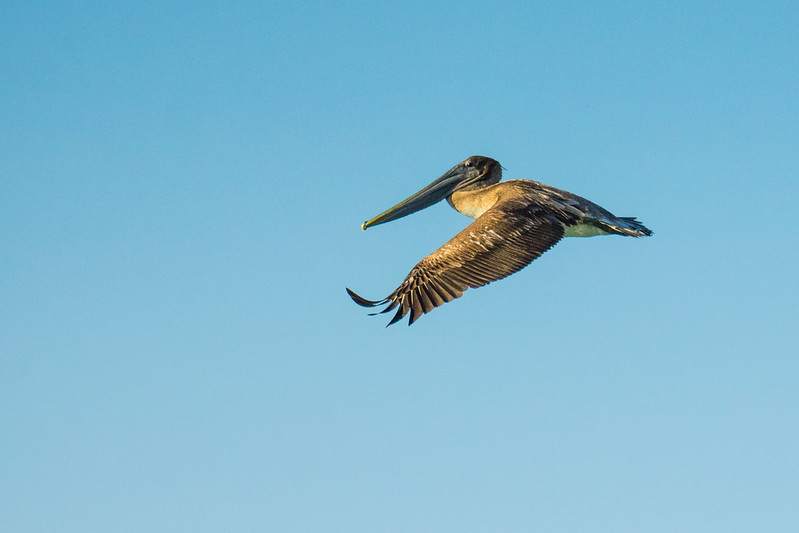
Bush Key and Long Key provide important nesting habitat for sooty terns, brown noddies, brown pelicans, and other colonial seabirds. Sooty terns are especially associated with the Tortugas, where large numbers nest on open ground during their breeding season. A bird colony can look distant and still be sensitive to disturbance: adults flushed from nests leave eggs and chicks exposed to heat and predators. Follow posted boundaries and resist the urge to approach birds for a closer photograph.
Read the water for signs of habitat
Light turquoise water often marks shallow sand, while darker patches can indicate seagrass, coral, or deeper channels. Seagrass beds are nursery habitat for fish and feeding areas for green sea turtles, so boaters should stay alert for turtles surfacing to breathe. Nurse sharks may rest on sandy bottoms, and barracuda often hover motionless near structure. Give every animal room to choose its own path, particularly around the moat and swimming areas where people and wildlife share confined water.
A better approach to wildlife photography
Use a longer lens from shore instead of stepping toward birds, and keep your camera low and quiet near roosting areas. In the water, photograph turtles and fish while floating horizontally rather than standing or bracing against the bottom. This protects coral and produces steadier images because your body moves with the water instead of fighting it.
Build a realistic day around the boat schedule and the heat
The essential things to do in Dry Tortugas National Park fit more comfortably into a day when you treat the fort, snorkeling, lunch, and the return journey as separate blocks rather than trying to do everything at once. Start with the ramparts or interior casemates while your energy is high, then move to the water after you understand the shoreline and swimming area. Midday is often the least comfortable period on exposed brick and sand, making the fort’s arched rooms useful for a shaded reset.
Prioritize two major experiences on a day trip
Most day visitors should choose Fort Jefferson and moat-wall snorkeling as their nonnegotiable experiences. Add a short beach walk, birding around Garden Key, or a ranger-led program if time permits, but do not sacrifice the return boarding window for one more swim. The ride back to Key West can be long and rough when winds build, so save dry clothes, medication if you use it for motion sickness, and a snack for the journey.
Plan around sun exposure, not air temperature
Open water reflects sunlight upward, while pale sand and Fort Jefferson’s brick surfaces radiate heat back at visitors. A broad-brimmed hat, polarized sunglasses, long sleeves, and frequent water breaks matter even on days with a cooling breeze. Apply sun protection before boarding your transportation, then reapply after snorkeling. Dehydration often starts during the fort walk, when people are focused on photographs and do not notice how much fluid they have lost.
A simple order for a Garden Key visit
- Orient yourself at the dock, note the departure time, and carry water before entering the fort.
- Walk the parade ground, casemates, and ramparts while the sun angle is lower.
- Eat and rest in shade before snorkeling, especially after a long boat crossing.
- Snorkel the moat wall with a buddy, staying inside the appropriate swimming area.
- Rinse off, change into dry clothing, and return to the dock early enough to board without rushing.
Frequently Asked Questions
How long does it take to get to Dry Tortugas National Park?
Garden Key is about 70 miles west of Key West. Passenger ferry travel commonly takes more than two hours each way, while seaplanes make the trip much faster but provide less time on the island.
Can children visit Dry Tortugas National Park?
Children can enjoy the fort, beach, shallow water, and wildlife, but adults need to manage sun exposure, hydration, and water safety closely. The boat journey can also be demanding for children prone to motion sickness.
Are dogs allowed in Dry Tortugas National Park?
Pets are generally not allowed in the park because the islands support sensitive wildlife and nesting birds. Service animals are treated differently under federal rules, so visitors traveling with one should review the park’s official guidance before departure.
Can you snorkel if you are a beginner?
The moat wall can suit beginners when water is calm because entry is available from the beach and the route follows a visible structure. Beginners should still wear properly fitted flotation equipment if needed, stay with a partner, and avoid going out in wind, waves, or poor visibility.
Can visitors go inside Loggerhead Lighthouse?
Loggerhead Lighthouse is a historic landmark on Loggerhead Key, but access to the island and lighthouse depends on a visitor’s transportation and site conditions. Most day visitors based on Garden Key will see it only from the water or at a distance.
Make the distance part of the reward
Dry Tortugas requires more preparation than a roadside national park stop. The long crossing, limited shade, saltwater exposure, and lack of ordinary services mean visitors do best when they pack deliberately and choose a short list of priorities. Fort Jefferson explains why this isolated harbor mattered to nineteenth-century defense, while the moat wall and surrounding reefs show how quickly the park’s story shifts from brickwork to living marine habitat.
Give the fort enough time to reveal its scale, then get into the water only when conditions and your skills support a safe swim. Visitors who bring water, sun protection, snorkeling gear they know how to use, and respect for bird colonies and coral will leave with a fuller understanding of this remote group of islands than a quick photo stop could provide.
Want to keep exploring? Browse all our Dry Tortugas guides and articles for more trip-planning tips and ideas.
Gear & Essentials
Tell us about your trip and we will add what else you will want:
The basics
Worth having in the car whatever the park.
For this trip
As an Amazon Associate we earn from qualifying purchases, at no extra cost to you.