A First-Timer’s Guide to Petrified Forest National Park
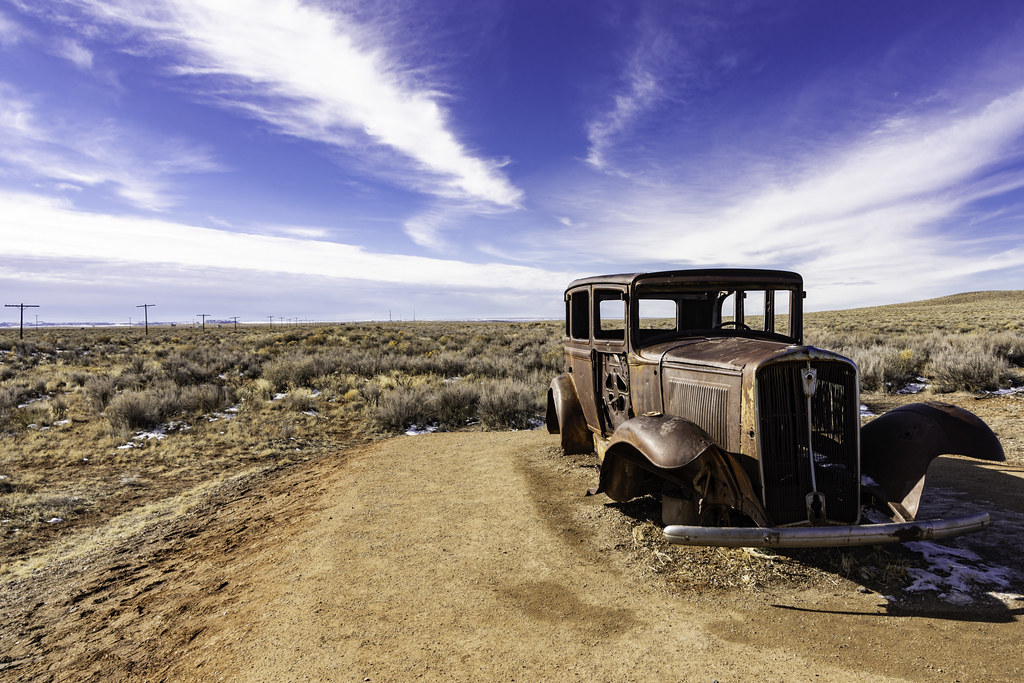
Photo: Unknown via Flickr (CC BY-NC-SA 2.0)
This First-Timer’s Guide to Petrified Forest is exactly what you need to spare yourself the rookie mistakes that turn a remarkable high-desert park into a frustrating afternoon of wrong turns and squinted-at maps. Straddling the northeastern Arizona plateau at elevations between 5,300 and 6,230 feet, Petrified Forest National Park protects one of the world’s most concentrated and scientifically significant deposits of fossilized wood, along with badland formations, ancient petroglyphs, and a sweep of the Painted Desert that stretches to the horizon in violets, ochres, and ash-white. The park receives roughly 800,000 visitors a year, yet its 221,000 acres absorb crowds far more gracefully than most.
What catches most first-timers off guard is the sheer geological and cultural density packed into what looks, from the highway, like empty scrubland. The ancient logs lying scattered across the Chinle Formation are not driftwood or rock that happens to look like wood. They are 225-million-year-old trees, primarily from species of the extinct genus Araucarioxylon, that fell into river floodplains during the Late Triassic, were buried rapidly under volcanic ash-rich sediment, and had their organic cells replaced molecule by molecule with silica-rich groundwater. The result is true stone, often brilliant with iron oxides, manganese, and carbon that produce the reds, purples, yellows, and blacks you see in every photograph. Understanding that process before you arrive makes the park dramatically more interesting when you are standing in front of a 100-foot-long log.
First-Timer's Guide to Petrified Forest National Park: Getting There and Navigating the Layout
Location and Driving Access
Petrified Forest sits in Apache County, Arizona, roughly 26 miles east of Holbrook on I-40. The park has two entrances connected by a 28-mile main road that bisects it north to south. The north entrance is off I-40 at Exit 311, adjacent to the Painted Desert Visitor Center. The south entrance is about 19 miles north of St. Johns on U.S. Highway 180. Most first-timers driving I-40 across Arizona enter from the north, loop the park road southward through the main fossil sites, and exit onto US-180, which curves back northwest to Holbrook, adding roughly 27 miles and completing an efficient loop. If you are approaching from the south, reverse the sequence.
Flagstaff, the most useful larger gateway city, sits about 118 miles to the west via I-40. Gallup, New Mexico, is approximately 75 miles to the east. Neither Phoenix nor Albuquerque makes a practical same-day base: Phoenix is over three hours away, and Albuquerque is about two and a half hours. Holbrook, 26 miles west, has the most convenient motels, fuel, and grocery options for an overnight stay. Confirm what accommodations are currently available in Holbrook before you build your itinerary, as options in a small high-desert town can change.
The 28-Mile Park Road: What You Will Pass
The main road runs from the Painted Desert Visitor Center (north end, elevation approximately 5,800 feet) to the Rainbow Forest Museum and Giant Logs Trail (south end, elevation approximately 5,400 feet). Every named overlook and trailhead is off this single road, so navigation is straightforward. Because the road is a through-route rather than a dead-end spur, you cannot backtrack conveniently, which means stopping in the right order matters. Driving north to south, you pass the Painted Desert badlands first, cross I-40 via an overpass, then reach Puerco Pueblo, Newspaper Rock, the Blue Mesa area, Agate Bridge, Crystal Forest, and finally the Giant Logs and Rainbow Forest areas at the south end.
A First-Timer's Guide to Petrified Forest National Park: Understanding What You Are Looking At
The Painted Desert
The northern third of the park is dominated by the Painted Desert, a badland landscape eroded from the Chinle Formation’s layered mudstones and siltstones. The colors shift visibly with the angle and quality of light: early morning and the hour before sunset are when the reds, lavenders, and pale blues saturate most intensely. The Painted Desert Inn, a National Historic Landmark perched at Kachina Point, is worth 20 minutes of your time even if the current exhibit schedule does not interest you. The building itself, a Pueblo Revival structure reconstructed by the Civilian Conservation Corps in the 1930s and later painted inside by Hopi artist Fred Kabotie, is one of the better pieces of 20th-century southwestern public architecture in the region.
Petrified Wood Deposits
The logs are concentrated in the southern half of the park, with the Crystal Forest and Giant Logs Trail areas holding the most photogenic specimens. Giant Logs Trail is a 0.4-mile loop directly behind the Rainbow Forest Museum and includes “Old Faithful,” the largest accessible petrified log in the park, measuring approximately 35 feet in circumference at its base. Crystal Forest Trail is a 0.75-mile paved loop through an exceptionally dense field of shattered logs. The fracturing happens because silicified wood, despite being chemically similar to quartz, is brittle along natural growth-ring planes and cracks when freeze-thaw cycling and erosion remove the surrounding matrix. The resulting cross-sections expose the internal crystal structure, which can include amethyst and smoky quartz in cavities where silica crystallized slowly.
Archaeology and Rock Art
The park contains over 13,000 recorded archaeological sites, a figure that places it among the most archaeologically significant units in the National Park System. Puerco Pueblo, an Ancestral Puebloan village of roughly 100 rooms occupied primarily from A.D. 1250 to 1380, sits directly beside the main park road and is accessible via a 0.3-mile loop trail. Newspaper Rock, visible from a fixed overlook platform (binoculars help significantly at this site), displays one of the densest concentrations of petroglyphs in the park, with over 650 individual designs pecked into the dark desert varnish of a sandstone outcrop.
First-Timer's Guide Petrified Forest Trails: What to Walk and Why
Most maintained trails at Petrified Forest are short and relatively flat, which suits the park’s day-trip character. A few wilderness routes in the Painted Desert and Black Forest areas require a free backcountry permit and genuine desert navigation skills. Below is a practical overview of the trails most first-timers should consider.
| Trail Name | Length | Difficulty | Key Feature | Location on Park Road |
|---|---|---|---|---|
| Giant Logs | 0.4 mi loop | Easy | Largest accessible log specimens | South end, behind Rainbow Forest Museum |
| Long Logs | 1.6 mi loop | Easy | Highest concentration of logs per acre | South end |
| Agate House | 2.0 mi round trip | Easy-Moderate | Partially restored pueblo built from petrified wood | South end |
| Crystal Forest | 0.75 mi loop | Easy | Dense field of shattered, crystalline logs | Mid-park |
| Blue Mesa | 1.0 mi loop | Moderate (steep descent) | Blue bentonite badlands, logs in situ | Mid-park |
| Puerco Pueblo | 0.3 mi loop | Easy | Ancestral Puebloan village ruins | North-central |
| Painted Desert Rim | 1.0 mi one way | Easy | Badland panoramas, Kachina Point | North end |
Blue Mesa deserves a particular mention because it is the one short trail where the topography genuinely surprises people. The path descends steeply into a bowl of blue-gray bentonite clay hills studded with log sections still embedded in the surrounding matrix, offering a clearer sense of how the fossils exist in three-dimensional geological context rather than simply lying on the surface. After rain, the bentonite becomes extremely slick; check conditions before committing to this one if the forecast includes any precipitation.
- Combine Long Logs and Agate House into one continuous 3-mile outing from the same trailhead, making efficient use of the southern area.
- Do Blue Mesa early or late when the low sun angle deepens the blue and purple tones of the bentonite.
- Bring binoculars to Newspaper Rock: the overlook platform keeps you at distance from the petroglyphs, and detail is lost to naked eyes.
- Check the backcountry permit process on the official park site if you plan to hike in the Painted Desert Wilderness or Black Forest, as overnight and off-trail day use have separate requirements.
- Wear ankle-supporting footwear even on short trails; the Chinle mudstone surface is uneven and can be unexpectedly soft after recent moisture.
First-Timer's Guide Petrified Forest Logistics: Timing, Fees, and What to Pack
When to Visit
Petrified Forest sits above 5,300 feet, which moderates summer heat compared to lower Arizona destinations but does not eliminate it. Midday temperatures in July and August regularly reach the low to mid-90s Fahrenheit on the exposed park road, and afternoon thunderstorms roll in with little warning from roughly late June through early September, the monsoon season. Those storms are genuinely dramatic over the Painted Desert but can produce flash flooding in the low-lying wash areas and turn bentonite trails into skating rinks within minutes.
Spring (late March through May) and fall (September through November) are the most reliably comfortable seasons. Spring brings occasional wildflowers across the grassland areas and cooler mornings ideal for photography, while fall delivers the same light quality with the added benefit of thinner crowds after Labor Day. Winter visits are underrated: the park sees dusting snowfalls that coat the petrified logs and badland formations in white, creating one of the more unusual landscape contrasts in the Southwest. Daytime winter temperatures can be pleasant in the 40s and 50s, but mornings drop well below freezing and the park road can ice over, so check road conditions on the official park site before an early-season or winter trip.
| Season | Typical Daytime Temp | Crowds | Key Consideration |
|---|---|---|---|
| Spring (Mar-May) | 55-75°F | Moderate | Best wildflower and photography conditions |
| Summer (Jun-Aug) | 80-95°F | High (June), Moderate (Jul-Aug) | Afternoon monsoon storms; start early |
| Fall (Sep-Nov) | 55-80°F | Low to Moderate | Excellent light, thinner crowds post-Labor Day |
| Winter (Dec-Feb) | 35-55°F | Very Low | Possible snow and ice; road closures possible |
Fees and Entry
The park charges a standard vehicle entry fee, and it accepts the America the Beautiful annual pass, which pays for itself quickly if you plan to visit more than two or three national park units in a calendar year. Entry fees and pass details change periodically, so confirm current pricing on the official National Park Service site for Petrified Forest before your visit. There are no additional fees for individual trails, including the backcountry permit routes, though permit requirements and processes should be verified directly with the park.
What to Bring for a Full-Day Visit
The park has no food service inside its boundaries beyond a small gift shop at the Rainbow Forest Museum, and the Painted Desert Visitor Center at the north entrance has vending but no hot food. Pack everything you intend to eat and drink before entering. The high-desert elevation means dehydration creeps up faster than it does at sea level, and the low humidity disguises perspiration. One liter of water per hour of active hiking is a practical baseline.
- Water: at least two liters per person even for a mostly drive-through visit; more if you plan the full trail list
- Sun protection: wide-brim hat, SPF 30 or higher sunscreen, and UV-blocking sunglasses; the open terrain provides almost no shade
- Layers: mornings at elevation can be 20 to 30 degrees cooler than the midday high, particularly in spring and fall
- Snacks and a packed lunch: plan to eat at one of the picnic areas along the park road rather than driving out and back to Holbrook
- Binoculars: useful at Newspaper Rock and effective for scanning the Painted Desert rim for pronghorn and raptors
- A camera with a wide-angle lens or a phone with a panoramic mode: the Painted Desert vistas are too broad for a standard focal length to capture meaningfully
- Cash or a debit card with no foreign transaction fees: the gift shops do accept cards, but cell service inside the park is intermittent
Wildlife and Natural Detail Worth Watching For
Mammals and Reptiles
Pronghorn (often incorrectly called antelope) are the most commonly spotted large mammal in the park, and they are genuinely fast. Pronghorn are the second-fastest land animal on earth, capable of sustaining speeds above 55 miles per hour, and they move across the open grassland and badland margins of the park with a smooth, almost mechanical stride. Sightings are most common in the northern grassland areas near the Painted Desert rim, particularly in early morning. Coyotes are year-round residents and frequently visible from the park road without any effort. Collared lizards, identifiable by the bold black-and-white bands around their necks and bright green-yellow body coloring, are common on rocky surfaces throughout the southern half of the park during warm months.
Badgers, black-tailed jackrabbits, and the occasional short-horned lizard are present but require more patience to spot. The park’s grasslands also support black-tailed prairie dogs in specific colony areas; the Puerco Pueblo loop passes near one such area, and the mounds and burrow entrances are easy to identify.
Birds
The park falls within the Colorado Plateau province and supports a surprisingly varied bird community given how stark the landscape looks at first glance. Common ravens are omnipresent and highly intelligent; they will investigate any food left unattended at a picnic area. Ferruginous hawks and Swainson’s hawks hunt the open grassland in warmer months, while rough-legged hawks appear in winter. The rare and federally protected yellow-billed cuckoo has been documented along riparian corridors in the park’s backcountry. Horned larks are almost always present along the park road shoulders, and violet-green swallows course over the badland drainages during spring and summer.
Putting It All Together: Your First-Timer's Guide to Petrified Forest National Park in Perspective
Returning to what makes this a worthwhile stop in any First-Timer’s Guide to Petrified Forest: the park rewards preparation in a way that few similar-length driving destinations do. A visitor who spends two hours driving straight through without stopping does not experience a fundamentally different park from one who plans four to six hours, they experience a completely different park. The Blue Mesa descent, the Agate House ruin (a prehistoric structure built entirely from petrified wood), and a properly timed sunset over the Painted Desert from Kachina Point are experiences that require nothing more than scheduling and a willingness to slow down.
The park’s geology is also a practical lesson in deep time that tends to land harder in person than it does in any description. Standing beside a 225-million-year-old log that has survived continental drift, the rise and erosion of mountain ranges, and the entire evolutionary history of flowering plants puts the surrounding Arizona landscape in a different register. The Painted Desert you are looking at is the eroded surface of sediment deposited when the land sat near the equator and the first dinosaurs were just beginning to diversify.
Plan to arrive early enough to catch morning light over the Painted Desert rim, work your way south through the park road stopping at Blue Mesa and Crystal Forest, finish with the Long Logs and Agate House combination at the south end, and leave enough daylight margin to avoid rushing. Pack your own food, carry more water than you think you need, keep petrified wood on the ground where you found it (federal law prohibits removing any, and the ranger station at both entrances takes that rule seriously), and confirm current fees and permit requirements on the official NPS site before you go. That straightforward preparation is the difference between a disorienting half-day and a genuinely memorable one.
Interested in learning more? Explore our Bear Incidents Prompts Trail Closure, Safety Reminder in Great Smoky Mountains National Park to see how we can help bring your vision to life.