
Great Basin National Park Stargazing Guide: Best Viewpoints and Tips
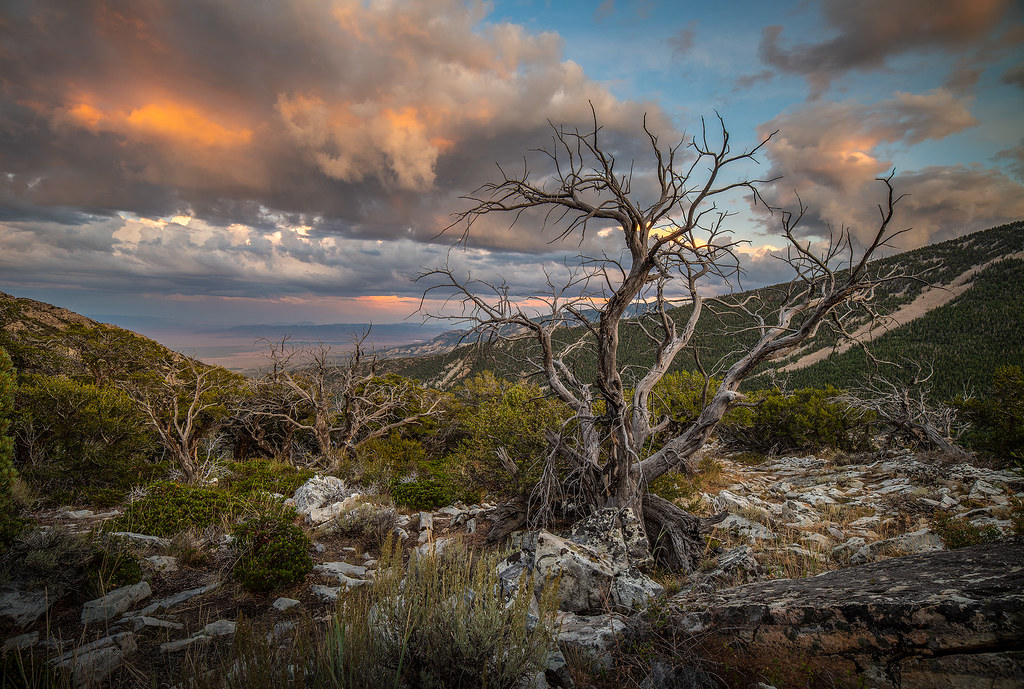
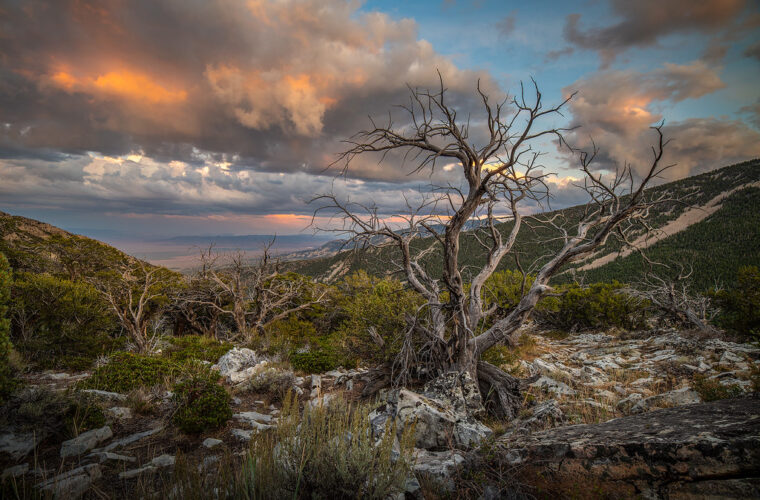
Photo: Andrew V Kearns via Flickr (CC BY 2.0)
Our Great Basin National Park Stargazing Guide starts with a useful surprise: the highest viewpoint is not automatically the best place to observe the night sky. Wheeler Peak rises to 13,063 feet, but exposed alpine terrain brings stronger wind, colder temperatures, and more difficult nighttime travel. A lower site with an open horizon and an easy route back to your vehicle often produces a longer, safer observing session.
Great Basin occupies a remote part of eastern Nevada near Baker, far from the concentrated light of Las Vegas and the Wasatch Front. Elevations climb from roughly 5,300 feet near the park boundary to Wheeler Peak’s summit, creating several distinct viewing environments. Dry air and limited regional development help reveal the Milky Way, zodiacal light, satellites, and faint star clusters that urban observers rarely see.
Why Great Basin has unusually dark skies
Distance from cities matters more than park boundaries
Artificial skyglow travels far beyond city limits, especially when haze or cloud reflects light toward the ground. Great Basin benefits from broad basins and sparsely populated mountain ranges extending across eastern Nevada and western Utah. The nearest communities are small, and there are no major metropolitan areas immediately beyond the park. Great Basin was certified as an International Dark Sky Park in 2016, recognizing both the quality of its night skies and its efforts to protect them.
The darkness becomes most apparent after astronomical twilight, when the sun is at least 18 degrees below the horizon. Under clear, moonless conditions, the Milky Way can cast a faint structure across the sky rather than appearing as a washed-out stripe. Summer observers can trace dark dust lanes through Sagittarius and Scorpius, while autumn shifts attention toward the Great Square of Pegasus and the Andromeda Galaxy.
Elevation improves clarity but changes the conditions
Higher viewpoints place observers above some dust, moisture, and low-level haze. Mather Overlook, at approximately 9,000 feet on Wheeler Peak Scenic Drive, often has clearer air than the valley around Baker. That advantage comes with rapid heat loss after sunset. A comfortable afternoon near 70 degrees Fahrenheit can become a cold, windy night, and temperatures near the road’s upper end may approach freezing outside midsummer.
Altitude can also affect visitors arriving directly from low elevations. Headache, nausea, unusual fatigue, and shortness of breath are warning signs. Keep the first evening simple, drink water, avoid strenuous nighttime hiking, and descend if symptoms worsen. Stargazing does not require reaching Wheeler Peak or the 10,000-foot end of the scenic drive.
Choose the date before choosing the viewpoint
Use the moon to decide what you want to see
A moonless night is essential for faint Milky Way detail, meteors, and diffuse objects such as the Andromeda Galaxy. Plan close to the new moon, or choose a night when the moon sets before your observing session begins. A bright moon can erase the Milky Way’s finer structure even though thousands of stars remain visible.
Moonlight has advantages for a different kind of visit. A first-quarter moon reveals craters and mountain shadows through binoculars, while also illuminating nearby ridges enough to provide a sense of the surrounding terrain. When the moon is bright, concentrate on planets, double stars, lunar detail, and prominent constellations rather than faint galaxies and nebulae.
Match the season to your priorities
| Season | Typical advantages | Main limitations | Best planning approach |
|---|---|---|---|
| March to May | Long nights and improving access at lower elevations | Snow may close Wheeler Peak Scenic Drive, with cold and unsettled weather | Use locations near Lehman Caves or the lower park roads |
| June to August | Milky Way core, warmer nights, and access to high viewpoints | Afternoon thunderstorms, wind, and busy campgrounds | Check cloud development and arrive before sunset |
| September to October | Clearer air, earlier darkness, and fewer insects | Sharp temperature drops and possible early snow | Carry winter layers even after a mild afternoon |
| November to February | Very long nights and bright winter constellations | Snow, ice, extreme cold, and restricted high-country access | Observe from low elevations with a conservative driving plan |
Build weather flexibility into the trip
Cloud cover matters more than the published sunset time. Summer convection can build over the South Snake Range during the afternoon, producing thunderstorms, gusty outflow, and lingering cloud after dark. Thin high cloud is also damaging because it scatters distant light and moonlight across the sky. If the mountain crest remains capped near sunset, a lower site with a clearer view away from the range may work better.
Smoke from regional wildfires can reduce contrast even when the sky appears cloudless. Look for muted ridges, an orange sun, or a pale horizon before committing to a high viewpoint. Road status, program schedules, entrance costs, and seasonal access can change, so confirm current details on the official park site before leaving Baker.
Select a viewing area that fits your night
Compare the most practical locations
| Viewing area | Approximate elevation | Best use | Important consideration |
|---|---|---|---|
| Great Basin Astronomy Amphitheater near Lehman Caves Visitor Center | About 6,800 feet | Programs, beginner orientation, and easy vehicle access | Program lighting and other visitors may affect independent observing |
| Mather Overlook | About 9,000 feet | Wide views and clearer high-elevation air | Cold, wind, altitude, and seasonal road closure |
| Wheeler Peak Scenic Drive upper area | Up to roughly 10,000 feet | High-country observation during stable summer weather | Narrow mountain driving and possible ice after dark |
| Lower park approaches near Baker | Roughly 5,300 to 6,000 feet | Winter visits and nights with cloud over the crest | Headlights from passing vehicles can interrupt dark adaptation |
The astronomy amphitheater is the simplest starting point
The Great Basin Astronomy Amphitheater sits near the Lehman Caves visitor area and gives first-time visitors a defined place to learn the sky. Park astronomy programs may include constellation tours and telescope viewing when staffing and conditions allow. Arrive before darkness so you can identify paths, curbs, and the route back to your vehicle without using a bright flashlight.
This area is also a sensible choice when Wheeler Peak Scenic Drive is closed or when high winds make exposed overlooks unpleasant. Nearby terrain blocks portions of the lowest horizon, but overhead views remain useful for observing the Milky Way, meteor showers, and constellations. Avoid setting up equipment where it obstructs walkways or program seating.
Mather Overlook provides scale and open sky
At Mather Overlook, the pavement releases the day’s warmth while cold air spills down from the spruce and fir forest above. The Snake Valley becomes a dark floor below, and isolated lights around Baker appear small against the basin. As your eyes adjust, the ridgeline loses detail and the sky gains it. Dust lanes divide the Milky Way overhead, wind moves through the trees, and exposed hands cool quickly when you stop moving.
Wheeler Peak Scenic Drive climbs steeply from the Lehman Caves area and contains sharp curves without urban roadside lighting. Scout the overlook during daylight, park completely within designated areas, and descend slowly. Wildlife, fallen rock, frost, and other drivers using high beams can all complicate the return trip.
Set up without ruining your night vision
Follow a deliberate arrival sequence
- Reach the site before sunset and inspect the walking surface, road edge, and surrounding terrain.
- Point the vehicle toward your eventual exit so backing in darkness is unnecessary.
- Place chairs, binoculars, and warm clothing before the sky becomes fully dark.
- Dim dashboard and interior lights, and cover unavoidable displays with opaque material.
- Allow 20 to 30 minutes for dark adaptation before judging sky quality.
- Use a dim red light aimed at the ground only when movement is necessary.
Red light preserves night vision better than white light, but brightness still matters. A powerful red headlamp can impair nearby observers and reduce your own sensitivity to faint objects. Set the lamp to its lowest level, avoid sweeping it across faces or telescopes, and keep phone screens covered. Night mode alone usually remains too bright.
Pack for stillness rather than daytime activity
Standing beside a telescope produces far less body heat than hiking. Our team recommends dressing for temperatures at least one layer colder than the forecast suggests, especially above 8,000 feet. Wind-resistant outerwear, a warm hat, gloves that allow binocular adjustment, and insulated footwear make a larger difference than elaborate optical equipment.
- A reclining chair to reduce neck strain while viewing overhead
- Binoculars in the 7×50 or 10×50 range for star fields and the Andromeda Galaxy
- A paper star chart or a phone app configured before dark
- Water, since high elevation and dry air increase fluid loss
- Spare batteries kept inside a warm pocket
- A dim red flashlight with a separate backup light for emergencies
- A blanket or foam pad to insulate against cold ground
A telescope is optional. Binoculars reveal the Pleiades, Jupiter’s four brightest moons, dense Milky Way star fields, and several open clusters while remaining easy to pack and aim. Begin with unaided eyes for constellation orientation, move to binoculars, and use a telescope only after identifying a specific target.
Turn darkness into a useful observing plan
Choose targets by time and direction
Begin with large objects that are easy to relocate. In summer, the Milky Way’s bright core rises in the southeast and moves toward the south as the night progresses. Cassiopeia and the Big Dipper help establish north, while the Summer Triangle marks a broad area rich in binocular star fields. During winter, Orion, Taurus, Gemini, and the Pleiades dominate the evening sky. A plan containing four or five targets will produce better results than searching randomly through an unfamiliar star chart.
Meteor observers should prioritize an unobstructed sky rather than staring directly at a shower’s radiant. Lie back, keep trees and ridges outside the center of your view, and watch an area roughly 40 to 60 degrees from the radiant. Most shower meteors become visible after midnight because Earth’s rotation turns the observer toward the direction of orbital travel. Moon phase, cloud, and shower timing still determine how many can be seen.
Use simple starting points for night photography
| Subject | Lens approach | Starting exposure | Adjustment to try |
|---|---|---|---|
| Milky Way landscape | Wide angle, widest practical aperture | 10 to 20 seconds at ISO 1600 to 6400 | Shorten the exposure if stars form trails |
| Constellation field | Moderate wide angle | 5 to 15 seconds at ISO 800 to 3200 | Lower ISO when bright stars lose color |
| Moonlit ridge | Wide or normal lens | 1 to 10 seconds at ISO 400 to 1600 | Check highlights on pale rock and snow |
These settings are starting points because aperture, moonlight, sensor performance, and focal length change the result. Use manual focus on a bright star, enlarge it on the rear screen, and adjust until it becomes the smallest possible point. Turn off image stabilization when the camera is secured to a tripod. Take a test frame before full darkness because foreground composition becomes difficult once the ridges disappear.
Avoid the mistakes that end sessions early
The most common problems are preventable: arriving after dark, relying on a phone for navigation, leaving warm layers in lodging, and assuming a clear valley means calm weather on the mountain. This Great Basin National Park Stargazing Guide recommends setting a turnaround time before observing begins. Fatigue makes the winding descent harder, particularly after several hours of cold exposure.
- Save maps offline because cellular coverage is limited.
- Keep vehicle keys in the same secured pocket all evening.
- Do not place tripods or chairs on the roadway.
- Skip exposed overlooks when lightning is visible or thunder is audible.
- Move to lower elevation if altitude symptoms develop.
- Use binoculars only after checking that no vehicle headlights are approaching.
Frequently Asked Questions
Night access depends on the road, season, and specific facility rather than darkness alone. Lower elevations generally provide the most dependable option when snow or ice affects Wheeler Peak Scenic Drive. Visitors should carry enough fuel for the round trip from Baker because late night services are limited and distances between communities are substantial.
Families can have a productive session without staying out for hours. Arrive before sunset, identify two constellations, look at one binocular target, and leave before children become cold or overtired. Adults should supervise near road edges, overlooks, and uneven ground. Night wildlife is best observed from a distance without food, calls, or artificial illumination.
Do I need a reservation to stargaze?
Independent sky viewing generally does not require a separate stargazing reservation. Ranger programs, cave tours, campgrounds, or special events may have their own requirements, so consult the park’s published information when planning those activities.
Can I stargaze near Lehman Caves without taking a cave tour?
Yes. The visitor area and astronomy amphitheater are separate from the guided underground route. Cave access is controlled, but joining a cave tour is not necessary for observing the night sky nearby.
Are dogs allowed at viewing areas?
Pet access varies by location, and dogs are restricted from most park trails and from Lehman Caves. Where pets are permitted, keep them leashed, remove waste, and prevent barking from disrupting wildlife or other observers.
How long should a first stargazing session last?
Allow about 90 minutes after astronomical twilight begins. That provides time for 20 to 30 minutes of dark adaptation followed by roughly an hour of useful observing without committing to an exhausting overnight session.
Is Great Basin suitable for children at night?
Yes, especially from an established viewing area with simple vehicle access. Give children binoculars only with a neck strap, dress them for low temperatures, and choose visible targets such as the Moon, Jupiter, the Pleiades, or the Milky Way.
Plan for a clear sky and a safe return
A successful night begins with three decisions: select a date around the object or moon phase you want, choose a viewpoint that matches road and weather conditions, and prepare for temperatures well below the daytime reading. Lower sites provide dependable access, while Mather Overlook and the upper scenic drive reward stable summer conditions with broad horizons and clearer high elevation air.
Keep the setup simple. Scout in daylight, protect dark adaptation, carry offline navigation, and establish a departure time before settling into the chair. Great Basin’s distance from major cities supplies the darkness. Careful timing and conservative mountain travel let you use it fully, then return safely without rushing along an unfamiliar road.
Want to keep exploring? Browse all our Great Basin guides and articles for more trip-planning tips and ideas.
Gear & Essentials
Tell us about your trip and we will add what else you will want:
The basics
Worth having in the car whatever the park.
For this trip
As an Amazon Associate we earn from qualifying purchases, at no extra cost to you.