




The National Parks of Florida: A Guide to All 3
Our National Parks Florida Guide covers the state’s three congressionally designated national parks: Everglades, Biscayne, and Dry Tortugas. Together they protect subtropical wetlands, mangrove shorelines, coral reefs, offshore keys, and one of the country’s largest nineteenth century coastal forts. Visiting all three is feasible in one trip, but their access differs sharply. Everglades is primarily a driving and paddling destination, Biscayne requires a boat for its signature places, and Dry Tortugas lies about 70 miles west of Key West.
South Florida’s dry season, generally November through April, brings lower humidity, fewer mosquitoes, and the best wildlife viewing around shrinking water sources. The wetter months bring afternoon thunderstorms, higher heat, active mosquitoes, and clearer water on some calm days. Hurricane season overlaps the wet season, so flexible plans and travel insurance become especially important from late summer into autumn.
What This Guide Covers
Three parks with three different landscapes
Everglades National Park protects about 1.5 million acres at the southern end of the Greater Everglades ecosystem. Water moves slowly across a nearly level limestone platform, creating sawgrass marshes, cypress domes, hardwood hammocks, mangrove forests, and the marine shallows of Florida Bay. Elevation changes are often measured in inches, yet those small differences determine where mahogany trees, slash pines, alligators, crocodiles, and wading birds can live.
Biscayne National Park begins along the mainland mangrove shoreline south of Miami and extends across Biscayne Bay to the northern Florida Keys and offshore reef tract. Roughly 95 percent of the park is water. Dry Tortugas National Park protects seven small islands, surrounding shoals, coral habitat, and Fort Jefferson. Its remote location makes transportation the central planning issue rather than road access or trail selection.
How the Three Parks Compare
| Park | Primary gateway | Defining experience | Typical minimum visit |
|---|---|---|---|
| Everglades | Homestead, Shark Valley, or Everglades City | Wetland wildlife, paddling, and the road to Flamingo | One full day per major entrance area |
| Biscayne | Convoy Point near Homestead | Boat access to keys, reefs, and shipwrecks | Half a day ashore, one full day by boat |
| Dry Tortugas | Key West | Fort Jefferson, snorkeling, and remote island scenery | One long day or an overnight trip |
Florida also contains national monuments, preserves, seashores, and historic sites administered by the National Park Service. Big Cypress National Preserve is especially relevant because it adjoins Everglades and protects part of the same watershed, but it has a different legal designation. This guide concentrates on the three units officially designated as national parks rather than every National Park Service property in the state.
Planning Your Trip
Build the route around water access
Miami or Homestead works well for Everglades and Biscayne. The Ernest F. Coe Visitor Center near Homestead opens the 38 mile park road to Flamingo, while Biscayne’s mainland visitor area at Convoy Point is about 20 miles east. Shark Valley sits along the Tamiami Trail west of Miami and does not connect by an internal park road to the Homestead entrance. The Gulf Coast entrance at Everglades City is farther west and best treated as a separate paddling or boating stop.
Key West is the departure point for scheduled ferry and seaplane trips to Dry Tortugas. Because the crossing covers open water and seats are limited, that excursion should anchor the itinerary. Current entrance fees, boat reservations, ferry schedules, camping procedures, closures, and tour availability can change, so confirm those operational details on the official park sites before booking flights or lodging.
Seasonal Comparison
The dry season generally provides the easiest overall trip. Animals gather near canals, ponds, and sloughs in Everglades, while cooler air makes exposed bicycle rides and boardwalks more comfortable. Winter cold fronts can still produce strong wind and rough crossings to reefs or Dry Tortugas. Summer mornings may offer calm water, but heat builds quickly and thunderstorms can interrupt boating by early afternoon.
- November through April: Lower humidity, concentrated wildlife, cooler paddling conditions, and heavier visitor demand.
- May through July: Rising water, intense sun, frequent afternoon storms, and active insects.
- August through October: Peak concern for tropical weather, high humidity, and possible transportation disruptions.
Everglades: Follow the Flow from Sawgrass to Florida Bay
Shark Valley for concentrated wildlife
Shark Valley is the most efficient Everglades introduction for travelers based in Miami. Its paved 15 mile loop enters the Shark River Slough, one of the broad waterways carrying freshwater south through the park. Visitors travel the loop by bicycle, authorized tram, or on foot. Alligators commonly rest beside the canal during the dry season, while anhingas, purple gallinules, herons, egrets, and wood storks feed in adjacent marshes.
The observation tower
From the loop’s observation tower, the Everglades appears almost level to the horizon. The concrete path feels exposed underfoot, with little shade and reflected heat rising from the pale pavement. Wind moves through the sawgrass below, interrupted by the clicks and calls of wading birds. The elevated view reveals the slough’s subtle pattern: open water, low sawgrass, isolated tree islands, and darker strands of vegetation following tiny changes in elevation.
The Homestead entrance and Flamingo road
The main park road begins near the Ernest F. Coe Visitor Center and crosses a sequence of habitats before reaching Flamingo on Florida Bay. The 0.8 mile Anhinga Trail at Royal Palm is the essential first stop, particularly in the dry season when fish and alligators concentrate around Taylor Slough. Nearby, the short Gumbo Limbo Trail passes through a shaded hardwood hammock containing royal palms, strangler figs, and smooth barked gumbo limbo trees.
Short walks along the park road
Pa-hay-okee Overlook provides a raised view across the River of Grass, while Mahogany Hammock enters a tree island supporting one of the largest living mahogany trees in the United States. Farther south, the landscape becomes increasingly saline as freshwater marsh gives way to mangroves and coastal prairie. At Flamingo, look for American crocodiles, manatees, ospreys, and roseate spoonbills around the marina basin and Florida Bay shoreline.
Where paddlers find the quieter Everglades
The Gulf Coast entrance at Everglades City provides access to the Ten Thousand Islands, a maze of mangrove islands, tidal creeks, and shallow bays. Experienced paddlers can enter portions of the 99 mile Wilderness Waterway between Everglades City and Flamingo, using designated backcountry campsites. Tides, wind, scarce freshwater, and difficult navigation make that route a serious expedition rather than a casual canoe trip.
Biscayne: Move Beyond the Mainland Shore
What can be seen from Convoy Point
Biscayne’s mainland visitor area at Convoy Point introduces the park’s mangrove fringe and shallow bay. A short waterfront path offers views toward the keys, and the visitor center explains the park’s four connected ecosystems: mangrove shoreline, Biscayne Bay, limestone keys, and coral reef. Shore time helps with orientation, but the park’s defining landscapes lie across open water. Travelers who skip a boat trip see only a narrow edge of the protected area.
Choose the boat trip by habitat
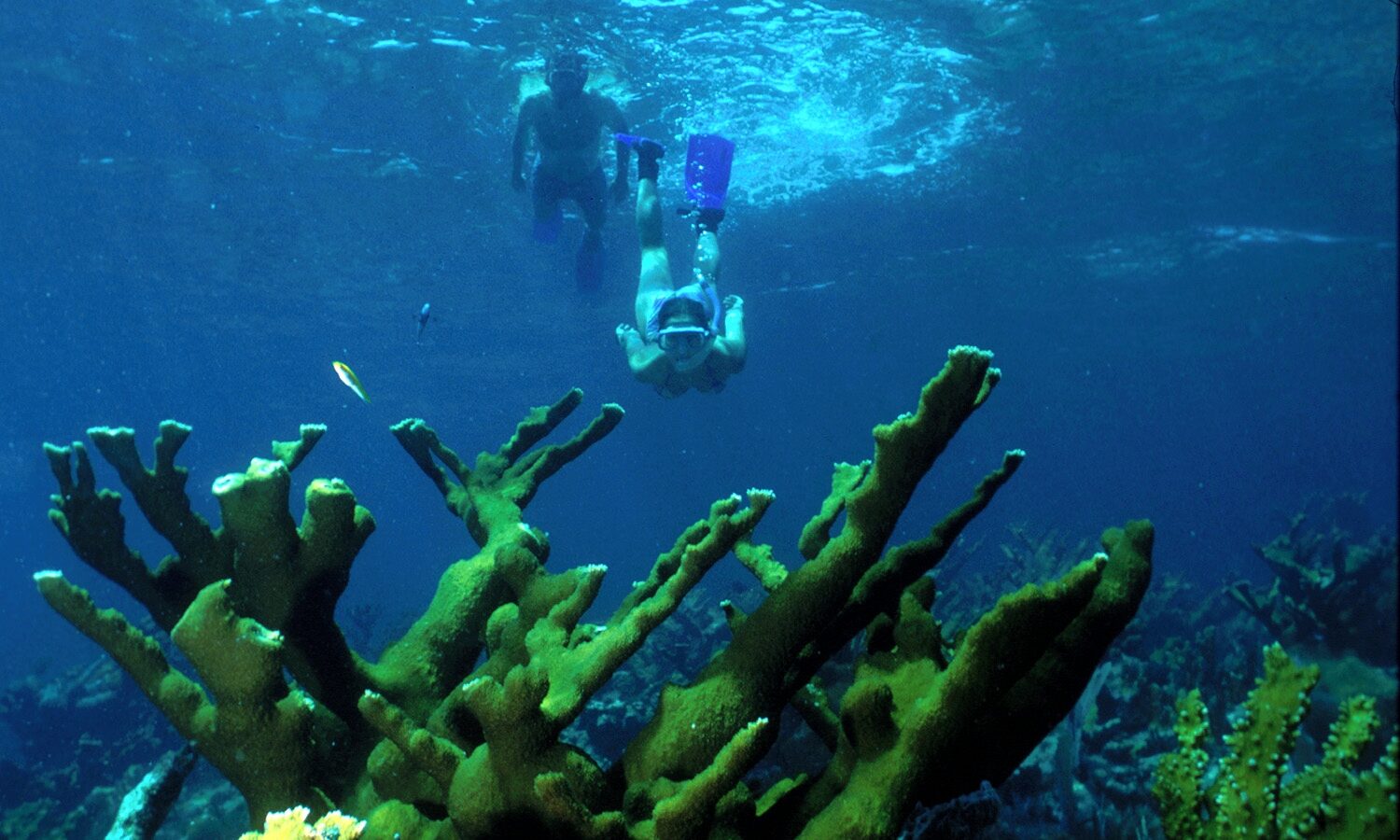
Boat outings serve different goals, so our team recommends choosing by habitat rather than simply selecting the shortest departure. A cruise toward Boca Chita Key emphasizes bay scenery, island history, and views from near its ornamental lighthouse. Elliott Key, the park’s largest island, supports tropical hardwood forest and the roughly seven mile Spite Highway trail. Reef trips focus on snorkeling or diving along the northern Florida Reef Tract, where conditions depend heavily on wind, visibility, and current.
- For first time visitors: Choose an island landing that combines a bay crossing with time ashore.
- For wildlife: Look for shallow water trips through seagrass habitat used by rays, sea turtles, dolphins, and juvenile fish.
- For maritime history: Seek an outing associated with the Maritime Heritage Trail and its protected shipwreck sites.
- For snorkeling: Select the destination according to that day’s wind and water clarity rather than committing to one reef in advance.
Why the reefs and shipwrecks matter
Biscayne sits at the northern end of the Florida Keys, where vessels have crossed reefs and shoals for centuries. The Maritime Heritage Trail links wreck sites from different eras, allowing qualified snorkelers and divers to examine both cultural remains and the marine life growing around them. Coral reefs face stress from warming water, disease, storms, and boat groundings, so careful buoyancy control and avoiding contact with coral are essential parts of responsible exploration.
Dry Tortugas: Plan the Day Around Garden Key
Most day visitors arrive at Garden Key, where Fort Jefferson fills nearly the entire island. The six sided masonry fortress was built between 1846 and 1875 to defend shipping routes through the Gulf of Mexico. Construction consumed roughly 16 million bricks, yet the fort was never completed or attacked. Its strategic value declined as rifled artillery made masonry defenses vulnerable, and it later served as a military prison during the Civil War era.
Walk Fort Jefferson before the midday heat
Begin with the fort while temperatures are lower. The open parade ground reveals the immense scale of the structure, while upper levels provide views across the moat, neighboring Bush Key, and surrounding turquoise shallows. Uneven brick, narrow stairs, low openings, and unguarded drops require attention. Interpretation inside the fort explains its rainwater collection system, coastal artillery, and imprisonment of Dr. Samuel Mudd, who was convicted of assisting John Wilkes Booth after Abraham Lincoln’s assassination.
Snorkeling along the moat wall
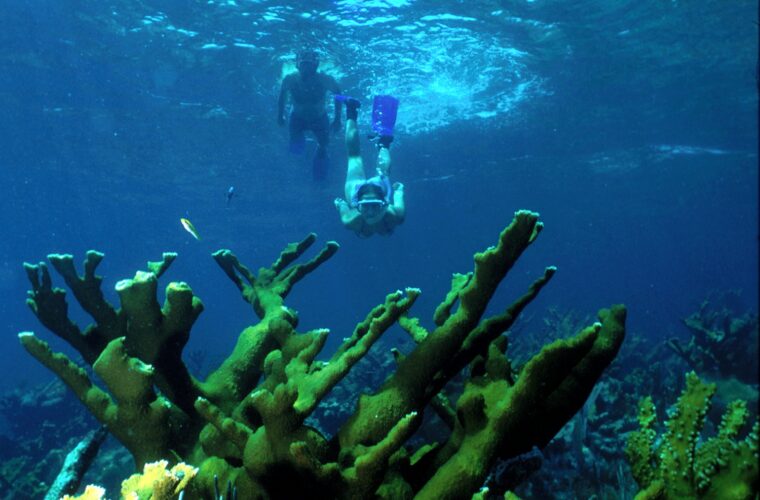
The protected water beside the moat wall is often the most approachable snorkeling area on Garden Key. Seagrass, coral growth, pilings, and masonry provide habitat for grunts, parrotfish, angelfish, barracuda, and juvenile reef species. Enter from designated beach areas and avoid standing on coral or submerged structures. Visibility changes with wind and waves, so inspect conditions from shore before committing to a longer swim around the wall.
Look beyond Garden Key
Bush Key may connect to Garden Key by a narrow sandbar, depending on currents and recent storms. It supports nesting colonies of sooty terns, brown noddies, and other seabirds, which can require seasonal access restrictions. Loggerhead Key, about three miles west, holds the 157 foot Dry Tortugas Light and lies beyond the reach of ordinary day visitors. Reaching it requires suitable private transportation, favorable weather, and strong open water judgment.
Linking the Three Parks Without Losing Days
A practical National Parks Florida Guide itinerary places Biscayne and the Homestead side of Everglades together, then continues through the Florida Keys. Reserve a separate day for Shark Valley if wildlife viewing is a priority because driving between that entrance and Flamingo consumes valuable daylight. Dry Tortugas should remain the fixed point in the schedule, with flexible activities before and after it in case marine conditions affect transportation.
A focused four day route
- Day one: Explore Royal Palm, Pa-hay-okee, Mahogany Hammock, and Flamingo along the Everglades park road.
- Day two: Take a boat excursion into Biscayne Bay, choosing an island, reef, or maritime history itinerary.
- Day three: Drive through the Florida Keys to Key West, allowing time for traffic and stops.
- Day four: Visit Garden Key and Fort Jefferson, keeping the evening free after returning.
Adding a fifth day allows Shark Valley or the Ten Thousand Islands to fit without rushing. Travelers interested in paddling should add another full day because tides and wind determine sensible launch times. Avoid scheduling a flight from Miami immediately after the Dry Tortugas excursion. The drive from Key West can exceed four hours before congestion, construction, or a crash on the Overseas Highway slows traffic further.
Where overnight bases make sense
Homestead provides efficient access to both Convoy Point and the Ernest F. Coe entrance. Miami offers more flights and lodging choices but adds urban traffic each morning. Everglades City is the logical base for Gulf Coast paddling rather than for the Flamingo corridor. In the Keys, staying in or near Key West simplifies early Dry Tortugas departures. Camping within the parks demands greater self sufficiency, especially where freshwater, shade, and resupply options are limited.
Prepare for Sun, Saltwater, and Wildlife
Florida’s subtropical conditions create risks that differ from those in mountain parks. Heat illness can develop during exposed walks even in winter, and reflected sunlight from water increases ultraviolet exposure. Saltwater quickly damages electronics and corrodes metal gear. Thunderstorms can produce dangerous lightning well ahead of rainfall, while shallow bays become rough when wind pushes against tidal current.
A compact gear comparison
| Setting | Most useful equipment | Primary concern |
|---|---|---|
| Everglades boardwalks | Water, insect repellent, sun protection, binoculars | Heat and close wildlife encounters |
| Biscayne boat trips | Dry bag, reef safe sun protection, secure hat | Spray, motion sickness, and limited shade |
| Dry Tortugas | Drinking water, food, snorkel gear, waterproof storage | Exposure and limited opportunities to replace supplies |
Give animals room
Alligators can accelerate quickly over short distances, and crocodiles may rest near shorelines or marina basins. Never step between a reptile and the water, feed wildlife, or approach for a close photograph. On the water, manatees and sea turtles can surface with little warning, making slow operation essential in shallow habitat. Mosquitoes and biting flies can be severe after rain, particularly near mangroves and shaded forest edges.
Gear & Essentials
Tell us about your trip and we will add what else you will want:
The basics
Worth having in the car whatever the park.
For this trip
As an Amazon Associate we earn from qualifying purchases, at no extra cost to you.
Completing Your Florida National Park Trip
Each park rewards a different planning strategy. Everglades requires choosing the correct entrance for the habitat you want to see. Biscayne depends on matching a boat trip to reefs, islands, or maritime history. Dry Tortugas requires committing transportation time to reach a remote fort surrounded by open sea. Treating those access patterns separately produces a far better trip than trying to approach all three as roadside parks.
For a first visit, allocate one full day to the Homestead corridor, one boating day in Biscayne, and one day for Dry Tortugas. Add Shark Valley, Everglades City, or an overnight island experience when time permits. With transportation secured first and weather flexibility built into the route, Florida’s three national parks form a coherent journey from freshwater sawgrass to coral reef and the outermost keys.