







Weeping Rock
| Type | Trailhead |
|---|---|
| Facilities | Restrooms · Parking · Shuttle stop |
At a glance
- Place type: Trailhead in the Zion area of Zion National Park
- Location: Weeping Rock, Zion Canyon Shuttle stop #7
- Typical visit: 25 minutes
- Route: Cross the bridge, turn left, and follow the paved trail
- Facilities: Restrooms, parking, and a shuttle stop
- Amenities: Benches, bicycle rack, exhibits, trash receptacles, restroom, shuttle stop, and trailhead
- Water: No drinking water is available here
- Park hours: Zion National Park is open every day of the year
Why visit
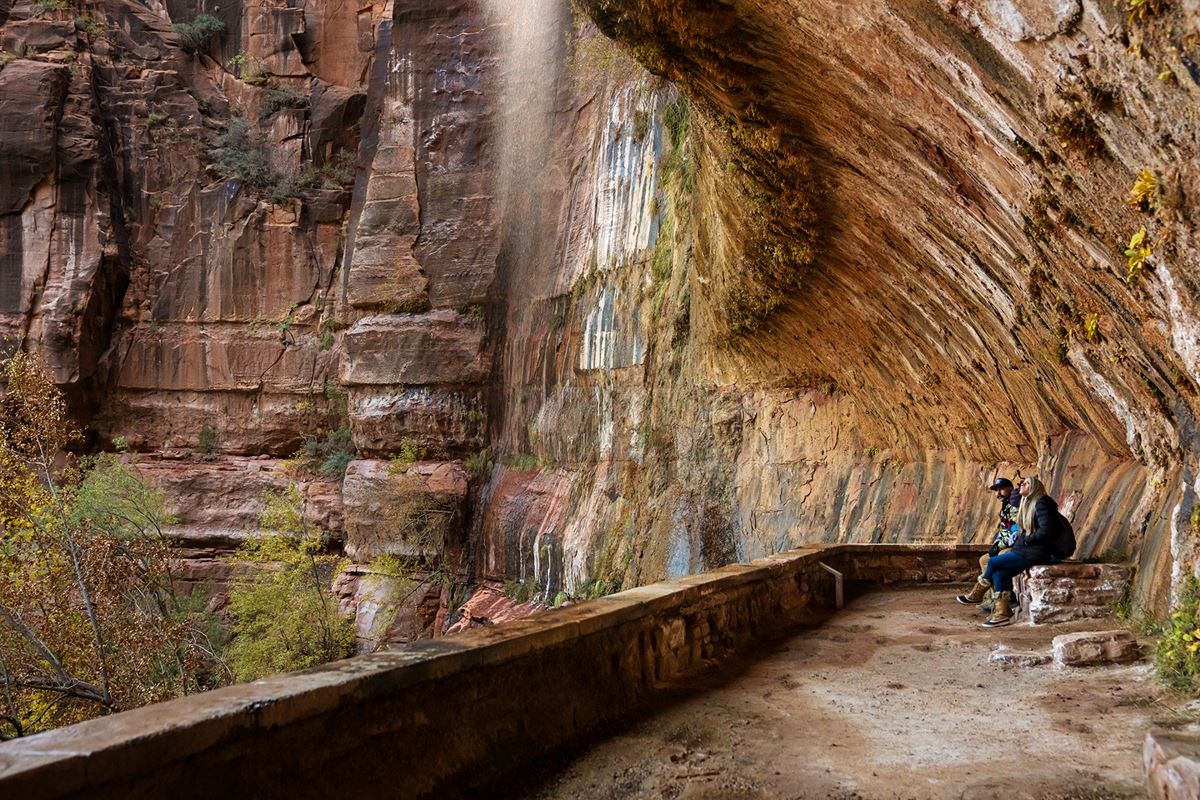
Weeping Rock is a short but steep paved walk leading from the parking area to a water-seeping alcove. The stop takes its name from water that continually emerges from the alcove walls.
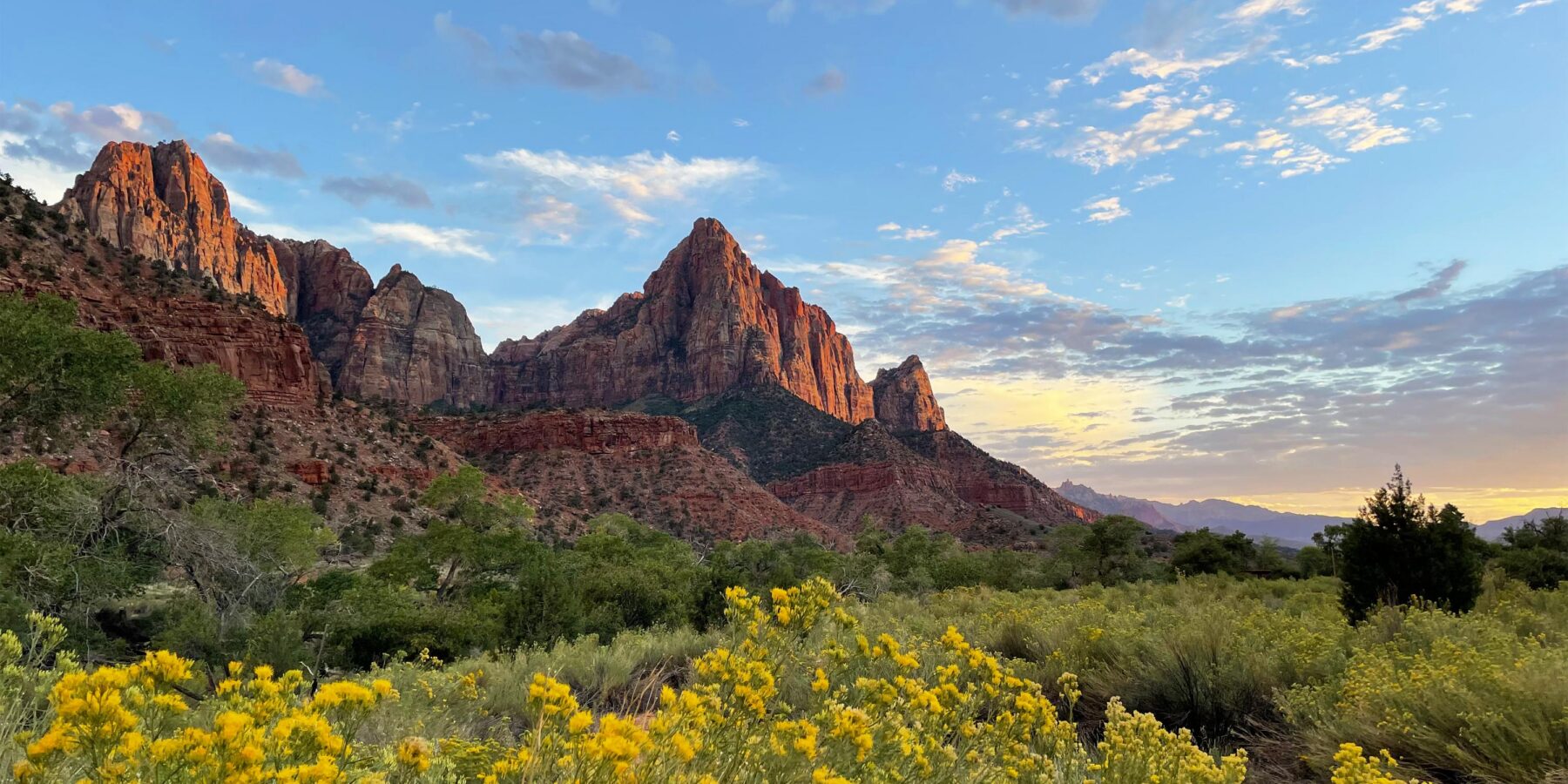
The area also provides views of Angels Landing, the Great White Throne, Big Bend, and Cable Mountain. Small exhibits along the route interpret local plants, lichens, and life on vertical terrain.
Getting there
Weeping Rock is in Zion and serves as Zion Canyon Shuttle stop #7. When the Zion Canyon Shuttle operates, use stop #7 for access.
Parking is available at the Weeping Wall Trailhead Parking Lot. A bicycle rack and bus or shuttle stop are also available. From the parking area, cross the bridge and turn left onto the paved path.
The Zion Canyon visitor center is about 6 miles away. Springdale, Utah, is about 7 miles away in a straight line. Hurricane, Utah, is about 20 miles away in a straight line.
Air travelers can use St. George Regional Airport, identified as SGU, or Harry Reid International Airport, identified as LAS. No airport distances are provided.
What to see and do
Follow the paved Weeping Rock Trail from the trailhead to the alcove. Although the outing is short, the National Park Service describes it as steep. A typical visit takes 25 minutes.
At the alcove, watch water seep continuously through the sandstone walls. Views from the area include Angels Landing, the Great White Throne, Big Bend, and Cable Mountain.
Wayside exhibits are located at the trailhead and along the route. Their subjects include Shrub Live Oak, Sand Sagebrush, Box Elder, Gambel Oak, lichens, and hillside shrubs.
Other displays include Life On The Vertical and Weeping Rock Trail Head. Historical and interpretive information is available among the site’s amenities.
Benches and other seating provide places to pause. Trash receptacles are available near the trailhead area.
History and nature
Weeping Rock takes its name from the alcove reached by the trail. Water continually seeps from its walls, creating the appearance of a rock surface that is crying.
The water movement is tied to the Navajo Sandstone layer. This porous stone absorbs water like a sponge. Water then passes through the rock and emerges along the alcove walls.
Interpretive displays introduce several plants found around the site. These include shrub live oak, sand sagebrush, box elder, Gambel oak, and hillside shrubs.
Visitors can also learn about lichens and organisms adapted to vertical surfaces. The Life On The Vertical exhibit focuses on that environment.
When to go
Zion National Park remains open every day of the year. Conditions vary widely, and temperatures change with elevation. Day and night temperatures can differ by more than 30°F, or 16°C.
Summer temperatures often rise above 100°F, or 38°C. Monsoon conditions occur from mid-July through September, increasing flash-flood risk. Storms and lightning are additional concerns. Winters are generally mild.
Check current conditions, shuttle operations, and park alerts on Zion’s National Park Service website before visiting. Prepare for significant weather and temperature changes.
Accessibility
The route to Weeping Rock is paved, but it is steep. The available facts do not provide a formal accessibility designation.
Benches and seating are available. The site also has a restroom, parking, a bicycle rack, trash receptacles, and a bus or shuttle stop.
Fees and rules
Zion National Park entrance fees are:
- Private vehicle: $35
- Motorcycle: $30
- Snowmobile: $20
- Per person: $20
There is no drinking water at Weeping Rock. Bring enough water before beginning any hike from this area.
Follow posted rules and leave no trace. Use the available trash receptacles and check current park alerts before departure.
Nearby trails and places
The East Rim Trail begins here and is about 10.5 miles as mapped by the National Park Service. The Weeping Rock Trail is also accessed from this stop.
Other nearby mapped trails include:
- Hidden Canyon Trail, about 0.2 miles away and about 0.4 miles
- Cable Mountain Trail, about 0.4 miles away and about 1.7 miles
- Angels Landing Trail, about 0.5 miles away and about 0.5 miles
- Observation Point Trail, about 0.5 miles away and about 0.4 miles
- East Mesa Trail, about 0.6 miles away and about 4.4 miles
Distances to these trailheads indicate proximity, not driving distance.
The Weeping Rock Restroom and Weeping Wall Trailhead Parking Lot are at the site. Exhibits at the same location include Shrub Live Oak, Sand Sagebrush, Box Elder, and Gambel Oak.
Life On The Vertical, Hjllside Of Shrubs, Weeping Rock Trail Head, and Lichens exhibits are also at the site.
Before you go
Carry plenty of water because none is available at Weeping Rock. Pack layers for changing temperatures, and prepare for storms and lightning.
During the mid-July through September monsoon period, remain alert for flash-flood risk. Check the park’s National Park Service website for current conditions, closures, alerts, and shuttle service.
The walk is short but steep. Wear suitable footwear, follow posted rules, and leave no trace.
Questions
Where is Weeping Rock in Zion National Park?
It is in the Zion area at Zion Canyon Shuttle stop #7.
How long does a visit to Weeping Rock take?
The National Park Service lists a typical visit time of 25 minutes.
How do visitors reach Weeping Rock from the parking area?
Cross the bridge, turn left, and follow the steep paved trail to the alcove.
Why does Weeping Rock weep?
Water moves through porous Navajo Sandstone and continually seeps from the alcove walls.
Is drinking water available at Weeping Rock?
No. Visitors should carry enough water before hiking from this location.
What can visitors see from Weeping Rock?
The area has views of Angels Landing, the Great White Throne, Big Bend, and Cable Mountain.
Does the Zion Canyon Shuttle stop at Weeping Rock?
Yes. When the shuttle is running, Weeping Rock is stop #7.
What facilities are available at Weeping Rock?
Facilities and amenities include parking, restrooms, seating, a bicycle rack, exhibits, trash receptacles, and a shuttle stop.
Nearby
Trails
Places
- Weeping Rock Restroom
- Weeping Wall Trailhead Parking Lot
- Shrub Live Oak
- Sand Sagebrush
- Box Elder
- Gambel Oak
- Life On The Vertical
- Hjllside Of Shrubs
On the map
10 trails24 places to see6 visitor services
Facts on this page draw on the National Park Service: Weeping Rock (nps.gov)