








Zion Human History Museum

| Type | Museum |
|---|---|
| Facilities | Restrooms · Parking · Shuttle stop |
At a glance
- Location: Zion Canyon in Zion National Park
- Type: Museum
- Significance: Human history and culture
- Season: Open from spring through fall; confirm current operating hours
- Facilities: Restrooms, parking, and a shuttle stop
- Highlights: Indoor exhibits, rotating displays, an orientation film, ranger information, a bookstore, and canyon views
- Access: Limited parking and seasonal down-canyon shuttle service
- Nearby visitor center: Zion Canyon Visitor Center, about 1 mile away
- Airports: St. George Regional Airport (SGU) and Harry Reid International Airport (LAS)
Why visit
Zion Human History Museum explains how people have interacted with Zion. It served previously as the park’s main visitor center.
Permanent indoor displays focus on Zion’s human history. Changing exhibits cover regional artists, discoveries from the area, and other subjects. An orientation film introduces the canyon’s history and the park’s dramatic landscapes.
The museum also serves as an information stop. Rangers staff a desk during operating hours, and ranger-led activities are available seasonally.
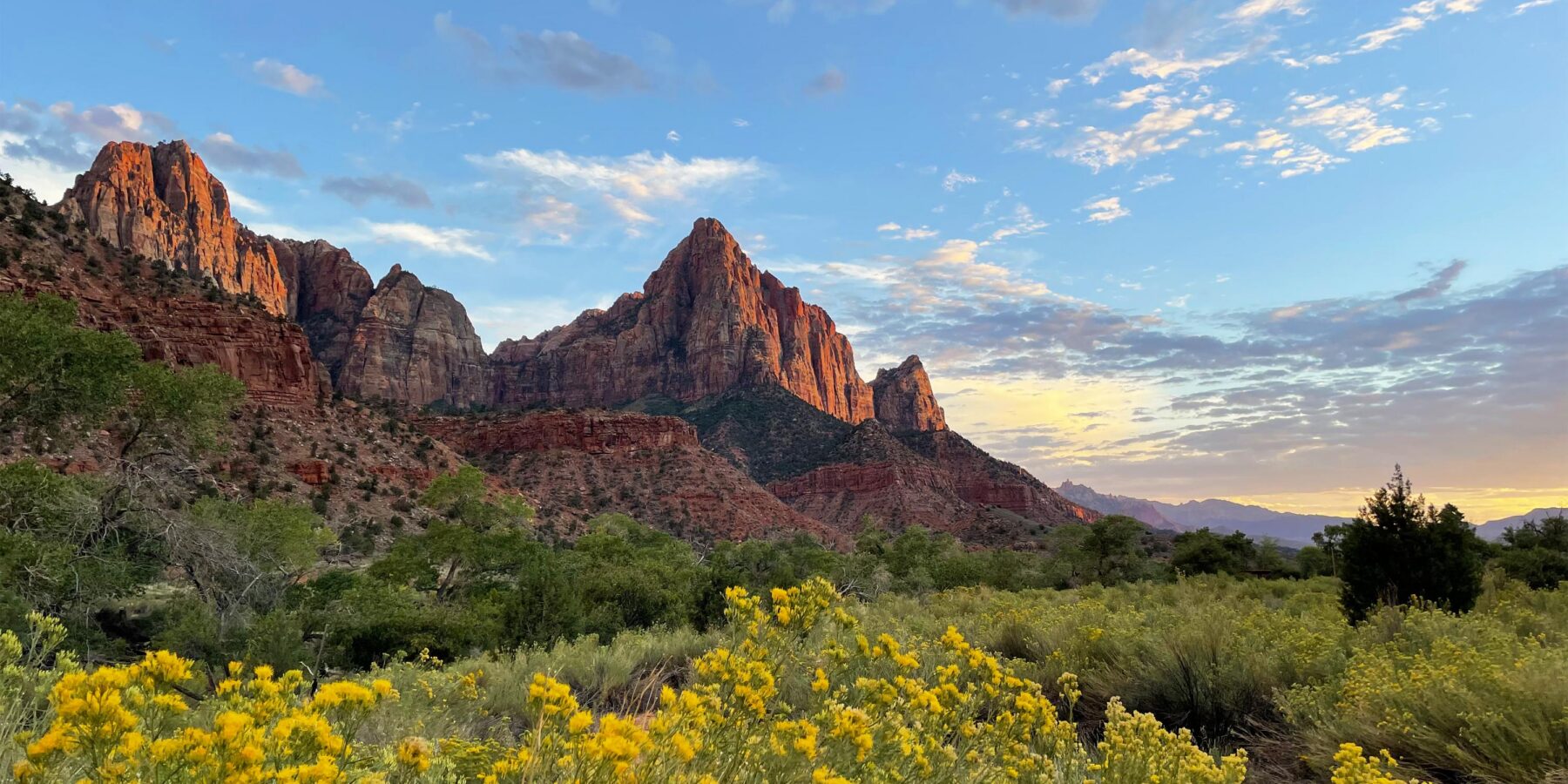
Outside, visitors can view several prominent canyon features. The rear patio provides an accessible viewing area facing West Temple and the Towers of the Virgin. Bridge Mountain and Crawford Arch are visible from the front of the building.
Getting there
The museum stands in Zion Canyon beside the ZNH Museum – Down Canyon shuttle stop. This is Shuttle Stop #2 when the park shuttle operates. Shuttles stop here while traveling down-canyon.
From the museum, take a shuttle to Shuttle Stop #1 at Zion Canyon Visitor Center. Up-canyon service departs from Stop #1. The main visitor center is about 1 mile away.
Visitors may also drive to the museum, but parking is limited. The Zion Human History Museum Parking Lot is at the building. A bicycle rack is available.
Springdale, Utah, is about 2 miles away in a straight line. Hurricane, Utah, is about 17 miles away in a straight line. These figures are not driving distances.
The listed airports are St. George Regional Airport (SGU) and Harry Reid International Airport (LAS).
What to see and do
Begin with the indoor exhibits about Zion’s human history and culture. Rotating displays may feature artists from the region, locally made discoveries, or other topics.
The museum shows a 22-minute orientation film covering canyon history and the park’s landscapes. Captioned media and assistive listening systems are available.
Rangers provide information at the desk whenever the museum is operating. Seasonal ranger-led programs may also begin or take place here.
The Zion Forever Project bookstore carries merchandise related to the park. Available visitor amenities include gifts, souvenirs, and books.
After exploring the exhibits, visit the outdoor viewpoints. The back patio looks toward West Temple and the Towers of the Virgin. The front offers views of Bridge Mountain and Crawford Arch.
The grounds are also an accessible location for watching sunrise and sunset or stargazing. Benches and other seating are available.
History and nature
The museum’s primary subject is the human history and culture of Zion. Its earlier role as Zion National Park’s main visitor center is part of the building’s history.
Exhibits place the canyon’s human story within its landscape. The orientation film combines historical information with views of the park. Temporary displays expand the interpretation through regional art, local findings, and other changing subjects.
The surrounding canyon is visible from both sides of the museum. West Temple and the Towers of the Virgin appear from the accessible rear viewing area. Bridge Mountain and Crawford Arch can be seen from the front.
The Pa’rus Trail connects the museum with the Virgin River at multiple points. It also links this area with Zion Canyon Visitor Center, Zion Nature Center, and Canyon Junction.
When to go
Zion National Park is open every day of the year. However, Zion Human History Museum operates only from spring through fall. Check its current hours before arriving. Ranger-led programming is seasonal.
Zion’s temperatures change with elevation. Day and night readings can differ by more than 30°F, or 16°C. Summer temperatures often rise above 100°F, or 38°C.
Monsoon conditions occur from mid-July through September, increasing flash-flood danger. Stay alert for storms and lightning. Winters are generally mild.
Sunrise, sunset, and stargazing are available from this accessible location. Actual viewing conditions depend on current weather and park conditions.
Accessibility
The museum has accessible rooms and accessible sites. An automated entrance helps visitors enter the building. Indoor media includes captions, and assistive listening systems are provided.
The back patio has an accessible viewpoint for West Temple and the Towers of the Virgin. The location also supports accessible sunrise, sunset, and stargazing experiences.
The Pa’rus Trail connects near the restroom building in the museum parking lot. However, the connector includes stairs and is not considered accessible for people with disabilities.
For an easier Pa’rus Trail entry, take the shuttle to Stop #1 at Zion Canyon Visitor Center. Begin the trail there instead.
Other amenities include benches, cellular signal, an automated external defibrillator, a fire extinguisher, and an available first aid kit.
Fees and rules
Zion National Park entrance fees are:
- Private vehicle: $35
- Motorcycle: $30
- Snowmobile: $20
- Per person: $20
The Pa’rus Trail permits bicycles and pets. Follow all posted park rules when using the trail, visiting viewpoints, or entering the museum.
The museum’s parking area is limited. Shuttle operations vary, so confirm whether service is running before relying on Shuttle Stop #2.
Nearby trails and places
The Pa’rus Trail begins from a connection near the restroom building in the museum parking lot. It allows bicycles and pets and provides several connections to the Virgin River.
The route links the museum with Zion Nature Center, Zion Canyon Visitor Center, and Canyon Junction. Remember that stairs make the museum connector unsuitable as an accessible route.
Watchman Trail is about 0.7 miles away. Its mapped length is about 1.8 miles. Visitor Center Area Pathways Trail is also about 0.7 miles away and about 0.8 miles as mapped.
Zion Nature Center and its parking lot are each about 0.3 miles away. South Campground’s fee booth, restroom, and Sites 85, 108, 110, and 112 are about 0.4 miles away.
The museum’s parking lot and the down-canyon shuttle stop are at the site. Restrooms are also available here.
Before you go
Check the park’s National Park Service website for museum hours, shuttle operations, ranger programs, current conditions, and alerts. The park remains open year-round, but the museum closes outside spring through fall.
Carry water, especially when summer temperatures exceed 100°F. Pack layers because temperatures can shift substantially between day and night.
Watch forecasts during the monsoon period from mid-July through September. Be alert for flash floods, storms, and lightning. Follow posted rules and leave no trace.
Questions
When is Zion Human History Museum open?
The museum operates from spring through fall. Check current hours before visiting.
What can visitors see inside Zion Human History Museum?
The museum has human-history exhibits, rotating displays, a 22-minute orientation film, ranger information, and a park bookstore.
Is Zion Human History Museum accessible?
Yes. It has accessible spaces, an automated entrance, captioned media, listening systems, and an accessible rear viewpoint.
Can visitors park at Zion Human History Museum?
Yes. A parking lot is at the museum, but parking is limited.
Which shuttle stop serves Zion Human History Museum?
The museum is next to Shuttle Stop #2. When operating, shuttles stop there while traveling down-canyon.
What views are available at Zion Human History Museum?
The rear patio faces West Temple and the Towers of the Virgin. Bridge Mountain and Crawford Arch are visible from the front.
Does the Pa’rus Trail connect to Zion Human History Museum?
Yes. It connects near the parking lot restroom, but stairs prevent the connector from being considered accessible.
Are pets and bicycles allowed on the trail by the museum?
Yes. The Pa’rus Trail allows pets and bicycles.
Nearby
Places
- ZNH Museum – Down Canyon
- Zion Human History Museum Parking Lot
- Zion Nature Center
- Nature Center Parking Lot
- South Campground
- South Campground, Site: 85
- South Campground Restroom
- South Campground, Site: 110
On the map
14 trails11 places to see15 visitor services
Facts on this page draw on the National Park Service: Zion Human History Museum (nps.gov)