Stargazing in Chiricahua National Park: When and Where to See the Night Sky
Stargazing Chiricahua National Park is best enjoyed on a moonless night from Massai Point, where an elevation of about 6,870 feet provides broad views above the surrounding canyon walls. Spring and autumn usually bring the most dependable combination of clear skies, comfortable temperatures, and manageable storm risk. Summer reveals the Milky Way prominently, but Arizona’s monsoon can produce clouds, lightning, and sudden downpours. The park occupies a remote corner of southeastern Arizona, about 36 road miles southeast of Willcox. Its distance from major cities limits artificial skyglow, while the high terrain rises above the desert grasslands of the Sulphur Springs Valley.
The park occupies a remote corner of southeastern Arizona, about 36 road miles southeast of Willcox. Its distance from major cities limits artificial skyglow, while the high terrain rises above the desert grasslands of the Sulphur Springs and San Simon valleys. The paved Bonita Canyon Scenic Drive links the entrance corridor with the highest practical observing locations, making it possible to scout a site before sunset and return to a parked vehicle when temperatures fall.
Why Chiricahua’s Night Sky Stands Apart
Chiricahua lies within the Madrean Sky Islands, isolated mountain ranges that rise sharply from the deserts of southeastern Arizona and northern Mexico. Elevation increases from roughly 5,100 feet near the entrance to more than 7,000 feet on the surrounding ridges. Cooler, thinner air at the upper overlooks can improve transparency, particularly after dry weather has cleared dust and moisture from the atmosphere.
Stargazing Above the Rock Pinnacles
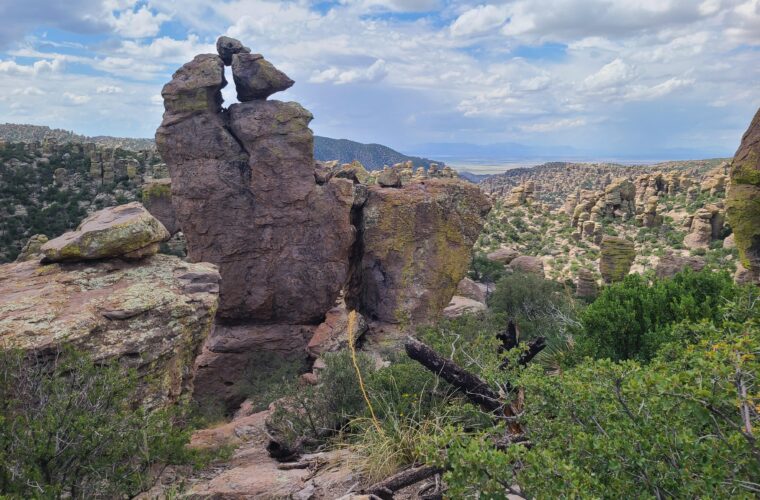
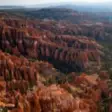
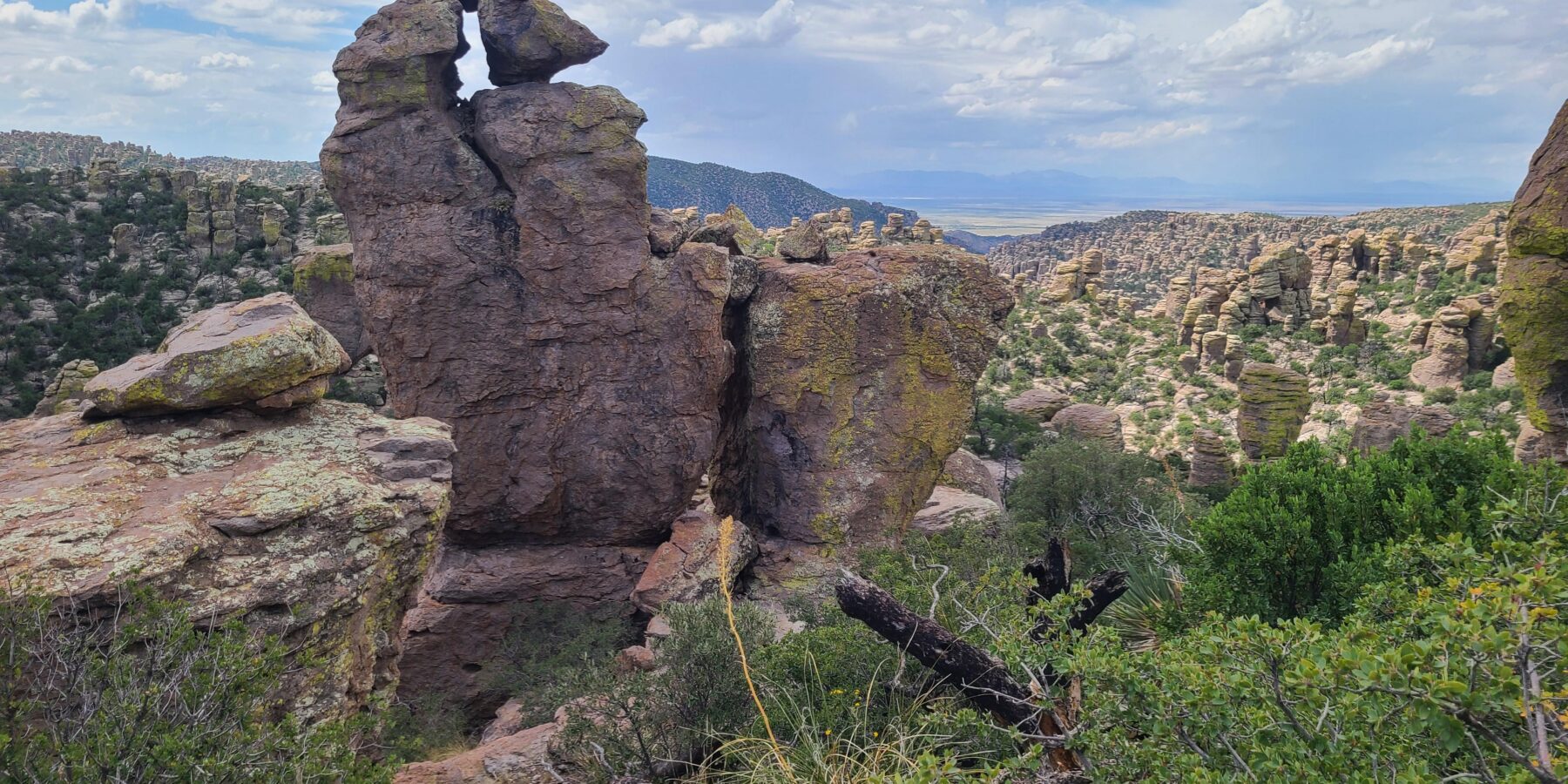
The park’s defining formations began about 27 million years ago, when eruptions from the Turkey Creek caldera deposited immense layers of hot volcanic ash. The compacted rhyolite tuff later fractured and eroded into columns, balanced rocks, and narrow fins. After dark, these formations block low angle lights and create sharply defined silhouettes, although they also limit the horizon at locations deep inside Bonita Canyon.
That geology makes site selection unusually important. A canyon floor may feel darker because cliffs hide distant light domes, but it also conceals stars and planets close to the horizon. Massai Point and the upper trailheads trade some shelter for a much larger field of view. Observers hoping to watch the Milky Way arc across the sky generally benefit from the higher sites.
A Dark Sky Surrounded by Working Landscapes
Chiricahua received International Dark Sky Park certification in 2021, recognizing both the quality of its night environment and efforts to protect it. The surrounding landscape remains sparsely populated, with ranchland, desert valleys, and national forest covering much of the region. Willcox produces the most noticeable distant glow, but topography keeps it low on the horizon from many locations inside the park.
Darkness also changes how visitors experience the Sky Island ecosystem. Mexican pinyon, alligator juniper, Apache pine, and several oak species occupy the upper elevations, while grasses and desert plants dominate lower ground. Listen for owls and insect activity, and watch roads carefully for deer, javelinas, skunks, and other nocturnal animals.
Finding the Park and Planning the Final Approach
The usual approach leaves Interstate 10 at Willcox, follows Arizona Route 186 southeast, and then turns onto Arizona Route 181 for the final miles to the entrance. The route crosses open country with few services. Tucson is roughly a two hour drive away under favorable conditions, so arriving before sunset leaves time to refuel, eat, and inspect the chosen observing area in daylight.
The Bonita Canyon Corridor
From the entrance, Bonita Canyon Scenic Drive climbs approximately 8 miles through oak woodland and volcanic terrain to Massai Point. The road is paved but narrow and winding, with wildlife, sharp curves, and occasional rockfall concerns. Drivers should expect slower travel after dark and use low beams around parked observers whenever safe. Current access rules, fees, road conditions, and facility hours should be confirmed on the official park site before departure.
There are no major commercial services along the park road. Bring enough fuel for the round trip, drinking water, food, and warm clothing before entering. Mobile coverage is unreliable among the canyon walls. Download maps in advance, tell someone where you plan to observe, and note the route back to the highway while daylight still makes intersections easy to identify.
What to Carry After Sunset
- Red flashlight: Red light preserves night vision better than a bright phone screen or white headlamp.
- Warm layers: Upper overlooks can feel dramatically colder than Willcox, especially when wind crosses the ridge.
- Water and food: Dry air can conceal perspiration, even during a cool night.
- Offline map: Save both the highway approach and the internal scenic drive.
- Chair or ground pad: Volcanic surfaces are rough, hard, and often covered with loose gravel.
- Binoculars: A basic pair reveals star clusters, lunar detail, and dense Milky Way star fields without telescope setup.
Where to Go Stargazing in Chiricahua National Park
The best location depends on horizon, wind, driving comfort, and the equipment being used. Large telescopes benefit from a stable parking area and shelter, while unaided viewing benefits from open sky. Visitors should use established parking areas rather than stopping on vegetation or blocking the narrow scenic road.
Massai Point, the Best Viewing Spot
Massai Point is the strongest all around choice. At about 6,870 feet, it overlooks an extensive concentration of hoodoos and provides broader horizons than the canyon floor. Its exposed position can be windy, and passing headlights may briefly affect dark adaptation. Set up away from traffic lanes, keep equipment compact, and avoid shining lights toward other observers.
As twilight drains from Massai Point, the pale rhyolite columns become black cutouts below the ridge. Gravel shifts underfoot, juniper carries a dry resinous scent, and wind moves through the oaks beneath the overlook. The temperature can drop quickly after sunset. Once the last color leaves the western sky, the scale of the formations recedes and the stars appear to extend directly above their jagged outlines.
Echo Canyon and Sugarloaf Trailheads
Echo Canyon Trailhead offers high elevation access and dramatic rock formations, but nearby ridges restrict portions of the sky. Sugarloaf Mountain rises to about 7,310 feet, with a trail of roughly 1.8 miles round trip leading toward the summit. The summit has excellent exposure, yet loose footing, steep edges, wind, and route finding make a first time night ascent a poor choice. Scout any trail entirely in daylight.
Bonita Canyon and the Lower Park
Lower locations provide warmer air and better wind protection, but trees and canyon walls reduce the visible sky. Campers can observe near their assigned site while controlling their own lighting, provided campground rules are followed. The Faraway Ranch area offers a lower elevation perspective near historic structures, although visitors should remain on open public routes and avoid illuminating buildings or disturbing wildlife.
When to Go
Moon phase matters as much as season. For the darkest Milky Way views, choose the period from about three nights before new moon through three nights afterward. A bright moon can be useful for viewing the rhyolite formations, but it washes out faint star clouds and reduces the number of visible meteors.
The Night Sky Through the Seasons
| Season | Typical conditions | Best use |
|---|---|---|
| March through May | Generally dry, with cool nights and occasional strong ridge winds | Clear observing and increasingly prominent Milky Way views |
| June through September | Warm early summer, followed by monsoon clouds, lightning, and localized heavy rain | Milky Way photography when forecasts show a stable, storm free window |
| October through November | Cooler, drier air and frequent clear nights | Comfortable early evening observing and crisp planetary views |
| December through February | Long nights, freezing temperatures, and possible snow or ice at higher elevations | Winter constellations and long observing sessions with proper cold weather gear |
The Milky Way and Meteor Showers
The bright galactic core is generally visible from late winter through autumn, first appearing before dawn and shifting into the evening sky as summer progresses. By August, it is prominent after darkness falls. Annual meteor showers can add activity, especially the Perseids in August and Geminids in December, but moonlight, monsoon clouds, and winter cold can determine whether those dates are worthwhile.
Reading the Sky Above the Chiricahua Mountains
Latitude shapes what appears above the hoodoos. Chiricahua sits near 32 degrees north, far enough south for observers to see celestial objects that remain low or invisible from much of the northern United States. Southern constellations skim the horizon, while familiar northern patterns remain available for orientation. Give your eyes at least 20 minutes without white light before judging sky quality. Faint detail strengthens as the pupils dilate and the retina becomes more sensitive.
Summer Objects Along the Milky Way
From June through September, the Milky Way runs through Sagittarius, Scorpius, Aquila, and Cygnus. Sagittarius stays low in the south, so select an overlook with minimal obstruction in that direction. Binoculars can resolve the Lagoon Nebula, the Sagittarius Star Cloud, and dense fields around the galactic center. Higher overhead, the Summer Triangle formed by Vega, Deneb, and Altair provides an easy reference when rock silhouettes make the horizon difficult to read.
Winter Targets in Clear, Cold Air
Orion dominates winter evenings, with the Orion Nebula visible as a hazy patch in the sword below its three belt stars. Taurus contributes the compact Pleiades and V shaped Hyades, while Sirius appears below Orion in Canis Major. The Andromeda Galaxy is best placed during autumn and early winter. It looks like a dim oval through binoculars and represents the most distant object many visitors can identify without a telescope.
Photographing the Night Sky
Night photography at Chiricahua works best when the composition is built before dark. Identify a stable, legal standing area, frame a recognizable rhyolite column, and focus on a distant ridge while daylight remains. Wide lenses capture both rock and sky, while longer lenses enlarge constellations but reveal star movement sooner. Avoid climbing formations or leaving established surfaces to find a foreground.
Starting Settings for Different Results
| Subject | Lens and exposure | Practical approach |
|---|---|---|
| Milky Way landscape | 14 to 24 mm, 10 to 20 seconds | Use a wide aperture and begin near ISO 3200, then adjust after reviewing the histogram |
| Rock silhouette | 16 to 35 mm, 5 to 15 seconds | Expose for the sky and allow the formation to remain dark |
| Moonlit hoodoos | 24 to 50 mm, 2 to 10 seconds | Lower ISO to preserve texture in pale rhyolite |
| Star trails | Repeated 20 to 30 second frames | Combine images later to reduce noise and protect highlights |
Controlling Focus, Vibration, and Light
Switch to manual focus after enlarging a bright star on the camera display and adjusting it to the smallest possible point. A sturdy tripod, delayed shutter, and image stabilization turned off on tripod mounted lenses reduce vibration. Cover bright status lights with removable opaque tape. For foreground illumination, use low output, warm light briefly and only when it will not affect wildlife, drivers, or nearby observers.
Managing Darkness Safely and Responsibly
Stargazing Chiricahua National Park requires slower movement than an ordinary scenic stop. Rhyolite gravel rolls beneath shoes, retaining walls and drop offs become difficult to judge, and cold can reduce dexterity around tripod controls. Remain within previously inspected areas after dark. If clouds begin building during monsoon season, leave exposed ridges early because lightning can arrive before rain reaches the overlook.
A Night Setup Sequence That Prevents Problems
- Reach the observing location before sunset and inspect edges, steps, and the route back to the vehicle.
- Park fully within a designated space without blocking travel lanes or gates.
- Place chairs and tripods where they cannot become tripping hazards.
- Dim dashboards, screens, and interior lights before full darkness.
- Check wind, cloud movement, temperature, and battery levels at regular intervals.
- Pack equipment methodically and sweep the area with a red light before leaving.
Protecting Wildlife and Other Visitors
Keep food secured and never approach an animal encountered along the road. Use the vehicle horn only when necessary for immediate safety, and avoid recorded owl calls or other sounds intended to attract wildlife. Voices travel surprisingly far across quiet ridges. Laser pointers should stay at home because they can distract other visitors, disturb animals, and create hazards for aircraft. Carry out every small item, including tape, lens wipes, and hand warmer wrappers.
Gear & Essentials
Tell us about your trip and we will add what else you will want:
The basics
Worth having in the car whatever the park.
For this trip
As an Amazon Associate we earn from qualifying purchases, at no extra cost to you.
Build the Night Around Conditions, Not a Fixed Schedule
A successful Chiricahua observing plan begins with three choices: a suitable moon phase, a forecast without significant cloud or ridge wind, and a location inspected before sunset. Massai Point suits broad sky views, while lower Bonita Canyon locations provide shelter at the cost of a restricted horizon. Match the site to the target rather than assuming the highest overlook will always produce the best result.
Allow flexibility for cold, wildlife on the road, and changing visibility. Bring binoculars even when photography is the main goal, since they turn short breaks between exposures into useful observing time. With careful preparation, low light discipline, and realistic weather expectations, Chiricahua’s volcanic skyline becomes an effective foreground for the Milky Way, winter constellations, meteor showers, and quiet unaided viewing throughout the year.