Yellowstone National Park Camping Guide: Campgrounds, Reservations and Tips
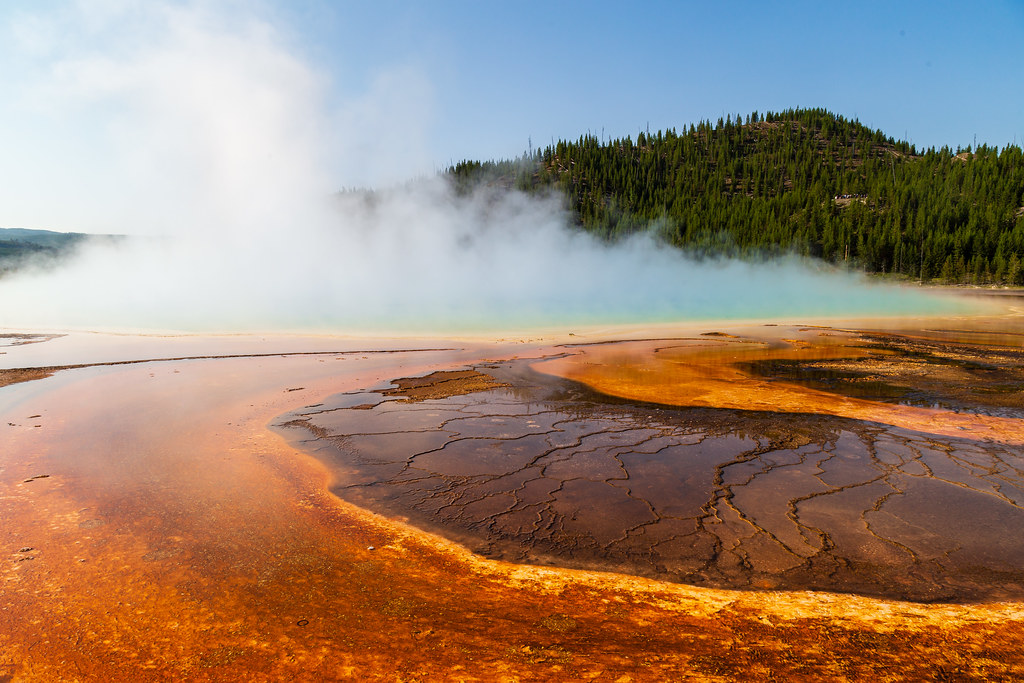
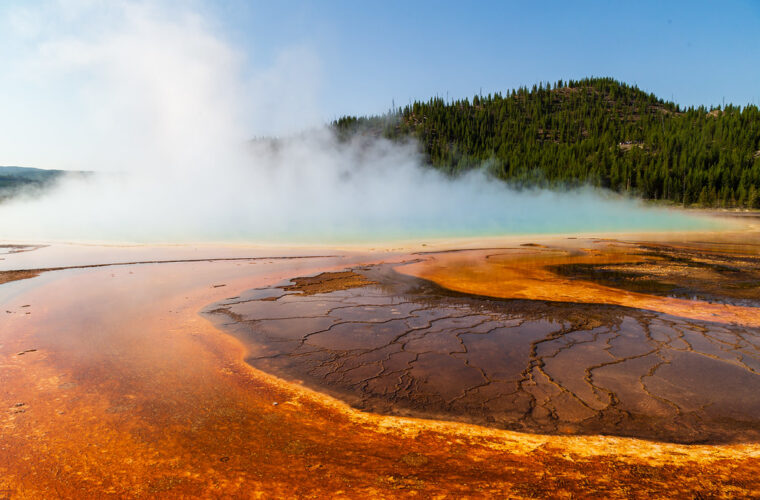
Photo: aparlette via Flickr (CC BY 2.0)
Yellowstone National Park camping works best when you choose a campground for the part of the park you plan to explore, then reserve through the correct booking system as soon as your dates become available. Yellowstone covers about 2.2 million acres, and its Grand Loop Road forms a figure eight measuring roughly 142 miles. A poorly placed campsite can add several hours of driving to an otherwise straightforward day.
The park’s developed campgrounds range from full hookup RV sites at Fishing Bridge to small, generator free sites near the wildlife rich Lamar Valley. Elevations generally run from about 6,200 feet at Mammoth to nearly 8,000 feet around Canyon and Yellowstone Lake, so freezing nights, sudden thunderstorms, and lingering snow can affect camping well into the nominal summer season.
Yellowstone National Park Camping Begins With the Right Campground
Yellowstone has five road entrances and several distinct sightseeing regions. Old Faithful and the geyser basins occupy the southwest, Yellowstone Lake fills much of the southeast, the Grand Canyon of the Yellowstone anchors the central east side, and the northern range extends from Mammoth Hot Springs through Tower Junction to Lamar Valley. No campground provides equally convenient access to all four areas.
Match the campground to your main priorities
Madison is the practical base for Old Faithful, Grand Prismatic Spring, and the Lower, Midway, and Upper Geyser Basins. Canyon shortens trips to the canyon rims, Hayden Valley, and Mount Washburn. Bridge Bay, Grant Village, and Fishing Bridge serve Yellowstone Lake, while Mammoth, Slough Creek, Pebble Creek, and Tower Fall place campers closer to the northern range and its dawn wildlife activity.
| Camping area | Campgrounds | Setting and approximate elevation | Best suited to |
|---|---|---|---|
| North | Mammoth, Indian Creek | Sagebrush or forest near 6,200 to 7,300 feet | Mammoth terraces, Gardiner access, northern range |
| Northeast | Slough Creek, Pebble Creek, Tower Fall | Valley and forest sites near 6,250 to 6,900 feet | Wildlife watching, quieter camping, smaller rigs |
| West and central | Madison, Norris, Canyon | Lodgepole pine and geothermal country near 6,800 to 7,900 feet | Geyser basins, canyon overlooks, balanced itineraries |
| Yellowstone Lake | Bridge Bay, Fishing Bridge, Grant Village, Lewis Lake | Open meadows or forest near 7,800 feet | Boating, lake scenery, West Thumb, southern entrance |
Account for Yellowstone driving conditions
Map mileage understates travel time. Bison regularly stop traffic in Hayden and Lamar valleys, while narrow roads, construction, and crowded parking slow movement near major thermal features. Driving from Mammoth to Old Faithful can consume close to two hours before wildlife delays. Campers dividing a trip between the geyser basins and northern range often save time by changing campgrounds midway through their stay.
Campground Settings, Privacy, and Site Character
Most Yellowstone campsites provide a picnic table and fire ring, but the experience varies considerably by location. Large campgrounds have multiple loops, easier access for a range of vehicles, and denser site arrangements. Smaller National Park Service campgrounds generally feel quieter, although they may have tighter roads, fewer level pads, limited generator use, and less space for long trailers.
Large campgrounds near major attractions
Canyon, Madison, and the lake campgrounds
Canyon Campground sits in lodgepole pine forest near the Grand Canyon of the Yellowstone, approximately one mile from the Canyon Village area. The trees provide visual screening, but closely spaced trunks can complicate backing a trailer. Madison occupies open pine forest near the confluence of the Firehole and Gibbon rivers. Its western position makes it useful for visitors entering through West Yellowstone and for repeated trips into the geyser basins.
Bridge Bay combines open meadow loops with wooded sections overlooking the Absaroka Range across Yellowstone Lake. Grant Village has a more consistently forested setting near West Thumb, while Fishing Bridge RV Park concentrates on hard-sided recreational vehicles and full hookups. Fishing Bridge prohibits tents because it lies in active grizzly bear habitat near the Yellowstone River and lake shore.
Small campgrounds in the north and northeast
Indian Creek lies south of Mammoth in comparatively quiet forest, with a more rustic layout than the park’s major campgrounds. Slough Creek and Pebble Creek provide the most direct camping access to the northern range. These small sites favor tents, vans, and modest trailers because turning space and campsite lengths can be restrictive. Tower Fall occupies forest near Tower Junction and the road toward Dunraven Pass.
At Slough Creek before sunrise, cold air settles over the sagebrush while the surrounding ridges remain dark. Gravel presses through thin footwear, creek water is audible between gusts, and distant wolf howls can carry across the valley. Once daylight reaches the grass, spotting scopes appear beside the campground road and bison become visible as moving shapes on the flats. The early hour and rough access road are part of the camping experience here.
Yellowstone National Park Camping Options for Tents and RVs
Tent campers should prioritize shade, food storage, and drainage rather than seeking the largest parking pad. Lodgepole pine sites can remain damp after storms, while meadow sites receive stronger afternoon sun and wind. RV travelers need to compare total vehicle length with the listed site dimensions, including the tow vehicle. A site advertised for a particular trailer length may not accommodate an additional truck beside it.
Reservations, Booking Channels, and Site Selection
Yellowstone campgrounds do not all use one reservation platform. Several large campgrounds are operated through the park lodging concessioner, while National Park Service campgrounds may be listed through Recreation.gov. Release schedules, cancellation rules, generator policies, opening dates, and the status of individual campgrounds can change, so confirm current details on the official park site before booking transportation or a nonrefundable stay.
How Yellowstone National Park Camping Reservations Work
Begin with the official campground list rather than searching a booking platform by campground name. That list identifies the correct operator and prevents confusion between similarly named lodging and camping inventory. Booking windows differ by operator and site category. Summer weekends, large RV sites, and campgrounds near Canyon or the geyser basins usually disappear first, while cancellations often return individual nights to inventory.
- Choose a park region based on your highest priority attractions.
- Check the campground’s vehicle limits, tent restrictions, and operating season.
- Identify whether reservations are handled by the concessioner or Recreation.gov.
- Search flexible arrival dates and compare single nights if a continuous stay is unavailable.
- Record the reservation holder’s name, site length, check in procedure, and cancellation terms.
- Recheck seasonal road access, especially for spring and autumn trips.
Road openings affect early and late reservations
Most park roads close to ordinary vehicles during winter and reopen in stages during spring. Heavy snow can postpone those dates, as illustrated by the delayed Yellowstone road openings following an April winter storm. A campground reservation therefore does not guarantee that every Grand Loop Road segment or entrance will be accessible during a shoulder season stay.
Selecting hookups, generator access, and pad size
Fishing Bridge is the principal choice for full hookup camping and accepts hard-sided units rather than tents or soft-sided campers. Elsewhere, campers should generally plan for sites without individual water, sewer, or electrical connections. Generator hours are controlled and can differ by campground or loop. Solar charging is unreliable in densely forested sites, particularly during cloudy weather and when lodgepole pine shades panels for most of the day.
Build a Camp Setup for Cold, Wind, and Wildlife
Yellowstone’s elevation creates a wider temperature range than many summer campers expect. A sunny afternoon near Yellowstone Lake can turn windy within minutes, while overnight temperatures at Canyon, Grant Village, and Bridge Bay may approach freezing even in midsummer. Pack for the campsite elevation rather than the forecast in West Yellowstone or Gardiner, which can sit substantially lower than camp.
Choose gear that handles Yellowstone conditions
A three season tent with a full rainfly is suitable for most established sites, provided it is securely staked for thunderstorms and lake winds. Bring an insulated sleeping pad as well as an appropriately rated sleeping bag, since cold ground removes heat quickly. RV campers should carry leveling blocks, a potable water hose, and enough battery capacity for furnaces during generator free hours.
| Camping style | Useful equipment | Primary limitation |
|---|---|---|
| Tent | Full rainfly, warm sleeping pad, rigid food container | Cold ground, wind, limited drying space |
| Small trailer or van | Leveling blocks, battery monitor, window insulation | Tight pads and shaded solar panels |
| Large RV | Surge protection, sewer fittings, freshwater capacity | Restricted site lengths and turning clearance |
| Early or late season | Freezing temperature sleeping system, traction aids, insulated water storage | Snow, frozen hoses, reduced daylight |
Keep food and scented items secured
Bears, ravens, foxes, and rodents quickly exploit unattended food. Store groceries, cookware, coolers, trash, toiletries, and pet food in a hard-sided vehicle or approved storage locker whenever they are not being used. Never keep scented items inside a tent. Carry bear spray on trails and know how to remove its safety clip. Temporary research activity can also affect localized access, including the 2026 Yellowstone grizzly bear capture program.
Plan Activities That Start Near Camp
Campground location becomes especially valuable during the first and last hours of daylight. Those periods bring cooler temperatures, lighter parking pressure, and strong wildlife activity. Keep one nearby objective available for each day instead of committing every morning to a long drive. Yellowstone National Park Camping becomes far more manageable when breakfast, wildlife watching, and an early trail can happen within the same district.
Use nearby trails for shorter outings
Canyon campers can reach the North Rim and South Rim trail systems quickly, including the steep Brink of the Lower Falls Trail and Uncle Tom’s Point area viewpoints. Madison provides access to the level Harlequin Lake Trail and the thermal basins along the Firehole River corridor. From Grant Village, the West Thumb Geyser Basin boardwalk creates a compact outing beside Yellowstone Lake, where thermal pools sit immediately above the shoreline.
Reserve dawn and dusk for wildlife
Slough Creek and Pebble Creek campers can enter Lamar Valley before most traffic arrives. Canyon and lake area campers have similar access to Hayden Valley, where bison, elk, coyotes, and occasionally bears use the Yellowstone River corridor. Watch from established pullouts and maintain required distances. A spotting scope provides better views than approaching animals, particularly when wolves remain far across open sagebrush flats.
- Keep binoculars, warm layers, and a headlamp together for pre-dawn departures.
- Prepare breakfast the previous evening to reduce noise and food handling in darkness.
- Carry a paper map because mobile service is unreliable across much of the Grand Loop.
- Return before dark if a route passes through active bear habitat or thermal terrain.
Choose Dates by Conditions, Not Calendar Labels
The practical camping season is shaped by snowpack, road access, campground elevation, and overnight temperature. Conditions can vary sharply within the park on the same day. Mammoth may have dry ground while shaded sites near Canyon retain snow. Yellowstone Lake also produces strong winds and localized weather, making exposed campsites feel considerably colder than readings suggest.
Summer provides access with heavier demand
July and August generally offer the broadest road and trail access, along with the mildest overnight conditions. They also bring full campgrounds, busy parking areas, afternoon thunderstorms, and smoke risk from regional wildfires. Start hikes early, secure loose equipment before leaving camp, and avoid exposed ridges when thunder develops. Mosquitoes can be persistent near wetlands, lakeshores, and slow water during early summer.
Spring and autumn reward prepared campers
May and June can bring muddy sites, lingering snow, and freezing nights, but waterfalls run strongly and wildlife remains active at lower elevations. September often delivers crisp mornings, thinner crowds, and elk rut activity around Mammoth. Snow can arrive abruptly during either shoulder season. Campers should keep enough food, fuel, and warm clothing to tolerate a delayed departure rather than relying on a precise forecast.
Make Your Yellowstone National Park Camping Base Work for the Whole Trip
A successful Yellowstone camping plan connects three decisions: the region you want to explore, the type of site your equipment requires, and the season’s likely road and weather conditions. Select a pad using the combined length of every vehicle, understand the electrical and water limitations, and arrive with a sleep system suitable for temperatures well below the daytime forecast.
Once camp is established, organize each day around nearby trails and early wildlife hours. Splitting a longer visit between two park regions can reduce driving and provide easier access to both thermal basins and the northern range. With food secured, cold weather gear ready, and reservations matched to actual vehicle dimensions, your campsite becomes an efficient base rather than another logistical problem.
Want to keep exploring? Browse all our Yellowstone guides and articles for more trip-planning tips and ideas.
Gear & Essentials
Tell us about your trip and we will add what else you will want:
The basics
Worth having in the car whatever the park.
For this trip
- Camp lantern Etekcity Camping Lanterns 4-Pack LED
- Camping hammock Wise Owl Outfitters Camping Hammock
- Camping pillow Hikenture Inflatable Camping Pillow
- Lighter & matches BIC Maxi Pocket Lighters 10-Pack
- Shelter tarp Amazon Basics Waterproof Multipurpose Camping Tarp
- Tent Camping Tent 2-4 Person Easy Setup
Traveling with kids
Bringing a pet
RVing
Backcountry
Winter conditions
On the water
Photography
Accessibility
As an Amazon Associate we earn from qualifying purchases, at no extra cost to you.