
Carlsbad Caverns National Park and White Sands National Park: How to Visit Both on One Trip
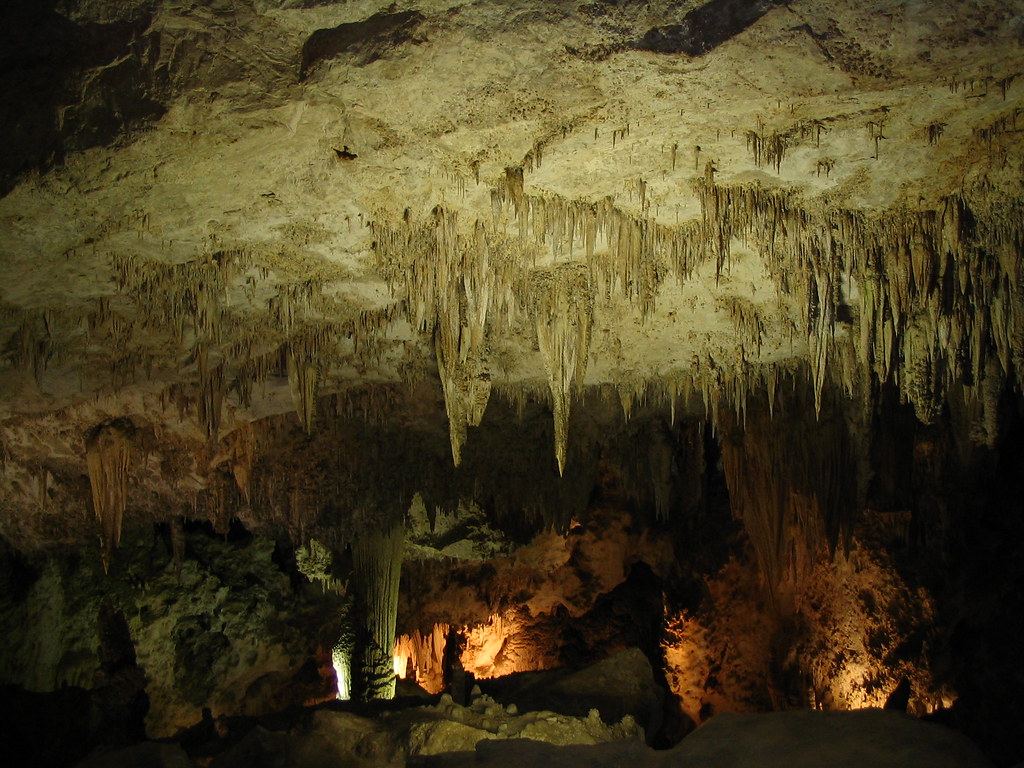
Photo: Ken Lund via Flickr (CC BY-SA 2.0)
Carlsbad Caverns National Park and White Sands National Park sit about 180 road miles apart, making them practical to combine in one southern New Mexico trip. One preserves a Permian reef transformed into enormous underground chambers, while the other protects the world’s largest gypsum dunefield, roughly 275 square miles of bright sand within the Tularosa Basin.
Most travelers need three full days after arrival, although four days create a better margin for cave reservations, mountain weather, missile range closures, and longer hikes. Our route plan explains where to begin, how much time each park deserves, where to sleep, and why the direct drive crosses higher and colder terrain than either destination.
Carlsbad Caverns National Park and White Sands National Park: How to Visit Both on One Trip
The efficient route uses Carlsbad or the smaller Whites City area for the cavern portion, then Alamogordo for White Sands. Driving between the parks takes roughly 3 hours 15 minutes without extended stops. The road climbs from the Chihuahuan Desert through the Sacramento Mountains before descending into the Tularosa Basin, so the transfer is part of the landscape experience rather than a simple desert commute.
Minimum Time to Visit Carlsbad Caverns National Park and White Sands National Park
Plan three days if your priority is the Natural Entrance and Big Room at Carlsbad Caverns, followed by a half or full day at White Sands. Four days allow time for a ranger guided cave tour, sunset among the dunes, and a weather delay. Two days force visitors to place a cave entry and the interpark drive on the same day, leaving little room for timed entry availability or temporary road closures.
| Trip length | What fits comfortably | Main compromise |
|---|---|---|
| 2 days | Big Room, Natural Entrance or elevator entry, Dunes Drive | Limited hiking and no useful delay margin |
| 3 days | Full cavern visit, park transfer, White Sands trails and sunset | Little time for side trips |
| 4 days | Longer hikes, a guided cave option, scenic mountain stops | Additional lodging change or night required |
Should Carlsbad Caverns National Park or White Sands National Park Come First?
Start at Carlsbad Caverns National Park when driving from Texas, including El Paso, Midland, or Guadalupe Mountains National Park. Begin at White Sands when arriving from Albuquerque, Santa Fe, or central New Mexico. El Paso International Airport is the most convenient major airport for a loop involving both parks, although the resulting itinerary still includes several hours of driving on arrival and departure days.
The order also depends on reservations. Cave entry commonly requires advance planning, while access at White Sands is generally more flexible but can be interrupted when nearby White Sands Missile Range closes U.S. 70. Secure the cave portion first, then arrange the remaining itinerary around it. Entrance procedures, guided tour availability, fees, operating hours, and temporary closures are volatile, so confirm current details on the official park sites before finalizing lodging.
Understanding the Route Between Carlsbad Caverns National Park and White Sands National Park
The direct route follows U.S. 62 and U.S. 180 north from Carlsbad toward Artesia, turns west on U.S. 82 through the Sacramento Mountains, and continues through Cloudcroft to Alamogordo. It covers approximately 180 miles. Fuel, meals, and supplies are easiest to arrange in Carlsbad, Artesia, Cloudcroft, and Alamogordo rather than near the park entrances.
Why the direct drive demands attention
U.S. 82 climbs steeply from the desert around Artesia into forested mountains near Cloudcroft, which stands at about 8,650 feet. Expect curves, slower vehicles, substantial elevation change, and much cooler temperatures at the crest. Winter storms can bring snow and ice even when conditions at both parks are dry. Summer thunderstorms can reduce visibility and send water across low sections of road.
Drive the mountain section in daylight when possible. Cell coverage can be inconsistent, and services become sparse between communities. A full fuel tank, downloaded maps, drinking water, and a warm layer reduce avoidable problems. Travelers uncomfortable with steep mountain roads can route south through the El Paso area, but that alternative adds considerable mileage and urban traffic.
Useful stops without derailing the schedule
Cloudcroft provides the most logical break, especially when traveling with children or changing drivers. The surrounding Lincoln National Forest contrasts sharply with both parks, replacing creosote scrub with ponderosa pine, Douglas fir, and cooler mountain air. A short meal stop is realistic on a three day itinerary. Longer forest walks fit better into a four day schedule because afternoon arrival at White Sands preserves time for lower temperatures and angled light.
How Much Time Carlsbad Caverns National Park Needs
Carlsbad Caverns protects more than 100 known caves beneath the Guadalupe Mountains, which are the exposed remains of a reef that bordered the Permian Delaware Basin about 250 million years ago. Hydrogen sulfide rising from petroleum deposits helped form sulfuric acid, which dissolved the limestone and enlarged passages on an exceptional scale. The visitor experience concentrates on Carlsbad Cavern, particularly the Natural Entrance and Big Room.
Choosing between the Natural Entrance and elevator
The Natural Entrance Trail descends about 750 feet over 1.25 miles, passing through a steep series of switchbacks before reaching the main cave routes. Allow about an hour for the descent, longer if you stop frequently for photographs. The trail places sustained strain on knees and calves. Visitors with limited time or mobility can use the elevator to reach the Big Room level, subject to current operations.
The Big Room route
The mostly level Big Room Trail forms a circuit of roughly 1.25 miles through a chamber covering more than eight acres. Features include the Hall of Giants, Bottomless Pit, Rock of Ages, and extensive groups of stalactites, stalagmites, columns, and draperies. Most visitors need 1.5 to 2 hours for the circuit because low light, interpretive stops, and the chamber’s scale naturally slow walking.
Inside the Big Room, the paved path feels small against a ceiling that disappears into dim amber light. The air remains close to 56 degrees Fahrenheit, cool enough to raise goosebumps after the desert heat. Footsteps and quiet voices carry across open space, while water drops strike distant rock with isolated clicks. The cavern’s size becomes clearest where the route turns and earlier groups appear as tiny silhouettes across the chamber.
Building a realistic cavern day
- Arrive with enough time to park, check entry requirements, and walk from the visitor center.
- Descend through the Natural Entrance if everyone can manage a sustained downhill walk.
- Complete the Big Room circuit rather than rushing directly back to the elevator.
- Allow additional time for exhibits, a meal, and the return drive to Carlsbad or Whites City.
- Schedule any ranger guided tour separately because routes, duration, age limits, and physical demands vary.
A Natural Entrance and Big Room visit commonly occupies three to four hours underground and can consume most of a day once driving, orientation, and breaks are included. Do not schedule the park to park transfer immediately after an ambitious cave route unless everyone is comfortable with another three hours behind the wheel. The cave’s cool air also disguises fatigue until visitors begin the drive.
Planning the White Sands Portion of the Trip
White Sands lies about 15 miles southwest of Alamogordo at an elevation near 4,000 feet. Gypsum eroded from surrounding mountains collects in the closed Tularosa Basin, where water evaporates and leaves crystals behind. Wind breaks those crystals into sand and moves the dunes northeast. Unlike quartz sand, gypsum reflects much of the sun’s energy, so it often feels cooler underfoot than its brilliant appearance suggests.
Start with Dunes Drive
Dunes Drive extends eight miles from the visitor area into the dunefield, creating a 16 mile round trip. Pavement eventually gives way to a hard packed gypsum road. Pullouts provide access to picnic areas, sledding slopes, and trailheads. Budget at least two hours for the drive with short walks, or half a day if you intend to hike and remain through sunset.
Selecting a trail for the available time
The 0.4 mile Interdune Boardwalk introduces dune ecology with minimal navigation. The one mile Dune Life Nature Trail crosses several steep dunes and explains how kit foxes, bleached earless lizards, and other animals use this exposed habitat. The Backcountry Camping Trail is a two mile loop, while the five mile Alkali Flat Trail demands greater effort and careful route finding across repeated dune crests.
- Under one hour: Choose the Interdune Boardwalk and one roadside dune stop.
- Two to three hours: Drive the full scenic road and walk the Dune Life Nature Trail.
- Half a day: Add sledding, photography, or the Backcountry Camping Trail.
- Most of a day: Attempt Alkali Flat early, carrying ample water and tracking every trail marker.
Timing heat, wind, and sunset
Spring commonly brings strong winds that erase footprints and blow gypsum across roads. Summer afternoons are hot, with thunderstorms capable of producing lightning and sudden temperature changes. Autumn usually brings milder hiking conditions, while winter days can be crisp and nights cold. For longer walks, use the cooler morning hours. Late afternoon works well for shorter exploration because shadows reveal dune contours that appear flattened under midday sun.
A Three-Day Carlsbad Caverns National Park and White Sands National Park Itinerary
A balanced schedule gives Carlsbad Caverns National Park the first full day, reserves the second for the mountain crossing, and uses the third for White Sands. This sequence avoids combining a demanding cave descent with the entire interpark drive. It also places the more flexible dune activities after the cave reservation. Travelers with a fourth day can add a guided cave tour, a longer White Sands hike, or an overnight pause in the Sacramento Mountains.
| Day | Overnight base | Primary plan |
|---|---|---|
| 1 | Carlsbad or Whites City | Natural Entrance, Big Room, visitor center exhibits |
| 2 | Alamogordo | Drive through Artesia and Cloudcroft, then make a short late afternoon dune visit |
| 3 | Alamogordo or onward destination | Dunes Drive, selected trail, sledding or sunset photography |
| Optional day 4 | Either park gateway | Guided cave tour, Alkali Flat Trail, or weather recovery time |
Keep the first day focused underground
Schedule the cavern entry early enough to finish without watching the clock. Pack lunch or arrange food before leaving Carlsbad because returning to town divides the day unnecessarily. After the cave, choose a quiet evening rather than adding a long desert drive. The descent and several hours on paved underground trails can leave legs tired, particularly for travelers unaccustomed to a 750 foot elevation loss.
Use the transfer day strategically
Leave Carlsbad after breakfast and refuel in Artesia before climbing toward Cloudcroft. A lunch stop near the mountain crest breaks the drive into manageable sections. If arrival in Alamogordo occurs by midafternoon, continue to White Sands for Dunes Drive and a short walk. Save Alkali Flat or another sustained hike for the next morning, when temperatures are lower and route markers are easier to follow without sunset pressure.
Pack for Two Environments and Prepare a Backup Plan
The parks require different clothing despite their relatively short separation. Carlsbad Cavern remains near 56 degrees Fahrenheit throughout the year, while exposed dunes can be hot, windy, and intensely bright. Cloudcroft may be colder than both. Keep cave layers, dune equipment, water, and road supplies in separate bags so essential items remain accessible without unloading the vehicle at every stop.
Build a park specific gear checklist
Wear shoes with reliable traction in the cavern because paved surfaces can be damp. For White Sands, use sunglasses with strong ultraviolet protection and apply sunscreen beneath the chin and around the nose because gypsum reflects sunlight upward. Carry a physical map or downloaded navigation for the mountain crossing. Anyone attempting Alkali Flat should bring enough water for several exposed hours and turn around if trail markers become difficult to locate.
- For the cave: Warm layer, secure walking shoes, compact camera, and any required reservation record.
- For the dunes: Sun hat, sunglasses, sunscreen, water, snacks, and a fully charged phone.
- For the vehicle: Downloaded maps, tire gauge, warm clothing, windshield fluid, and extra drinking water.
- For sledding: A plastic saucer generally slides better than cardboard, especially on steeper dune faces.
Know which mistake requires which response
If snow or ice affects U.S. 82, delay the mountain crossing or use the longer southern route through the El Paso area rather than treating summer tires as sufficient. During strong dune winds, replace a long hike with roadside stops and the Interdune Boardwalk. If the group cannot manage the Natural Entrance descent, use the elevator based visit instead. Missing a cave entry window can disrupt the entire trip, so build generous arrival time into the fixed reservation day.
- Protect the cave reservation before adding optional stops.
- Avoid driving the Sacramento Mountains after dark in poor weather.
- Do not follow footprints as navigation at White Sands because wind can erase them within minutes.
- Turn back at half your water supply, even when the trail endpoint appears close.
- Keep gypsum in the park and clean sand from footwear and equipment before packing the vehicle.
Make the Two Park Trip Work Without Rushing
The strongest plan anchors the trip around a reserved cavern visit, assigns a separate day to the mountain crossing, and leaves enough daylight for White Sands. Three days cover the principal experiences, while four allow meaningful flexibility. Carlsbad Caverns National Park deserves several unhurried underground hours, and White Sands rewards visitors who can adjust hiking time around wind, heat, and sunset.
Arrange lodging in Carlsbad or Whites City first, then secure an Alamogordo base for the dune portion. Pack for a temperature range spanning a cool cave, an 8,650 foot mountain town, and an exposed desert basin. With that preparation, the route becomes a coherent journey through Permian limestone, forested high country, and wind built gypsum dunes rather than a race between two park entrances.
Want to keep exploring? Browse all our Carlsbad Caverns guides and articles for more trip-planning tips and ideas.
Gear & Essentials
Tell us about your trip and we will add what else you will want:
The basics
Worth having in the car whatever the park.
For this trip
Traveling with kids
Bringing a pet
RVing
Backcountry
Winter conditions
On the water
Photography
Accessibility
As an Amazon Associate we earn from qualifying purchases, at no extra cost to you.