






Florida National Parks Road Trip: A 5-Day Itinerary
The Florida National Parks Road Trip works best as a one-way, five-day journey from Miami to Key West, linking Everglades, Biscayne, and Dry Tortugas national parks. The efficient order is Shark Valley, the southern Everglades, Biscayne Bay, the Florida Keys, and Dry Tortugas. It avoids backtracking and places the reservation-dependent Dry Tortugas excursion at the end, after you have reached Key West.
Plan on roughly 250 miles of driving, plus boat travel in Biscayne and Dry Tortugas. Miami International Airport is the most practical arrival point, while Key West International Airport allows a one-way departure. Returning to Miami adds approximately four hours without stops. A rental car is essential through Day 4, but it can remain parked on the Dry Tortugas day.
Why This Route Works
Three Florida National Parks Require Three Kinds of Travel
Everglades National Park is reached by road, but its two useful entrances are widely separated. Shark Valley lies along the Tamiami Trail west of Miami. The Ernest F. Coe entrance near Homestead leads to Royal Palm, freshwater marshes, pinelands, mangroves, and Flamingo, 38 miles inside the park. There is no road connecting Shark Valley directly to the southern park road, so dividing them across two days prevents a rushed visit.
Biscayne National Park protects coral reefs, mangrove shorelines, islands, and open bay. About 95 percent of the park is water, making a guided boat trip or paddle outing central to the experience. Dry Tortugas is even more dependent on transportation planning. Garden Key and Fort Jefferson sit nearly 70 miles west of Key West and are accessible only by boat or seaplane.
Homestead is the route’s practical base
Spend the first three nights around Homestead or Florida City. This base is close to the southern Everglades entrance and Biscayne National Park’s Dante Fascell Visitor Center at Convoy Point. It also offers reliable fuel, groceries, restaurants, and lodging before the trip enters the Florida Keys, where prices usually rise and traffic becomes less predictable.
Key West is the appropriate base for the final two nights. Reaching it on Day 4 creates a buffer before the Dry Tortugas excursion. That margin matters because check-in procedures are time-sensitive and driving from the Upper Keys on the morning of departure would introduce unnecessary risk.
The 5 Days at a Glance
The Complete Sequence
This schedule gives each ecosystem meaningful time rather than treating the parks as roadside photo stops. Drive times below assume ordinary traffic and exclude meals, wildlife stops, and congestion on the Overseas Highway. Weekend traffic, holiday travel, bridge work, and crashes can substantially slow the Florida Keys portion.
| Day | Primary stop | Main highlight | Approximate driving | Where to sleep |
|---|---|---|---|---|
| 1 | Shark Valley, Everglades | 15-mile loop and observation tower | About 2.5 hours total | Homestead or Florida City |
| 2 | Southern Everglades | Anhinga Trail, park road, Flamingo | About 2.5 hours inside and near the park | Homestead or Florida City |
| 3 | Biscayne National Park | Boat trip, paddling, or reef excursion | About 45 minutes locally | Homestead, Florida City, or Key Largo |
| 4 | Overseas Highway and Key West | Florida Keys scenery and historic Key West | About 3.5 hours without stops | Key West |
| 5 | Dry Tortugas National Park | Fort Jefferson, snorkeling, and Garden Key | No road travel beyond Key West | Key West |
Reservations to make before booking flights
Secure Dry Tortugas transportation first because ferry and seaplane capacity determines whether the itinerary works. Next, reserve any Biscayne boat tour that reaches Boca Chita Key, Elliott Key, or the offshore reef. Park entrance charges, boating options, tour schedules, closures, and reservation rules can change, so confirm current details on the official park site before committing to nonrefundable lodging.
- Book Key West lodging for the night before and after Dry Tortugas.
- Reserve Homestead-area lodging for the first three nights.
- Choose a Biscayne excursion suited to snorkeling, island history, or wildlife watching.
- Request a one-way rental car only after comparing the drop fee with the cost of returning to Miami.
Logistics, Weather, and Supplies
Fuel and food planning south of Miami
Fill the tank before entering Everglades National Park and carry lunch on Day 2. Flamingo is a long drive from the Ernest F. Coe entrance, and returning to Homestead for food wastes the best wildlife hours. Stock water, fruit, sandwiches, and salty snacks at a supermarket in Homestead. Refill again before the Overseas Highway, even though fuel is available throughout the inhabited Keys.
Cell coverage becomes inconsistent inside the Everglades, particularly toward Flamingo, and can vary over the water in Biscayne Bay. Download offline maps before leaving Miami. Save reservation confirmations as screenshots, and do not depend on navigation apps to estimate the time needed for a park road crowded with slow vehicles and wildlife.
How the seasons change this itinerary
December through April generally brings lower humidity, fewer mosquitoes, and concentrated wildlife around shrinking water sources. It is also the busiest period. From May into October, afternoon thunderstorms, heat, biting insects, and hurricane disruptions require earlier starts. Water temperatures favor snorkeling for much of the year, but wind and visibility can determine whether offshore Biscayne trips operate.
During the wet season, schedule exposed walks before late morning and carry more water than the short trail distances suggest. In winter, pack a light layer for fast boat rides because wind across Florida Bay can feel cool. Reef-safe sun protection, a brimmed hat, polarized sunglasses, insect repellent, and quick-drying footwear belong in the car year-round.
Day 1: Shark Valley and the River of Grass
Start on the Tamiami Trail
Drive west from Miami to Shark Valley, a northern access point within Everglades National Park. Its paved 15-mile loop crosses sawgrass marsh and follows a borrow canal where alligators, turtles, herons, anhingas, and limpkins gather. Visitors commonly explore by bicycle, guided tram, or a shorter out-and-back walk. The full loop is flat but exposed, with little protection from sun or thunderstorms.
The observation tower
The loop’s far point contains a 65-foot observation tower overlooking the Shark River Slough. This broad, shallow drainage carries water south toward Florida Bay at an almost imperceptible pace. The Everglades landscape has very little elevation change, yet differences measured in inches determine where sawgrass, cypress domes, hardwood hammocks, and open water can survive.
Continue to Homestead before evening
Allow at least three hours at Shark Valley, longer if cycling the entire loop. Then continue to Homestead or Florida City for the night. Buy Day 2 provisions before checking in, since an early departure improves wildlife viewing at Royal Palm and reduces exposure to midday heat. Avoid scheduling a late Miami attraction on this day because urban traffic can consume the margin needed for the park.
Day 2: Royal Palm to Flamingo
Walk the Anhinga and Gumbo Limbo trails
Enter through the Ernest F. Coe entrance and drive first to Royal Palm. The 0.8-mile Anhinga Trail combines pavement and boardwalk beside Taylor Slough, one of the park’s most reliable places for close wildlife observations during the dry season. The adjoining 0.4-mile Gumbo Limbo Trail enters a shaded tropical hardwood hammock with royal palms, strangler figs, and smooth, copper-colored gumbo limbo trunks.
On the Anhinga boardwalk, the flat horizon makes the sky feel unusually large. Sawgrass blades scrape together in the breeze while dark water moves almost silently below the decking. Anhingas spread wet wings from low branches, and an alligator may surface close enough for you to hear its exhale. Shade is scarce, and the reflected heat becomes noticeable even on a short walk.
Follow the park road toward Florida Bay
Continue south with selective stops rather than attempting every turnout. Pa-hay-okee Overlook provides a short boardwalk view across Shark River Slough. Mahogany Hammock follows a roughly half-mile loop through one of the park’s elevated tree islands. Farther south, the landscape shifts into coastal prairie and mangrove forest before the road reaches Flamingo on Florida Bay.
Finish Day 2 at Flamingo, Then Prepare for Biscayne
Use the late afternoon around Florida Bay
At Flamingo, scan the marina basin and Florida Bay for American crocodiles, manatees, ospreys, and wading birds. Crocodiles favor the brackish and saltwater reaches of South Florida, while alligators are more closely associated with freshwater marshes. Boat tours and paddling routes can reveal mangrove channels inaccessible from the road, but a land-based visit still provides a clear view of the Everglades transition from interior slough to coastal estuary. Leave enough daylight for the 38-mile return to the park entrance.
Day 3 begins at Convoy Point
Reach Biscayne National Park early enough for your reserved excursion. Trips may focus on snorkeling, paddling, or island landings, and each reveals a different part of the park. Boca Chita Key has a decorative 1930s lighthouse and views across the bay. Elliott Key, the park’s largest island, sits on the remains of a fossilized coral reef. Offshore trips can reach portions of the Florida Reef, where conditions determine visibility and suitable snorkeling sites.
If wind cancels the boat portion, use the waterfront around the Dante Fascell Visitor Center rather than abandoning the park. The boardwalk and jetty provide views into shallow seagrass habitat used by rays, juvenile fish, and coastal birds. Exhibits explain the park’s four connected environments: mangrove shoreline, Biscayne Bay, the northern Florida Keys, and coral reef. Afterward, return to Homestead or move to Key Largo to shorten Day 4.
Day 4: Cross the Florida Keys to Key West
Choose a few stops along the Overseas Highway
US 1 follows the former route of Henry Flagler’s Overseas Railway, completed to Key West in 1912. The drive passes through Upper Keys limestone islands before crossing increasingly long stretches of open water. Prioritize one nature stop and one meal stop because frequent pullovers can turn the Florida National Parks Road itinerary into an all-day crawl. Long Key and Bahia Honda offer coastal scenery, while roadside viewpoints near the Seven Mile Bridge show the old railway alignment beside the modern highway.
Protect the evening before Dry Tortugas
Arrive in Key West with time to locate the departure point, arrange parking, and organize a small day bag. Keep identification, booking documents, medication, sun protection, water gear, and a change of clothes together. Avoid scheduling a late-night activity before the longest day of the trip. Ferry passengers spend several hours traveling across open water, and seasickness medication generally works best when taken according to its directions before motion begins.
- Pack snorkeling clothing that dries quickly rather than heavy cotton.
- Carry a waterproof pouch for a phone, documents, and medication.
- Bring a filled reusable bottle and compact snacks.
- Leave bulky luggage secured at the Key West lodging.
Day 5: Fort Jefferson and Garden Key
Walk the fort before entering the water
Fort Jefferson occupies much of Garden Key and is among the largest masonry forts in the United States. Construction began in 1846 to protect shipping routes through the Gulf of Mexico, although the fort was never completed. Follow the interior route through brick arches, parade grounds, and gun rooms before climbing to the upper level. The walls provide broad views, but drops, uneven surfaces, intense sun, and limited railings require close attention.
Snorkel the moat wall and nearby shallows
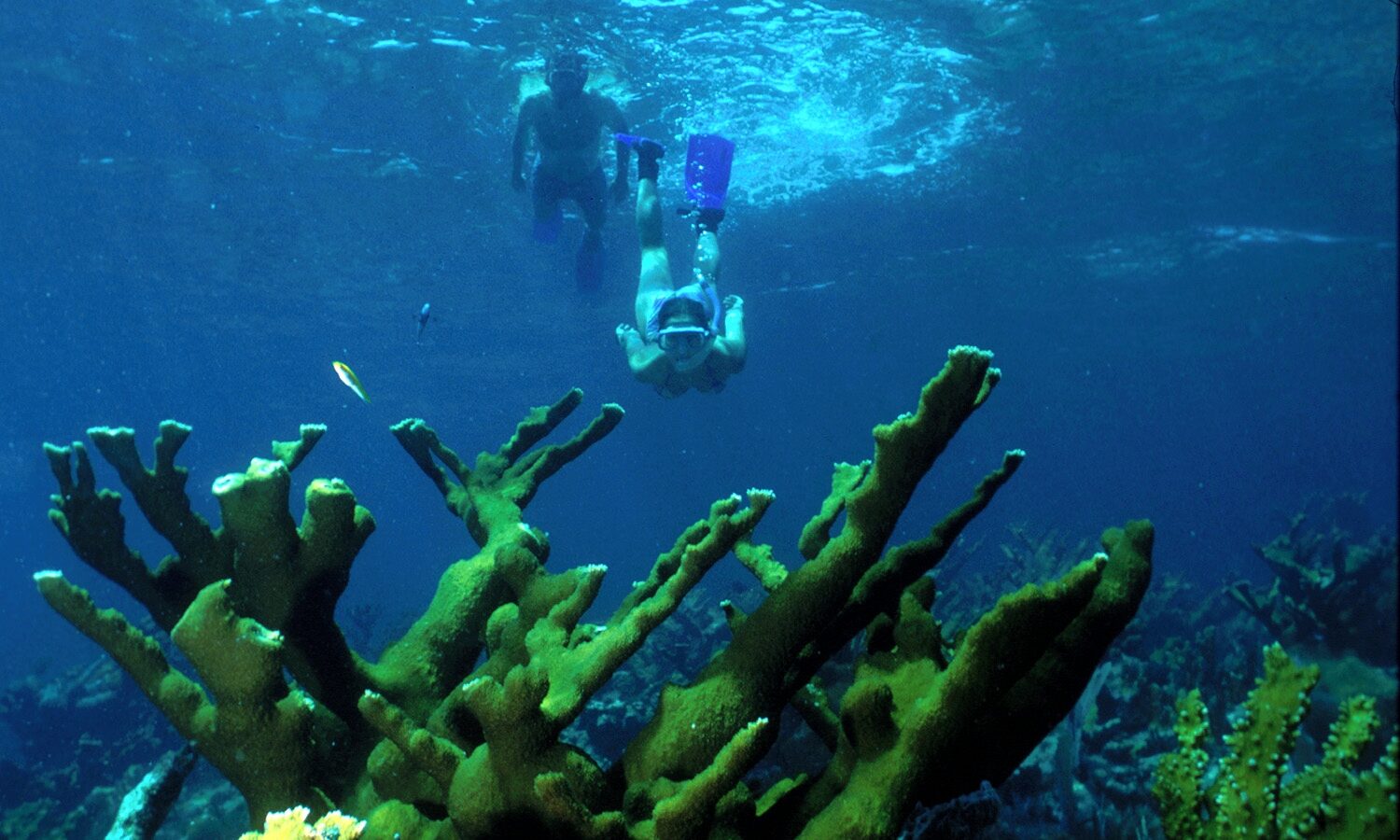
The most approachable snorkeling is generally along designated areas beside the fort’s moat wall, where seagrass, rubble, and submerged masonry shelter tropical fish. Coral, currents, visibility, and waves vary daily, so enter only where conditions match your ability. Keep distance from coral and never stand on living reef structure. Garden Key also supports nesting seabirds, while neighboring Bush Key can hold large colonies of sooty terns and brown noddies during breeding season.
From the fort wall, the scale of the setting becomes clear. Brick fills most of the island behind you, while pale sand and turquoise water extend toward an empty horizon. Wind moves through the open gun ports, waves tap against the moat wall below, and the tropical sun reflects upward from the water. After the enclosed fort passages, the sudden brightness and uninterrupted Gulf view feel physically expansive.
Build Flexibility Into the Five-Day Plan
Know which elements can move
Dry Tortugas transportation is the least flexible component, so preserve Day 5 once it is booked. Biscayne’s water activities are more vulnerable to wind than the Everglades road stops. If poor marine conditions are forecast, ask whether the Biscayne excursion can shift between Days 2 and 3 without affecting the Key West drive. Shark Valley and Royal Palm can tolerate light rain, but exposed boardwalks and observation structures should be avoided when lightning approaches.
Match substitutions to the season
| Condition | Best adjustment | What to protect |
|---|---|---|
| Strong wind | Use Biscayne’s mainland exhibits and shoreline | Keep the reserved Dry Tortugas day unchanged |
| Extreme heat | Start Everglades walks near sunrise | Retain shaded midday driving |
| Heavy Keys traffic | Reduce roadside stops and continue south | Reach Key West before evening |
| Wet-season storms | Schedule exposed trails and paddling early | Leave afternoon buffer time |
A five-day schedule has little room for a missed boat, so optional detours should remain optional. Protect the Anhinga Trail, one meaningful Biscayne water experience, the Overseas Highway crossing, and Fort Jefferson. Short roadside walks, extra snorkeling stops, and extended Key West sightseeing can be removed when weather or traffic consumes time. That hierarchy keeps all three national parks in the itinerary without forcing unsafe driving or rushed water departures.
Gear & Essentials
Tell us about your trip and we will add what else you will want:
The basics
Worth having in the car whatever the park.
For this trip
As an Amazon Associate we earn from qualifying purchases, at no extra cost to you.
Wrapping Up the Trip
This route succeeds because it follows South Florida’s geography from freshwater marsh to mangrove coast, coral islands, and the open Gulf. Three nights near Homestead support both Everglades entrances and Biscayne Bay, while two nights in Key West protect the reservation-dependent Dry Tortugas day. The sequence also places grocery shopping, fuel stops, and longer road segments before the trip becomes dependent on boats and marine weather.
Book the limited-capacity transportation first, keep one or two roadside stops expendable, and carry offline directions throughout the Everglades and Keys. With those decisions settled, five days provide enough time to understand each park’s distinct landscape rather than collecting hurried entrance signs. The result is a practical South Florida journey built around wildlife, water, history, and realistic travel time.