Arches National Park Camping Guide: Campgrounds, Reservations and Tips
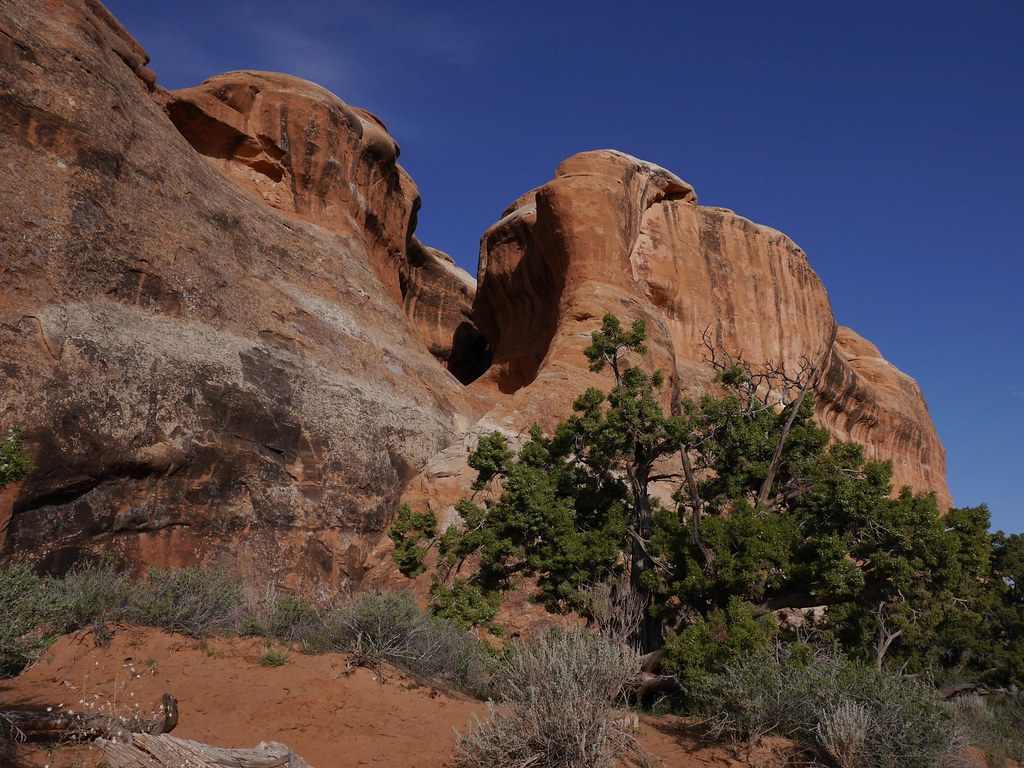
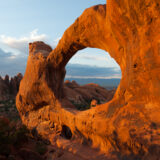
Photo: usareisetipps via Flickr (CC BY-SA 2.0)
Arches National Park camping centers on one developed campground, Devils Garden, a 51 site outpost about 18 miles from the park entrance. Its position near the end of the scenic road places campers among Entrada Sandstone fins, pinyon and juniper woodland, and some of the park’s best hiking. It also means groceries, fuel, showers, and major RV services remain back in Moab, roughly 45 to 60 minutes away depending on traffic.
This first half of our guide explains how Devils Garden is arranged, which campsites suit tents and RVs, how its reservation system generally works, and what conditions to expect throughout the year. The campground sits near 5,200 feet, so temperatures can differ noticeably from Moab. Shade is limited, wind funnels between rock formations, and nighttime temperatures fall quickly after sunset.
Arches National Park Camping at Devils Garden Campground
Devils Garden is the only developed campground inside Arches National Park. Staying here removes the morning drive through the entrance corridor and gives campers immediate access to the northern end of the park. Balanced Rock is about 9 miles away by road, while The Windows and Delicate Arch require longer drives south from camp. Visitors planning several sunrise hikes should account for those distances rather than assuming every landmark is next door.
A campground built into sandstone fins
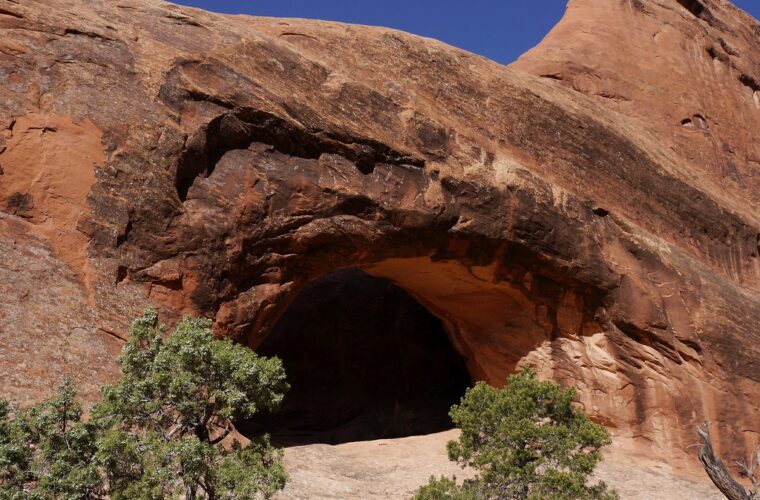
The campground occupies shallow basins and rock alcoves between narrow fins of orange Entrada Sandstone. These fins formed as fractures widened through erosion above the buried salt deposits of the Paradox Formation. The same process created the arches, spires, and balanced rocks visible throughout the park. Sites beside sandstone walls often feel more enclosed than sites near the central road, but rock orientation determines when they receive sun, shade, and wind.
Vegetation consists mainly of Utah juniper, two needle pinyon pine, blackbrush, Mormon tea, and low desert grasses. These plants provide scattered visual screening rather than a continuous canopy. Biological soil crust covers many undisturbed spaces between plants. Its dark, rough surface contains cyanobacteria, lichens, and mosses that stabilize the soil, so campers should keep tents, chairs, and feet on established pads and bare rock.
What the campground feels like
Late in the day, sandstone walls hold the sun’s warmth while the air in the basin begins to cool. Fine sand shifts underfoot between the paved spur and tent pad, juniper branches click in a dry breeze, and ravens call from the fins overhead. Once the last light leaves the rocks, the temperature can drop rapidly. Headlamps reveal uneven slickrock, low steps, and sandy paths that are easy to overlook in daylight.
Choosing a Site for Tents, Vans, or RVs
Devils Garden contains individual campsites, designated group areas, and sites intended to improve access for visitors with disabilities. Campsite dimensions and parking layouts vary because the campground follows natural rock formations rather than a uniform grid. A vehicle that fits one spur may not fit another, making the listed driveway length and maximum equipment dimensions important during booking.
Arches National Park Camping Site Comparison for Tents, Vans, and RVs
| Site type | Best suited to | Key characteristics | Planning concern |
|---|---|---|---|
| Individual tent site | Tents, small vans, and compact camping setups | Defined tent area, picnic space, and proximity to sandstone or desert vegetation | Tent pads can be sandy, exposed, or irregularly shaped |
| Individual RV compatible site | Camper vans, trailers, and motorhomes that fit the listed spur | Paved parking with access to a standard campsite living area | No electrical, water, or sewer hookups |
| Group site | Organized groups meeting the required occupancy | Larger gathering and sleeping area with separate booking rules | Vehicle numbers and group size limits apply |
| Accessible site | Visitors who need a more navigable campsite layout | Modified surfaces or site features intended to reduce barriers | Review the individual site description and photos before reserving |
Shade, privacy, and campground traffic
Sites against tall fins may receive useful morning or afternoon shade, although the rock can radiate stored heat after sunset. Junipers offer partial cover but rarely shade an entire picnic table or tent. Open sites provide broader views and better night sky visibility, yet they are more exposed to wind and summer sun. Campground loops also generate regular vehicle and foot traffic, particularly around restrooms and routes leading toward trail connections.
What RV travelers need to check
Devils Garden has no hookups, and maneuvering space differs sharply among sites. RV travelers should compare the combined length of the tow vehicle and trailer with the dimensions shown for the exact campsite. Arrive with charged batteries, a conservative water plan, and empty waste tanks. Large rigs also need to negotiate the park road, parking congestion at overlooks, and narrow campsite spurs bordered by rock and vegetation.
Arches National Park Camping Reservations, Booking Windows, and Arrival Planning
Devils Garden generally operates as a reservable campground during the busiest part of the year, with winter availability handled differently. Reservations are normally released through the federal recreation booking system on a rolling schedule, often several months before the arrival date. Operational seasons, fees, group rules, water availability, and park entry procedures can change, so confirm current details on the official park site before purchasing travel or rental arrangements.
How to improve your booking odds
- Create the booking account in advance. Save traveler information and learn how the campsite calendar displays equipment limits.
- Search by exact equipment size. Filtering out unsuitable parking spurs prevents a fast booking from becoming an unusable reservation.
- Compare site photos and maps. Look for afternoon exposure, proximity to shared facilities, and the relationship between the parking spur and tent area.
- Check single nights. Short gaps often appear between longer reservations, especially on weekdays.
- Monitor cancellations. Plans change frequently around periods of extreme heat, winter weather, and regional road trips.
Campground reservations and park entry
A campsite reservation and a park entrance pass are separate items. Arches has also used timed entry systems during busy periods, and the relationship between campground bookings and timed entry requirements depends on the current program. Keep the campsite confirmation available offline because mobile reception can be inconsistent. If arriving after dark, download the campground map beforehand and identify the loop, site number, and parking orientation.
Seasonal Conditions and Gear for Arches National Park Camping
The high desert climate produces large temperature swings, intense ultraviolet exposure, low humidity, and sudden weather changes. Spring and autumn generally offer the most comfortable daytime conditions, but they also attract the highest camping demand. Summer requires disciplined heat management, while winter can bring quiet nights alongside frozen water, icy shaded trails, and occasional snow on slickrock.
Arches National Park camping by season
| Season | Typical campground advantages | Main drawbacks |
|---|---|---|
| Spring | Mild hiking temperatures and longer daylight | Strong winds, cold fronts, and heavy reservation demand |
| Summer | Long evenings and warm nights | Extreme afternoon heat, limited shade, and monsoon thunderstorms later in the season |
| Autumn | Cooler hiking weather and generally comfortable nights | Busy weekends and rapidly shortening daylight |
| Winter | Lower visitation and crisp views after storms | Freezing nights, possible snow or ice, and reduced seasonal services |
Gear that solves high desert problems
- Freestanding tent: Sandy pads and shallow soils can make standard stakes unreliable. Bring sand anchors or approved weights, and never attach guylines to vegetation or fragile rock features.
- Sun shelter: A sturdy canopy can help at exposed sites, but it must be secured for abrupt gusts and lowered whenever camp is unattended.
- Layered sleep system: A warm sleeping bag and insulated pad remain useful even after a hot afternoon because clear desert air loses heat quickly.
- Water containers: Carry enough capacity for drinking, cooking, and an emergency delay. Do not depend on finding water at trailheads.
- Dust resistant storage: Lidded bins protect food, electronics, and cooking equipment when wind drives fine sand through camp.
- Red light headlamp: A low red setting protects night vision and reduces glare for neighboring campers under Arches’ dark sky.
Walks and Hikes Directly from Camp
Devils Garden gives campers access to several trails without moving a vehicle, an important advantage when trailhead parking fills after breakfast. Distances below begin near the campground or the adjacent Devils Garden trailhead. Carry the water needed for the entire outing because the routes cross exposed slickrock and sandy ground. Trail junctions can also be confusing after dark, so sunrise hikers should download a map and locate the correct path the previous evening.
Choosing a route by distance and terrain
| Route | Approximate distance | Terrain and difficulty |
|---|---|---|
| Skyline Arch | 0.4 mile round trip | Short, relatively level path to an arch enlarged by a major rockfall in 1940 |
| Broken Arch Loop | About 2.3 miles | Sand, open desert, slickrock, and a passage through Broken Arch |
| Landscape Arch | 1.9 miles round trip | Maintained trail leading to an exceptionally thin arch with a 306 foot opening |
| Double O Arch | 4.1 miles round trip | Exposed sandstone fins, uneven footing, and route finding beyond Landscape Arch |
| Primitive Trail loop | About 7.8 miles | Steep slickrock, narrow fins, sand, scrambling, and difficult navigation |
Landscape Arch and the primitive route
Landscape Arch is the most approachable major destination from camp. The maintained trail passes spur paths toward Pine Tree Arch and Tunnel Arch before reaching the long sandstone ribbon. Beyond Landscape Arch, the route changes character quickly. Hikers climb exposed fins and negotiate steep rock near Partition Arch, Navajo Arch, and Double O Arch. The full Primitive Trail should be reserved for dry weather because water and mud can collect in low sections.
Planning around heat and darkness
For a summer hike, leave early enough to finish exposed sections before the hottest part of the afternoon. Spring winds can make fin crossings uncomfortable, while winter ice may linger where the sun does not reach. Sunset hikers need a headlamp and enough navigation margin to return without following informal tracks through biological soil crust.
Managing Food, Water, and Waste at Camp
Arches National Park Camping requires a self contained approach because replacing a forgotten ingredient involves a long drive toward Moab. Organize meals before entering the park, fill water containers, and bring enough stove fuel for the reservation. Simple meals that use one pot reduce water consumption and cleanup. Salty foods, electrolyte mixes, and lunches that can travel in a daypack are particularly useful when hiking in hot, dry conditions.
A practical camp kitchen
Wind is the main challenge when cooking at Devils Garden. Use a stable stove on the established cooking surface, shield the flame with equipment designed for that stove, and keep combustible material away from burners. Fires should only be used where authorized and when posted restrictions allow them. Never leave food, grease, cookware, or scented toiletries unattended, since ravens, rodents, and other wildlife quickly investigate occupied sites.
Leave the campsite ready for the next visitor
- Pack out food scraps, foil, bottle caps, and small pieces of plastic that can blow into vegetation.
- Strain dishwater and place food particles with the rest of the trash.
- Keep tents and kitchen equipment within the established campsite footprint.
- Inspect the site after dark with a headlamp, when reflective wrappers and dropped utensils are easier to spot.
- Secure lightweight chairs, empty water jugs, and table coverings before leaving for a hike.
Fine sand works into zippers, storage bins, and vehicle doors during windy weather. Closing containers immediately prevents food contamination and keeps packaging from escaping across the campground. Before departure, check beneath the picnic table and around the parking spur. Wind commonly carries light trash several yards from where it was dropped.
Building a One or Two Night Camping Plan
A short stay works best when hikes are grouped by location. Campers arriving in the afternoon can set up before walking to Skyline Arch or exploring the Broken Arch area. The following morning, begin the Devils Garden Trail at first light. After returning for lunch and a rest, drive south for Delicate Arch viewpoints or the Windows district rather than attempting another long, exposed hike.
One night at Devils Garden
With one night, prioritize the northern park rather than spending the visit driving between distant trailheads. Landscape Arch fits into a morning departure schedule, while Skyline Arch works well before dinner. Allow extra time for campsite setup because identifying the tent area, leveling sleeping equipment, and securing loose gear usually takes longer on sand and irregular rock than at a paved commercial campground.
Two nights with an early trail start
A second night creates enough time for Double O Arch or the Primitive Trail without packing camp immediately afterward. Use the first day for shorter walks and reserve the coolest morning for the longest route. Keep the final morning flexible for weather. Strong wind, thunderstorms, snow, or icy slickrock can make an exposed itinerary unsafe even when conditions at the picnic table appear manageable.
Making Devils Garden Camping Work
Successful camping at Devils Garden depends on matching the exact site to the vehicle, arriving with water and supplies, and planning hikes around exposure rather than mileage alone. The campground’s location rewards preparation with direct trail access, quiet early mornings, and evenings among sandstone fins after most day visitors have started back toward the entrance.
Reserve carefully, study the campsite dimensions, and organize each day by geography. A short walk near camp, an early Devils Garden hike, and a separate trip to the southern landmarks create a balanced itinerary without unnecessary driving. With secure gear, conservative water planning, and respect for fragile desert soils, campers can use Devils Garden as an efficient base for exploring Arches.
Want to keep exploring? Browse all our Arches guides and articles for more trip-planning tips and ideas.
Gear & Essentials
Tell us about your trip and we will add what else you will want:
The basics
Worth having in the car whatever the park.
For this trip
- Camp lantern Etekcity Camping Lanterns 4-Pack LED
- Camping hammock Wise Owl Outfitters Camping Hammock
- Camping pillow Hikenture Inflatable Camping Pillow
- Lighter & matches BIC Maxi Pocket Lighters 10-Pack
- Shelter tarp Amazon Basics Waterproof Multipurpose Camping Tarp
- Tent Camping Tent 2-4 Person Easy Setup
Traveling with kids
Bringing a pet
RVing
Backcountry
Winter conditions
On the water
Photography
Accessibility
As an Amazon Associate we earn from qualifying purchases, at no extra cost to you.