


Best Things to Do in White Sands National Park for First-Time Visitors
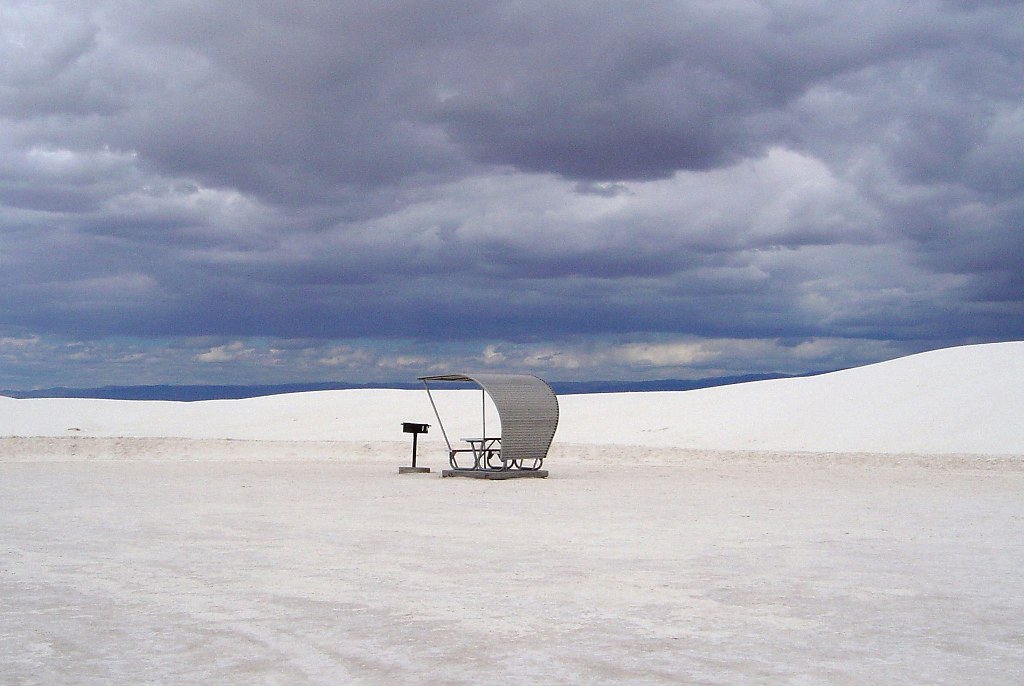
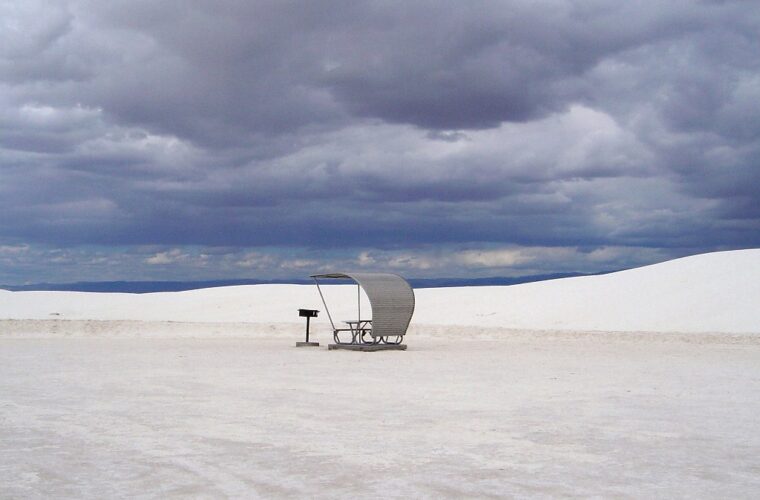
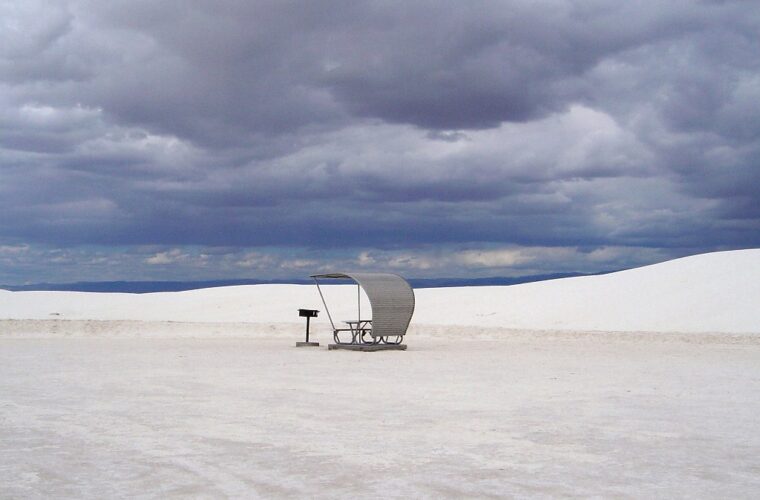
Photo: Road Travel America via Flickr (CC BY 2.0)
The Best Things White Sands visitors can do begin along an 8-mile road that runs from Chihuahuan Desert scrub into the largest gypsum dune field on Earth. White Sands National Park protects part of a 275-square-mile sea of bright dunes in southern New Mexico’s Tularosa Basin, where gypsum crystals have accumulated, broken down, and migrated into ridges reaching roughly 60 feet high.
A first visit works best when you combine Dunes Drive with one short interpretive walk, time on open sand, and either sledding or a longer hike. Our team recommends allowing at least half a day. A full day gives you cooler hiking hours, changing light, and enough time to explore beyond the busiest roadside pullouts.
Why White Sands Looks and Behaves Differently
White Sands sits at about 4,000 feet above sea level between the San Andres and Sacramento mountains. The elevation moderates winter temperatures but does little to reduce the intensity of summer sun reflected from the pale ground. Unlike quartz sand, gypsum does not absorb much heat, so the surface can feel surprisingly cool under bare feet even when the air is hot. That does not prevent dehydration, sunburn, or heat illness.
The geology behind the gypsum dunes
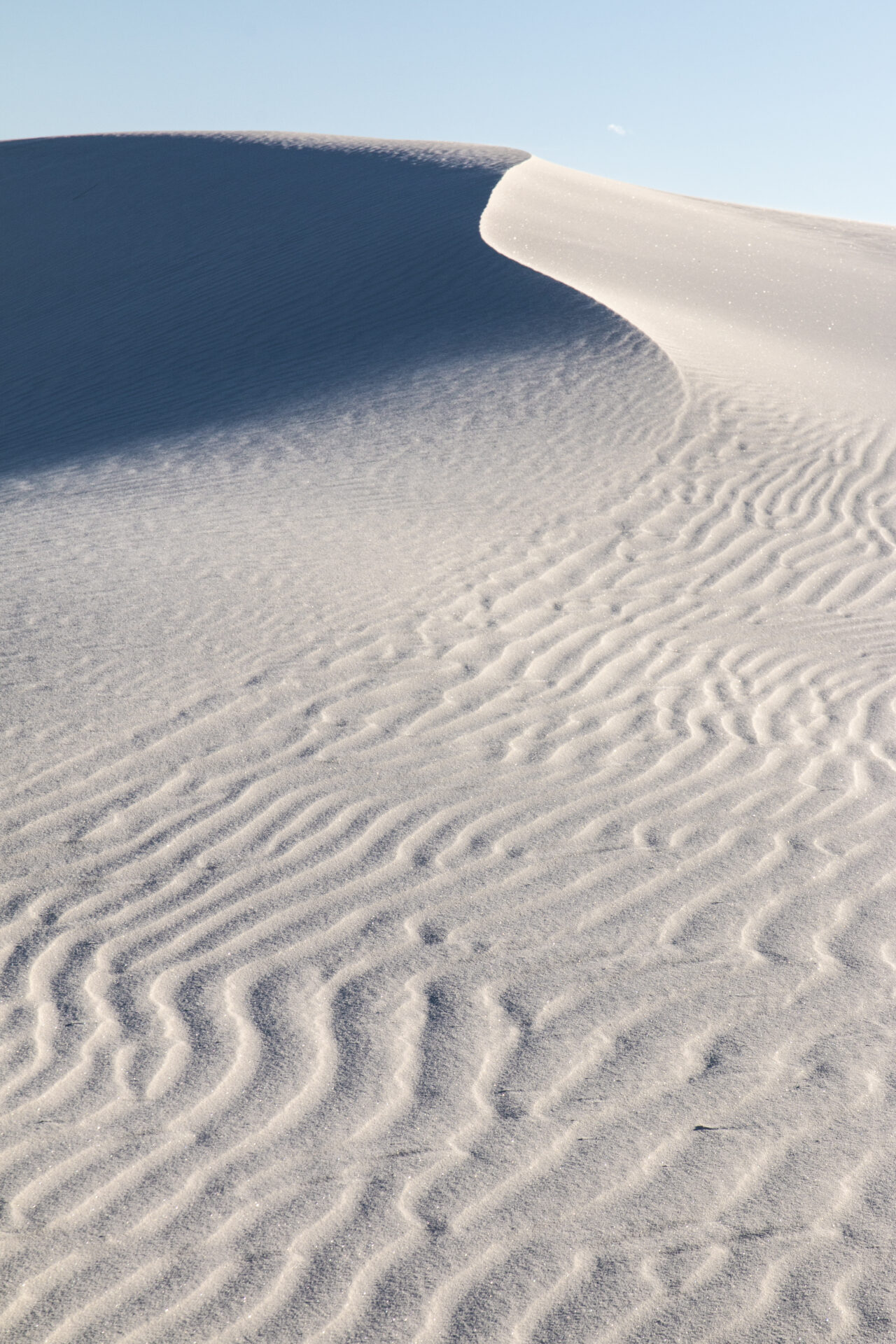
Gypsum usually dissolves in water and eventually reaches the ocean through rivers. The Tularosa Basin has no outlet. Rain and snowmelt carry dissolved gypsum from the surrounding mountains into low areas, especially Lake Lucero and Alkali Flat. Water evaporates, selenite crystals form, and wind breaks those crystals into smaller grains. Prevailing southwesterly winds then push the grains northeast, continually reshaping the dune field.
The active dunes include several recognizable forms. Crescent-shaped barchan dunes move relatively quickly where sand is limited. Transverse dunes create long ridges across the central field. Parabolic dunes develop around vegetation near the margins, while dome dunes form low mounds in transitional areas. Watching these shapes change along Dunes Drive helps explain why plant density decreases toward the park’s bright interior.
Life adapted to a moving white landscape
Soaptree yuccas survive burial by extending their stems upward as sand gathers around them. The visible leaves may stand only a few feet above a dune while a long stem continues down to the original ground surface. Rio Grande cottonwoods can also respond to burial by producing new roots from covered portions of their trunks.
Animals have adapted through behavior and coloration. Bleached earless lizards, Apache pocket mice, and some insects have lighter populations within the dunes than related animals outside them. Most mammals avoid daytime heat, so tracks often provide better evidence than sightings. Look for the paired prints of kangaroo rats, winding beetle trails, and lines left by kit foxes during the night.
Planning the Best Things to Do in White Sands National Park for First-Time Visitors
The park entrance lies off U.S. Route 70, roughly 15 miles southwest of Alamogordo and about 50 miles northeast of Las Cruces by road. Dunes Drive is the park’s only public driving corridor. Its 16-mile round trip begins near the historic adobe visitor center and ends among tall dunes, making navigation straightforward but concentrating traffic around sunset.
Allow time for road closures and desert conditions
White Sands National Park is surrounded by White Sands Missile Range. Missile testing can temporarily close U.S. Route 70 and park access, occasionally with limited advance notice. Entrance fees, operating hours, road status, ranger programs, missile-test closures, and any permit requirements should be confirmed on the official park site before departure.
Cell service can be unreliable once you enter the dune field, and gypsum tracks can obscure footprints within minutes on a windy day. Download maps before arriving and carry more water than a short walk appears to require. Summer afternoons regularly bring intense heat and thunderstorms, while winter mornings may begin below freezing. Spring is commonly windy, with blowing gypsum reducing visibility.
Pack for reflected sun and featureless terrain
- Water: Carry at least one gallon per person for a full summer day, with smaller but still generous quantities for short cool-season visits.
- Sun protection: Use sunglasses, a brimmed hat, sunscreen, and light clothing that covers exposed skin. Light reflects upward from the dunes.
- Navigation: Bring an offline map and follow the park’s colored trail markers rather than footprints.
- Footwear: Choose shoes that tolerate fine gypsum and provide traction on steep dune faces.
- Warm layers: Temperatures fall quickly after sunset, especially from late autumn through early spring.
- Sledding equipment: A waxed plastic saucer generally slides better than a flat board or flexible foam sled.
Explore Dunes Drive: One of the Best Things to Do in White Sands National Park
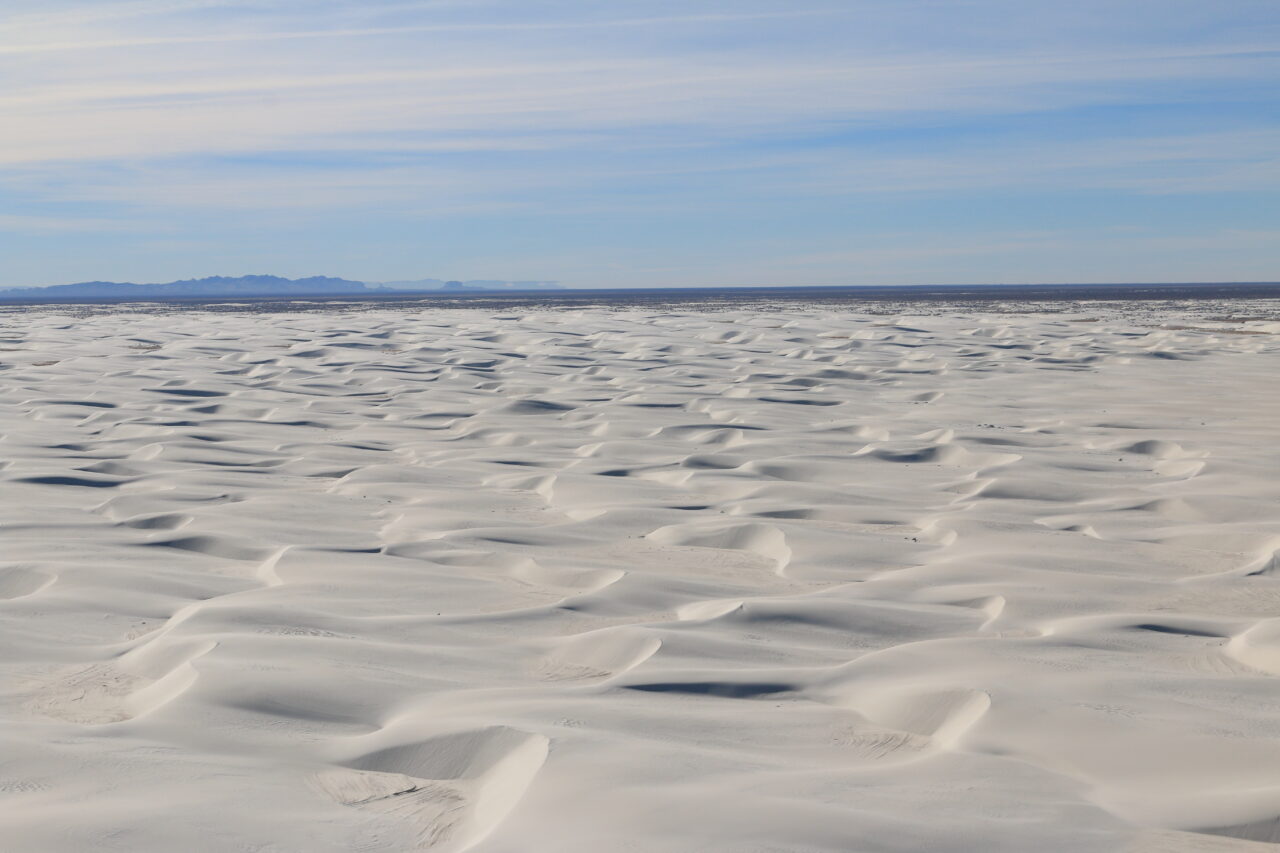
Dunes Drive takes about 45 minutes to drive without stops, but first-time visitors should budget two to three hours. The road changes from pavement to a compacted gypsum surface as it enters the dune field. Ordinary passenger cars can usually travel the route when it is open, though drifting sand and recent weather can affect surface conditions.
Start in the interdune transition zone
The first part of the drive passes desert grassland and scattered dunes where plants stabilize the sand. The Playa Trail, a 0.5-mile round trip, examines a shallow basin that alternates between dry ground and temporary water after heavy rain. Its animal tracks, cracked mud, and seasonal changes provide a useful introduction to how scarce water governs life in the Tularosa Basin.
Walk the Interdune Boardwalk
The Interdune Boardwalk extends about 0.4 mile round trip across a firm ecological boundary between vegetated ground and mobile dunes. Interpretive panels explain the roles of yucca, rodents, reptiles, and wind. It is the most manageable trail for visitors who want dune views without climbing loose slopes, although blowing gypsum can collect on any developed surface.
Continue into the open heart of the dunes
Farther along the road, vegetation thins and picnic areas sit among taller transverse dunes. Pullouts near the loop road provide easier access to sledding slopes and broad sunset views. Choose a parking area first, then walk into the sand from there. Parking beside the travel lane damages fragile dune edges and can block vehicles on the narrow gypsum road.
At the crest of a central dune, the surface compresses with a faint squeak underfoot. Wind erases the sharp edges of footprints behind you, and the nearest road can disappear after one ridge. The San Andres Mountains rise dark beyond the white basin while shallow ripples reveal the wind’s direction. Even a short climb becomes strenuous because each step slides backward in loose gypsum.
The Best Hikes for a First Visit to White Sands
Trail mileage understates the effort required here. There is little shade, repeated dune climbing slows progress, and a white horizon makes distance difficult to judge. Begin longer routes early, check the weather, and turn around if trail markers become hard to see. Thunderstorms create exposure to lightning, while blowing sand can erase tracks and obscure the next marker.
Compare the marked trails
| Trail | Distance | Typical effort | Best use |
|---|---|---|---|
| Playa Trail | 0.5 mile round trip | Easy | Desert ecology and temporary wetlands |
| Interdune Boardwalk | 0.4 mile round trip | Easy | Interpretation and limited climbing |
| Dune Life Nature Trail | 1-mile loop | Moderate | Wildlife signs and dune-margin plants |
| Backcountry Camping Trail | 2-mile loop | Moderate to strenuous | Quieter dunes and repeated climbs |
| Alkali Flat Trail | 5-mile loop | Strenuous | Immersion in the open dune field |
Dune Life Nature Trail for a first climb
The Dune Life Nature Trail is the strongest short introduction to walking on gypsum. The 1-mile loop crosses several steep dunes and uses interpretive signs to explain tracks, burrows, and plant survival near the field’s edge. Follow the blue trail markers carefully. Families should expect loose footing and considerably more effort than a level one-mile path would require.
Alkali Flat Trail for experienced desert hikers
The 5-mile Alkali Flat Trail loops across exposed dunes toward the edge of the ancient Lake Otero basin. Despite its name, the route repeatedly climbs and descends dune ridges. Orange markers define the course, and hikers should not proceed unless they can see the next marker. There is no shade or reliable water along the route, and midday summer conditions can become dangerous quickly.
Sledding the Dunes
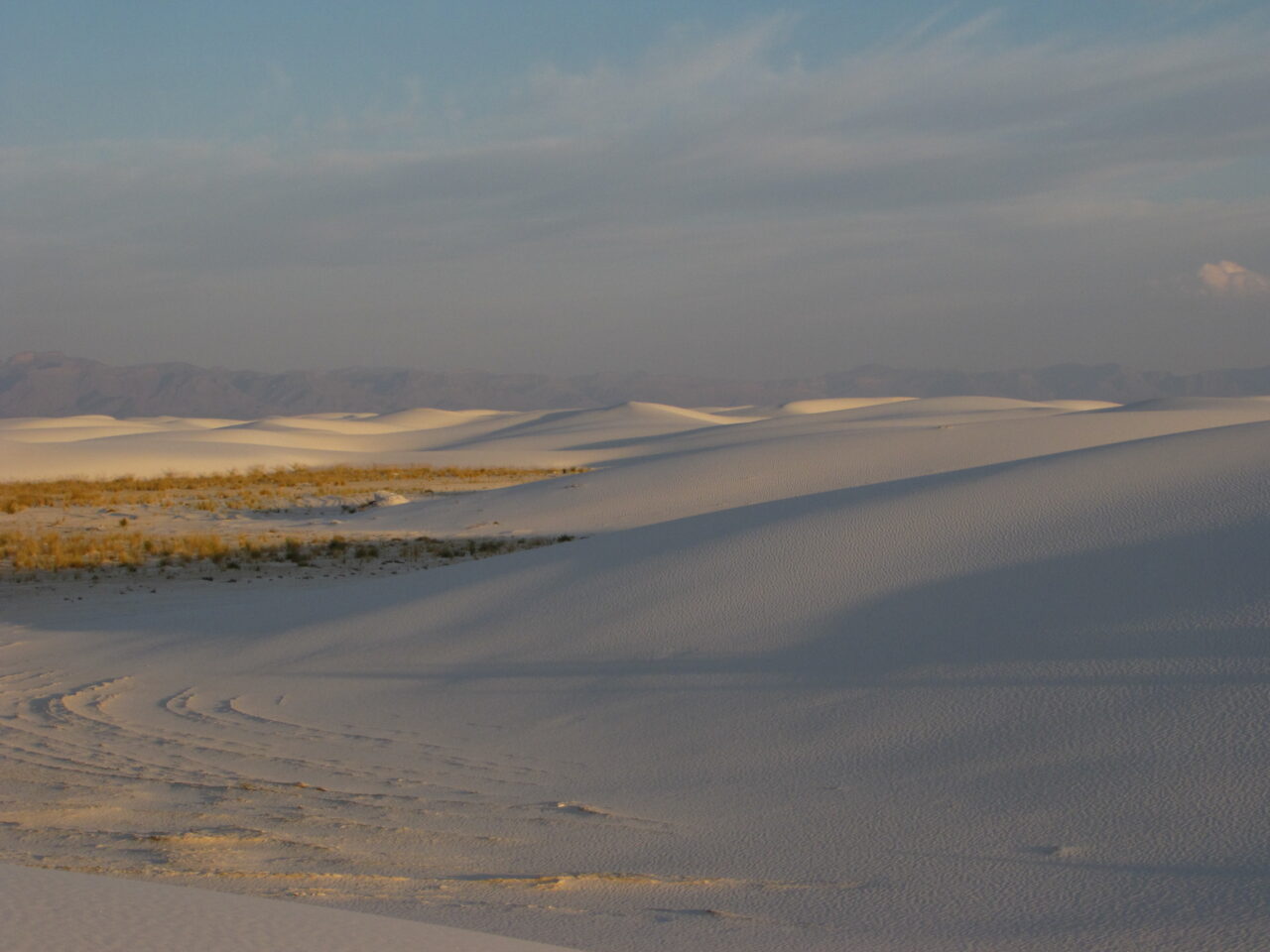
Sledding is one of the few White Sands activities that works for children, adults, and mixed ability groups. Central Dunes Drive provides the tallest practical slopes, but steepness matters less than the runout. Select a dune with a broad, unobstructed base, then inspect the entire route for yuccas, picnic structures, roads, and other visitors. Gypsum becomes compacted and fast where many sleds follow the same track.
Choose a safe line before climbing
Walk up beside the intended route rather than through its center. This keeps the sliding surface smooth and prevents collisions between descending riders and people climbing. Sit upright, keep arms and legs inside the sled, and allow the previous rider to clear the bottom before starting. Small children should use gentler slopes, since steering a saucer on packed gypsum is difficult.
Protect vegetation and fragile dune margins
Open sand can tolerate foot traffic better than the stabilized margins where roots and biological soil crust hold the surface together. Keep sleds away from yuccas, grasses, animal burrows, and dark patches of crust. A practical sledding checklist includes:
- A clear slope with a long, level stopping area
- Eye protection for windblown gypsum
- Closed shoes for repeated climbs
- Water kept at the vehicle or shaded picnic site
- A bag for broken sled pieces and other waste
Match Your Visit to Light, Wind, and Temperature
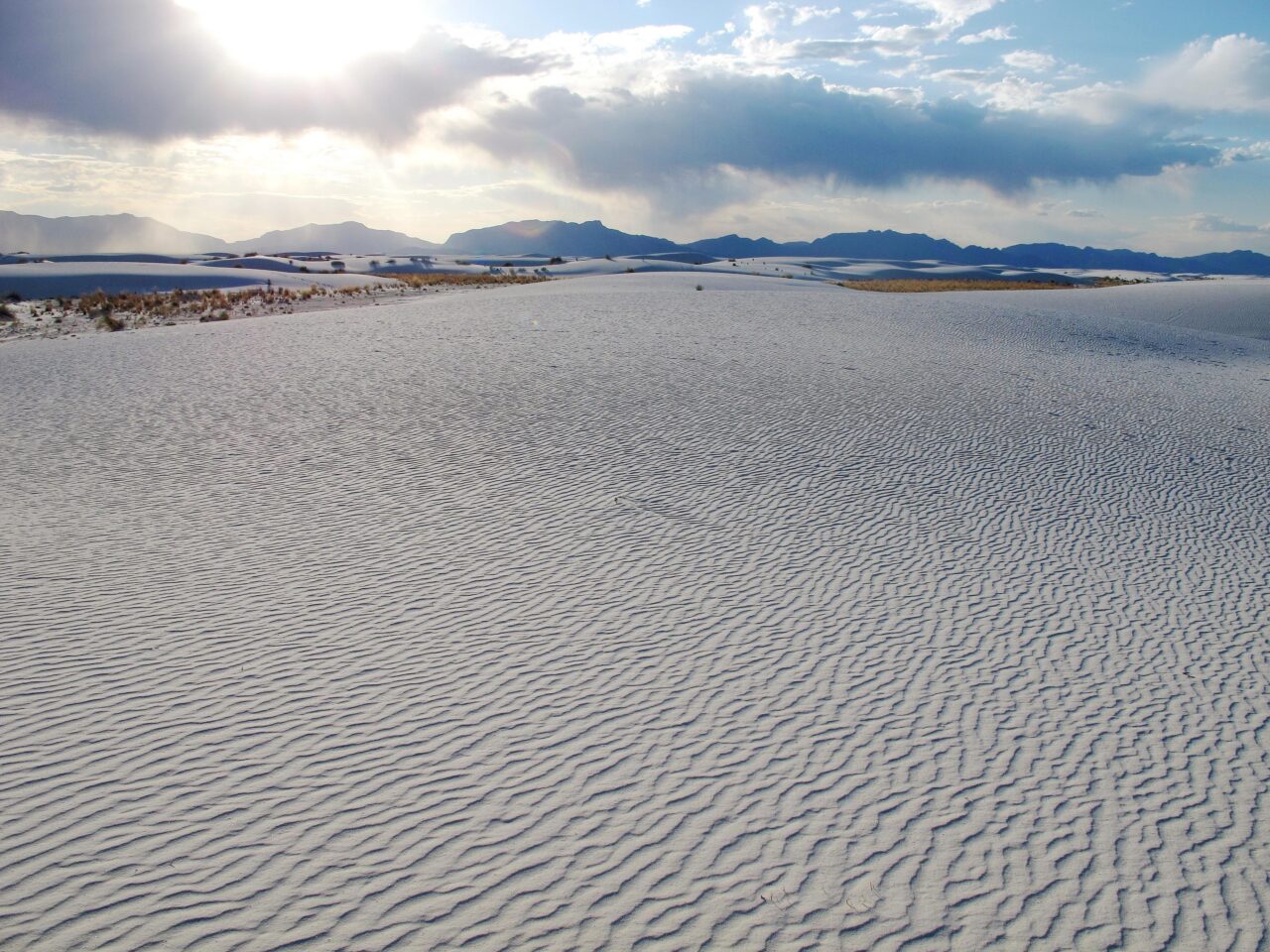
The white surface changes character throughout the day. Morning light emphasizes ripples and animal tracks before wind and foot traffic soften them. Near midday, reflected light reduces contrast and makes distant ridges difficult to distinguish. Late afternoon produces longer shadows along dune crests, while sunset often adds pink or violet tones reflected from the San Andres Mountains.
| Season | Typical conditions | Best strategy |
|---|---|---|
| December through February | Cool days, freezing nights possible | Hike midday and carry warm layers |
| March through May | Frequent wind and blowing gypsum | Start early and protect eyes and cameras |
| June through August | Hot afternoons and seasonal thunderstorms | Use morning hours and avoid exposed ridges when storms build |
| September through November | Cooling temperatures and generally comfortable hiking | Plan longer walks earlier in the day as daylight shortens |
Photograph texture rather than brightness alone
Expose for the gypsum instead of the sky, since automatic cameras often render the dunes gray. Side lighting reveals wind-carved ripples, slip faces, and the sharp edges of fresh tracks. Keep a lens cloth accessible because fine crystals enter bags and collect around controls. From established pullouts, use yuccas or a dark mountain ridge to give the otherwise scale-free landscape a measurable foreground.
Read the sky before sunset
Thunderheads can approach quickly across the open basin, particularly during the summer monsoon period. If thunder is audible, return to the vehicle rather than waiting on an exposed crest. Wind also intensifies near passing storms, erasing footprints and reducing visibility. Sunset visitors should mark their parking direction before wandering across multiple ridges and carry a light for the return.
Look Beyond the Roadside Dunes
The Best Things White Sands visitors experience include features that explain where the dunes came from. Lake Lucero occupies a low area near the southwestern edge of the field and receives gypsum-rich runoff from the mountains. As shallow water evaporates, selenite crystals develop across the lakebed. Public access is restricted because the route crosses a sensitive, isolated area, so visitors must enter through an authorized ranger program.
Understand Lake Lucero’s role
Lake Lucero is usually a dry playa rather than a permanent lake. Its exposed crystals can grow into translucent blades before weather and abrasion break them into smaller particles. Wind moves those grains toward the active dunes, linking the playa directly to the landscape seen along Dunes Drive. The lakebed also preserves delicate salt crusts and seasonal habitat that would be easily damaged by unrestricted vehicles and foot traffic.
Search for evidence of movement
Even without reaching Lake Lucero, visitors can read dune migration along the field’s edges. Partly buried yuccas indicate accumulating sand, while exposed roots suggest erosion. On a dune’s windward side, grains bounce upward through a process called saltation. They collect on the sheltered slip face until gravity produces small avalanches, moving the ridge forward one thin layer at a time.
Build Your First Visit Around the Best Things to Do in White Sands National Park
A productive half-day begins with the visitor center area, continues through the ecological transition along Dunes Drive, and ends among the central dunes. Add one interpretive trail, an hour for sledding or free exploration, and time for changing light. For a full day, include a longer marked hike during the coolest hours and reserve the late afternoon for photography or a slower walk near the road.
The strongest first visit balances curiosity with conservative desert planning. Carry sufficient water, follow trail markers, avoid plants and crusted ground, and return before heat, wind, or thunderstorms compromise navigation. With those decisions made early, the park’s defining experiences become easy to combine: climbing moving gypsum ridges, tracing the basin’s geology, reading nocturnal tracks, and watching mountain shadows spread across the white dunes.
Want to keep exploring? Browse all our White Sands guides and articles for more trip-planning tips and ideas.
Gear & Essentials
Tell us about your trip and we will add what else you will want:
The basics
Worth having in the car whatever the park.
For this trip
As an Amazon Associate we earn from qualifying purchases, at no extra cost to you.