

Badlands National Park in Fall: Weather, Wildlife, Hiking, and What to Pack
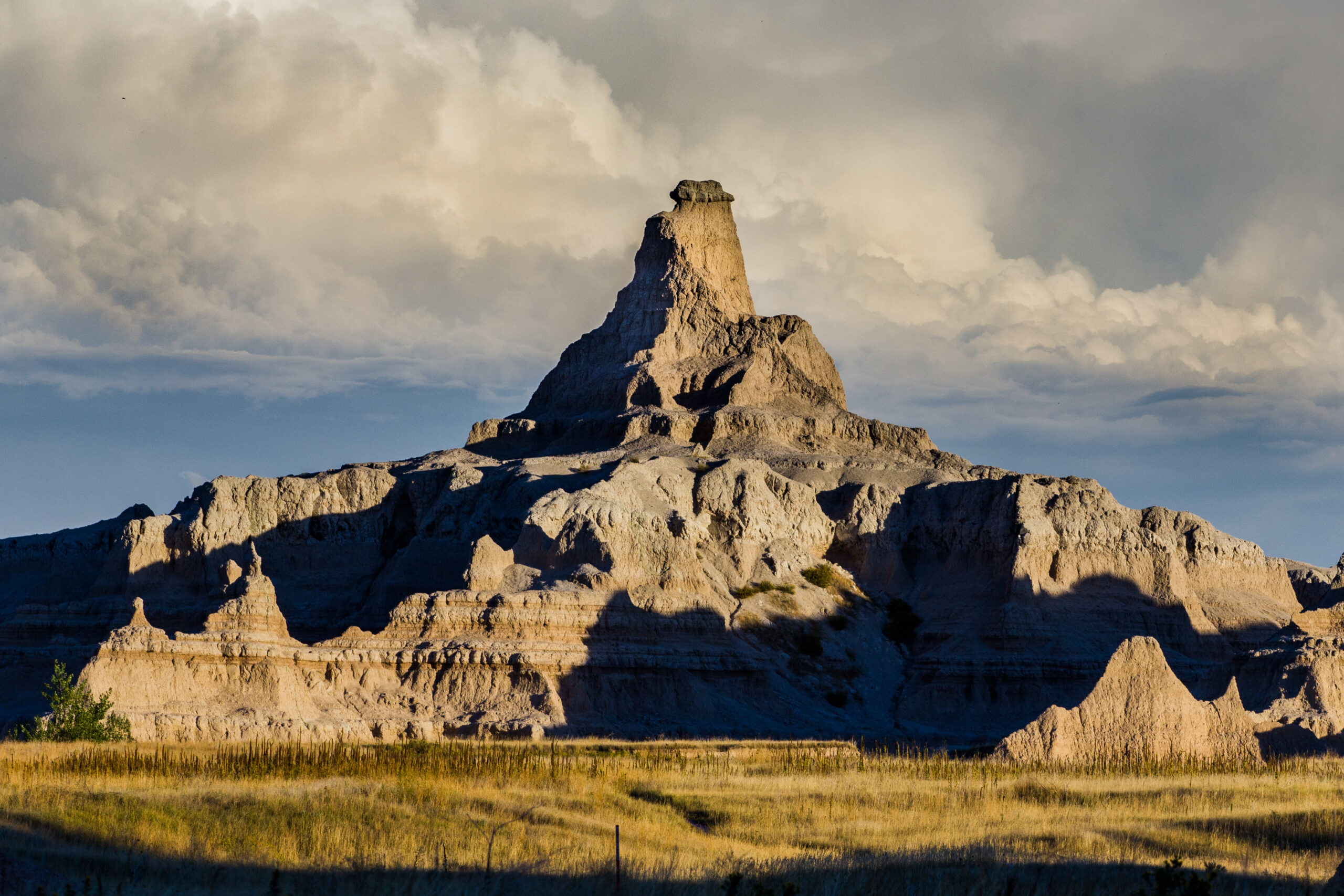
Photo: Bernard Spragg via Flickr (CC0 1.0 (Public Domain))
Badlands National Park in Fall can deliver an 80 degree afternoon, a freezing night, strong prairie wind, and measurable snow within the same week. The landscape looks dry and exposed, but its elevation and continental climate produce rapid changes that catch visitors wearing summer clothing long after Labor Day.
Fall also brings thinner crowds, active wildlife, and clearer hiking temperatures than midsummer. Most first visits center on the North Unit, where the 39 mile Badlands Loop Road connects overlooks, trailheads, the Ben Reifel Visitor Center area, and the park entrances near Wall and Interior. September generally behaves like late summer, October is cooler and less predictable, and November belongs to the transition into winter.
How fall changes the Badlands experience
The park protects one of North America’s richest Oligocene fossil landscapes. Water and wind have carved layered sediment into buttes, gullies, and narrow ridges, exposing deposits laid down roughly 28 to 37 million years ago. Bands of gray Chadron Formation, tan Brule Formation, and the yellow fossil soils near Yellow Mounds become especially distinct in low autumn light.
September, October, and November feel different
September usually provides the broadest hiking window. Afternoon heat remains possible, yet mornings can be cool enough for longer routes such as Castle Trail. By October, shorter daylight and stronger cold fronts make layered clothing essential. November can bring frozen trail surfaces, snow, and wind chills that turn short exposed walks into winter outings. There is little shelter on the open prairie or among the formations.
| Fall period | Typical trail character | Main planning concern |
|---|---|---|
| Early September | Dry, warm, and often dusty | Heat, sun exposure, and limited shade |
| Late September to mid October | Cool mornings with generally comfortable afternoons | Large temperature swings and wind |
| Late October through November | Cold, occasionally snowy, with possible ice | Short daylight, slick clay, and winter driving conditions |
Rain and snow transform the walking surface
Badlands clay becomes unusually adhesive when wet. Mud builds under boots in heavy layers, fills tread, and makes sloping routes such as Saddle Pass difficult to descend safely. Even a short shower can affect exposed formations while nearby prairie remains relatively firm. After snow, shaded gullies and north facing slopes may preserve ice longer than overlooks beside the road. Our team checks the forecast and road conditions before committing to any trail beyond a boardwalk.
Wildlife becomes easier to notice
Cooler days encourage bison, bighorn sheep, pronghorn, mule deer, and prairie dogs to remain active beyond dawn and dusk. Bison commonly appear near Sage Creek Rim Road and in prairie west of the main developed corridor. Bighorn sheep are often seen around rocky slopes near Pinnacles Overlook and Cedar Pass. Fall activity does not make animals approachable. Use binoculars, keep substantial distance, and never position yourself between a bison and its direction of travel.
Reaching trailheads and organizing the drive
Most marked hiking trails begin along the eastern portion of Badlands Loop Road near the Ben Reifel Visitor Center and Cedar Pass. This concentration makes it practical to combine several short trails without repeatedly crossing the park. Rapid City lies roughly 60 miles west of the Wall area, while Wall provides the most convenient northern approach from Interstate 90. Interior sits just south of the park’s eastern developed area.
The Door, Window, Notch, and Castle parking area
A shared roadside trailhead zone serves Door Trail, Window Trail, Notch Trail, and the eastern end of Castle Trail. Arriving early matters on pleasant September weekends because several popular walks begin here. Door and Window require little time, while Notch needs a longer block and dry conditions. Castle hikers should decide in advance whether they are walking an out and back route or arranging transportation from the Fossil Exhibit Trail area.
Roadside stops require more time than the mileage suggests
Driving the loop without stops takes about an hour, but wildlife traffic and overlooks can extend the trip to half a day. Big Badlands Overlook, White River Valley Overlook, Panorama Point, Yellow Mounds Overlook, and Pinnacles Overlook reveal different layers and erosion patterns. Sage Creek Rim Road is an unpaved extension used to reach prairie wildlife habitat. Its surface can become rough or muddy after precipitation, particularly for low clearance vehicles.
Fees, services, and fall operating details
Badlands charges an entrance fee, but trail permits are generally not required for ordinary day hiking. Services become more limited as the season advances, and potable water should never be assumed at a trailhead. Carry what the group needs before leaving the visitor center corridor. Entrance fees, operating hours, road work, and seasonal facility availability can change, so confirm current details on the official park site.
- Fuel the vehicle before entering the loop, especially when continuing toward Sage Creek.
- Download an offline map because cellular reception is inconsistent.
- Place longer hikes first in the day, leaving overlooks and boardwalks for changing weather.
- Keep food secured inside the vehicle and never feed prairie dogs or other wildlife.
Choosing a fall hike by distance and exposure
The park’s marked trails range from accessible boardwalks to steep scrambles across crumbly formations. Elevation gain is modest compared with mountain parks, but loose sediment, exposure, wind, and the absence of shade increase the physical demand. Badlands National Park also permits cross country exploration in many areas, though first time visitors should learn how the terrain behaves on maintained routes before leaving marked posts.
Short walks for uncertain weather
Door Trail begins with an accessible boardwalk leading about 0.25 mile through a break in the Badlands Wall. Beyond the boardwalk, numbered yellow posts mark a rough route over cracked clay. Window Trail is a 0.25 mile round trip to an opening overlooking an eroded canyon. The 0.5 mile Cliff Shelf Nature Trail climbs boardwalks and stairs through a juniper shaded slump where moisture supports denser vegetation than the surrounding prairie.
| Trail | Approximate distance | Difficulty | Key fall consideration |
|---|---|---|---|
| Window Trail | 0.25 mile round trip | Easy | Useful during short weather windows |
| Cliff Shelf Nature Trail | 0.5 mile loop | Moderate | Stairs may become slick with frost |
| Door Trail | 0.75 mile round trip | Easy to moderate | Route beyond the boardwalk is fully exposed |
| Notch Trail | 1.5 miles round trip | Moderate to strenuous | Avoid the ladder and ledges when icy or muddy |
| Castle Trail | 10 miles round trip | Moderate | Carry water and plan for rapidly changing weather |
Notch Trail adds a ladder and exposed ledges
Notch Trail follows a wash before reaching a log ladder that climbs sharply onto a shelf. The route then traverses narrow, uneven ground above the drainage before ending at a view across the Cliff Shelf area and White River Valley. Hikers uncomfortable with heights may prefer Door Trail. Dogs are not permitted on park trails, and the ladder is unsuitable for animals, bulky packs, or anyone unable to maintain three points of contact.
Above the ladder, dry clay shifts underfoot like coarse powder, while the wall beside the path radiates stored afternoon heat. Wind reaches the ledge without obstruction and can drown out nearby voices. At the final opening, the confined drainage falls away and the White River Valley spreads below, making the route’s exposure and scale immediately clear.
Castle Trail rewards hikers prepared for distance
Castle Trail runs about 5 miles one way between the Door and Window trailhead area and Fossil Exhibit Trail. It crosses mixed grass prairie, shallow washes, and eroded formations with little sustained climbing, yet the exposed mileage requires more water than many hikers expect in September. Medicine Root Trail can be combined with part of Castle Trail to create a shorter loop through prairie where bison may be present.
Building a longer route around Saddle Pass
Saddle Pass provides the steepest direct connection between Badlands Loop Road and the park’s higher prairie. The marked trail is only about 0.25 mile one way, but it climbs loose gullies where footing matters more than distance. From the top, hikers can connect with Castle Trail and Medicine Root Trail rather than descending immediately. This option suits cool, dry fall days when the clay is firm and winds are manageable.
The climb from the road
The route begins from a small parking area along Badlands Loop Road and rises directly through a break in the Badlands Wall. Expect a hands-on scramble rather than a maintained staircase. Several parallel tracks develop where hikers search for solid footing, so pause to locate trail markers before continuing upward. Descending usually feels harder because loose sediment collects beneath the soles. Trekking poles help only where there is enough room to plant them securely.
Connecting Castle and Medicine Root
At the top of Saddle Pass, Castle Trail crosses the open tableland while Medicine Root Trail makes a roughly 4 mile circuit through mixed grass prairie. The prairie portion has gentler grades, but bison can occupy the trail corridor. Give them a wide berth and turn around if terrain prevents a safe detour. The exposed junctions can also look similar from several directions, making an offline map valuable when clouds or blowing dust reduce visibility.
Where the difficulty changes
The steep quarter mile below the rim creates most of the physical demand. Above it, the challenge shifts to exposure, distance, and navigation. A hiker comfortable with four prairie miles may still struggle on the final descent if frost, rain, or wet snow has softened the clay. For a safer sequence, climb early, assess the surface at the rim, and shorten the prairie loop if weather begins moving across the White River Valley.
Packing for exposed clay, wind, and temperature swings
A fall pack should support both warm afternoon hiking and an unplanned cold return. Carry water from the start because dependable sources are absent along the marked routes. For a longer Castle or Medicine Root outing, many adults need at least two liters, with additional capacity during warm September weather. Salty snacks are useful because dry wind can mask perspiration and reduce awareness of fluid loss.
Footwear and clothing priorities
Boots or trail shoes need an aggressive tread that releases clay reasonably well. Smooth soles become ineffective when damp sediment packs into the grooves. Wear a moisture moving base layer, an insulating midlayer, and a wind resistant outer shell. A knit cap and light gloves take little space and can make a large difference when temperatures fall after sunset. Cotton layers dry slowly and provide limited insulation once wet.
| Item | Best use | Why it matters here |
|---|---|---|
| Wind resistant shell | All fall outings | Open ridges and prairie provide almost no wind protection |
| Trekking poles | Castle, Medicine Root, and Saddle Pass | Improve balance on loose sediment and uneven washes |
| Offline map | Long routes and cross country travel | Cell coverage is inconsistent and junctions can be subtle |
| Headlamp | Afternoon hikes | Fall daylight shortens quickly, especially after October begins |
| Microspikes | Cold late fall mornings | Useful on firm ice, but ineffective in deep, sticky mud |
A final trailhead check
Before leaving the vehicle, compare the planned turnaround time with sunset and inspect nearby slopes for moisture. Darkened clay, mud clinging to roadside tires, or frost in shaded gullies indicates that steeper trails may be slick. A practical kit for Badlands National Park in Fall should include the following essentials:
- Water, food, sunscreen, sunglasses, and lip protection
- A paper map backed up by downloaded navigation
- A wind shell, warm layer, hat, and gloves
- A compact first aid kit and emergency blanket
- Binoculars for viewing wildlife without approaching it
- A headlamp with charged batteries
Frequently Asked Questions
Fall visitors commonly underestimate how strongly trail suitability depends on the previous night’s weather. A dry overlook does not guarantee that shaded gullies, ladders, or north facing slopes are free of frost. Select a backup boardwalk or roadside walk before starting the day so deteriorating conditions do not force a rushed decision at the trailhead.
Are dogs allowed on Badlands hiking trails?
Dogs are prohibited on park trails and in backcountry areas. Leashed pets are generally limited to developed areas and public roads where vehicles are allowed.
Does day hiking require a permit?
Ordinary day hikes generally do not require a separate trail permit, although park entrance requirements still apply. Backcountry users should understand camping, fire, and resource protection rules before leaving established routes.
How long should I allow for Notch Trail?
Most hikers should reserve one to two hours. The ladder, narrow ledges, photography stops, and two way traffic can slow progress even though the round trip is only 1.5 miles.
Are the trails suitable for children?
Door, Window, and Fossil Exhibit are the most manageable choices for many families. Notch Trail requires close supervision around the ladder and exposed ledges, while Saddle Pass involves steep, loose footing.
What should I do if bison block the trail?
Stop well before reaching the animal, remain quiet, and retreat if necessary. Never squeeze past a bison against a slope or formation, and do not rely on another hiking group’s proximity as evidence that the situation is safe.
Planning a safer fall day in the Badlands
Start with the route most sensitive to weather, such as Notch, Saddle Pass, or a longer Castle Trail itinerary. Use the warmer, more stable part of the day for exposed mileage, then shift to Door Trail, Fossil Exhibit Trail, or roadside overlooks if wind or precipitation arrives. This order preserves flexibility without committing the group to difficult terrain late in the afternoon.
The strongest fall plan accounts for clay conditions, rapid temperature changes, limited shade, and wildlife on open prairie. Match the route to the least experienced person, carry enough water and insulation for a delayed return, and treat wet clay as a reason to change plans. With those decisions made before leaving the trailhead, autumn’s cooler air and lower visitor numbers create an excellent window for exploring the park on foot.
Want to keep exploring? Browse all our Badlands guides and articles for more trip-planning tips and ideas.
Gear & Essentials
Tell us about your trip and we will add what else you will want:
The basics
Worth having in the car whatever the park.
For this trip
As an Amazon Associate we earn from qualifying purchases, at no extra cost to you.