Stargazing in Acadia National Park: When and Where to See the Night Sky
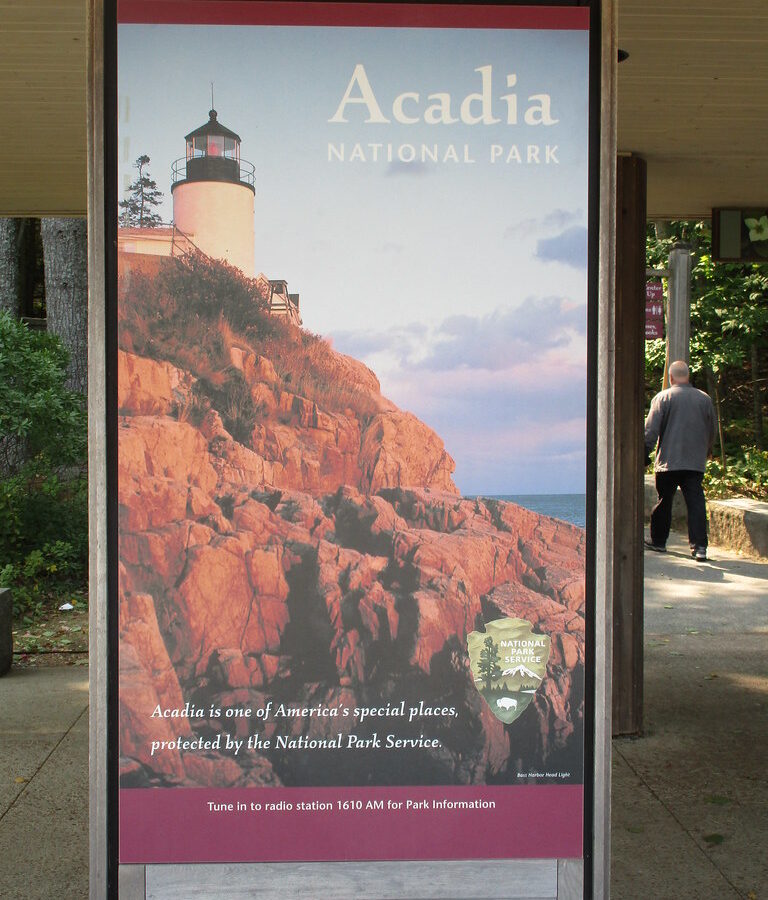
Photo: jaygannett via Flickr (CC BY-SA 2.0)
A Stargazing Acadia National Park itinerary can work better at sea level than on Cadillac Mountain. The 1,530 foot summit has an enormous horizon, but exposed wind, moving headlights, and frequent cloud can compromise night vision. Sand Beach, Seawall, and Schoodic Point often provide darker foregrounds, shelter options, and broad views over the Atlantic.
Acadia occupies a broken coastal landscape rather than one continuous block. Most visitors use Mount Desert Island, while the Schoodic Peninsula lies across Frenchman Bay and Isle au Haut requires a boat. Granite mountains rise directly above glacial lakes, cobble beaches, and spruce forest. That combination creates several distinct night sky settings within relatively short driving distances.
A Practical Guide to Stargazing in Acadia National Park
Why the coastline matters after dark
Acadia’s strongest natural darkness generally appears toward the open Atlantic, away from Bar Harbor and mainland communities. South facing locations such as Sand Beach and Seawall place miles of ocean beneath the sky, reducing direct artificial light along the horizon. North and northeast views can pick up localized glow from developed areas, although trees, ridges, and granite headlands often block it from lower viewpoints.
Mount Desert Island’s mountains also create fast changes in visibility. A bank of marine fog can obscure Cadillac Mountain while Sand Beach remains clear, or cover the shoreline while stars remain visible above inland ponds. Clouds frequently form against higher terrain because moist air is pushed upward and cooled. Checking both cloud cover and cloud ceiling is therefore more useful than relying on a simple rain forecast.
Three viewing zones with different strengths
The eastern side of Mount Desert Island provides the easiest combination of recognizable landmarks and open coastal views. The quieter western side has fewer concentrated visitor areas and excellent southern horizons. Schoodic Peninsula, approximately 45 road miles from Bar Harbor, rewards the longer drive with broad granite ledges and separation from Mount Desert Island’s busiest corridor.
- Eastern Mount Desert Island: Sand Beach, Ocean Path, Otter Point, and Cadillac Mountain provide dramatic foregrounds and relatively direct access.
- Western Mount Desert Island: Seawall and nearby coastal pullouts face open water with fewer town lights.
- Schoodic Peninsula: Schoodic Point offers expansive ocean views, exposed granite, and a distinctly quieter setting.
When Darkness Works in Your Favor
Moon phase matters more than the clock
Astronomical darkness begins after the sun has dropped at least 18 degrees below the horizon. Around the June solstice, twilight lingers late at Acadia’s latitude, shortening the fully dark observing window. Autumn brings earlier darkness and longer nights. A new moon provides the best conditions for the Milky Way and faint star fields, while a quarter moon can illuminate granite cliffs without erasing every dim object.
Timing within the night also matters. If a bright moon sets at midnight, the hours afterward may become excellent for deep sky viewing. Conversely, a moonless evening can still be compromised by fog or thin high cloud, which scatters light from nearby communities. Allow roughly 20 to 30 minutes for your eyes to adapt, and avoid checking an unfiltered phone screen during that period.
When to Go Stargazing in Acadia National Park
| Season | Typical advantage | Primary challenge |
|---|---|---|
| Spring | Long nights, cool air, and lower visitation before summer | Cold coastal wind, mud, and frequent fog |
| Summer | Milder overnight temperatures and the Milky Way’s bright core | Late darkness, heavier traffic, insects, and haze |
| Autumn | Earlier sunsets, crisp air, and long observing windows | Rapid temperature drops and busy foliage weekends |
| Winter | Very long nights and potentially exceptional clarity | Ice, snow, closed roads, and severe wind chill |
Late summer through mid autumn usually provides the most balanced conditions. The Milky Way remains prominent during evening hours, sunset arrives progressively earlier, and cooler air often holds less moisture. Winter can produce sharper transparency, but snow and ice complicate shoreline access. Coastal granite becomes especially dangerous when a thin glaze is nearly invisible under red light.
Where to See the Night Sky in Acadia National Park
Sand Beach and the Ocean Path corridor
Sand Beach sits between Great Head and the cliffs below Gorham Mountain. Its south and southeast orientation opens toward the Atlantic, while the surrounding headlands block some stray light. The beach is approximately 290 yards long, providing room to move away from arriving headlights. High tide reduces usable sand, so consult a tide table before carrying a tripod or blanket down the stairs.
Standing near the middle of the beach, coarse shell fragments and sand shift underfoot while surf echoes between the dark headlands. The air can feel several degrees colder beside the water than it did at the parking area. Once your eyes adjust, Great Head becomes a black wall, stars appear above its rim, and the ocean horizon reveals a scale that is difficult to judge during daylight.
Ocean Path and Otter Point
Ocean Path runs about 2.2 miles one way from Sand Beach to Otter Point, passing Thunder Hole and Monument Cove. It creates numerous viewpoints, but roots, uneven granite, and abrupt cliff edges demand caution after dark. Otter Point has a wider southern outlook than many stops along the path. Remain well back from wet ledges because swells can send water far above the apparent tide line.
Cadillac Mountain’s elevated horizon
Cadillac Mountain provides nearly unobstructed views across Frenchman Bay, the Cranberry Isles, and the layered mountains of Mount Desert Island. The summit’s elevation also increases exposure to wind and low cloud. For meteor showers or broad constellation viewing, choose a position away from the main flow of vehicles and shield your eyes when headlights sweep across the granite.
The paved summit route is approximately 3.5 miles from its junction with Park Loop Road. Seasonal vehicle reservation rules, overnight access, road closures, entrance fees, and parking procedures can change, so confirm current details on the official park site. Walking the road after closure is not automatically permitted, and hiking routes such as the North Ridge Trail require full night navigation preparation.
Seawall and the quieter western shore
Seawall lies on the southwestern side of Mount Desert Island, beyond Southwest Harbor and Manset. Rounded cobbles form a natural storm ridge beside the road, with views south toward offshore islands and the open Gulf of Maine. The low shoreline avoids Cadillac’s strongest winds on some nights, although storm surf can reach the upper rocks. Use established access points and keep clear of private property along the surrounding coast.
Preparing for Several Hours Outside
Protecting night vision and navigating safely
Use a headlamp with a dedicated red mode rather than covering a bright white lamp with your hand. Red light still affects dark adaptation when used at high intensity, so select the lowest useful setting and point it at the ground. Download maps before leaving town because cellular reception varies among coves, ridges, and the western side of Mount Desert Island.
Essential Gear for Stargazing Acadia National Park
- A red light headlamp plus spare batteries
- Warm layers, including a wind resistant outer shell and hat
- A paper map or downloaded offline map
- Binoculars, which reveal star clusters without telescope setup
- A stable tripod for long exposure photography
- A foam pad or insulated blanket to separate you from cold granite
- Water and a warm drink in a sealed container
- Traction aids when frost or ice is possible
Coastal temperatures can fall quickly after sunset, particularly when clear skies allow heat to radiate from exposed rock. Dress for conditions colder than the evening forecast in Bar Harbor. Binoculars are often more practical than a telescope on windy ledges, and an insulated sitting pad prevents granite and cobbles from drawing heat away during a long meteor shower.
Choosing Celestial Targets Above Acadia
Acadia lies near 44 degrees north latitude, placing Polaris about 44 degrees above a level northern horizon. That makes basic orientation straightforward, but the park’s ridges and spruce forest frequently obscure the lower sky. Open shorelines work best for planets and constellations near the horizon, while Cadillac Mountain provides a broader northern view when auroral activity is possible.
Following the Milky Way across the ocean
The Milky Way’s bright central region appears low in the southeastern sky during late spring nights, shifts south during summer, and moves toward the southwest on autumn evenings. Sand Beach and Schoodic Point suit this progression because their ocean horizons remain comparatively open. By October, the bright galactic core sets earlier, although the fainter northern Milky Way still crosses constellations including Cassiopeia, Perseus, and Cygnus.
Meteor showers and possible aurora
The Perseids peak around mid August, while December’s Geminids can produce numerous bright meteors despite colder conditions. Meteors can appear anywhere, so a reclining position with a wide view works better than staring directly at the shower’s radiant. Aurora displays are less predictable. Look north from Cadillac Mountain or another unobstructed location, and use a camera exposure to detect faint green or magenta color that may remain gray to the eye.
| Night sky target | Useful period | Best viewing direction |
|---|---|---|
| Milky Way core | Late spring through early autumn | Southeast through southwest |
| Perseid meteors | Mid August, especially after midnight | Broad overhead view |
| Geminid meteors | Mid December | Broad overhead view |
| Aurora | During strong geomagnetic activity | Low northern horizon |
Schoodic Peninsula After Sunset
Schoodic Peninsula provides a different scale from Mount Desert Island. The mountains are lower, the road corridor is quieter, and the granite shoreline faces the open Atlantic without the concentrated development around Bar Harbor. The tradeoff is exposure. Wind crosses the ledges with little resistance, and breaking waves can throw spray onto rock that appears dry from a distance.
Schoodic Point and the southern horizon
At Schoodic Point, broad sheets of pink granite descend toward channels carved by waves and frost. The southern sky is largely unobstructed, making the area useful for the Milky Way, southern constellations, and meteor photography. Choose a position on high, dry rock rather than the darker stone near the water. That darker color often marks surfaces reached by spray or recent tides.
Blueberry Hill and Schoodic Head
Blueberry Hill offers coastal views without requiring a long approach, while 440 foot Schoodic Head provides a higher perspective reached by hiking trails. The summit route demands stronger navigation skills after dark because forest cover removes visual landmarks and roots complicate footing. For a relaxed session, use a shoreline viewpoint. Reserve the summit for groups carrying offline maps, backup lights, and enough insulation for a delayed return.
Building a Safe Night Session
A productive outing usually concentrates on one location rather than several stops. Every drive introduces headlights, parking adjustments, and another period of dark adaptation. Arrive before sunset, inspect the ground, identify the route back to the vehicle, and note cliff edges or incoming tide channels while they remain visible. Then allow the night sky to strengthen gradually through twilight.
Camera settings that suit the coast
For an initial Milky Way exposure, try a wide lens, an aperture near f/2.8, ISO 3200, and a shutter speed between 10 and 20 seconds. Review stars at high magnification. Shorten the exposure if they form streaks, particularly when using a higher resolution camera. Salt spray creates halos around stars, so carry a clean microfiber cloth and check the front element frequently.
Roads, wildlife, and shoreline hazards
White tailed deer may step onto roads around forest edges, and smaller animals can be difficult to see beyond the headlight beam. Drive slowly and avoid stopping in travel lanes to watch wildlife. Along the shore, rising water can isolate low granite shelves. A safe Stargazing Acadia National Park plan keeps people above the active surf zone and preserves a clear retreat route.
- Reach the viewing area during daylight or twilight.
- Check tide timing and identify wet or wave washed rock.
- Set one meeting point in case the group becomes separated.
- Keep white lights off unless navigation or safety requires them.
- Pack every item out, including food scraps and disposable hand warmers.
Planning Your Stargazing Acadia National Park Experience
The strongest plan pairs the right horizon with the right target. Use Sand Beach for a sheltered ocean foreground, Seawall for the quieter southwestern shore, Schoodic Point for expansive granite ledges, and Cadillac Mountain when elevation and a broad northern view matter. Match that choice to moonrise, cloud ceiling, wind, tides, and the direction of the object you want to observe.
Give yourself enough time to settle into one place, protect your night vision, and respond to changing coastal weather. A clear hour between fog banks can be more rewarding than an ambitious night spent driving between viewpoints. With warm layers, conservative shoreline decisions, and a simple celestial target, Acadia’s broken coastline becomes an unusually varied platform for observing the northern night sky.
Want to keep exploring? Browse all our Acadia guides and articles for more trip-planning tips and ideas.
Gear & Essentials
Tell us about your trip and we will add what else you will want:
The basics
Worth having in the car whatever the park.
For this trip
Traveling with kids
Bringing a pet
RVing
Backcountry
Winter conditions
On the water
Photography
Accessibility
As an Amazon Associate we earn from qualifying purchases, at no extra cost to you.