Arches National Park in Winter: What to Expect and What to Do
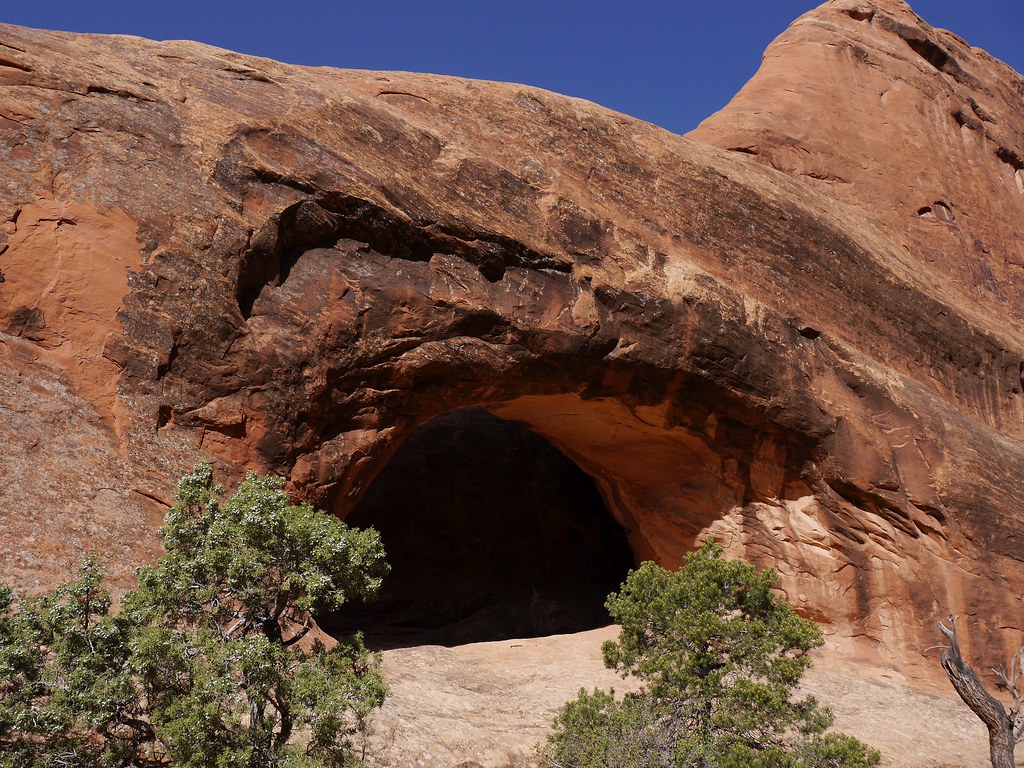
Photo: usareisetipps via Flickr (CC BY-SA 2.0)
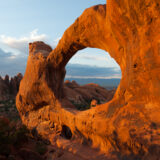
An Arches National Park winter sunrise at the Windows begins with boots crunching over frozen sand and a thin glaze of ice shining beneath North Window. The sandstone feels cold enough to draw heat through a glove, while the first light turns Turret Arch from brown to copper. Snow may outline distant La Sal Mountain peaks and collect in shaded joints, yet exposed slickrock can already be dry. That contrast often defines a winter day here: sharp cold before sunrise, bright sun by midday, and lingering ice wherever cliffs block it.
Winter generally means December through February, although freezing nights can extend into November and March. Visitors gain quieter overlooks, easier parking, and unusually clear light, but they also face short days, variable road conditions, and trails where snowmelt refreezes after sunset. Our team uses this guide to explain seasonal weather, access, crowds, and the tradeoffs that determine whether winter is the right time for your trip.
How Winter Changes the Landscape at Arches National Park
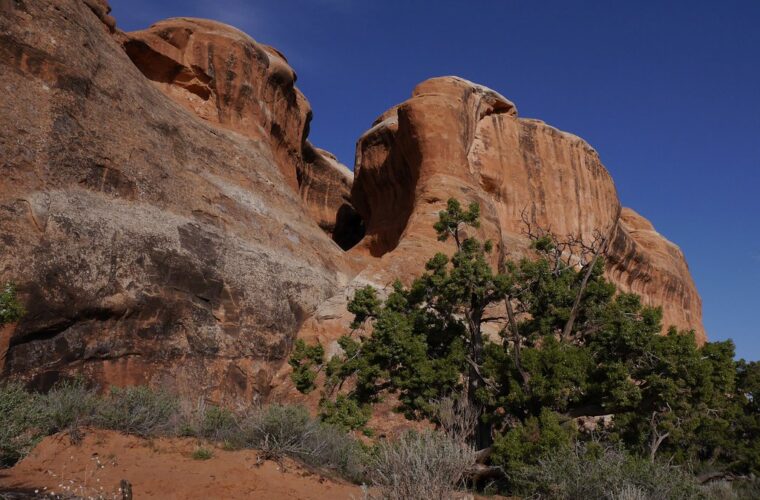
Arches protects more than 2,000 documented natural stone arches within a high desert landscape above Moab. Elevation rises from roughly 4,085 feet near the visitor center to 5,653 feet at Elephant Butte, producing colder conditions than many travelers expect from southern Utah. The park’s Entrada Sandstone fins, Navajo Sandstone domes, and narrow washes also create pockets of shade where snow and ice can survive long after open ground has dried.
Typical Temperatures, Snow, and Rapid Weather Shifts
Average daytime highs are commonly in the 40s Fahrenheit during December and January, rising into the low 50s during February. Typical nighttime lows fall into the 20s, with colder readings during clear, calm periods. Major snow accumulation is uncommon at lower elevations, but passing storms can cover roads and trails quickly. Winter precipitation frequently alternates among snow, sleet, and cold rain, depending on elevation and the time of day.
Why a Small Storm Can Have a Large Effect
A few inches of snow can change hiking conditions more than the total suggests. Foot traffic compresses snow into ice on popular routes, especially near Delicate Arch and Landscape Arch. North facing slopes dry slowly, while sunlit sandstone may clear within hours. Carry traction devices after recent storms, and avoid stepping around ice onto biological soil crust. That dark, knobby soil community contains cyanobacteria, lichens, and mosses that stabilize desert soil but can take decades to recover from footprints.
Daylight and the Daily Freeze Cycle
December brings fewer than ten hours between sunrise and sunset, leaving limited time for long routes such as the Devils Garden Primitive Loop. Cold air settles into washes overnight, so low areas may feel colder than nearby exposed benches. By late morning, direct sunlight can make a sheltered trail comfortable enough for lighter layers. Temperatures drop rapidly once the sun disappears behind sandstone fins, sometimes before the published sunset time.
Plan the most ice prone trail for late morning rather than dawn. Delicate Arch Trail, a 3 mile round trip with about 480 feet of elevation gain, crosses a broad slickrock slab and finishes along an exposed rock ledge. The slab receives substantial sun, but the final shaded approach can remain icy. Shorter walks at the Windows and Balanced Rock are easier to adjust around changing weather.
Arches National Park in Winter: Roads, Trails, and Visitor Access
The park’s paved scenic road climbs from the entrance and continues approximately 18 miles to Devils Garden. Most major formations are reached from this road or short paved spurs. Winter storms can temporarily close steep or icy sections while crews work, particularly during active snowfall or overnight freezing. Four wheel drive does not improve braking on ice, so delay travel when pavement is glazed and allow room for road crews.
What Usually Remains Reachable
On dry winter days, visitors can generally reach Park Avenue, Courthouse Towers, Balanced Rock, the Windows, Delicate Arch viewpoints, Wolfe Ranch, Fiery Furnace, Sand Dune Arch, and Devils Garden by paved road. Snow can obscure lane markings and cover parking edges, while unpaved routes may become muddy enough to damage both the road and a vehicle. Avoid backcountry roads when wet, even if the surface initially appears firm.
Several short trails provide flexible choices when conditions change:
- Balanced Rock: A roughly 0.3 mile loop with close views of the formation and the Windows area.
- Double Arch: About 0.6 mile round trip over sand and uneven rock, beginning near the Windows trailhead.
- Windows Loop: Approximately 1 mile, with access to North Window, South Window, and Turret Arch.
- Landscape Arch: About 1.9 miles round trip from Devils Garden, mostly gentle but potentially icy in shaded sections.
- Park Avenue: A 1.8 mile one way trail descending through a corridor of sheer sandstone walls.
Crowds, Parking, and Seasonal Entry Rules
Winter visitation is substantially lower than during spring break, summer vacations, and October weekends. The practical benefit is greatest at compact parking areas. Spaces at Delicate Arch, the Windows, and Devils Garden are easier to find, and photographers can set up without constant foot traffic crossing a composition. Holiday periods around late December and Presidents Day weekend can still produce busy midday conditions, particularly during mild, dry weather.
Arches has used seasonal timed entry reservations during busier months, while winter has generally fallen outside that operating window. Entrance fees, reservation dates, Fiery Furnace permit procedures, and temporary closures can change, so confirm current details on the official park site. Arriving before sunrise still demands preparation even without a reservation system because the entrance road, parking lots, and trails may be icy and largely unlit.
How Winter Compares With the Rest of the Year
Winter suits travelers who value open viewpoints, low angle photography, and cool hiking conditions. It is less dependable for anyone trying to complete every planned trail on fixed dates. A single storm may affect access for part of a day, and shaded ice can complicate routes even after roads reopen. Spring and autumn provide longer days and generally warmer hiking temperatures, but those advantages draw far heavier visitation.
Season by Season Conditions
| Season | Typical conditions | Crowd effects | Access considerations | Best suited activities |
|---|---|---|---|---|
| Winter, December through February | Cold nights, cool days, occasional snow, and rapid freeze and thaw cycles | Lowest overall visitation, with exceptions around holidays and mild weekends | Paved roads usually accessible between storms; ice may affect shaded trails | Photography, short hikes, scenic driving, and quiet sunrise visits |
| Spring, March through May | Cool to warm days, windy periods, and occasional rain or late snow | Heavy visitation around school breaks and weekends | Longer daylight supports full day hikes; timed entry rules may apply | Long trails, wildflower observation, and broad park itineraries |
| Summer, June through August | Very hot afternoons, intense sun, and occasional thunderstorms | Busy roads and trailheads, especially during vacation periods | Heat limits exposed hiking after midmorning; flash floods can affect washes | Sunrise walks, scenic drives, stargazing, and short evening trails |
| Autumn, September through November | Warm early weeks followed by cooler days and freezing nights | High visitation through October, then declining traffic | Generally broad trail access, with shorter days and possible November ice | Long hikes, landscape photography, and camping |
Choosing Winter Based on Your Priorities
Choose winter if you can keep the itinerary flexible and are comfortable layering clothing, checking road conditions, and changing trails after a storm. Photographers gain low sun angles that emphasize the texture of sandstone fins, while hikers encounter less heat on exposed routes. Travelers focused on the Fiery Furnace, technical canyoneering, or a rigid list of long hikes may prefer spring or autumn, when daylight and surface conditions are usually more consistent.
- For solitude: Visit on a weekday in January, outside holiday periods.
- For snow photography: Build an extra day into the Moab stay because snow cover often melts quickly on sunlit rock.
- For longer hikes: Favor February, when daylight is increasing, but retain a shorter backup route.
- For predictable footing: Choose a dry period and hike sunny trails after the morning freeze has eased.
What to Do in Arches National Park in Winter
A successful winter itinerary follows the sun across the park. Begin with open, eastern exposures, reserve shaded corridors for later, and finish near a trailhead that does not require a long return after dark. Because the scenic road gains elevation as it travels north, conditions at Devils Garden can remain colder than those near the visitor center. Keep one short walk available as a substitute when ice, wind, or a delayed road opening disrupts the original plan.
Morning Around the Windows
The Windows section combines four major formations within a compact area: North Window, South Window, Turret Arch, and Double Arch. Begin at Double Arch, where the approach is short and the massive opening receives useful morning light. Continue to the Windows Loop after the sun reaches the stone steps. Nearby Garden of Eden and Balanced Rock provide quick roadside stops, allowing visitors to monitor cloud cover and trail conditions before committing to a longer afternoon hike.
Afternoon at Delicate Arch or Devils Garden
Choose one major afternoon objective rather than rushing between distant trailheads. Delicate Arch requires sustained climbing across open slickrock, followed by a narrow final approach. Devils Garden provides several turnaround points: Landscape Arch at 1.9 miles round trip, Double O Arch at roughly 4.1 miles, or the full Primitive Loop at about 7.8 miles. The longer options involve rock fins, route finding, steep surfaces, and shaded sections where winter ice can persist.
Set a Firm Turnaround Time
Winter darkness arrives quickly behind the fins at Devils Garden. Set a turnaround time based on the slowest person in the group, then allow extra time for icy descents. Each hiker should carry a headlamp instead of relying on a phone flashlight, which drains the same battery needed for navigation and emergency communication.
Pack for Cold Shade and Strong Desert Sun
Arches National Park Winter conditions require equipment for two different environments during the same outing. A sheltered morning can remain below freezing while exposed sandstone becomes warm under direct sun. Wear a moisture moving base layer, an insulating midlayer, and a wind resistant outer shell. Cotton holds perspiration against the skin and becomes uncomfortable once activity slows. Gloves should allow enough dexterity to operate zippers, trekking poles, and camera controls.
Footwear, Traction, and Water
Hiking shoes with a pronounced tread handle dry sandstone and loose sand better than smooth casual footwear. Carry compact traction devices when snow or refrozen meltwater is present, but remove them on bare rock because metal points can feel unstable on sloping sandstone. Trekking poles add balance on packed snow. Cold weather suppresses thirst, so carry water and drink regularly. Arches has extremely limited natural water, and desert pools should never be treated as a dependable source.
- A headlamp with spare batteries
- Traction sized to fit the chosen footwear
- Windproof layers, gloves, and a warm hat
- Sunscreen, sunglasses, and lip protection
- Offline maps or a printed trail map
- Water, salty snacks, and an insulated lunch
Recognize Winter Route Hazards
Snow can conceal cairns, shallow ledges, and gaps between rocks. Wind also erases tracks quickly, particularly along the Primitive Loop and less traveled routes. Download maps before entering the park because cellular coverage is inconsistent. Avoid walking across frozen potholes, which support specialized aquatic organisms when filled with water. If a route requires stepping onto biological soil crust or scrambling around an icy obstacle, turn back rather than widening the trail.
Use Moab as a Weather Buffer
Moab lies about five miles south of the park entrance and provides the practical base for most winter visits. Lodging rates often decline outside major holidays, although some seasonal businesses reduce their hours. Staying in town makes it easier to postpone an icy morning departure, obtain food, or replace forgotten cold weather gear. Travelers using campgrounds should prepare for freezing nights and verify that their sleep system is rated below the forecast minimum.
A One Day Plan
With one day, prioritize the Windows area in the morning, Balanced Rock near midday, and either Delicate Arch or Landscape Arch during the afternoon. Add Park Avenue as a viewpoint rather than a through hike unless two vehicles are available. This sequence limits backtracking and protects enough daylight for the longest walk. If clouds thicken or roads remain wet near sunset, finish at Courthouse Towers, close to the park exit.
A Two Day Plan With Flexibility
Use the clearest day for Delicate Arch, Devils Garden, and distant views toward the La Sal Mountains. Reserve the second day for short formations and nearby public lands around Moab. After heavy snow, waiting until later in the trip can improve both road and trail conditions. A second night also creates space for winter photography without forcing a predawn drive immediately after a storm.
Plan an Adaptable Arches National Park Winter Visit
Winter works best for visitors who treat weather as part of the planning process. Select one priority trail, identify two shorter substitutes, and organize each day around sunlight rather than a rigid checklist. The payoff comes through quieter trailheads, crisp visibility, and the chance to see snow define arches, fins, and distant peaks. Those advantages are strongest when the schedule includes enough room to wait for safe footing.
Before leaving Moab, review the forecast, assess pavement and trail conditions, and carry the equipment needed to return after dark. Choose spring or autumn when completing long routes matters more than solitude or winter light. For travelers comfortable with cold mornings and quick itinerary changes, Arches in winter provides a focused, practical way to experience the park at its quietest.
Want to keep exploring? Browse all our Arches guides and articles for more trip-planning tips and ideas.
Gear & Essentials
Tell us about your trip and we will add what else you will want:
The basics
Worth having in the car whatever the park.
For this trip
Traveling with kids
Bringing a pet
RVing
Backcountry
Winter conditions
On the water
Photography
Accessibility
As an Amazon Associate we earn from qualifying purchases, at no extra cost to you.