Denali National Park Camping Guide: Campgrounds, Reservations and Tips
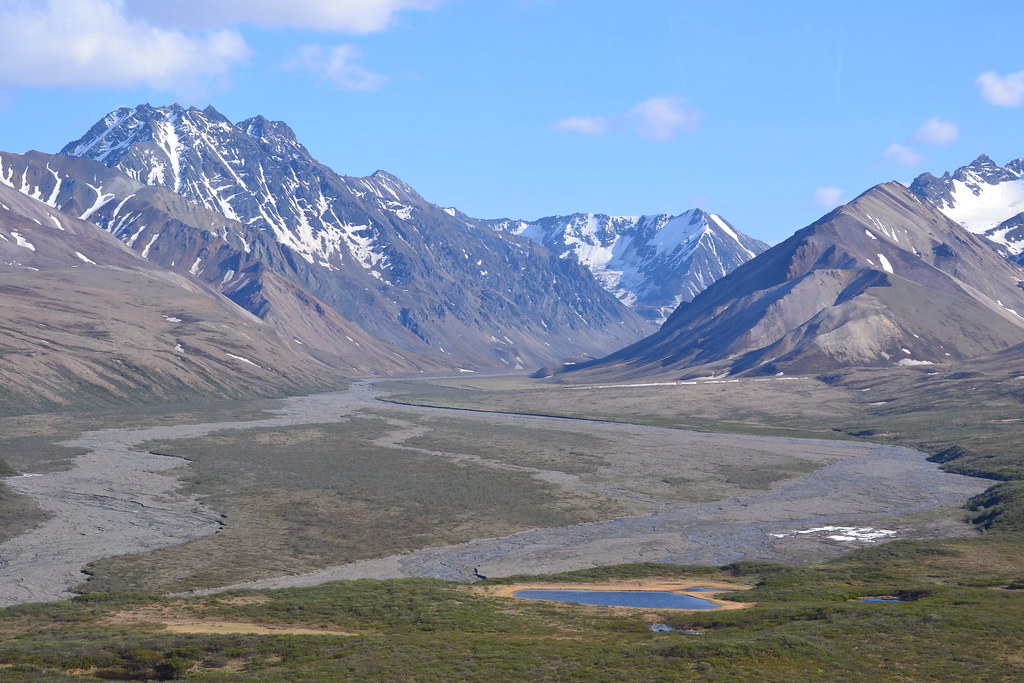
Photo: larrywkoester via Flickr (CC BY 2.0)
Denali National Park Camping works differently from camping in most road based national parks because reaching your site may involve a camper bus, strict vehicle limits, or several nights without moving your car. The 92 mile Denali Park Road penetrates deep into the Alaska Range, but ordinary private vehicles historically travel only as far as Savage River at Mile 15 during the main visitor season. Campers bound for the interior follow separate access rules.
The park’s campgrounds span boreal spruce forest, open river valleys, and treeless tundra. Elevation, distance along the road, and transportation matter more than electrical service or elaborate facilities. None of Denali’s National Park Service campgrounds offers recreational vehicle hookups, and interior campers must plan around cold nights, bears, limited supplies, and a road system affected by the Pretty Rocks landslide near Mile 45.
How Denali National Park Camping Fits the Park Road System
Entrance area camping versus the interior
Riley Creek Campground sits near the park entrance at roughly 1,750 feet. It provides the simplest base for visitors arriving from Anchorage, about 240 road miles south, or Fairbanks, approximately 125 miles north. The Alaska Railroad also stops near the entrance. Riley Creek works well for first nights, recreational vehicles, and travelers who want access to the visitor center area without committing to interior transportation.
Campgrounds farther west feel progressively more remote. Savage River occupies a broad valley near the usual private vehicle turnaround. Sanctuary River, Teklanika River, Igloo Creek, and Wonder Lake lie beyond that point and have historically depended on park or camper bus access. The ongoing Park Road closure near Pretty Rocks can make western campgrounds inaccessible, so campground availability does not necessarily mean the full road is open.
Vehicle rules shape the entire reservation
Teklanika River has traditionally been the major exception to the private vehicle boundary. Campers with the appropriate permit may drive directly to the campground, generally making one inbound and one outbound trip while keeping the vehicle parked during their stay. A minimum stay has commonly applied. Sanctuary River and Igloo Creek are tent focused locations reached by camper bus rather than by driving a personal vehicle.
These restrictions protect wildlife movement and prevent congestion on a narrow gravel road with steep shoulders. They also make itinerary changes difficult. Our team recommends buying food, stove fuel, bear resistant storage equipment, and cold weather layers before entering the interior. Forgetting one item at Teklanika can require hours of travel rather than a quick drive to a store.
Denali National Park Campgrounds Compared
Each campground serves a distinct type of trip. Riley Creek and Savage River accommodate the widest range of camping equipment, while the smaller interior campgrounds favor compact tents and travelers comfortable carrying gear on a bus. Site dimensions vary, and large recreational vehicles have fewer suitable choices than vans, truck campers, or tents.
| Campground | Park Road location | Typical site types | Setting and privacy | Hookups |
|---|---|---|---|---|
| Riley Creek | Near Mile 0 | Tents and recreational vehicles | Spruce forest, generally wooded, busiest campground | None |
| Savage River | Near Mile 13 | Tents and smaller recreational vehicles | Open valley with low vegetation and mountain views | None |
| Sanctuary River | Near Mile 22 | Tents | Very small, wooded, quiet, limited separation between some sites | None |
| Teklanika River | Near Mile 29 | Tents and recreational vehicles | Spruce woodland beside a wide glacial river valley | None |
| Igloo Creek | Near Mile 35 | Tents | Tiny campground beneath Igloo Mountain, strong wilderness character | None |
| Wonder Lake | Near Mile 85 | Tents | Open tundra, wetlands, minimal shade, severe mosquito exposure | None |
Riley Creek and Savage River
Riley Creek is the practical choice for larger rigs and short visits. Mature white spruce provides shade and visual screening, although the forest can feel dark and damp after rain. Sites near campground roads receive more vehicle noise. The nearby trail network includes the 2.1 mile Horseshoe Lake Trail, which descends through spruce and aspen to a lake shaped partly by active beaver dams.
Savage River offers a stronger sense of the open park landscape while remaining comparatively easy to reach. Vegetation is lower, shade is limited, and wind moves freely through the valley. From the Savage River area, the approximately 2 mile Savage River Loop follows both sides of the braided river beneath rocky slopes used by Dall sheep. The more strenuous Savage Alpine Trail climbs between the river and Mountain Vista areas.
The small interior campgrounds
Sanctuary River and Igloo Creek
Sanctuary River and Igloo Creek contain only a handful of sites, creating the closest experience to backcountry camping without leaving an established campground. Their small scale also means less flexibility for large tents or complicated cooking setups. Igloo Creek lies near tundra slopes where hikers may encounter caribou, ground squirrels, ptarmigan, and occasional grizzly bears. Formal trail options are limited, so visitors should understand off trail navigation and wildlife spacing.
Teklanika River
Teklanika balances interior access with space for some recreational vehicles. Standing near the river, you hear water shifting through several gray channels rather than flowing in one fixed course. Rounded cobbles move underfoot, cold air drains from the Alaska Range, and the wide gravel bars make nearby spruce trees look unusually small. The openness provides long sightlines, but glacial rivers are dangerously cold and can rise quickly after rain.
Denali National Park Camping Reservations, Booking Windows, and Transportation
Reserve the campground before building the itinerary
Denali campground reservations have traditionally opened well before the summer season, with popular dates at Riley Creek, Savage River, and Teklanika filling earliest. Interior bus tickets and campground stays must align precisely because a reservation alone does not solve transportation. Current booking dates, fees, campground openings, road access, vehicle length limits, and camper bus procedures can change, so confirm them on the official park site before purchasing nonrefundable travel.
- Choose an entrance area stay or an interior stay based on vehicle access.
- Check whether the selected campground will be reachable during the Park Road closure.
- Reserve consecutive nights before arranging rail tickets, lodging, or rental vehicles.
- Add the correct camper transportation for every passenger and all camping gear.
- Record food storage rules, check in instructions, and vehicle size restrictions.
Match the bus to your campsite
Camper buses are designed to carry passengers with tents, coolers, packs, and other overnight equipment. Regular narrated tour buses are generally a poor substitute because their schedules and baggage capacity serve a different purpose. Campers should label equipment, pack loose items into durable bags, and keep rain gear, medication, food, and warm clothing accessible during transit.
Travel along the unpaved road is slow because buses stop for wildlife and must negotiate narrow sections. A campground that looks close on a mileage chart can consume much of a day when loading, wildlife viewing, and road conditions are included. Build the arrival day around reaching camp, setting up in daylight, and preparing food securely rather than scheduling a long hike immediately afterward.
Seasonal Conditions for Denali National Park Camping
Late spring and early summer
Campground operations usually begin gradually as snow melts and water systems are prepared. May and early June can bring frozen ground, lingering snowbanks, muddy sites, and nighttime temperatures below freezing. Leaves emerge quickly once sustained warmth arrives. Mosquito numbers usually increase as ponds and tundra depressions thaw, although timing changes with snowpack and spring temperatures.
Midsummer tradeoffs
June and July provide exceptionally long daylight, with usable light lasting through most of the night near the summer solstice. Daytime temperatures can reach the 60s Fahrenheit, yet rain, wind, and temperatures in the 30s remain possible. Wonder Lake and wet tundra areas are particularly mosquito prone. Riley Creek tends to offer better shelter from wind, while Savage River and exposed interior sites cool rapidly when clouds settle over the Alaska Range.
Late summer and early autumn
By mid to late August, nights become noticeably darker and tundra vegetation begins turning red and gold. Mosquito pressure often declines, but freezing nights become more common. Snow can dust nearby ridges or reach the campgrounds during early storms. Bears remain active as they feed before winter, and campers must maintain strict food storage even when cool temperatures make odors seem less obvious.
Pack for Cold, Wet, and Windy Camps
Denali’s summer weather can shift from warm sun to wind-driven rain within an hour. A campground elevation near 2,000 feet can still produce frost, while trips farther along the Park Road add exposure and fewer opportunities to replace failed equipment. Our packing strategy prioritizes a dry sleeping system, redundant insulation, and gear that can withstand repeated loading onto buses.
Build a sleep system for freezing nights
A sleeping bag rated near 20 degrees Fahrenheit gives most summer campers a practical margin when nighttime temperatures fall into the 30s. Pair it with an insulated sleeping pad carrying an R-value around 4 or higher. Closed-cell foam beneath an inflatable pad adds warmth and provides backup if sharp gravel or spruce twigs cause a puncture. Keep sleeping clothes sealed in a waterproof bag.
| Condition | Useful equipment | Reason |
|---|---|---|
| Cold ground | Insulated pad and foam backup | Reduces conductive heat loss |
| Persistent rain | Full rain shell, rain pants, pack liner | Keeps insulation and sleep gear dry |
| High mosquitoes | Head net, repellent, tightly woven clothing | Essential around wetlands and sheltered brush |
| Open, windy sites | Low-profile tent with extra guylines | Improves stability on exposed gravel and tundra |
Protect cooking equipment from weather and animals
Bring a reliable backpacking stove because campfires may be restricted and wet wood burns poorly. A windscreen improves fuel efficiency, but it must never enclose a fuel canister because reflected heat can cause dangerous pressure buildup. Pack several ignition methods, a separate cooking tarp, and odor-proof inner bags. All food, garbage, toiletries, and cooking residue belong in approved storage rather than inside a tent.
Daily Camp Routines That Prevent Problems
Good routines matter in Denali because bears, ravens, red squirrels, and smaller rodents quickly investigate accessible food. Campers should cook away from sleeping areas when the site layout permits, clean immediately, and strain food particles from dishwater. Never bury scraps or pour greasy water beside a fire ring. Even small amounts of oatmeal or soup can condition wildlife to search occupied sites.
Handle drinking water carefully
Surface water should be filtered and then treated according to the system manufacturer’s instructions. Glacial rivers such as the Teklanika carry heavy sediment that rapidly clogs filters, so collect from a clearer tributary when possible or allow silty water to settle before treatment. Carry enough containers to avoid approaching steep banks repeatedly. Braided channels can rise after rain or warm weather accelerates high-elevation snowmelt.
Keep a simple departure checklist
- Remove food and scented products from the tent each morning.
- Secure trash before leaving for a hike or bus ride.
- Check guylines after rain softens the soil around stakes.
- Store boots and damp clothing where animals cannot chew them.
- Leave the campsite cleaner than you found it, including tiny foil and food fragments.
Before breaking camp, inspect beneath the tent and around the cooking area for dropped cord, twist ties, and microtrash. Interior campers should finish packing well before the scheduled bus because loading coolers, tents, and rigid containers takes longer than boarding with a daypack. Keep one small bag separate for medication, rainwear, water, and snacks needed during the ride.
What to Do Without Driving From Camp
Denali National Park Camping rewards visitors who treat the campground as a base rather than a parking place. Riley Creek connects with the Taiga and McKinley Station trails, while the longer Triple Lakes Trail extends approximately 9.5 miles toward the park’s southern boundary. Its forested ridges and lake basins provide a demanding full-day option without relying on interior road transportation.
Use short trails for flexible weather days
From Savage River, hikers can combine the river loop with nearby tundra exploration while maintaining clear sightlines for wildlife. Mountain Vista, near Mile 13, has a short loop through open terrain and interpretive information about early park travel. These lower-commitment walks suit arrival days because campers can turn around quickly when clouds, wind, or heavy rain move into the valley.
Approach off-trail travel conservatively
Interior campgrounds provide access to largely trail-free country. Select routes with broad visibility, avoid dense willow where bears may be difficult to see, and spread out on durable gravel or tundra rather than creating a path. Carry a topographic map, compass, and satellite communication device. Creeks that appear easy in the morning may become impassable after rainfall, so never depend on a single ford for the return route.
Plan Your Denali National Park Camping Trip Around Your Priorities
Choose Riley Creek for transportation flexibility, larger camping equipment, and access to entrance-area trails. Savage River suits campers who want open scenery without committing to a remote stay. Teklanika requires more careful food and vehicle planning, while the small interior campgrounds favor experienced tent campers prepared for limited services, bus-dependent travel, and off-trail exploration.
The strongest itinerary matches campground access, equipment, and seasonal conditions before any side trips are added. Reserve transportation alongside the site, pack for freezing rain even in midsummer, and organize food storage before arrival. With those decisions settled, Denali’s campgrounds provide something day visits cannot: time to watch weather cross the Alaska Range, hear braided rivers through the night, and experience the park at its natural pace.
Want to keep exploring? Browse all our Denali guides and articles for more trip-planning tips and ideas.
Gear & Essentials
Tell us about your trip and we will add what else you will want:
The basics
Worth having in the car whatever the park.
For this trip
- Camp lantern Etekcity Camping Lanterns 4-Pack LED
- Camping hammock Wise Owl Outfitters Camping Hammock
- Camping pillow Hikenture Inflatable Camping Pillow
- Lighter & matches BIC Maxi Pocket Lighters 10-Pack
- Shelter tarp Amazon Basics Waterproof Multipurpose Camping Tarp
- Tent Camping Tent 2-4 Person Easy Setup
Traveling with kids
Bringing a pet
RVing
Backcountry
Winter conditions
On the water
Photography
Accessibility
As an Amazon Associate we earn from qualifying purchases, at no extra cost to you.