How to Get to Denali National Park: Airports, Roads and Getting Around
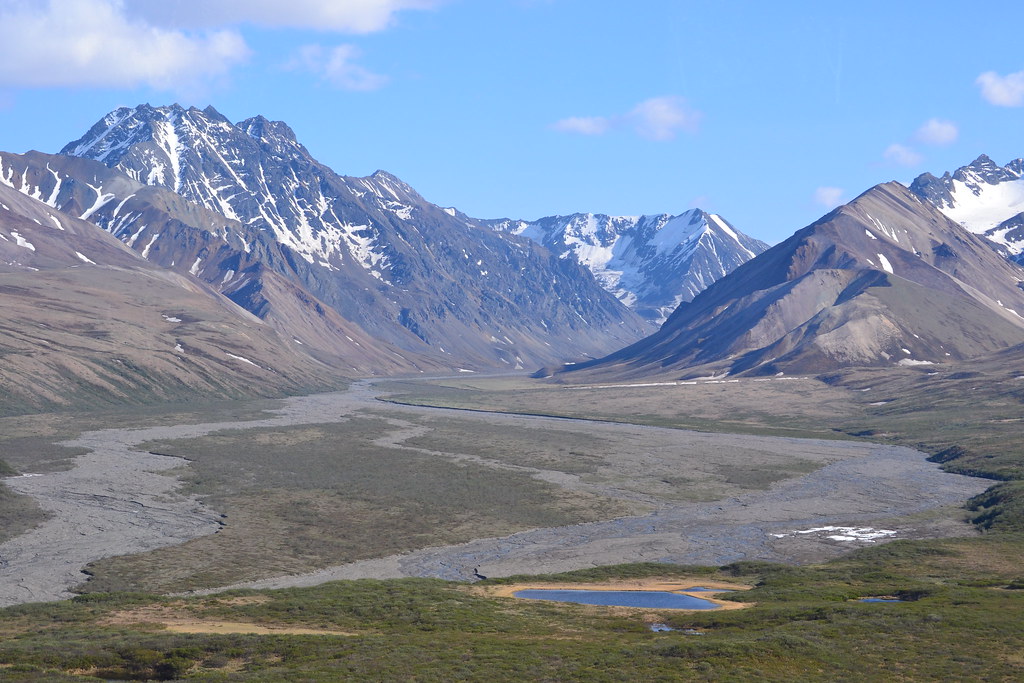
Photo: larrywkoester via Flickr (CC BY 2.0)
How Get Denali National Park visitors there determines what they see at 7 a.m. on the Parks Highway: low cloud spilling through Broad Pass, wet spruce darkened by overnight rain, and the Alaska Range rising abruptly beyond the windshield. Near the pass, the road crosses open tundra at roughly 2,400 feet, where wind can shake the car and summer temperatures may feel 20 degrees colder than they did in Anchorage. Denali lies between Anchorage and Fairbanks in Alaska’s largely roadless interior. Most visitors fly into one of those cities, then continue by rental car, motorcoach, or the Alaska Railroad. Our
Denali lies between Anchorage and Fairbanks in Alaska’s largely roadless interior. Most visitors fly into one of those cities, then continue by rental car, motorcoach, or the Alaska Railroad. Our team recommends choosing the gateway and ground transport together because one way car restrictions, train timing, lodging location, and Denali Park Road access all affect the plan.
How to Get to Denali National Park: Airports, Roads and Transit at a Glance
The developed park entrance is beside Alaska Route 3, commonly called the George Parks Highway, at approximately highway mile 237. It is about 240 road miles north of Anchorage and 125 miles south of Fairbanks. These distances reach the entrance area, not the summit of Denali or the remote western side of the six million acre park.
How to Get to Denali National Park: Choose an Airport Gateway
Anchorage provides the broadest range of flights, rental vehicles, hotels, and connections to other Southcentral Alaska destinations. Fairbanks is considerably closer to Denali and can save several hours of driving. It also works well for trips continuing to the Arctic Circle, Chena River area, or eastern Interior. An open jaw itinerary, arriving in one city and departing from the other, avoids retracing the Parks Highway.
| Gateway | Approximate road distance | Typical nonstop drive | Best fit |
|---|---|---|---|
| Anchorage | 240 miles | 4.5 to 5.5 hours | More flight choices and a broader Alaska road trip |
| Fairbanks | 125 miles | 2 to 2.5 hours | Shortest road transfer and Interior Alaska itineraries |
| Talkeetna | About 150 miles | About 3 hours | Flightseeing stop rather than a primary airline gateway |
Understand where “Denali” means
Several places use the Denali name. Denali National Park’s main entrance, the Denali Park commercial area outside the boundary, and backcountry lodges near Kantishna are separate locations. Healy is about 11 miles north of the entrance, while Cantwell is roughly 30 miles south. Always check a property’s map pin before booking. A listing described as “near Denali” can require a substantial drive and may have no pedestrian connection to park transportation.
How to Get to Denali National Park by Air: Anchorage or Fairbanks
There is no major commercial airport at the park entrance. Travelers generally use Ted Stevens Anchorage International Airport or Fairbanks International Airport, then transfer overland. Small airstrips around the region support private aviation, charter services, and flightseeing, but they do not function as simple substitutes for scheduled airline service into the park.
Flying through Anchorage
Anchorage is usually the practical choice for travelers combining Denali with Kenai Fjords, Prince William Sound, or the Kenai Peninsula. From the airport, drivers cross Anchorage and follow Alaska Route 1 toward Wasilla before joining Route 3 north. Build extra time around the city and the Matanuska Susitna Borough, where commuter traffic and summer roadwork can slow the first part of the trip.
When an Anchorage arrival needs an overnight
A late flight followed by a long drive creates unnecessary wildlife and fatigue risks. Moose frequently enter roads around Anchorage, Wasilla, and the Susitna Valley, particularly near dawn and dusk. For evening arrivals, sleep near the airport or along the northern edge of Anchorage, then begin in daylight. This also leaves time to buy food and any bear spray that cannot travel in airline luggage.
Flying through Fairbanks
Fairbanks offers the shortest transfer. Route 3 heads south through forest and low hills, passes the community of Nenana, then follows portions of the Nenana River toward Healy. The drive usually takes half a day once a meal, fuel, construction delays, and viewpoints are included. It is a sensible gateway for visitors with limited time or lodging north of the park entrance.
Planning an open jaw trip
Before booking Anchorage in and Fairbanks out, verify that the rental company permits a one way return and examine the relocation charge. Availability can be limited during the main summer season. Compare that total against a railroad or motorcoach segment. Travelers who keep a vehicle for several idle days while using park buses may pay more without gaining useful mobility.
How to Get to Denali National Park via the Parks Highway
The Parks Highway is paved and maintained year round, but an Alaska drive should be measured in time rather than mileage alone. Mountain weather, construction zones, slow recreational vehicles, and wildlife can change the pace. Services cluster in communities, with long stretches of forest and muskeg between them. Download maps before departure because mobile coverage has gaps.
How to Get to Denali National Park from Anchorage by Road or Rail
Follow Route 1 north through Wasilla, then remain on Route 3 toward Talkeetna, Cantwell, and Denali. The highway crosses the Susitna River drainage before climbing toward Broad Pass between the Alaska Range and Talkeetna Mountains. Denali, at 20,310 feet, may appear from signed roadside viewpoints when cloud cover permits, although the mountain itself is west of the highway and far beyond the park entrance.
Talkeetna requires a detour along the Talkeetna Spur Road, so include it deliberately rather than assuming the Parks Highway passes through town. Farther north, fuel and food are available in established communities, but opening hours can be shorter outside summer. Start with a full tank and avoid depending on a single late evening stop.
The shorter approach from Fairbanks
From Fairbanks, take Route 3 south through Nenana and Healy. The highway remains open through winter, yet snowpack, black ice, blowing snow, and very limited daylight can make the drive substantially slower. In summer, watch for moose along wet lowlands and for vehicles braking at roadside viewpoints. Passing opportunities narrow as the highway approaches the Nenana River canyon.
- Carry water, snacks, a charged phone, and an offline map.
- Keep rain layers and warm clothing accessible rather than buried in luggage.
- Refuel before reaching the final rural stretch, especially outside summer.
- Give wildlife the full roadway and never stop in an active traffic lane.
- Add time for construction instead of relying on the fastest navigation estimate.
Finding the Entrance and Changing Transportation
The park entrance turnoff leads west from the Parks Highway into the developed eastern end of Denali. Riley Creek, the railroad depot, visitor facilities, and bus boarding areas are concentrated within the first few miles. This compact layout allows train passengers and visitors staying nearby to connect with park transportation without attempting to drive deep into the wilderness.
Private vehicles on Denali Park Road
Denali Park Road extends approximately 92 miles toward Kantishna, but ordinary private vehicles are generally limited to the paved eastern section as far as Savage River at mile 15 during the main visitor season. Buses provide access farther west. Landslide work near Pretty Rocks has affected the operating endpoint in recent seasons, while permits, schedules, fees, and seasonal road openings can change, so confirm current details on the official park site.
Recognize the seasonal transition
Vehicle access expands or contracts as snow removal, freeze up, wildlife activity, and road conditions permit. Spring openings often advance in stages rather than exposing the entire accessible road at once. Our report on the Denali Park Road opening to Teklanika illustrates why shoulder season visitors should distinguish highway access from access along the interior park road.
How to Get to Denali National Park Without a Rental Car
The Alaska Railroad and scheduled motorcoaches solve the driving problem, but each requires lodging that works with fixed arrival points. The Denali railroad depot sits inside the park near the visitor area, while coaches may stop at selected hotels or designated roadside locations. The question behind the search phrase “How Get Denali National” is often really about completing this final transfer. Check the exact distance between your stop, accommodation, and morning bus departure before paying for a room.
Taking the Alaska Railroad
The Denali Star typically links Anchorage, Wasilla, Talkeetna, Denali, and Fairbanks during the summer travel season. Anchorage to Denali occupies most of a day, generally around seven to eight hours, while Fairbanks to Denali takes roughly four hours. Large windows make the journey useful for sightseeing, particularly along the Susitna River and through Broad Pass. Match the dated timetable to your lodging check in and park bus reservation because passenger service does not operate like frequent commuter rail.
Using an intercity motorcoach
Motorcoaches usually travel faster than the train and may provide more convenient hotel stops, although routes and pickup patterns differ. Ask whether the fare includes direct accommodation service or ends at a central stop requiring another transfer. Travelers arriving by coach should carry food, medication, rainwear, and one warm layer aboard. Checked luggage may remain inaccessible until arrival, and roadside delays can extend the journey beyond the advertised driving time.
| Option | Primary advantage | Planning constraint |
|---|---|---|
| Alaska Railroad | Scenic journey and depot inside the park | Fixed daily timing and a long travel day |
| Motorcoach | Quicker highway transfer in many itineraries | Stop locations vary by operator |
| Rental car | Flexible food, lodging, and viewpoint stops | Parking costs and limited usefulness beyond mile 15 |
Getting Around Denali National Park After You Arrive
Transportation inside Denali has two distinct functions. Courtesy shuttles circulate around parts of the entrance area, while reserved park buses travel west on Denali Park Road. Do not assume that a hotel shuttle connects with every early departure. If your bus leaves before local transfers begin, choose lodging within walking distance, arrange a taxi in advance, or keep a vehicle for that morning.
Moving through the entrance area
Riley Creek, the railroad depot, visitor facilities, and major bus boarding points are linked by roads and paths, but the terrain is rolling rather than flat. The commercial corridor outside the park follows a narrow, busy section of the Parks Highway with steep grades and limited pedestrian space. A property that appears close on a map may involve an unsafe roadside walk. Obtain its transportation instructions before arrival instead of improvising after dark.
Planning a day beyond Savage River
Choose between narrated tour buses and transit style buses according to how much interpretation and hiking flexibility you want. Carry lunch, water, binoculars, and clothing for a full day because interior travel is slow and weather shifts rapidly. At Savage River, gravel presses underfoot as the approximately two mile loop follows cold, silty water between rounded ridges. Wind funnels through the valley, ground squirrels whistle from talus, and the entrance forest disappears behind a broad wall of tundra.
Avoiding Common Transportation Failures
The costliest mistake is booking each segment independently. A late train arrival, distant hotel, and early park bus can create an impossible connection even when every reservation looks reasonable by itself. Build the itinerary backward from the activity with the least flexibility, usually a reserved road excursion. Then select lodging, inbound transportation, and meals that support that departure time.
Pack for delays and disconnected services
Mobile coverage weakens along the highway and within the park. Save confirmations and maps offline, and write down lodging and transportation telephone numbers. Drivers should retain at least half a tank when practical, particularly outside the core summer period. Rail and coach passengers need a compact delay kit that remains with them rather than under the bus or in checked baggage.
- Photo identification and downloaded reservation records
- Water, substantial snacks, and essential medication
- Waterproof jacket, insulating layer, hat, and gloves
- Portable battery and charging cable
- Offline map showing the depot, hotel, and bus boarding point
Protect the departure day
A same day Denali transfer followed by a flight from Anchorage leaves little protection against construction, collisions, weather, or mechanical delays. Spend the final night near the departure airport when the flight is expensive or difficult to replace. From Fairbanks, allow a generous highway margin rather than treating the normal drive time as guaranteed. Travelers returning rental cars should also account for refueling, baggage unloading, and terminal transfer time.
Build the Route Around Your Fixed Commitments
Start with the gateway that best matches the rest of the trip: Anchorage for wider connections, Fairbanks for the shorter transfer, or an open jaw itinerary for efficient northbound travel. Next, anchor the schedule around the park bus, train, or coach segment with the strictest departure time. This sequence exposes inconvenient hotel locations and risky same day connections before they become expensive problems.
Once inside Denali, a private vehicle mainly helps with lodging, groceries, and the eastern entrance area. Reserved buses handle travel deeper along the park road. A realistic plan includes daylight driving, offline information, warm layers, food, and a final airport buffer. Those details turn a complicated chain of flights, highways, rail service, and park transportation into a route that works from arrival through departure.
Want to keep exploring? Browse all our Denali guides and articles for more trip-planning tips and ideas.
Gear & Essentials
Tell us about your trip and we will add what else you will want:
The basics
Worth having in the car whatever the park.
For this trip
Traveling with kids
Bringing a pet
RVing
Backcountry
Winter conditions
On the water
Photography
Accessibility
As an Amazon Associate we earn from qualifying purchases, at no extra cost to you.