Grand Canyon National Park Camping Guide: Campgrounds, Reservations and Tips
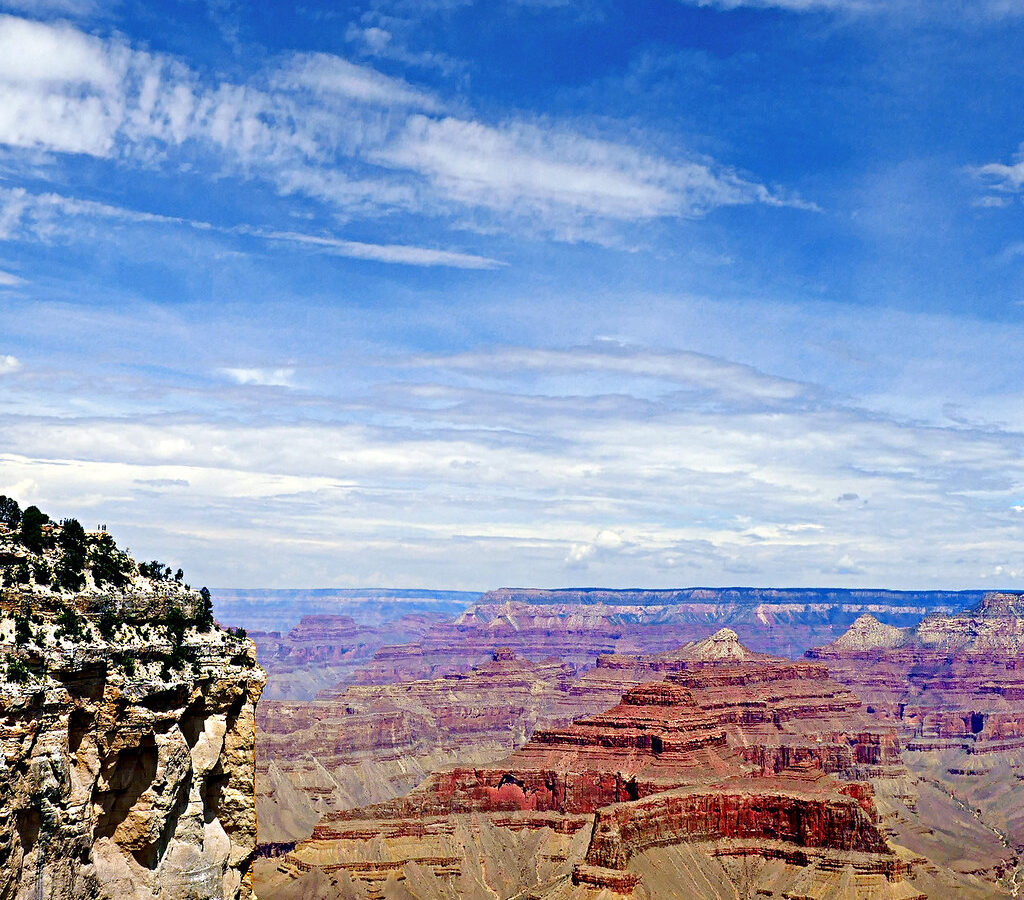
Photo: pom'. via Flickr (CC BY-SA 2.0)
Grand Canyon National Park has four developed campgrounds inside the park, split between the South Rim, Desert View, and the seasonally accessible North Rim. Their elevations range from roughly 7,000 to 8,200 feet, so nighttime cold, summer monsoon storms, intense ultraviolet exposure, and occasional freezing weather all influence where and when to camp.
Our guide explains how the in park campgrounds differ, which sites suit tents and RVs, how the reservation systems work, and what to examine before booking. Backcountry camps below the rim use a separate permit system and require substantially different preparation, so this first half concentrates on developed vehicle accessible camping.
Choose the Right Rim for Grand Canyon National Park Camping
The Colorado River separates the South and North rims by about 10 miles as the raven flies, but driving between them requires roughly 215 miles and commonly takes four to five hours. Treat the two rims as separate camping destinations. The South Rim has the broadest selection of campgrounds and services, while the North Rim provides a quieter, higher elevation experience during its shorter operating season.
South Rim access and year round flexibility
The South Rim sits near 7,000 feet and is reached through the South Entrance near Tusayan or from the east along Arizona Highway 64. Mather Campground and Trailer Village RV Campground occupy the developed Grand Canyon Village area. Desert View Campground is 23 miles east of the village, near the park’s East Entrance. South Rim access generally continues throughout winter, although snow, icy roads, and temporary closures can affect travel.
Grand Canyon National Park camping on the North Rim
North Rim Campground stands at approximately 8,200 feet in a forest of ponderosa pine, white fir, Douglas fir, and aspen. It is reached from Jacob Lake by following Arizona Highway 67 for about 44 miles. Snow closes the highway during winter, creating a camping season that usually extends from late spring into autumn. Temperatures commonly run cooler than at the South Rim, especially after sunset and during shoulder season.
At the rim, the ground changes from springy forest duff to pale limestone scattered with pine needles. Wind moves through the conifers overhead, but the forest abruptly falls away at nearby viewpoints, revealing stacked cliffs of Kaibab Limestone, Coconino Sandstone, and Redwall Limestone. That transition helps explain why a campsite can feel sheltered while an exposed overlook several minutes away feels markedly colder.
Compare Grand Canyon National Park Campgrounds
Each developed campground serves a distinct style of trip. Mather works well for visitors who want village transportation and trail access. Trailer Village is the practical choice for large RVs requiring utility connections. Desert View favors smaller setups and a quieter setting, while North Rim Campground suits travelers prioritizing forest, cooler conditions, and access to North Rim trails.
| Campground | Approximate elevation | Typical site character | Hookups | Best fit |
|---|---|---|---|---|
| Mather Campground | 7,000 feet | Ponderosa forest, mixed tent and RV loops | No utility hookups | Tents, vans, and moderate size RVs near Grand Canyon Village |
| Trailer Village RV Campground | 7,000 feet | Developed RV sites with less screening between spaces | Full hookups available | Large RVs and travelers needing water, sewer, and electrical connections |
| Desert View Campground | 7,463 feet | Pinyon and juniper woodland, smaller and more open sites | No utility hookups | Tents, vans, and compact RVs away from the village |
| North Rim Campground | 8,200 feet | Cool mixed conifer forest, some sites near the canyon edge | No utility hookups | Tents and RVs seeking a quieter, seasonal base |
Village campgrounds near trails and transportation
Mather Campground
Mather is about a mile from the South Rim and has separate loops containing tent sites, standard sites, and group areas. Mature ponderosa pines provide intermittent shade, although tree spacing varies considerably by site. There are no campsite utility hookups. Its location is especially useful for reaching the Rim Trail, Grand Canyon Village, and the Bright Angel Trailhead without repositioning camp each day.
Trailer Village RV Campground
Trailer Village accommodates larger recreational vehicles and provides the park’s primary full hookup camping option. Pull through spaces simplify arrival for long rigs, but the developed layout offers less privacy and natural screening than Mather. It is a practical base for RV travelers who need dependable onboard utility service and want access to the village transportation network rather than driving a large vehicle to crowded overlooks.
Smaller campgrounds with a quieter setting
Desert View Campground places campers near Desert View Watchtower and the eastern section of the Rim Trail. The pinyon and juniper woodland is lower and more open than Mather’s ponderosa forest, producing less reliable midday shade. North Rim Campground has denser vegetation and cooler nights. Some North Rim sites sit close to the canyon edge, but campers should never assume that a site described as near the rim has an unobstructed view.
Grand Canyon National Park Reservations and Booking Windows
Most reservable National Park Service campsites at the canyon are released through Recreation.gov on a rolling window, commonly six months before the arrival date. Trailer Village uses a concessioner reservation system with separate inventory and booking rules. Group sites, standard sites, and accessible sites can have different release patterns, so search for the exact site category rather than relying on a campground level availability screen.
Booking high demand dates
Spring and autumn weekends on the South Rim often disappear soon after their booking window opens. North Rim demand is concentrated into a shorter season, while summer visitors also compete for shaded sites. Create an account before release day, enter vehicle dimensions accurately, and search one campsite at a time. A reservation does not override a posted maximum vehicle length, tent pad boundary, or occupancy limit.
- Choose the rim before selecting dates, since changing rims requires a lengthy drive.
- Measure the RV or trailer from the frontmost component to the rearmost rack or accessory.
- Check the site description for driveway length, slope, generator restrictions, and tent pad size.
- Compare several loops rather than filtering only for hookups or shade.
- Review cancellation terms and save the confirmation for offline access.
Operational details that require a final check
Fees, seasonal opening dates, generator hours, water availability, and reservation procedures can change. Confirm current details on the official park site before committing to travel, particularly during freezing weather or periods of infrastructure maintenance. Our team also tracks major operational changes, including recent South Rim service and water conservation updates, because water limitations can affect campground planning even when sites remain open.
Match the Campsite to Your Tent or RV
A campground accepting RVs does not mean every site fits every rig. Older loops were laid out around trees, rocks, and compact parking spurs. Slide outs, tow vehicles, bike racks, and awnings can extend beyond the listed body length. Large rigs generally gain the most predictable fit at Trailer Village, while vans and short trailers have a broader choice at Mather, Desert View, and the North Rim.
Site dimensions, hookups, and generator use
Campers without hookups should calculate battery, propane, and freshwater needs before arrival. Generator use is limited to designated periods and may be restricted further in particular loops. Solar panels perform well in exposed sites, but trees can reduce output at Mather and the North Rim. Never plan to discharge gray water onto the ground, and verify that a dump station is operating before depending on it.
Shade, privacy, and tent placement
For tent camping, prioritize a defined pad, distance from restroom traffic, and protection from prevailing wind rather than selecting solely by proximity to the rim. Ponderosa forest sites can collect sticky sap and falling cones, while Desert View’s open woodland exposes tents to stronger sun and wind. Food, scented toiletries, and cooking equipment should be secured against ravens, squirrels, and elk whenever camp is unattended.
Pack for Elevation, Wind, and Dry Air
Rim temperatures can fall sharply after sunset because dry air releases heat quickly. A warm afternoon can lead to a near freezing night during spring or autumn, especially at the North Rim. Tent campers should bring a sleeping bag rated below the forecast low, an insulated sleeping pad, and stakes that hold in firm, rocky soil. Freestanding tents are easier to position on compact pads where ideal stake placement may be limited.
Build a wind and rain ready shelter
Summer monsoon storms commonly develop during July and August, bringing sudden downpours, strong gusts, hail, and dangerous lightning. Use every available guy line, keep the rainfly attached, and place sleeping gear in waterproof sacks rather than relying on the tent floor alone. Avoid setting tents beneath dead limbs. At exposed Desert View sites, lower profile shelters generally handle gusts better than tall cabin tents with broad vertical walls.
Protect food, water, and power supplies
Low humidity increases water loss even when temperatures feel comfortable. Carry refillable containers with enough capacity for drinking, cooking, and the first morning in camp. Hard sided food storage bins help contain odors and prevent ravens from opening soft bags. RV campers using solar power should bring an extension cable or portable panel so the collector can reach sunlight without forcing the vehicle into an unsuitable position.
| Condition | Useful equipment | Planning reason |
|---|---|---|
| Cold nights | Insulated pad, warm sleeping bag, knit cap | Ground heat loss can make a mild forecast feel considerably colder |
| Monsoon storms | Full rainfly, guy lines, waterproof storage | Rain and wind can arrive with little warning |
| Intense sun | Wide brim hat, sunscreen, shade canopy | High elevation increases ultraviolet exposure |
| Dry conditions | Water containers, moisturizer, lip balm | Dehydration develops quickly in low humidity |
Plan Grand Canyon National Park Activities from Camp
Camping inside Grand Canyon National Park reduces morning driving and makes sunrise or evening walks easier. It also allows hikers to begin before exposed trails become hot. Keep activities proportional to elevation and conditioning. Rim walks are relatively level, while every trail entering the canyon requires a sustained climb back to camp through warmer ecological zones.
South Rim walks and viewpoints
From the village area, the paved Rim Trail links overlooks including Yavapai Point, Mather Point, and the historic district. Sections can be combined with the park transportation system to avoid retracing the entire route. Desert View campers can explore the Watchtower area and eastern overlooks, where views extend toward the Colorado River, the Painted Desert, and the broad Palisades of the Desert.
North Rim routes from a forest base
The Transept Trail connects the campground area with Grand Canyon Lodge through forest near the rim, covering about 1.5 miles each way. Experienced hikers seeking a longer day can consider the Widforss Trail, approximately 9.6 miles round trip. The North Kaibab Trail descends steeply from the rim, losing thousands of feet, so casual campers should set a conservative turnaround point rather than treating the river as a day hike.
- Carry water and salty food on every below rim hike.
- Start early enough to avoid exposed climbs during afternoon heat.
- Yield to mule trains and follow instructions from wranglers.
- Remain at least 100 feet from elk and other large wildlife.
Choose Dates Based on Grand Canyon National Park Camping Conditions
Season affects road access, nighttime comfort, shade, and thunderstorm exposure. South Rim spring brings mild hiking temperatures but also strong wind and occasional snow. Summer produces warm days, crowded viewpoints, and monsoon storms. Autumn usually provides stable daytime conditions with increasingly cold nights, while winter campers may encounter snow covered roads, icy trails, and prolonged freezing temperatures.
Spring and autumn tradeoffs
April, May, September, and October often provide the broadest range of hiking opportunities. Campers should still prepare for temperature swings of several dozen degrees between afternoon and dawn. Autumn generally has drier ground than spring, but shortening daylight reduces the time available for long hikes. At the North Rim, early and late season cold can freeze water containers left outside overnight.
Summer and winter realities
Summer is manageable at rim elevation when camp includes ventilation and shade, although inner canyon temperatures can be dramatically hotter. Lightning is the principal afternoon hazard on exposed overlooks. Winter offers quieter South Rim camping, but traction devices improve safety on packed snow along the Rim Trail. Insulated water containers, a cold weather stove, and a vehicle prepared for winter driving become essential equipment.
Build a Campground Plan That Holds Up
A successful reservation begins with the correct rim, an accurately measured vehicle, and a campsite matched to utility needs. After booking, organize equipment around elevation rather than the warmer temperatures found in lower Arizona. Warm sleep systems, secure food storage, stormworthy shelter, and sufficient water capacity address the conditions most likely to disrupt a stay.
Use camp as a base for measured exploration. Choose rim walks for easier days, begin below rim hikes early, and preserve energy for the climb back. With realistic distances and seasonal preparation, camping inside the park gives you valuable time at overlooks before daily traffic builds and after most day visitors have departed.
Want to keep exploring? Browse all our Grand Canyon guides and articles for more trip-planning tips and ideas.
Gear & Essentials
Tell us about your trip and we will add what else you will want:
The basics
Worth having in the car whatever the park.
For this trip
- Camp lantern Etekcity Camping Lanterns 4-Pack LED
- Camping hammock Wise Owl Outfitters Camping Hammock
- Camping pillow Hikenture Inflatable Camping Pillow
- Lighter & matches BIC Maxi Pocket Lighters 10-Pack
- Shelter tarp Amazon Basics Waterproof Multipurpose Camping Tarp
- Tent Camping Tent 2-4 Person Easy Setup
Traveling with kids
Bringing a pet
RVing
Backcountry
Winter conditions
On the water
Photography
Accessibility
As an Amazon Associate we earn from qualifying purchases, at no extra cost to you.