Olympic National Park Camping Guide: Campgrounds, Reservations and Tips
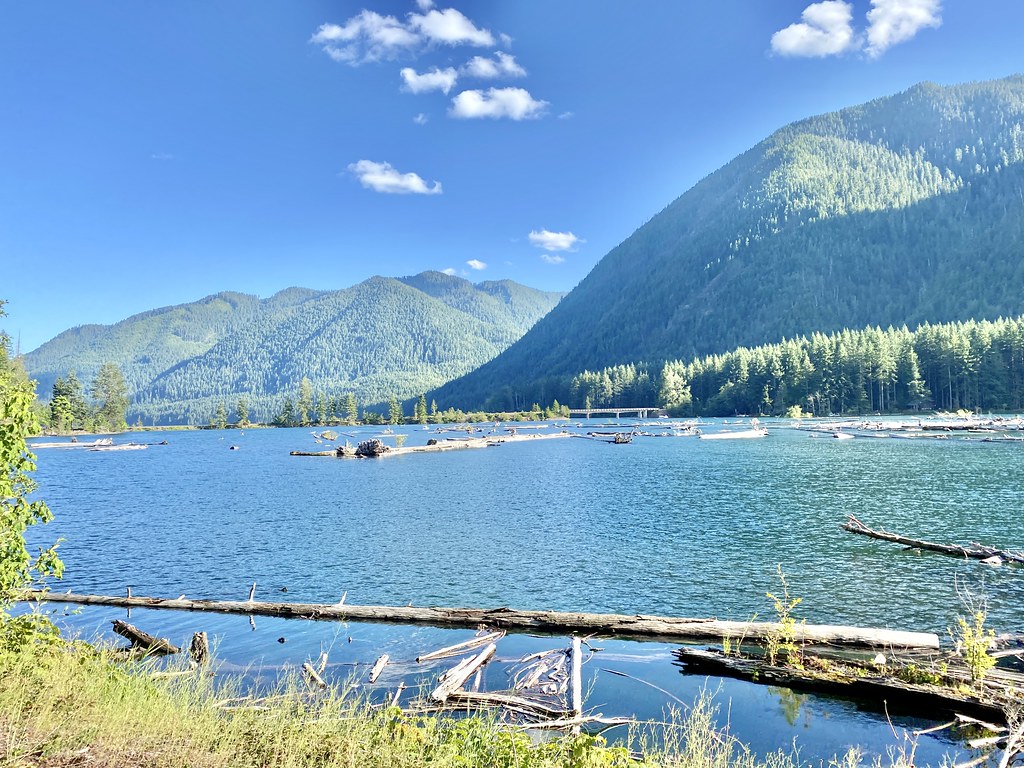
Photo: w_lemay via Flickr (CC BY-SA 2.0)
Olympic National Park camping begins vividly at Kalaloch, where evening fog slips through Sitka spruce and the Pacific pounds the cobble below the campground bluff. At the Hoh Rain Forest, the soundtrack changes to river water, winter wren calls, and droplets falling from moss several minutes after a shower has passed. These places occupy the same park, yet their weather, road access, campsite layout, and booking pressure differ substantially.
Olympic covers nearly one million acres across the Olympic Peninsula, with no road crossing its mountainous center. Campers choose among Pacific coast, temperate rainforest, lake, river valley, and high elevation settings. Our guide explains how those regions fit together, which developed campgrounds suit tents or recreational vehicles, and how to approach reservations without building an itinerary around unrealistic drive times.
How Olympic National Park Camping Is Organized Across the Peninsula
Separate road corridors shape every itinerary
Most developed campgrounds sit at the ends of spur roads branching from US 101. Port Angeles provides the principal approach to Heart O’ the Hills, Deer Park, Lake Crescent, and Sol Duc. Forks is the practical supply point for Mora, the Hoh Rain Forest, and the western beaches. Kalaloch lies farther south along the coastal highway, while Staircase is reached from the Hood Canal side near Lake Cushman.
Distances on a map can disguise slow travel. The road into the Hoh Rain Forest extends roughly 18 miles east from US 101, and summer entrance congestion can add time. Deer Park requires a steep mountain road whose upper section is narrow and unpaved. Campers moving between Lake Crescent and Kalaloch must circle around the western foothills rather than cutting through the Olympic Mountains.
Frontcountry and wilderness camping follow different systems
Developed frontcountry campgrounds provide designated vehicle accessible sites, picnic tables, fire rings where permitted, and some form of toilet facility. None of the National Park Service campgrounds should be assumed to have recreational vehicle hookups. Generator rules, water availability, dump stations, food storage equipment, and vehicle length limits vary by location and season.
Wilderness camping covers places such as Enchanted Valley, the Seven Lakes Basin, Shi Shi Beach, and the North Coast route. Those trips require separate wilderness permits and, in some areas, approved bear canisters. A frontcountry campground reservation does not authorize an overnight backpacking trip, even when the trail begins beside the campground.
Olympic National Park Camping Areas and Campgrounds Compared
Coast and rainforest campgrounds
Kalaloch occupies a forested bluff above the Pacific, with beach access nearby and sunsets visible from several overlooks. Mora stands in coastal forest about 2 miles from Rialto Beach, making it better protected from direct ocean wind. The Hoh campground sits beside the glacier fed Hoh River beneath dense western hemlock, Sitka spruce, and bigleaf maple. Expect greater shade, damp ground, and persistent condensation there.
| Campground area | Setting and nearby feature | Best fit | Important limitation |
|---|---|---|---|
| Kalaloch | Pacific bluff near broad beaches | Tents, vans, and compatible RV sites | Open sites can receive ocean wind and salt mist |
| Mora | Coastal forest near Rialto Beach | Beach walks with a sheltered camp | Driving is required to reach the beach |
| Hoh | Rainforest beside the Hoh River | Hall of Mosses and Hoh River Trail access | Long entry road and heavy summer demand |
| Fairholme | Forested shore at Lake Crescent | Lake access and north peninsula touring | Many sites are shaded and tightly enclosed |
| Heart O’ the Hills | Low mountain forest south of Port Angeles | Hurricane Ridge access | No lake or major trail begins in camp |
| Deer Park | Subalpine ridge around 5,400 feet | Small tents and clear night skies | Unsuitable for larger vehicles and exposed in bad weather |
Lake, foothill, and mountain choices
Fairholme places campers at the west end of Lake Crescent, a deep glacially carved lake whose clear water reflects surrounding ridges. Heart O’ the Hills is the convenient forest base for Hurricane Ridge, reached by climbing from Port Angeles into subalpine meadows. Staircase serves the park’s southeastern corner, where the North Fork Skokomish River flows beneath Douglas fir and western red cedar.
Primitive road end campgrounds
Graves Creek and North Fork in the Quinault drainage offer smaller, simpler sites near rainforest trails. Ozette provides access to Lake Ozette and the 9.4 mile Ozette Triangle, which links Cape Alava and Sand Point by boardwalk and beach. Queets is remote and reached via a less convenient road network. These campgrounds favor tents and compact vehicles because maneuvering space, road surfaces, and services are limited.
Olympic National Park Camping Reservations, Site Selection, and Booking Strategy
Which campgrounds usually accept reservations
Peak season reservations are commonly offered at major campgrounds such as Kalaloch, Mora, Hoh, Fairholme, and Staircase, although the participating loops and operating dates can change. Smaller campgrounds generally use first come allocation. Sol Duc also has concession operated camping with a separate booking process. Confirm current opening dates, fees, reservation inventory, vehicle limits, and water status on the official park site before purchasing flights or committing to a fixed route.
How rolling booking windows work
Many reservable sites are released through Recreation.gov on a rolling basis, often several months before the arrival date. The exact release schedule shown on the campground listing controls, including any later release batches. Search by individual campground rather than by the park name alone, and enter the total length of the tow vehicle plus trailer when a listing requests equipment dimensions.
- Choose the park region before searching for a site.
- Check every night of a multi-night stay because availability may differ by date.
- Read the driveway length, slope, and equipment restrictions for the individual site.
- Review generator rules if traveling in a motorhome.
- Save a first come campground as a backup, but arrive with enough daylight to relocate.
Choosing shade, privacy, and vehicle fit
Rainforest sites often have thick vegetation between pads, but branches and moss drip long after rain ends. Coastal sites can feel brighter and breezier, with less protection from storms. Larger recreational vehicles have fewer compatible choices because many roads and loops were designed before modern rigs became common. A listed driveway length does not guarantee room for slide outs, a second vehicle, or comfortable trailer backing.
Seasonal Conditions and Tips for Olympic National Park Camping
Summer brings access and booking pressure
July through early September generally provides the driest weather, the broadest road access, and the most dependable conditions for beaches and mountain day trips. It also produces the strongest reservation demand. Coastal fog can keep Kalaloch and Mora cool while Port Angeles is sunny, and the Hoh remains humid even during dry spells. Temperatures drop quickly after sunset at Deer Park because of its elevation and exposed position.
Spring, autumn, and winter require flexible plans
Spring brings high river flows, muddy rainforest trails, and lingering snow in the Olympic high country. Autumn often delivers quieter campgrounds and changing vine maple foliage, followed by Pacific storms that can drop branches or temporarily affect roads. Winter camping is concentrated at lower elevations because snow closes or complicates mountain access. Kalaloch and the rainforests remain comparatively mild, but wind driven rain tests tents, tarps, and waterproof storage.
Typical conditions by region
- Pacific coast: Cool fog, wind, salt spray, and rapidly changing tides throughout the year.
- Western rainforest: High humidity, saturated ground, and frequent condensation outside midsummer.
- Lake Crescent and foothills: Cooler nights than nearby towns, deep forest shade, and limited solar exposure.
- Deer Park and high roads: Short camping season, strong wind, cold nights, and possible snow outside summer.
- Hood Canal side: Warmer summer afternoons, with river valleys remaining shaded and damp.
Pack for Water From Above and Below
Shelter and sleep systems for saturated ground
Olympic National Park camping rewards equipment that manages moisture rather than merely blocking rain. Bring a tent with a full coverage rainfly, a footprint cut smaller than the tent floor, and enough guyline to stabilize the fly without letting wet fabric touch the inner canopy. A synthetic sleeping bag retains more insulation than untreated down when damp. Closed cell foam beneath an inflatable pad adds protection from cold, root covered ground.
| Camping environment | Most useful gear | Problem it addresses |
|---|---|---|
| Kalaloch and Mora | Stout tent stakes, wind resistant stove, tide chart | Ocean gusts, exposed cooking, changing beach access |
| Hoh and Quinault | Waterproof bins, extra groundsheet, quick drying layers | Dripping vegetation, mud, persistent humidity |
| Fairholme and Staircase | Warm sleep system, headlamp, insect repellent | Cool forest nights, deep shade, seasonal mosquitoes |
| Deer Park | Low profile tent, insulated jacket, extra drinking water | Wind exposure, cold nights, limited services |
Dry storage and camp organization
Separate wet clothing from sleeping equipment with roll top dry bags or sealed bins. A tarp can create a useful cooking area, but suspend it away from dead limbs and never attach it where runoff will drain through the tent pad. Keep food, toiletries, cooking oil, and scented rubbish secured in approved storage or a locked hard sided vehicle. Ravens, raccoons, rodents, and black bears quickly exploit food left on tables.
Day Trips Worth Building Around Camp
Rainforest and coast walks
From the Hoh campground, the 0.8 mile Hall of Mosses Trail passes beneath maple branches covered in club moss, while the 1.2 mile Spruce Nature Trail reaches the river. Mora campers can drive to Rialto Beach and walk north toward Hole in the Wall, roughly 1.5 miles each way. Kalaloch provides access to broad beaches and the root exposed Tree of Life near the campground area.
What the coast feels like on foot
On Rialto Beach, rounded stones shift and clatter under every step, making a mile feel longer than it appears on the map. Cold wind moves through gaps between driftwood logs, surf noise fills conversation pauses, and the sea stacks seem to change position as the beach curves north. Near Hole in the Wall, the passable strip can narrow quickly as the tide rises against rock and stranded timber.
Lake, waterfall, and river valley options
Fairholme is well placed for the Lake Crescent area. Marymere Falls is reached on a forest walk of about 1.8 miles round trip, while the Mount Storm King route climbs steeply and includes exposed, unmaintained terrain near its upper viewpoint. From Sol Duc, the forest trail to Sol Duc Falls is approximately 1.6 miles round trip. Staircase campers can follow the roughly 2.2 mile Staircase Rapids Loop beside the North Fork Skokomish River.
Run Camp Safely and Leave It Ready for Wildlife
Check tides before entering coastal routes
Headlands along the Olympic coast can become impassable at high tide, and offshore weather can push waves farther up the beach than predicted. Carry a tide table, identify the relevant coastal station, and note both the height and time of each high tide. Never sleep below the line of accumulated driftwood. Large logs can roll unexpectedly in surf, even when the ocean appears calm from above the beach.
Build a departure routine for wet camps
Pack sleeping gear before opening the tent widely, then wipe condensation from the fly with an absorbent cloth. Inspect the pad for microtrash, food scraps, tent stakes, and cord before leaving. Muddy boots can carry seeds between watersheds, so brush soles when moving from the Hoh or Quinault drainage to another corridor. Use these final checks:
- Extinguish permitted fires until ashes are cold enough to touch.
- Drain coolers and wash water only where campground rules allow.
- Secure rubbish inside the vehicle before visiting a trailhead.
- Leave vegetation, driftwood, rocks, and marine life in place.
- Allow extra travel time when changing park regions after checkout.
Plan a Camp That Matches the Peninsula
The strongest itinerary chooses one or two geographic corridors and spends enough time to experience them. Pair Mora with Rialto Beach, the Hoh campground with rainforest trails, or Fairholme with Lake Crescent and Sol Duc. Adding Kalaloch can create a practical western loop, while Staircase works better as a separate Hood Canal stay. This approach reduces repeated driving on US 101 and preserves daylight for trails.
Match the campsite to the equipment, then prepare for the conditions surrounding it. Coastal campers need wind awareness and tide knowledge. Rainforest campers need disciplined moisture management. Mountain campers need compact vehicles, warm layers, and conservative weather decisions. With those choices made before booking, Olympic National Park camping becomes easier to organize and far less vulnerable to avoidable surprises.
Want to keep exploring? Browse all our Olympic guides and articles for more trip-planning tips and ideas.
Gear & Essentials
Tell us about your trip and we will add what else you will want:
The basics
Worth having in the car whatever the park.
For this trip
- Camp lantern Etekcity Camping Lanterns 4-Pack LED
- Camping hammock Wise Owl Outfitters Camping Hammock
- Camping pillow Hikenture Inflatable Camping Pillow
- Lighter & matches BIC Maxi Pocket Lighters 10-Pack
- Shelter tarp Amazon Basics Waterproof Multipurpose Camping Tarp
- Tent Camping Tent 2-4 Person Easy Setup
Traveling with kids
Bringing a pet
RVing
Backcountry
Winter conditions
On the water
Photography
Accessibility
As an Amazon Associate we earn from qualifying purchases, at no extra cost to you.