Stargazing in Glacier National Park: When and Where to See the Night Sky
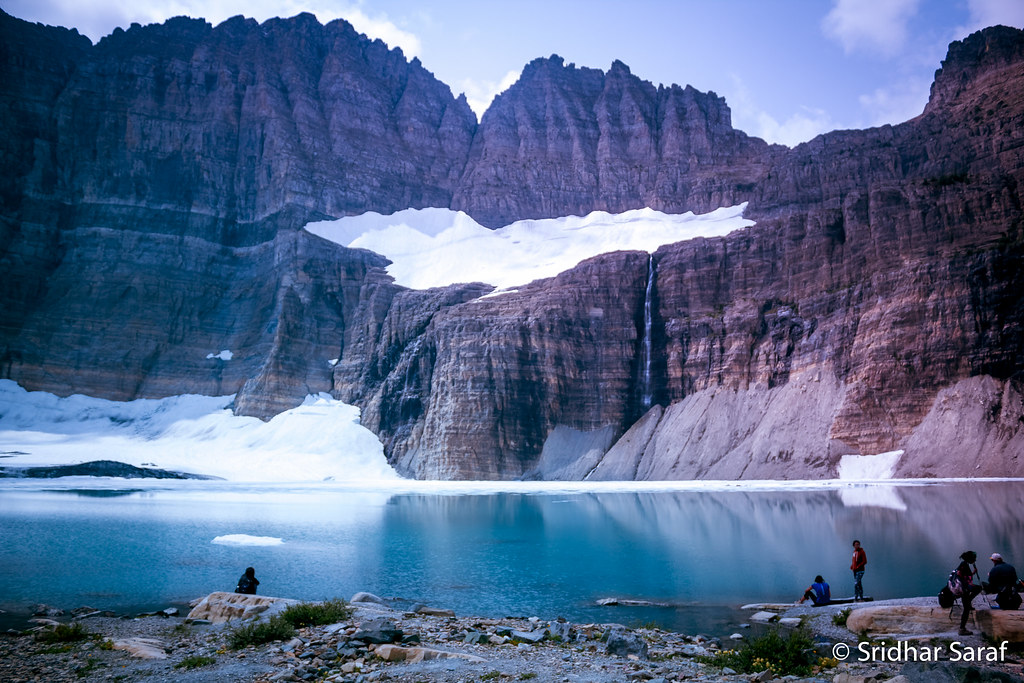
Photo: SridharSaraf via Flickr (CC BY-SA 2.0)
Stargazing Glacier National Park works best when you match the observing site to the sky you want to see. Logan Pass provides elevation and a broad celestial dome, Apgar frames stars above Lake McDonald, and the park’s eastern side opens toward the northern plains, where fewer mountains obstruct aurora displays. This guide explains how darkness, season, moonlight, road access, and terrain should shape your plans. Glacier covers more than 1,500 square miles along the Continental Divide, with elevations ranging from roughly 3,100 feet near Lake McDonald to 10,466 feet on Mount Cleveland. That relief creates dramatic foregrounds but also
Glacier covers more than 1,500 square miles along the Continental Divide, with elevations ranging from roughly 3,100 feet near Lake McDonald to 10,466 feet on Mount Cleveland. That relief creates dramatic foregrounds but also hides portions of the horizon. Successful night-sky viewing here requires more planning than simply finding an unlit parking area.
Why Stargazing in Glacier National Park Is Distinctive
Glacier and neighboring Waterton Lakes National Park were designated an International Dark Sky Park in 2017, creating the world’s first transboundary dark-sky park. Mountain ridges shield much of Glacier from distant development, while its northern latitude, close to the 49th parallel, places Polaris relatively high above the horizon and improves the odds of seeing northern aurora activity.
Darkness changes across the Continental Divide
The west side has dense conifer forest and narrower mountain horizons. It also receives more moisture, so clouds and valley haze occur frequently around Lake McDonald. The east side is drier and opens abruptly onto prairie. Locations near St. Mary generally provide a wider northern and eastern horizon, useful for watching an aurora or a late-summer moonrise.
Geology shapes the view overhead
Glacier’s sharp ridges consist largely of ancient sedimentary rocks lifted along the Lewis Overthrust. At night, silhouettes such as Reynolds Mountain, Clements Mountain, and the Garden Wall provide recognizable orientation points. Those same formations can conceal low celestial objects. A planet that remains visible from an open prairie overlook may disappear hours earlier behind the Garden Wall at Logan Pass.
Stargazing in Glacier National Park by Season
Summer provides the easiest access to high elevations, but it also brings the year’s shortest nights. Near the June solstice, Glacier never reaches full astronomical darkness because the sun does not descend a full 18 degrees below the horizon. July and August offer better access to Going-to-the-Sun Road, although wildfire smoke can reduce transparency and obscure the Milky Way.
When to Go Stargazing in Glacier National Park
| Period | Night-sky advantage | Main complication |
|---|---|---|
| May to June | Snow-covered peaks reflect moonlight, and visitor traffic is lighter | High-country roads and trails may remain closed; complete darkness is brief near the solstice |
| July to August | Best chance of reaching Logan Pass by road; Milky Way core is prominent | Darkness arrives late, and smoke or thunderstorms can impair visibility |
| September to October | Earlier nightfall, crisp air, and reduced traffic | Freezing temperatures and early snow can close alpine roads quickly |
| November to April | Long nights and bright winter constellations | Most park roads have limited access, with serious snow and avalanche hazards |
Moon phase matters as much as cloud cover
Plan Milky Way photography within several nights of a new moon, particularly from July through September. A first-quarter moon can still leave a useful dark interval after it sets. Full moonlight washes out faint stars, but it illuminates peaks and lakes well enough for landscape photography. Check both moonrise and moonset, since mountain ridges can delay the moon’s local appearance beyond the published time.
When to look for the aurora
Glacier lies far south of the auroral oval, so northern lights require elevated geomagnetic activity. Displays are possible in any season, with longer darkness around the spring and autumn equinoxes improving practical viewing opportunities. Choose an unobstructed northern horizon, monitor a short-term space-weather forecast, and allow your eyes 20 to 30 minutes to adjust before dismissing a pale glow.
Where to Stargaze in Glacier National Park Along Going-to-the-Sun Road
Going-to-the-Sun Road crosses approximately 50 miles between West Glacier and St. Mary, climbing from forested valleys to Logan Pass at 6,646 feet. Seasonal opening dates depend on snow removal, and nighttime construction, vehicle restrictions, reservations, or closures can affect access. Confirm current road status, entrance requirements, and operating details on the official park site before leaving reliable mobile service.
Lake McDonald and Apgar
Lake McDonald is roughly 10 miles long and lies at about 3,153 feet. From the Apgar area near its southwestern end, the lake creates a dark corridor toward the northeast, framed by the Livingston Range. This is one of the easiest productive locations for visitors staying on the west side because it avoids a late-night drive over the Continental Divide.
What the shoreline feels like after dark
On the cobble beach, rounded stones shift under every step and cold air settles against the water. Small waves make a steady clicking sound as they pull pebbles downslope. When your eyes adapt, the mountain silhouettes separate from the sky, and bright stars appear reflected between ripples. Even in midsummer, air draining from the peaks can make the shoreline feel markedly colder than the nearby forest.
Logan Pass and the alpine sky
Logan Pass has a much broader sky than the forested valleys, along with less atmospheric haze. The Milky Way can span above Reynolds Mountain and the Garden Wall on clear, moonless nights. Temperatures may drop rapidly after sunset, and strong wind is common. Wildlife, steep roadside terrain, and darkness make casual wandering hazardous, so established paved areas are safer than attempting an alpine trail at night.
Why Hidden Lake Overlook requires caution
The Hidden Lake Overlook route is about 2.7 miles round trip and gains roughly 540 feet from the pass. Snowfields can linger well into summer, while boardwalks, rock steps, and wildlife become difficult to detect after dark. Our team recommends scouting the route in daylight and turning around before visibility deteriorates unless you have suitable navigation, lighting, layers, and backcountry experience.
St. Mary Lake and the eastern corridor
St. Mary Lake extends nearly 10 miles beneath steep peaks, including Red Eagle Mountain and Little Chief Mountain. The eastern approach has a wider view toward the plains than Lake McDonald, making it better for low northern aurora activity. Wild Goose Island viewpoints add a distinctive foreground, but passing headlights can interrupt dark adaptation, and narrow pullouts demand careful parking.
Your First Night Stargazing in Glacier National Park
Begin before sunset. Daylight reconnaissance reveals safe parking edges, shoreline access, drop-offs, and the direction of major peaks. Download maps in advance because coverage is unreliable along much of Going-to-the-Sun Road. Avoid depending on park transportation for a late return, and leave enough fuel for slow mountain driving and possible detours.
What to carry after sunset
- Two light sources: Use a red-light headlamp for equipment and keep a brighter white light available for emergencies.
- Insulating layers: Pack a warm hat, gloves, and a wind-resistant outer layer even during July and August.
- Bear spray: Carry it where it can be reached immediately, and know how to use it.
- Offline navigation: Save the parking location and return route before darkness falls.
- Optics: Binoculars reveal star clusters and moons around Jupiter without the setup required by a telescope.
- Tripod and spare batteries: Cold temperatures shorten battery life, especially during long photographic exposures.
Protecting night vision and wildlife
Dim lights before arriving and point every beam toward the ground. White headlights, phone screens, and camera menus can erase dark adaptation for everyone nearby. Stay clear of wildlife corridors and never use lights to approach or surround an animal. Bears, deer, and other mammals continue moving through developed areas after visitors have left, particularly around lakeshores and meadow edges.
Beyond Going-to-the-Sun Road
Many Glacier and Two Medicine offer strong night-sky compositions without requiring a drive across Logan Pass. Both valleys place lakes beneath steep, glacially carved peaks, but their horizons differ. Many Glacier emphasizes enclosed mountain scenery, while Two Medicine provides a broader southeastern sky. These areas also become quieter after daytime hikers leave, although wildlife remains active around campgrounds, parking areas, and shorelines.
Reflections at Swiftcurrent Lake
Swiftcurrent Lake sits at roughly 4,860 feet beneath Mount Grinnell, which rises to 8,851 feet. The lake’s southwestern shore provides views toward the Continental Divide, and calm water can reflect bright stars and moonlit ridges. The surrounding mountains block much of the low western sky, so this location favors overhead constellations and landscape photographs rather than objects close to the horizon. Scout shoreline paths during daylight because roots, rocks, and abrupt water edges become difficult to distinguish at night.
Two Medicine’s southeastern opening
Two Medicine Lake lies at approximately 5,164 feet, with Rising Wolf Mountain dominating its northern side. The valley opens toward the southeast, making it useful for watching summer constellations rise or photographing the Milky Way as it changes position through the night. Wind can funnel along the lake and shake a tripod even when nearby forest appears calm. Extend the tripod’s thickest leg sections first, keep the center column lowered, and avoid setting up on floating or loosely fitted dock boards.
The North Fork After Dark
Glacier’s North Fork district provides some of the park’s darkest surroundings, particularly around Bowman Lake. Access involves unpaved roads where dust, washboards, potholes, and wildlife can make nighttime driving slow. Drivers should arrive before sunset rather than attempting the approach for the first time in darkness. Services are sparse, mobile reception is unreliable, and a mechanical problem here carries greater consequences than it would near Apgar or St. Mary.
Bowman Lake and its narrow mountain frame
Bowman Lake stretches about seven miles beneath the Livingston Range. From its lower end, the view looks northeast along the water toward Mount Peabody and the lake’s mountainous head. Forest confines the shoreline, so the visible sky is narrower than at Logan Pass. That limitation creates a concentrated composition for star trails, particularly when Polaris remains visible above the ridgeline. Moisture near the lake can fog lenses, making a lens cloth and a low-powered dew heater useful additions.
When the extra drive is worthwhile
Choose the North Fork when solitude and low local light matter more than a broad horizon. It works especially well for stationary photography, binocular observing, or watching stars reflected in the lake. Visitors pursuing aurora should generally favor the eastern side, where mountains obstruct less of the north. Stargazing Glacier National Park often involves this tradeoff: the darkest site may not provide the clearest view in the direction of a specific celestial event.
Camera Settings for Glacier’s Mountains and Stars
Mountain silhouettes require different exposure choices from open-sky astrophotography. A wide lens between 14 and 24 millimeters captures both the Milky Way and nearby peaks, while an aperture near f/2.8 gathers enough light for relatively short exposures. A practical starting point is ISO 3200 with a 10 to 15 second shutter speed. Review star sharpness at full magnification because longer exposures can produce visible trailing, especially with high-resolution sensors.
Balancing stars with the foreground
Focus manually on a bright star using magnified live view, then tape the focus ring if it moves easily. A single exposure may leave the mountains nearly black on a moonless night. Photographers can capture a longer, lower-ISO foreground exposure without moving the tripod, then blend it with the sky image later. Moderate moonlight provides a simpler alternative because it reveals sedimentary layers, snowfields, and trees while preserving brighter constellations.
Adjustments for aurora and meteor showers
Aurora curtains can change shape rapidly, so shorten exposures to roughly one to five seconds and raise ISO as needed. Meteors require continuous shooting because their timing is unpredictable. Disable long-exposure noise reduction, which can leave the camera processing while another meteor crosses the frame. Use an intervalometer and compose with more sky than foreground so long meteor paths remain inside the image.
- Turn off image stabilization when the camera is locked firmly to a tripod.
- Use manual white balance around 3,500 to 4,000 kelvin for a neutral starting point.
- Cover the optical viewfinder if stray light can enter during a long exposure.
- Keep spare batteries inside an inner pocket, where body heat slows cold-related power loss.
- Avoid light painting near wildlife, roads, campsites, or other observers.
Planning Your Stargazing Night in Glacier National Park
The most dependable plan combines a daylight activity with an observing site nearby. Hike near Logan Pass and remain in the developed pass area after sunset, or spend the afternoon around Lake McDonald before moving to the Apgar shoreline. On the east side, pair a daytime visit to St. Mary Lake with an evening at a safely accessible viewpoint. This approach reduces unfamiliar driving and lets you identify mountain horizons before celestial objects appear.
Choose the location according to the event. Logan Pass supplies elevation and a wide celestial dome, Apgar provides convenient lake reflections, St. Mary opens toward potential aurora activity, and Bowman Lake rewards visitors prepared for remote travel. Then match the date to moon phase, astronomical darkness, smoke, and cloud forecasts. A carefully selected valley will usually produce better results than driving between several sites after dark.
Glacier’s strongest night-sky experiences come from understanding how its ridges, lakes, forests, and weather shape the view. Arrive early, remain within terrain you have already inspected, protect your night vision, and carry enough insulation for a sudden temperature drop. With those decisions made before sunset, the park’s dark skies become easier to observe, photograph, and enjoy responsibly.
Want to keep exploring? Browse all our Glacier guides and articles for more trip-planning tips and ideas.
Gear & Essentials
Tell us about your trip and we will add what else you will want:
The basics
Worth having in the car whatever the park.
For this trip
Traveling with kids
Bringing a pet
RVing
Backcountry
Winter conditions
On the water
Photography
Accessibility
As an Amazon Associate we earn from qualifying purchases, at no extra cost to you.