Where to Stay Near Grand Teton National Park: Lodges, Campgrounds and Towns
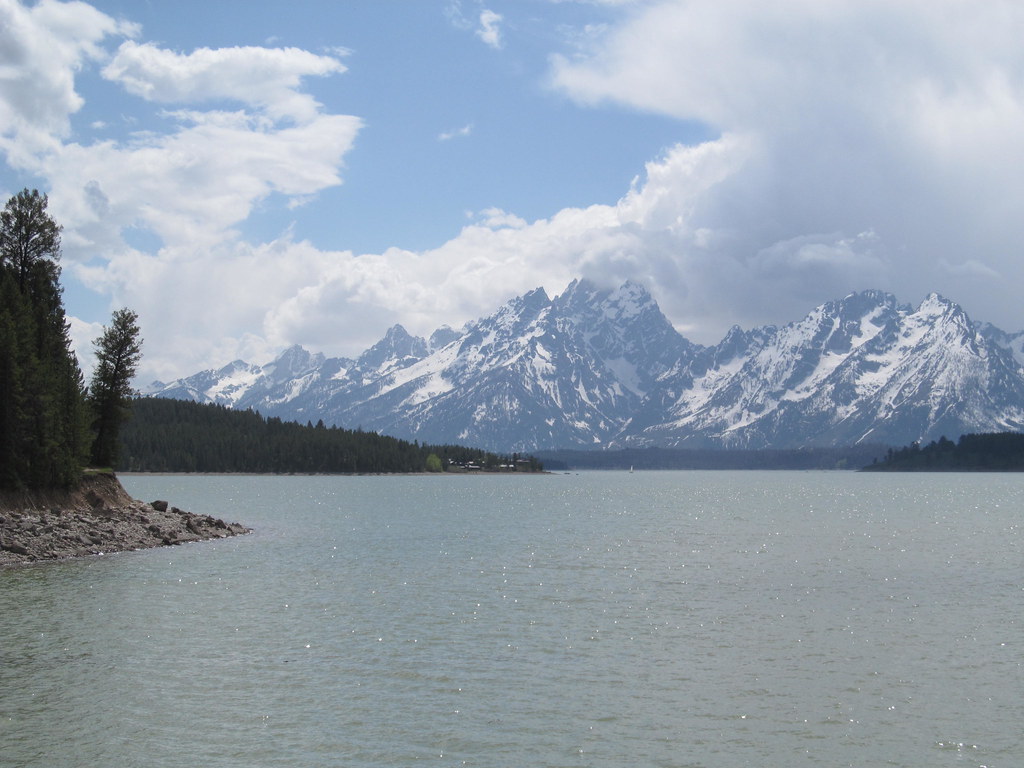
Photo: Dougtone via Flickr (CC BY-SA 2.0)
Deciding Where Stay Near Grand Teton National Park feels especially consequential at Oxbow Bend before sunrise, when cold air settles over the Snake River and Mount Moran appears in the still water. Gravel shifts underfoot at the roadside overlook, elk may bugle from willow flats in autumn, and the first light reaches the 12,610-foot summit several minutes before it warms the riverbank. Your accommodation’s location determines how easily you can experience moments like this. Grand Teton stretches along a north-to-south corridor, with Jackson Lake and Colter Bay in the north and Jenny Lake and the central peaks farther south.
Accommodation location determines how easily you can experience moments like this. Grand Teton stretches along a north to south corridor, with Jackson Lake and Colter Bay in the north, Jenny Lake and the central peaks farther south, and Moose near the park’s southern entrance. Staying inside the park reduces early morning driving, while Jackson provides the broadest choice of restaurants, shops, and year-round lodging. Campgrounds add proximity to wildlife and trailheads but require more planning.
Where to Stay Near Grand Teton National Park Based on Your Priorities
The best base depends on the experiences at the top of your itinerary. Jenny Lake is the practical choice for hikers targeting Cascade Canyon, Inspiration Point, or the trails beneath Teewinot Mountain. Jackson Lake works better for boating, wildlife watching, and access to the northern park. Jackson suits travelers who want evening dining and a larger range of accommodation prices.
Choose the central park for signature hiking
The Jenny Lake area places visitors beneath the steepest face of the Teton Range. From here, the 7.1 mile loop around Jenny Lake connects with Hidden Falls, Inspiration Point, and Cascade Canyon. A seasonal passenger boat can shorten the approach across the lake, though schedules and operating dates vary. Lodging in this zone is limited, so rooms often disappear well before peak summer.
Staying centrally also makes dawn starts easier. Trailhead parking near Jenny Lake fills early during busy periods, and afternoon thunderstorms are common over the high peaks in July and August. Starting on foot after sunrise provides cooler temperatures, quieter trails, and more time to turn around before exposed terrain becomes hazardous.
Stay north for Jackson Lake and wildlife
Jackson Lake sits at approximately 6,772 feet and extends about 15 miles beneath Mount Moran. Colter Bay, Jackson Lake Junction, and Signal Mountain provide access to lakeshore walks, boat launches, and northern wildlife areas. Oxbow Bend lies east of Jackson Lake Junction, while Willow Flats spreads below Jackson Lake Lodge. Moose, elk, black bears, grizzly bears, and trumpeter swans use this wetland and sagebrush habitat.
Use Jackson for services and nightlife
Jackson lies about 12 miles south of Moose and functions as the region’s main year-round service center. Its hotels range from basic motels to full-service resorts, while restaurants, grocery stores, gear shops, and medical services are easier to reach than they are from park lodging. Traffic can slow the drive toward Moose and Jenny Lake during summer mornings, so a Jackson stay rewards travelers willing to leave early.
Understanding Where to Stay Near Grand Teton
Grand Teton’s accommodation areas follow two primary roads. US 89, 191, and 287 forms the eastern route through sagebrush flats, connecting Moose Junction, Moran Junction, Oxbow Bend, and Jackson Lake. Teton Park Road follows the mountain front between Moose and Jackson Lake Junction, providing the most direct access to Jenny Lake, String Lake, and Signal Mountain.
Drive times between useful bases
Distances appear modest on a map, but wildlife congestion, road construction, and scenic stops can substantially lengthen a journey. Bison occasionally occupy the roadway near Moran, while bear sightings can produce abrupt traffic backups. The following estimates assume normal conditions and no extended stops.
| Base | Primary access | Approximate drive to Moose | Best suited to |
|---|---|---|---|
| Jackson | Southern approach | 20 to 30 minutes | Dining, shopping, winter visits |
| Jenny Lake area | Central Teton Park Road | 25 to 35 minutes | Hiking and early trail starts |
| Signal Mountain | Southern Jackson Lake | 40 to 50 minutes | Lake access and balanced touring |
| Colter Bay | Northern Jackson Lake | About 1 hour | Boating, families, northern wildlife |
| Flagg Ranch area | John D. Rockefeller, Jr. Memorial Parkway | About 1 hour 20 minutes | Combining Grand Teton and Yellowstone |
Seasonal roads change the calculation
Much of Teton Park Road closes to motor vehicles in winter, although the section between Taggart Lake Trailhead and Signal Mountain is groomed for nonmotorized recreation when conditions allow. US 89 generally remains the essential through route. Summer travelers have the greatest choice of in-park lodging, while winter visitors usually find Jackson more practical because most facilities around the lakes operate seasonally.
Where to Stay Inside Grand Teton National Park
In-park lodges trade urban convenience for immediate access to mountain scenery. Their settings differ substantially. Jenny Lake accommodations sit near forest and trailheads, Jackson Lake Lodge overlooks Willow Flats, and Colter Bay has a busier village layout near the lakeshore. Buildings range from rustic cabins to lodge rooms, so travelers should compare bathroom arrangements and meal access rather than relying on the word “lodge.”
Grand Teton Lodges Around Jenny Lake and Jackson Lake
Jenny Lake Lodge
Jenny Lake Lodge occupies a wooded location near the lake’s northern end. Its position is particularly useful for String Lake, Leigh Lake, and the Paintbrush Canyon trail system. The demanding Paintbrush Canyon and Cascade Canyon loop covers roughly 19 miles, climbs into alpine terrain near 10,720 foot Paintbrush Divide, and is best attempted with an early start and stable weather.
Jackson Lake Lodge and Signal Mountain Lodge
Jackson Lake Lodge faces west across Willow Flats toward Mount Moran, giving guests broad views without requiring a trail. Signal Mountain Lodge sits closer to the water on Jackson Lake’s southeastern shore and provides convenient access to the 6.8 mile Signal Mountain Summit Road. The summit overlooks Jackson Lake, the Teton Range, and the glacial outwash plains east of the Snake River.
Cabins and village-style accommodation
Colter Bay Village is useful for groups seeking a northern base with access to short lakeshore trails. The 2 mile Lakeshore Trail follows forested peninsulas with intermittent views across Jackson Lake. Farther north, lodging near Flagg Ranch places travelers between Grand Teton and Yellowstone, though reaching Jenny Lake or Jackson adds considerable driving.
Campgrounds and the Tradeoffs of Sleeping Outdoors
Campgrounds offer the closest connection to the park’s daily rhythms. Temperatures can fall sharply after sunset even in midsummer, and nights near Jackson Lake often feel colder than forecasts for Jackson suggest. Elevation, dry air, and clear skies encourage rapid heat loss. Afternoon wind can also move through exposed sites near sagebrush or open water.
Where to Stay Near Grand Teton for Tent Camping
Jenny Lake Campground is positioned for hikers, while Signal Mountain and Colter Bay favor lake access. Lizard Creek, near the northern end of Jackson Lake, has a quieter and more remote setting. Gros Ventre Campground lies southeast of Moose near cottonwood forest and sagebrush habitat, making it useful for wildlife observation and access to the southern park.
- Jenny Lake: Best for walking directly toward central trailheads and minimizing morning driving.
- Signal Mountain: A balanced location for Jackson Lake, Jenny Lake, and Oxbow Bend.
- Colter Bay: Practical for families, boaters, and travelers continuing north.
- Lizard Creek: Better for a quieter northern base, with longer drives to central trails.
- Gros Ventre: Convenient for Jackson, Mormon Row, Moose, and the park’s southern corridor.
Reservations, food storage, and campsite selection
Campground reservation systems, opening dates, fees, vehicle limits, and generator rules can change, so confirm current details on the official park site before committing to an itinerary. Demand is strongest from June through September, particularly around holiday weekends. A campground’s location matters as much as site availability because moving between the northern lake district and southern trailheads can consume a large portion of the morning.
Grand Teton is active bear country. Food, rubbish, cookware, toiletries, and scented products must be secured according to park rules whenever they are unattended. Campers should arrive prepared for cold rain, intense sun, and gusty wind within the same day. A waterproof shelter, warm sleep system, and rigid food storage plan are essential even when the forecast appears settled.
Towns Near Grand Teton National Park Beyond Jackson
Travelers who find central Jackson expensive or busy can widen the search to Wilson, Teton Village, and the Idaho side of Teton Pass. These bases have distinct advantages, but mountain roads separate them from park entrances. For anyone searching Where Stay Near Grand Teton with a rental car, the important calculation is the daily route to the trailhead, not the straight-line distance to the mountains.
Wilson and Teton Village
Wilson sits west of Jackson near the junction of Wyoming Highway 22 and the road into Jackson Hole Mountain Resort. It provides access to groceries, casual food, and the southern end of the valley without requiring an evening trip into central Jackson. Teton Village lies farther north at the base of the ski area. Summer lodging there works well for travelers interested in resort activities, but reaching Moose requires driving south before turning back toward the park.
Victor and Driggs across Teton Pass
Victor and Driggs often provide vacation rentals, motels, and cabins at different price points from Jackson Hole. Both communities sit in Idaho’s Teton Valley, west of the range. The route into Jackson crosses 8,431 foot Teton Pass, a steep mountain highway with sustained grades and winter weather exposure. These towns are practical for longer stays and remote work, but repeated day trips to Jenny Lake create considerable driving.
| Outside-park base | Approximate route to Moose | Main advantage | Important tradeoff |
|---|---|---|---|
| Wilson | About 25 to 35 minutes | Quieter evenings near Jackson | Traffic can build at major junctions |
| Teton Village | About 35 to 45 minutes | Resort lodging and mountain activities | Indirect drive to park roads |
| Victor | About 55 to 75 minutes | Broader choice of rentals | Teton Pass crossing each way |
| Driggs | About 1 hour 10 minutes to 1 hour 30 minutes | Useful for longer Teton Valley stays | Poor base for consecutive dawn starts |
Match Your Base to a Realistic Itinerary
Changing accommodation every night rarely saves enough time to justify repeated packing. A better strategy is to divide a longer trip into northern and southern blocks. Spend two or three nights around Jackson Lake for wildlife, boating, and Yellowstone access, then move to Jackson or the central park for hikes around Jenny Lake, Taggart Lake, and Phelps Lake.
A short visit needs one central base
For two nights, Signal Mountain or the Jenny Lake area offers the most balanced location. One morning can begin at Oxbow Bend and continue along the Jackson Lake shoreline. The second can focus on Cascade Canyon or the 3.8 mile round-trip Taggart Lake Trail. Jackson also works, provided both days begin early enough to avoid peak traffic and crowded trailhead parking.
Combined Yellowstone trips favor the north
Travelers continuing to Yellowstone should consider Colter Bay or the Flagg Ranch area for their final Grand Teton night. Yellowstone’s South Entrance lies beyond the John D. Rockefeller, Jr. Memorial Parkway, and the route then continues through the Lewis River canyon toward Grant Village. Distances inside Yellowstone remain large, so sleeping farther south before a Yellowstone touring day creates unnecessary backtracking.
Prepare for the Conditions Your Room Cannot Fix
Lodging category does not eliminate environmental constraints. Grand Teton’s valley floor sits near 6,300 to 6,800 feet, while surrounding summits rise abruptly above 12,000 feet. Strong ultraviolet exposure, dry air, and rapid temperature changes affect guests in cabins as readily as campers. Spring prescribed fire operations may also influence local smoke or access, as explained in our Grand Teton prescribed fire update.
Pack for cold mornings and exposed afternoons
A July morning beside Jackson Lake can require a fleece and light gloves, followed by warm, exposed conditions on sagebrush trails. Pack layers that can move from a cold wildlife stop to a sunny hike. Lodging guests should also carry food and water during long touring days because returning to a room may involve an hour of driving.
- A rain shell and insulating layer for sudden mountain weather
- Sun protection suitable for high elevation
- Bear spray carried where it can be reached immediately
- A refillable water container for each traveler
- Binoculars for observing wildlife without approaching it
- A paper map for areas with weak mobile coverage
Check the room details before paying
Read accommodation descriptions for air conditioning, private bathrooms, kitchen facilities, and parking dimensions. Historic cabins may have compact rooms or shared walls, while vacation rentals can impose minimum stays and cleaning charges. RV travelers must compare the campsite’s listed pad length with the total length of the tow vehicle and trailer. A technically available site may still be unusable for an oversized combination.
Choose Where to Stay Near Grand Teton to Protect Your Park Time
The most effective choice aligns one lodging zone with the experiences that matter most. Central park rooms favor major hikes, Jackson Lake bases support wildlife watching and northern exploration, and Jackson supplies the widest range of year-round services. Wilson and Teton Village add quieter alternatives, while Victor and Driggs suit travelers willing to exchange lower-density surroundings for a mountain pass commute.
Build the reservation around your earliest planned mornings, then calculate evening meals and supply stops from that location. A well-placed room can remove several hours of driving over a three-day visit, improve the odds of finding trailhead parking, and make sunrise wildlife outings manageable. That practical advantage usually matters more than a larger room or a modest nightly saving far from the park corridor.
Want to keep exploring? Browse all our Grand Teton guides and articles for more trip-planning tips and ideas.
Gear & Essentials
Tell us about your trip and we will add what else you will want:
The basics
Worth having in the car whatever the park.
For this trip
Traveling with kids
Bringing a pet
RVing
Backcountry
Winter conditions
On the water
Photography
Accessibility
As an Amazon Associate we earn from qualifying purchases, at no extra cost to you.