Yellowstone National Park in Winter: What to Expect and What to Do
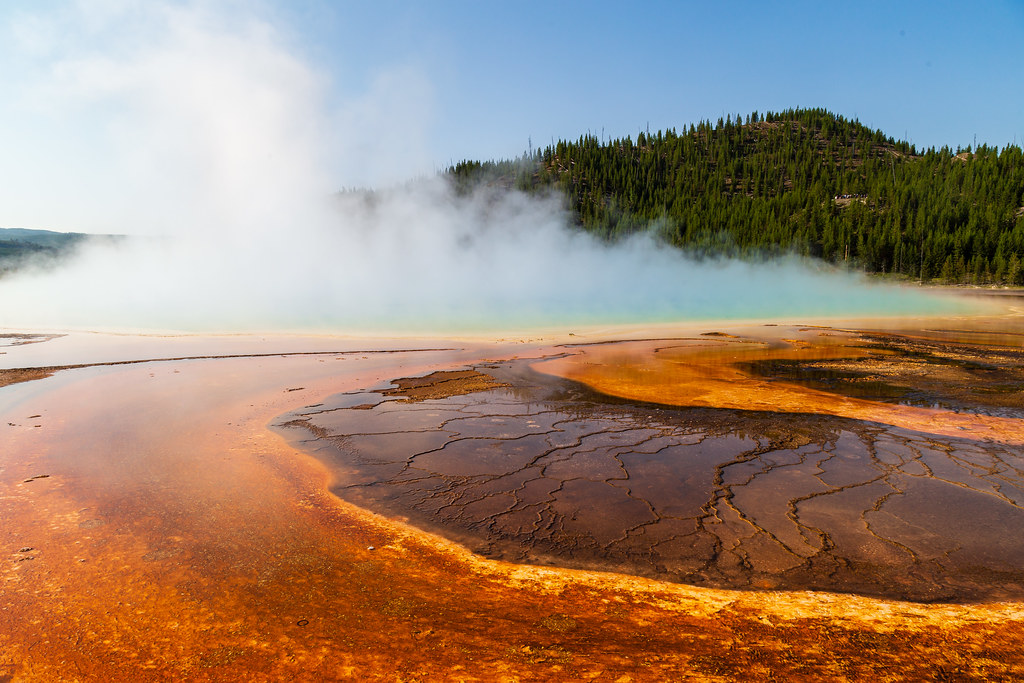
Photo: aparlette via Flickr (CC BY 2.0)
Yellowstone National Park winter travel works differently from a conventional cold weather road trip because most of the park closes to ordinary vehicles. Once seasonal roads are covered by snow, the interior becomes accessible primarily by snowcoach, guided snowmobile, skis, or snowshoes. The exception is the northern road connecting Gardiner, Mammoth Hot Springs, Tower Junction, the Lamar Valley, and Cooke City, which generally remains open to cars throughout winter.
That division creates two distinct trips. Visitors can base themselves near the North Entrance and explore wildlife country independently, or reserve commercial oversnow transportation into Old Faithful and nearby thermal basins. Snow muffles traffic, bison gather around geothermal ground, and steam becomes much more visible against temperatures that regularly fall below zero Fahrenheit overnight.
How Yellowstone National Park Winter Changes the Map
Yellowstone covers nearly 3,500 square miles across Wyoming, Montana, and Idaho, with elevations ranging from about 5,300 feet near Reese Creek to 11,358 feet on Eagle Peak. Winter closes the shortcuts that make summer loops possible. A place that appears 30 miles away on a map may require reserved oversnow transportation, a long ski, or an entirely different entrance.
The northern road remains the practical driving corridor
The North Entrance at Gardiner leads five miles uphill to Mammoth Hot Springs, park headquarters, and the travertine terraces. From Mammoth, the plowed route continues east through Tower Junction and the Lamar Valley to the Northeast Entrance and Cooke City. Road conditions can deteriorate during storms, but this corridor usually provides winter access for ordinary vehicles. The road beyond Cooke City toward Red Lodge is seasonally closed, so Cooke City functions as the end of the route.
Interior roads become oversnow routes
Roads linking West Yellowstone, Madison Junction, Old Faithful, Yellowstone Lake, and the Grand Canyon of the Yellowstone generally close to wheeled traffic in autumn. Commercial snowcoaches and authorized snowmobiles begin using designated routes after enough snow accumulates, commonly around mid December. Operations usually wind down in early or mid March as the snowpack weakens. The East Entrance does not provide routine winter access into the interior.
Choosing the Right Time to Visit Yellowstone National Park in Winter
Winter is better understood as three periods rather than one uniform season. Early winter brings short days and developing snow cover. January and February deliver the deepest cold and the most dependable oversnow conditions. March adds daylight and more variable surfaces, including packed snow in the morning and softer snow after midday warming.
| Winter period | Typical conditions | Crowd pattern | Access and activities |
|---|---|---|---|
| November to early December | Increasing snow, thin coverage at lower elevations, very short daylight | Very quiet outside holiday periods | Northern road trips, wildlife watching, limited skiing as coverage permits |
| Mid December to February | Persistent snowpack, frequent subzero nights, deep snow in the interior | Moderate around holidays, otherwise far below summer levels | Snowcoach tours, guided snowmobiling, skiing, snowshoeing, wildlife viewing |
| March | Longer days, cold mornings, stronger sun, changing snow surfaces | Generally light, with localized activity around access hubs | Late season oversnow trips, wildlife watching, springlike skiing before roads close for plowing |
Early winter rewards flexible travelers
November and early December can produce stark landscapes with relatively little visitation, especially around Mammoth and the Lamar Valley. Snow depth is less predictable, however. Lower trails may have exposed rocks and ice while higher routes hold deep drifts. This period suits travelers focused on wildlife and photography rather than those planning a full schedule of snowcoach excursions or groomed skiing.
January and February bring the fullest winter conditions
These are usually the most reliable months for traveling over snow into the interior. Old Faithful sits at roughly 7,350 feet, where temperatures remain colder and snow lasts longer than around Mammoth. Daytime highs often remain below freezing, while clear nights can fall well below zero. Cold air also sharpens the visibility of steam columns above geysers, fumaroles, and hot springs.
March trades deep cold for longer daylight
March can be productive for skiing and wildlife observation, but daily temperature swings matter. Firm morning snow may become soft or sticky by afternoon. Oversnow operations end before roads reopen to cars because crews need time to plow, repair surfaces, and prepare facilities. Travelers arriving during this transition can encounter fewer available routes than the calendar alone suggests.
Yellowstone National Park Winter Road Access, Reservations, and Trip Planning
A successful Yellowstone winter itinerary begins with choosing an access model. Independent drivers can use the northern corridor and stop at pullouts between Mammoth and the Lamar Valley. Reaching Old Faithful or other interior locations generally requires a reserved snowcoach, an authorized snowmobile arrangement, or an overnight package that includes transportation from a winter gateway.
Pick a gateway based on your priorities
- Gardiner and Mammoth: Best for independent driving, the Mammoth terraces, and access toward Tower Junction and the Lamar Valley.
- Cooke City and the Northeast Entrance: Useful for concentrating on the northeastern wildlife corridor, though winter driving requires careful attention to snow and ice.
- West Yellowstone: A principal departure point for commercial oversnow trips toward Madison Junction and Old Faithful.
- South Entrance area: Used by some commercial snowcoach itineraries approaching from Jackson and Grand Teton country, subject to seasonal operations.
Reserve transportation before building the rest of the itinerary
Snowcoach seats, guided snowmobile trips, and limited interior lodging can fill well ahead of peak winter dates. Snowmobile access is regulated, and most visitors cannot simply arrive with a machine and enter the park independently. Arrange the interior transportation first, then add gateway lodging and flights. Entrance rules, approved operators, road status, fees, and reservation procedures can change, so confirm current details on the official park site.
What to Do in Yellowstone National Park in Winter
Winter concentrates activity into a smaller number of accessible landscapes. The strongest itinerary combines one thermal area, one wildlife corridor, and time on skis or snowshoes. Trying to reproduce a summer sightseeing loop leads to excessive transit time because Grand Loop Road is no longer an open circuit for private vehicles.
Experience geothermal basins in cold air
Old Faithful and the Upper Geyser Basin
Old Faithful remains the central winter destination because the Upper Geyser Basin contains the park’s densest concentration of geysers. On a cold morning, packed snow squeaks under boots and frost coats lodgepole pines beside the boardwalk. Steam drifts across the basin, briefly hiding the cone, then the eruption rises above the white ground with water freezing along its margins. Boardwalks can be icy and visibility can change within seconds.
Mammoth Hot Springs
Mammoth’s terraces are formed from travertine, a pale limestone deposited as hot water rises through rock and releases dissolved calcium carbonate. The lower terraces are accessible near the developed area, while winter conditions determine how much of the Upper Terrace Loop can be explored on foot, skis, or snowshoes. Active water flow shifts over time, leaving some terraces bright white and others gray, brown, or dry.
Watch wildlife in the northern range
The Lamar Valley and surrounding northern range provide Yellowstone’s most practical winter wildlife viewing from a private vehicle. Bison use windswept slopes and geothermal patches where forage is easier to reach. Elk often occupy lower elevations, while coyotes, foxes, wolves, bighorn sheep, and river otters may also be observed. A spotting scope is considerably more useful than binoculars when animals remain hundreds of yards from the road.
Ski and snowshoe established routes
Popular options include the 1.5 mile Upper Terrace Loop near Mammoth and the approximately 4.8 mile round trip route to Lone Star Geyser from near Old Faithful. Winter distances feel longer because breaking trail, climbing through loose snow, and managing cold consume time. Geothermal crust can be dangerously thin, so remain on marked routes and boardwalks around thermal features, even when an untracked snowfield appears solid.
How Light Crowds Affect Yellowstone National Park in Winter
Winter visitation is a small fraction of summer volume, but the remaining travelers concentrate along the few open corridors. Mammoth can feel active around lodging and tour departure times, while roadside pullouts in the Lamar Valley fill when wolves or an active carcass draw observers. Interior snowcoach groups also tend to arrive at major thermal features together. The landscape is quiet between these clusters, so solitude depends more on timing and location than on total visitor numbers.
Use daylight strategically
Wildlife watchers should reach the northern range near first light, when wolves and coyotes are often active and roadside stopping areas have more space. Thermal basins are especially atmospheric during cold mornings, though dense steam can conceal pools and geysers. Midday provides better visibility and warmer temperatures for skiing. Winter daylight is limited, and mountain shadows reach roads and valleys well before sunset, so leave enough time for a slower return on packed snow.
Expect slower movement at every stage
A 30 mile drive can take considerably longer when snow, wildlife congestion, or icy pullouts intervene. Snowcoaches also travel more slowly than summer vehicles and may stop for animals or changing road conditions. Avoid scheduling a long northern range wildlife drive on the same day as a fixed departure from another gateway. One primary activity per day creates room for weather delays without sacrificing the experience that motivated the trip.
Build an Itinerary That Matches the Access
The most efficient plans group activities by gateway instead of attempting to connect distant sections of the park. A northern range stay supports independent wildlife watching and Mammoth exploration. An Old Faithful stay or day excursion supports geyser basins, skiing, and snowshoeing. Combining both areas generally requires separate lodging blocks and careful coordination because private vehicles cannot cross the snow covered interior roads.
| Trip length | Best base pattern | Realistic priorities | Main limitation |
|---|---|---|---|
| Two days | Gardiner or West Yellowstone | Choose wildlife or an interior thermal excursion | Too little time to combine distant gateways comfortably |
| Three to four days | One gateway with a reserved interior trip | Thermal features, one ski outing, and wildlife viewing | Storms can disrupt a tightly scheduled transfer |
| Five days or longer | Split northern range and interior access | Lamar Valley, Mammoth, Old Faithful, and longer ski routes | Requires additional lodging and transportation planning |
A practical three day sequence
- Use the first day for Mammoth Hot Springs and lower elevation wildlife viewing near Gardiner.
- Devote the second day to the Lamar Valley, allowing the full daylight window for scanning and roadside stops.
- Reserve the third day for a snowcoach excursion from the appropriate gateway, with no same day flight connection.
This sequence protects the reservation dependent activity from an overly ambitious transfer. Travelers based in West Yellowstone can reverse the emphasis, using the first day to become familiar with winter conditions before taking a longer interior excursion. Keep the final evening near the departure airport or highway corridor when a major storm is forecast.
Prepare for Cold, Altitude, and Limited Services During a Yellowstone National Park Winter
Cold management begins before anyone steps onto a trail. Batteries discharge quickly below freezing, eyeglasses fog under face coverings, and perspiration can chill the body once movement stops. Carry insulated boots, traction devices, a wind resistant outer layer, spare gloves, and chemical hand warmers. Place water inside the pack rather than in an exposed bottle pocket, where it can freeze from the top down.
Plan for self rescue on the northern road
Cell service is unreliable across much of the northern range. A vehicle kit should include a shovel, scraper, blankets, food, water, headlamp, and a fully charged backup battery. Keep the fuel tank well above empty because idling during delays consumes fuel quickly. Winter tires provide a meaningful advantage on compacted snow, while four wheel drive primarily helps with acceleration and does not shorten braking distance.
Give wildlife winter space
Animals conserve energy when forage is buried and temperatures are low. Federal park rules require at least 100 yards of separation from bears and wolves and 25 yards from other wildlife, including bison, elk, and bighorn sheep. Never use skis or snowshoes to approach an animal. If wildlife changes direction, raises its head repeatedly, or stops feeding to watch you, increase the distance immediately.
Deciding If Winter Fits Your Priorities
Choose Yellowstone National Park Winter travel for concentrated wildlife watching, snow covered thermal landscapes, and guided access into an interior largely closed to cars. January and February best suit travelers seeking dependable snow, while March favors those who value longer daylight and can accept variable surfaces. Early winter works for flexible visitors content to focus on the northern road if oversnow operations have not begun.
Questions to answer before booking
- Is Lamar Valley wildlife or Old Faithful the main priority?
- Are all travelers comfortable in subzero temperatures?
- Can the schedule absorb a storm delay?
- Does anyone require an activity with minimal walking on ice?
- Is guided oversnow transportation within the trip budget?
Those answers determine the gateway, trip length, and reservation sequence. Travelers who want spontaneous driving throughout the Grand Loop should choose the regular road season instead. Winter rewards a narrower plan: select one access corridor, reserve the activity that cannot be improvised, and leave open time for weather and wildlife.
Plan Around Winter’s Actual Boundaries
A successful Yellowstone winter trip starts with accepting that snow redraws the park. The northern road supports independent exploration, while Old Faithful and the interior require organized transportation or substantial human powered travel. Matching lodging to those access points prevents long detours and protects limited daylight for wildlife, thermal features, and established ski routes.
Choose the winter period according to snow reliability, temperature tolerance, and preferred activity, then build in time for slower roads and changing conditions. With that framework, the park’s closures become useful planning boundaries rather than surprises. The result is a focused trip that uses Yellowstone’s quietest season on its own terms.
Want to keep exploring? Browse all our Yellowstone guides and articles for more trip-planning tips and ideas.
Gear & Essentials
Tell us about your trip and we will add what else you will want:
The basics
Worth having in the car whatever the park.
For this trip
Traveling with kids
Bringing a pet
RVing
Backcountry
Winter conditions
On the water
Photography
Accessibility
As an Amazon Associate we earn from qualifying purchases, at no extra cost to you.