Yellowstone National Park in Spring: What to Expect and What to Do
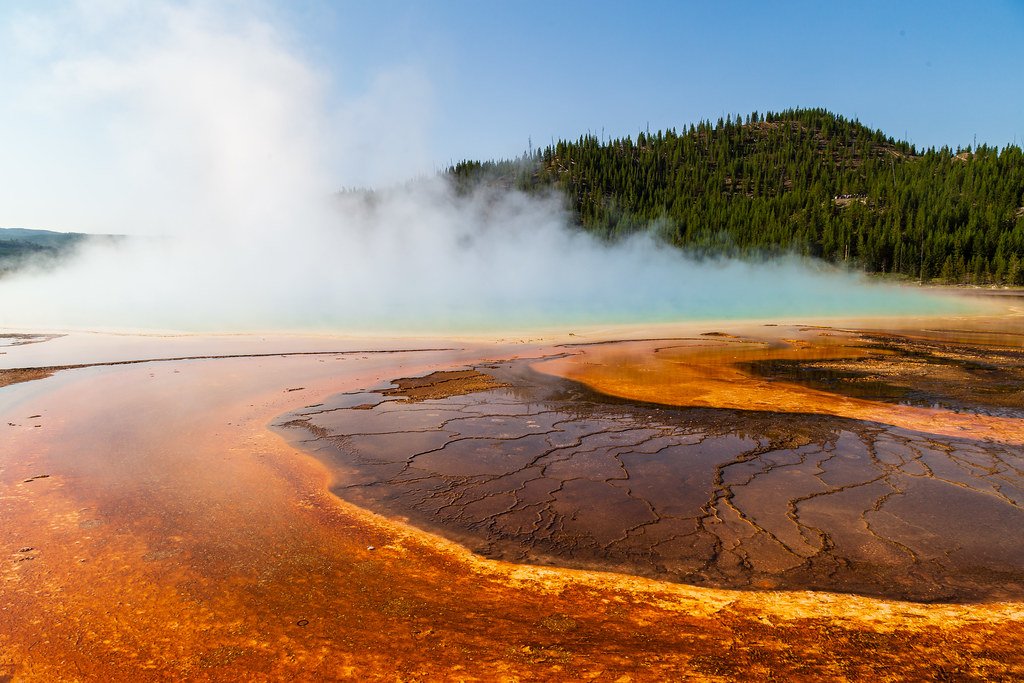
Photo: aparlette via Flickr (CC BY 2.0)
Yellowstone National Park spring trips work best for travelers who can accept shifting road access, muddy trails, and sudden snow in exchange for active wildlife and lighter crowds. March remains largely a winter visit, April brings plowed roads and awakening bears, and May provides the most practical combination of open routes, visible wildlife, and accessible boardwalks.
Yellowstone covers 2.2 million acres across Wyoming, Montana, and Idaho, with elevations ranging from about 5,300 feet near the North Entrance to 11,358 feet on Eagle Peak. Spring reaches the lower northern valleys first while snow persists around Yellowstone Lake, Canyon Village, and the park’s high passes. Planning by elevation and road opening sequence matters more than choosing dates from a calendar alone.
Yellowstone National Park in Spring at a Glance
Yellowstone National Park Spring Unfolds in Three Distinct Stages
March is winter throughout the interior. Groomed oversnow routes generally remain in operation early in the month before closing for spring plowing, while most park roads remain inaccessible to private vehicles. Mammoth Hot Springs and the northern road corridor are the principal exceptions. Daytime thawing may expose grass around Gardiner and the lower reaches of the Lamar Valley, but deep snow still covers higher plateaus.
April is the park’s transition month. Plow crews begin opening interior roads in stages, bison calves start appearing, and bears emerge near lower elevation feeding areas. By May, access expands toward Old Faithful, Yellowstone Lake, and the Grand Canyon of the Yellowstone. Late May feels increasingly like the main visitor season, although shaded trails can retain snow and Yellowstone Lake often remains cold, windy, and partly frozen.
How Yellowstone National Park in Spring Compares with Other Seasons
| Season | Typical conditions | Crowd level | Road and trail access | Best suited to |
|---|---|---|---|---|
| Spring | Snow, rain, freezing nights, and rapid warming at lower elevations | Low in March and April, rising through May | Limited at first, then expanding through staged road openings | Wildlife watching, photography, geyser basins, flexible road trips |
| Summer | Mild days, cool nights, thunderstorms, and occasional smoke | Highest, especially from late morning through afternoon | Broadest road and trail access | Long hikes, lake activities, family itineraries, complete park loops |
| Autumn | Crisp mornings, shorter days, early snow possible | Moderate, then low later in the season | Generally good early, with weather closures increasingly possible | Elk rut, fall color, hiking, wildlife viewing |
| Winter | Persistent snow, severe cold, and short daylight | Low outside concentrated tour areas | Most interior roads limited to authorized oversnow travel | Snowshoeing, skiing, winter photography, guided snowcoach trips |
Road Access Shapes Every Yellowstone National Park Spring Itinerary
The northern corridor provides the most dependable access
The road from the North Entrance at Gardiner through Mammoth Hot Springs and the Lamar Valley toward Cooke City is generally the park’s dependable year-round vehicle corridor, subject to weather and temporary closures. This route connects lower elevation wildlife habitat with the travertine terraces at Mammoth, the Blacktail Plateau area, Tower Junction, and Lamar Valley. It is the logical base for a March or early April trip.
Mammoth sits near 6,200 feet, while Lamar Valley is roughly 6,500 feet. That modest elevation change can still produce different conditions. South-facing slopes near Gardiner may be bare while shaded sections farther east remain icy. The road beyond Cooke City toward the Beartooth Highway is seasonally closed, so the Northeast Entrance functions as a dead end until regional mountain routes reopen.
Interior roads open in stages
The western road system usually begins opening to regular vehicles in mid-April, commonly providing access from West Yellowstone toward Madison, Old Faithful, and Mammoth. Additional segments toward Canyon Village, Lake Village, and the South and East entrances follow later as plowing and safety work progress. Dunraven Pass, at 8,859 feet, is among the later routes because of deep snow and avalanche exposure.
Opening dates are targets rather than guarantees. A single storm can delay plowing, close a recently opened segment, or create several hours of difficult driving. The park’s 2026 spring road delay illustrates why fixed itineraries need alternatives. Check road status, entrance operations, current fees, and reservation requirements on the official park site before traveling.
Allow more driving time than the mileage suggests
Mammoth to Lamar Valley is approximately 30 miles, while West Yellowstone to Old Faithful is about 31 miles. These distances routinely take longer than expected because of frost damage, construction, wildlife near the pavement, and stopped traffic. A bison herd can occupy a traffic lane for several minutes, and stopping in the roadway to photograph animals creates dangerous congestion.
What Weather, Wildlife, and Thermal Areas Feel Like in Spring
Prepare for winter and mud on the same day
Yellowstone’s high plateau averages roughly 8,000 feet above sea level. April and May can bring sunshine, sleet, heavy snow, and strong wind within a few hours. Morning temperatures commonly fall below freezing, creating black ice and firm snow. Afternoon warmth then softens unpaved paths into mud. Waterproof boots, traction devices, insulating layers, rain protection, gloves, and sunglasses all belong in the vehicle.
- Carry water and food because some seasonal services remain closed early in spring.
- Keep a snow brush and ice scraper in the vehicle through May.
- Use binoculars or a spotting scope instead of approaching wildlife.
- Pack traction devices for icy boardwalk approaches, but remove them if they could damage bare wooden surfaces.
- Bring a paper map because mobile coverage remains unreliable across much of the park.
Spring wildlife concentrates in open valleys
Lamar Valley, Little America, Blacktail Deer Plateau, and the grasslands around Mammoth are productive because snow leaves these areas earlier than the central plateau. Bison calves usually begin appearing from late April into May. Elk migrate toward summer range, pronghorn return to northern grasslands, and grizzly and black bears search for winter-killed animals, roots, and fresh vegetation.
Predators often remain distant. Wolves may be visible across Lamar Valley around dawn, particularly through a spotting scope, while bears can appear unexpectedly beside roads. Federal rules require visitors to remain at least 100 yards from bears and wolves and at least 25 yards from bison, elk, and other large animals. Inside a vehicle, allow animals to cross without surrounding or following them.
Yellowstone’s geothermal basins look different in cold air
At Grand Prismatic Spring, cold air can hold a dense layer of steam over the water, obscuring the famous orange, yellow, and blue microbial bands. Old Faithful remains worthwhile because eruption activity continues regardless of season, and chilly conditions make its steam plume more prominent. Norris Geyser Basin, one of the park’s hottest and most changeable thermal areas, may retain snow well after lower valleys have thawed.
Step onto the Upper Geyser Basin boardwalk early and the physical contrast is immediate. Frost can make the boards slick underfoot, your breath hangs in the air, and runoff channels carry warm water beneath curtains of steam. The hiss of vents competes with the crunch of old snow. When wind clears the vapor, sinter terraces and intensely blue pools appear only a few yards away, revealing features that were hidden seconds earlier.
Choosing the Right Time to Visit Yellowstone National Park in Spring
March and early April favor solitude and the northern range
Choose this period if wildlife observation and quiet roads matter more than seeing the park’s complete network. Base plans around Mammoth and the northern range, where lower elevations support exposed forage. Hiking choices are limited, snow travel may require skis or snowshoes, and the interior can be between its winter transport season and regular vehicle access.
Late April and May suit first-time visitors
Late April becomes practical once western routes reach Old Faithful and adjacent geyser basins. May is the stronger choice for combining wildlife, geothermal features, and scenic driving, particularly after roads connect the western side with Canyon and Yellowstone Lake. Crowds build around Memorial Day, but early starts still provide quiet boardwalks and better wildlife activity.
Match your dates to your main priority
- Choose March for snow-covered landscapes and a northern range itinerary.
- Choose mid to late April for bison calves, bears, and lower visitor numbers, while accepting incomplete road access.
- Choose early May for a broader driving route with lingering winter scenery.
- Choose late May for the greatest spring access, longer daylight, and more operating visitor services.
How Crowds Change the Spring Experience
Low visitation does not guarantee empty wildlife corridors
March and April traffic remains concentrated along the northern range because relatively few roads are available. A wolf sighting in Lamar Valley or a bear beside the Mammoth to Tower road can produce a substantial roadside gathering even on a quiet weekday. Use designated pullouts, park completely beyond the travel lane, and walk only where firm shoulders allow safe movement. Binoculars let you observe from a less congested pullout rather than joining the nearest cluster.
Once the western entrance opens, Old Faithful and Midway Geyser Basin receive a larger share of visitors. Arriving before 9 a.m. reduces parking delays and places you on boardwalks before tour traffic builds. Spring mornings also bring ice, so move carefully rather than rushing toward an eruption. Canyon overlooks become busier after nearby roads open, although snow can keep some paths and secondary viewpoints inaccessible.
Wildlife jams have practical consequences
A roadside bear can delay traffic for 20 minutes or longer, particularly where shoulders are narrow. Build unscheduled time into any plan involving a dinner reservation, guided activity, or entrance change. Never stop in a travel lane, and continue to the next pullout if parking is full. Rangers may temporarily restrict stopping when animals remain close to pavement, both to protect visitors and to prevent bears from becoming accustomed to crowds.
Trail Conditions Lag Behind Road Openings
Boardwalks and valley paths become usable first
A plowed road does not indicate that nearby trails are dry. Lower routes such as the Beaver Ponds Trail near Mammoth and portions of the Yellowstone River Trail may begin thawing before trails around Canyon or Yellowstone Lake, but shaded slopes retain packed snow. Meltwater also enlarges creek crossings and saturates meadows. Walking around mud widens trails and damages vegetation, so turn back when staying on the established tread becomes impractical.
| Area | Typical spring obstacle | Planning approach |
|---|---|---|
| Mammoth and northern valleys | Mud, lingering ice, and wildlife closures | Choose short routes and inspect trailhead notices |
| Old Faithful and geyser basins | Frosted boardwalks and dense steam | Walk slowly and allow extra navigation time |
| Canyon rims | Deep shaded snow and icy overlooks | Use open viewpoints rather than assuming rim trails connect |
| Yellowstone Lake | Snowpack, cold wind, and wet shoreline terrain | Favor brief shoreline stops until trails firm up |
| High passes and backcountry | Deep snow, swollen streams, and avalanche terrain | Postpone major hikes or use winter travel skills |
Bear management closures affect route choice
Yellowstone uses seasonal closures and travel restrictions in important bear habitat, including areas where grizzlies feed on winter carcasses or emerging vegetation. A route that appears snow free may still be legally closed. Read every trailhead notice and carry bear spray where it can be reached immediately, rather than buried in a pack. Groups should remain together, make noise near blind corners, and avoid running if they encounter a bear.
Reservations, Permits, and a Flexible Booking Strategy
Secure scarce lodging before building the daily itinerary
Spring accommodation inventory develops gradually. Lodging inside the park opens by property and season, while gateway communities such as Gardiner and West Yellowstone provide useful bases when nearby entrances are operating. Park lodging may accept bookings many months ahead, commonly up to about 13 months through its concession system. Some federally managed campsites use rolling windows around six months, while other campgrounds follow different release schedules.
Book cancellable nights near the entrance that matches the roads expected to be open. Splitting a trip between Gardiner and West Yellowstone can reduce backtracking once western roads open, but changing hotels every night wastes daylight. Visitors arriving before most campgrounds operate should not assume that dispersed camping is available immediately outside the boundary. Snow, mud, land management rules, and seasonal road closures can eliminate apparent options.
Backcountry travel requires a separate plan
Overnight backcountry trips require permits, and popular sites may be distributed through an advance process before remaining inventory becomes generally available. Spring routes also demand conservative mileage because snow travel is slow and creek crossings can become dangerous during afternoon runoff. Applicants should identify several acceptable campsites and routes rather than depending on one high elevation itinerary.
- Reserve lodging or camping before purchasing inflexible transportation.
- List alternate entrances in case a storm changes the usable road network.
- Keep one day free of timed activities for weather or wildlife delays.
- Separate roadside sightseeing plans from backcountry permit plans.
- Carry meals that do not depend on every seasonal dining facility being open.
Planning a Yellowstone National Park Spring Visit That Fits Your Priorities
The best Yellowstone National Park Spring itinerary follows current access rather than trying to reproduce a summer loop. Wildlife focused travelers should devote repeated dawn and evening sessions to the northern valleys. Geothermal focused visitors gain more from staying near the western corridor after it opens. Travelers seeking long mountain hikes should choose a later season because road access advances weeks before high trails become dependable.
Build each day around one primary area, one optional stop, and a route back to your lodging. That structure absorbs bison jams, changing weather, and closed trails without turning the visit into a race. With warm layers, realistic driving times, early reservations, and alternate plans, spring provides close views of Yellowstone’s seasonal transition while preserving the flexibility this large, high elevation park demands.
Want to keep exploring? Browse all our Yellowstone guides and articles for more trip-planning tips and ideas.
Gear & Essentials
Tell us about your trip and we will add what else you will want:
The basics
Worth having in the car whatever the park.
For this trip
Traveling with kids
Bringing a pet
RVing
Backcountry
Winter conditions
On the water
Photography
Accessibility
As an Amazon Associate we earn from qualifying purchases, at no extra cost to you.