Stargazing in Grand Teton National Park: When and Where to See the Night Sky
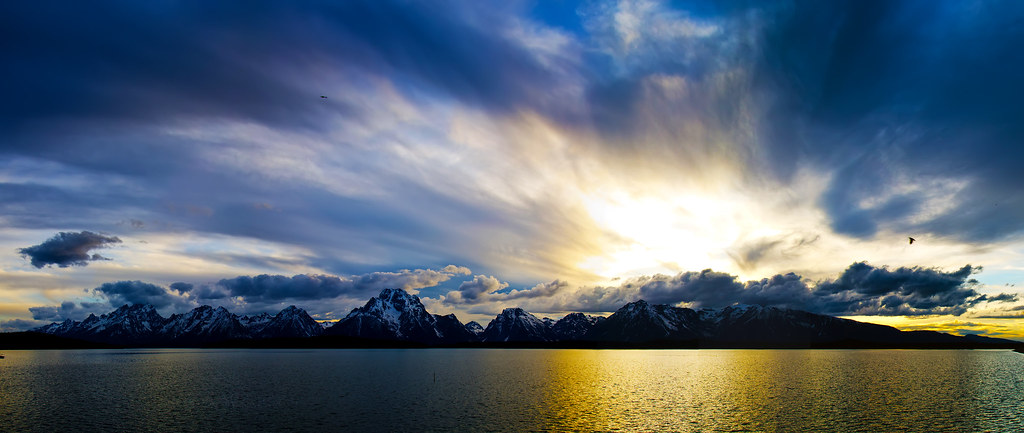
Photo: RuggyBearLA via Flickr (CC BY-SA 2.0)
For Stargazing Grand Teton National Park offers clear, dark skies, especially within several days of the new moon at open sites such as Colter Bay, Jackson Lake, Mormon Row, or the Signal Mountain area. Summer provides the easiest access and a well-positioned Milky Way, while autumn brings longer darkness, colder air, and fewer visitors. Winter skies can be exceptionally transparent, but snow closes many secondary roads and makes nighttime travel more demanding. The park occupies roughly 310,000 acres in northwestern Wyoming, with much of its accessible valley floor near 6,300 to 6,800 feet. Grand Teton rises to
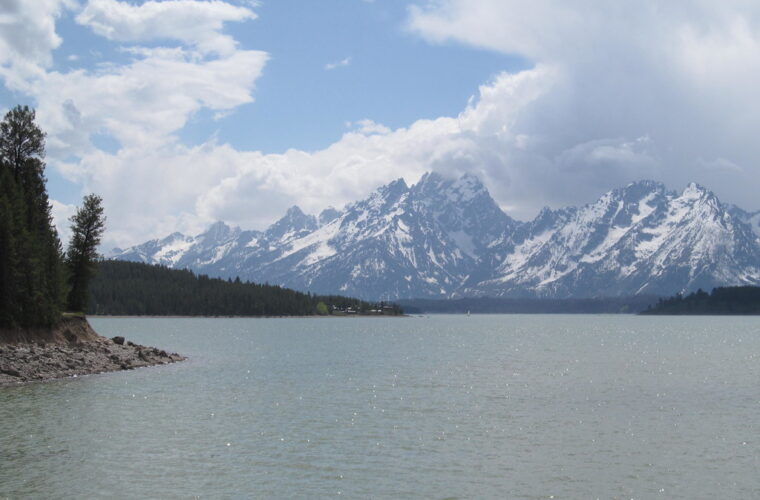
The park occupies roughly 310,000 acres in northwestern Wyoming, with much of its accessible valley floor near 6,300 to 6,800 feet. Grand Teton rises to 13,775 feet, almost 7,000 feet above Jackson Hole. That abrupt western skyline gives night photographers a recognizable foreground, but it also hides objects low in the west. Open shorelines and sagebrush flats generally provide broader views than forested trailheads.
Stargazing in Grand Teton National Park: A Seasonal Calendar
Match the moon to the experience you want
The darkest window usually falls from about three nights before to three nights after a new moon. During that period, faint stars, the Milky Way, and diffuse objects become easier to see once astronomical twilight ends. A first quarter moon can still work because it sets during the night. A full moon suppresses faint detail, but its light reveals snowfields, illuminates the Teton faces, and makes foreground composition easier for photography.
Check both the moon phase and its rising or setting time. A bright moon below the horizon has no effect on the sky, so an evening with a waning moon may remain dark until after midnight. Conversely, a slender crescent near the mountains can add useful light without overwhelming the stars. Visitors interested in meteors should prioritize the hours after midnight, when their location on Earth turns into the direction of orbital travel and encounters more debris.
How Grand Teton’s Night Sky Changes Through the Year
From roughly March into October, the bright central region of the Milky Way becomes visible at some point during the night. In spring it appears mainly before dawn. By midsummer, it stands prominently in the southern sky during convenient evening hours. During autumn, the galactic center drops toward the southwest soon after darkness, while the Great Square of Pegasus and Andromeda rise in the east. Winter favors Orion, Taurus, Gemini, and exceptionally bright stars over the snow-covered valley.
| Season | Primary sky features | Ground conditions | Planning concern |
|---|---|---|---|
| March to May | Milky Way before dawn, Leo, spring galaxies | Snow and mud remain common | Many side roads remain closed or difficult |
| June to August | Milky Way during evening, Summer Triangle, Perseid meteors | Broadest vehicle access | Short nights, thunderstorms, busy pullouts |
| September to October | Early evening Milky Way, Andromeda, longer darkness | Cold nights and possible early snow | Rapid temperature drops after sunset |
| November to February | Orion, Pleiades, Gemini, bright winter stars | Deep snow and extensive seasonal closures | Ice, severe cold, limited roadside access |
Why the Teton Landscape Changes the View
Stargazing Grand Teton National horizons
The Teton Range formed along the Teton fault, where movement lifted the western block and lowered the Jackson Hole block. Glaciers later carved steep canyons, sharpened summits, and excavated basins now occupied by lakes including Jenny, Leigh, and Phelps. Because the range lacks broad foothills on its eastern side, the peaks rise abruptly above the valley. Stars therefore disappear behind a steep western wall while the northern, eastern, and southern horizons remain comparatively open.
Artificial glow is generally strongest toward Jackson and developed areas south of the park. Looking north from Jackson Lake places the sky over comparatively undeveloped country extending toward Yellowstone. Antelope Flats provides a broad eastern horizon, while Jackson Lake supplies open water and a clearer northern view. Dense lodgepole pine forest can block the lower sky, so a site that looks spacious on a road map may feel enclosed after dark.
Weather, smoke, and mountain cloud
Clear daytime weather does not guarantee a clear night. Moist air forced up the mountains can create cloud over the range while the valley remains open, and summer thunderstorms may leave lingering haze. Wildfire smoke can travel hundreds of miles, reducing contrast even when no fire is nearby. Spring prescribed burns can also affect localized visibility, as explained in our report on Grand Teton prescribed fire planning.
Mountain air cools quickly after sunset, particularly beside lakes and across open sagebrush. Jackson Hole also experiences temperature inversions, when cold air settles on the valley floor beneath warmer air aloft. These inversions can produce fog near wetlands and river channels, including Oxbow Bend and the Snake River. A higher roadside viewpoint may sit above shallow fog, but wind exposure generally increases with elevation.
Where to See the Darkest Night Sky in Grand Teton National Park
Jackson Lake and the northern park
Colter Bay’s shoreline combines a broad western view, dark northern sky, and an easily recognized mountain foreground. Jackson Lake lies at 6,772 feet and stretches approximately 15 miles from north to south, creating a larger open horizon than the park’s smaller glacial lakes. Signal Mountain also provides elevated perspectives, although seasonal road access and nighttime driving conditions require advance planning. Confirm current road status, closures, parking rules, and program schedules on the official park site.
What it feels like at Colter Bay
On the cobble shoreline, rounded stones shift under each step and cold air drains from the mountains toward the lake. Small waves make a repetitive scraping sound as they pull pebbles downslope. Once twilight fades, the Teton silhouette becomes a jagged black edge rather than a collection of separate peaks. The northern sky feels unusually large because open water removes nearby trees from the sightline, while even a light breeze can make the shore considerably colder than the parking area.
Sagebrush flats near Mormon Row
Mormon Row and Antelope Flats place the historic homesteading landscape beneath the southern Teton Range. The open sagebrush steppe provides room to see constellations rise in the east, and photographers can frame stars above barns, fences, or the mountain skyline. The ground is exposed to wind, and wildlife remains active after dark. Bison, elk, pronghorn, coyotes, and moose may cross roads or stand beyond the reach of headlights.
Schwabacher Landing and Snake River foregrounds
Schwabacher Landing offers reflective channels and cottonwood-lined views toward the Tetons, but it requires more care than an open roadside turnout. Uneven ground, dense vegetation, wildlife, and localized fog complicate nighttime movement. Scout compositions before sunset and remain on established routes. Reflections are strongest when water is calm, while even a modest breeze can erase sharp stars and mountain shapes from long exposures.
Build a Safe Grand Teton Stargazing Plan
Arrive before darkness
Reach the selected viewpoint during daylight so you can identify the parking area, shoreline, trail junctions, and safe camera positions. Sunset does not mark full darkness. Civil, nautical, and astronomical twilight follow, with the faintest stars becoming visible only after the sun reaches 18 degrees below the horizon. Near the June solstice, Grand Teton’s northern latitude produces a long twilight, so serious Milky Way viewing may begin surprisingly late.
Use the waiting period to preserve night vision. Human eyes require roughly 20 to 30 minutes to adapt substantially to darkness, and a glance at an unfiltered phone screen can reverse much of that progress. Set navigation, camera controls, and emergency contacts in advance. A dim red lamp helps with equipment, although it should still be pointed toward the ground when other observers are present.
Carry gear for a cold, wildlife-active landscape
- Warm layers: Pack insulation beyond what the sunset temperature suggests, plus a wind-resistant outer layer.
- Two light sources: Carry a red-capable headlamp and a separate backup light with fresh batteries.
- Navigation: Download offline maps because mobile coverage is inconsistent across the park.
- Wildlife protection: Keep bear spray accessible and know how to use it. Do not leave it buried in a camera bag.
- Optics: Bring binoculars for star clusters, Jupiter’s moons, and wide-field Milky Way viewing.
- Photography equipment: Use a stable tripod, a wide aperture lens, spare batteries, and a lens cloth for dew or frost.
Set Up a Camera Without Losing the Stars
Start with exposure settings that protect star detail
For a full frame camera and a lens between 14 and 24 millimeters, begin around f/2.8, ISO 3200, and 10 to 15 seconds. Longer exposures collect additional light but turn stars into short trails as Earth rotates. The traditional 500 rule often overestimates usable shutter time on modern high resolution sensors. Review an image at full magnification and shorten the exposure if stars appear oval. On crop sensor cameras, 8 to 10 seconds is a safer starting range with many wide lenses.
| Subject | Starting focal length | Typical shutter range | Useful adjustment |
|---|---|---|---|
| Milky Way over the range | 14 to 24 mm | 8 to 15 seconds | Raise ISO before extending the shutter enough to blur stars |
| Constellations above a barn | 20 to 35 mm | 6 to 12 seconds | Capture a separate lower ISO frame for the foreground |
| Star trails around Polaris | 14 to 24 mm | Multiple 20 to 30 second frames | Stack images to control noise and remove aircraft trails |
| Moonlit peaks | 24 to 70 mm | 1 to 8 seconds | Lower ISO to preserve snow and granite highlights |
Focus before the foreground disappears
Use a bright star instead of the infinity mark
Autofocus often fails after twilight, and the infinity symbol on a lens is rarely precise enough for pinpoint stars. Switch to manual focus, enlarge a bright star or distant light in live view, then turn the focus ring until the point becomes as small as possible. Tape the ring if it moves easily. For a nearby barn, tree, or shoreline, make a second focused exposure and blend the frames later. Keep stabilization switched off when the camera is locked to a tripod.
Learn the Sky Above Jackson Hole
Use Polaris and the Tetons as anchors
Polaris stands almost due north at an altitude close to 44 degrees, matching the park’s latitude. From Jackson Lake, it appears over the northern end of the water rather than above the central Teton skyline. Cassiopeia and the Big Dipper circle it through the night, providing dependable orientation when other constellations are unfamiliar. Facing the range means looking generally west, so stars and planets there descend behind the peaks earlier than their published setting times suggest.
Choose targets that work without a telescope
Binoculars reveal far more than their modest size suggests. Sweep through Sagittarius and Scorpius during summer for dense star fields, or examine the Pleiades in autumn and winter. The Andromeda Galaxy appears as an elongated haze under dark conditions and sits about 2.5 million light years away. During a meteor shower, leave the binoculars packed because they restrict peripheral vision. Recline with a broad view of the sky and look 30 to 60 degrees away from the shower’s radiant.
- August: Perseid meteors radiate from Perseus and often improve after midnight.
- October: Orionid meteors cross the sky quickly and may leave persistent trains.
- December: Geminid meteors can appear across the winter sky, although severe cold limits comfortable viewing time.
- Any clear month: Satellites move steadily without blinking, while aircraft usually show colored or flashing lights.
Reduce Your Impact After Dark
Keep light inside your own working area
Headlights sweep across large areas of sagebrush and can spoil exposures from hundreds of yards away. Park only in established spaces, avoid idling, and prepare equipment before switching off interior lights. Red light preserves adaptation better than white light, but brightness still matters. Use the lowest setting and shield the beam with a hand. Laser pointers should stay packed because they can distract other visitors, disturb wildlife, and create serious hazards for aircraft operating over Jackson Hole.
Leave room for nocturnal wildlife
Darkness changes how animals use roads, shorelines, and open flats. Drive below the posted limit when visibility, frost, or wildlife activity demands it, and scan both shoulders for reflected eyes. Never approach an animal for a silhouette photograph. Federal distance guidance generally calls for at least 100 yards from bears and wolves and 25 yards from other wildlife. Food, scented items, and rubbish belong in secure storage rather than beside a tripod or unattended at a picnic area.
Make Stargazing the Center of Your Grand Teton National Park Visit
Stargazing Grand Teton National Park works best when the plan joins three variables: an open horizon, a favorable moon window, and conditions that support safe nighttime travel. Jackson Lake provides the broadest northern outlook, while Antelope Flats supplies expansive eastern and southern horizons. Match those landscapes to the season, then allow enough time for twilight, eye adaptation, and changing cloud. A short, deliberate session often produces better viewing than hours spent moving between pullouts.
Choose one primary location and one lower risk backup that remains accessible under the expected road and weather conditions. Scout before sunset, dress for temperatures well below the afternoon reading, and bring optics or camera settings suited to a specific target. Once lights are lowered and attention settles on the sky, the park’s geography becomes clear in a different way: a dark valley floor, an abrupt mountain wall, and thousands of stars turning above both.
Want to keep exploring? Browse all our Grand Teton guides and articles for more trip-planning tips and ideas.
Gear & Essentials
Tell us about your trip and we will add what else you will want:
The basics
Worth having in the car whatever the park.
For this trip
Traveling with kids
Bringing a pet
RVing
Backcountry
Winter conditions
On the water
Photography
Accessibility
As an Amazon Associate we earn from qualifying purchases, at no extra cost to you.