7 Best Winter Hikes in Rocky Mountain National Park
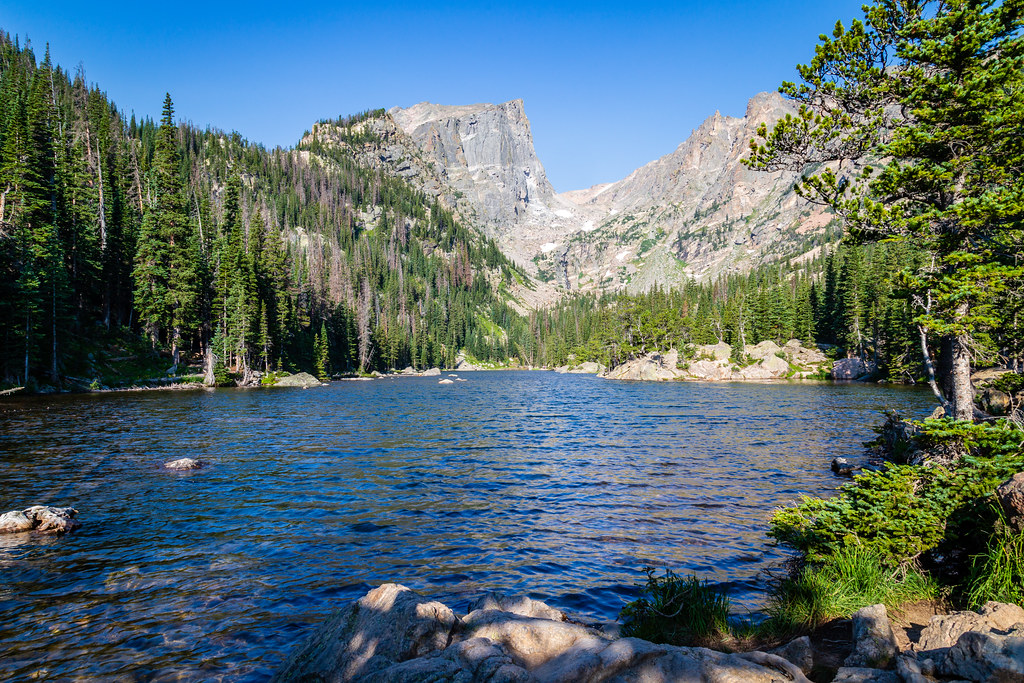
Photo: aparlette via Flickr (CC BY 2.0)
Our guide to the Best Winter Hikes Rocky Mountain National Park has to offer starts with seven routes that remain practical when snow covers the high country: Bear Lake, Sprague Lake, Alberta Falls, Dream Lake, Emerald Lake, Mills Lake, and Deer Mountain. They range from a 0.7-mile lakeside loop to a roughly 6-mile summit hike, giving first-time snowshoers and experienced winter hikers realistic choices.
Most routes begin between 8,688 and 9,475 feet, where cold, wind, and altitude matter immediately. Snow commonly lingers from November into May, while shaded sections can remain icy longer. Our team treats winter as several distinct phases because December powder, February hardpack, and April thaw conditions require different equipment and route decisions.
How We Chose the 7 Best Winter Hikes in Rocky Mountain National Park
We prioritized trails with dependable winter access, recognizable navigation features, and worthwhile scenery at modest distances. Bear Lake Road provides access to six of the seven routes, while Deer Mountain begins near Deer Ridge Junction on the park’s eastern side. Trail Ridge Road normally closes through the alpine section during the snowy season, so hikes requiring access from the road’s highest reaches are absent from this list.
7 Best Winter Hikes in Rocky Mountain National Park Compared
Distances below are approximate round trips from the usual winter trailheads. Snow tracks sometimes diverge from summer tread, especially around frozen lakes and wind-loaded clearings, so a GPS recording may differ slightly.
| Hike | Distance | High point | Typical winter challenge |
|---|---|---|---|
| Bear Lake Loop | 0.7 mile | About 9,475 feet | Easy, frequently icy |
| Sprague Lake Loop | 0.8 mile | About 8,688 feet | Easy, exposed to wind |
| Alberta Falls | 1.6 miles | About 9,400 feet | Easy to moderate |
| Dream Lake | 2.2 miles | 9,912 feet | Moderate, windy near the lake |
| Emerald Lake | 3.6 miles | 10,110 feet | Moderate, sustained snow travel |
| Mills Lake | 5.6 miles | About 9,940 feet | Moderate, longer and quieter |
| Deer Mountain | About 6 miles | 10,013 feet | Moderate to strenuous |
What Difficulty Means in Winter
Mileage understates the effort. A packed 3-mile trail can feel straightforward in microspikes, while fresh snow can turn the same outing into hours of trail breaking. Wind erases tracks around Dream and Emerald lakes, and afternoon softening creates deep postholes. Deer Mountain adds roughly 1,000 feet of climbing, making it substantially harder than its mileage suggests.
Equipment That Changes With the Surface
Carry traction rather than choosing one device at home and assuming it will work all day. Conditions can shift from dry pavement at the trailhead to polished ice beneath forest cover and knee-deep drifts near a lake.
- Microspikes: Best for packed snow and icy trail surfaces.
- Snowshoes: Useful after storms or when warming temperatures soften the snowpack.
- Trekking poles: Improve balance on uneven, concealed steps.
- Insulated layers: Essential when wind chills exposed lakes and overlooks.
- Navigation tools: Carry an offline map because snowfall can obscure established tracks.
When Conditions Are Best for Winter Hikes in Rocky Mountain National Park
Winter hiking conditions begin before the calendar season. October storms can coat Bear Lake while lower elevations remain dry, and substantial snow often persists into late spring. Midwinter usually provides the most consistent snow cover, but it also brings the shortest days and coldest trailhead temperatures. Spring delivers longer daylight alongside slush, postholing, and a more variable snowpack.
How the Mountain Year Changes Access
| Period | Crowds | Weather and snow | Road and trail access | Best suited to |
|---|---|---|---|---|
| Late autumn | Generally light outside holidays | Mixed dry ground, ice, and early storms | Alpine road closures can begin after major snowfall | Short hikes with flexible footwear |
| Early winter | Moderate around holidays | Cold, increasing snow depth, limited daylight | Plowed east-side corridors usually become the practical focus | Frozen lakes and snowshoe outings |
| Midwinter | Light on weekdays, busier on clear weekends | Deep snow, strong wind, frequent hardpack | High alpine roads remain closed to through travel | Reliable snow scenery and quieter trails |
| Spring snow season | Increasing with warmer weather | Firm mornings, soft afternoons, recurring storms | Seasonal roads may remain closed despite lower-elevation thaw | Early starts and longer daylight |
| Summer | Highest of the year | Mostly snow-free trails, afternoon thunderstorms | Broadest road and trail access | High alpine hiking rather than winter routes |
Crowds Affect Parking and Trail Conditions
Winter visitation is lower than summer visitation, but Bear Lake can still feel busy on sunny weekends and holiday mornings. A full parking area can force a change of plans, particularly when seasonal shuttle service is unavailable. Heavy use also packs snow into a hard, slick surface. Quieter Mills Lake and Deer Mountain may preserve softer snow, which demands more energy and stronger route-finding skills.
The Best Daily Timing
Start after daylight rather than committing to unfamiliar terrain in darkness. Morning snow is usually firmer, winds often strengthen as the day develops, and winter sunset arrives early behind the Continental Divide. During spring, an early start also reduces postholing as solar radiation softens exposed sections.
Roads, Reservations, and Winter Trailhead Strategy
Estes Park is the practical eastern gateway, with Beaver Meadows and Fall River entrances providing access to the park’s principal winter corridors. Bear Lake Road is the key approach for Bear Lake, Sprague Lake, Glacier Gorge, and the chain of subalpine lakes beneath Hallett Peak. Snowplows improve access, but active storms can temporarily slow travel and make parking areas difficult to use.
Seasonal Closures Reshape the Park
Trail Ridge Road crosses tundra above 12,000 feet and normally closes to through traffic during winter, dividing east-side and west-side access. Do not plan a winter drive across the park between Estes Park and Grand Lake. Construction can also affect individual trails, as illustrated by our report on the temporary closure above Nymph Lake.
Fees and Reservation Windows
An entrance pass is generally required year-round, while timed-entry systems and shuttle operations are more commonly associated with busier seasons. Reservation release dates, current fees, construction closures, and winter road status can change, so confirm those details on the official park site before departure. Lodging around Estes Park fills earlier for holiday periods, while ordinary winter weekdays usually allow greater flexibility.
Choosing Among the Best Winter Hikes Rocky Mountain National Park Offers
Match the hike to the weakest member of the group, the day’s wind forecast, and snow depth rather than choosing by scenery alone. Sprague Lake sits lower than the Bear Lake corridor and makes a sensible fallback during severe cold. Bear Lake provides the shortest introduction to traction devices, while Alberta Falls adds forest travel and a recognizable turnaround point.
For Lakes, Peaks, or Solitude
Dream Lake supplies the strongest scenery-to-effort ratio, with Hallett Peak and 12,324-foot Flattop Mountain rising beyond the frozen basin. Continuing to Emerald Lake adds only modest mileage but enters rougher terrain beneath Tyndall Gorge. Mills Lake follows Glacier Creek toward the granite walls surrounding Glacier Gorge and usually feels quieter after the junctions for Alberta Falls and The Loch.
What Emerald Lake Feels Like in Winter
Beyond Dream Lake, the packed trail climbs through Engelmann spruce before opening abruptly at Emerald Lake. Snow squeaks underfoot in deep cold, wind pours down Tyndall Gorge, and the dark cliffs of Hallett Peak rise more than 2,000 feet above the frozen water. The exposed shoreline can feel dramatically colder than the sheltered forest only minutes behind you.
Build a Winter Plan With a Clear Turnaround Point
The Best Winter Hikes Rocky shortlist works best when each outing includes a primary objective, a shorter turnaround, and a lower-elevation alternative. A group heading toward Emerald Lake can reassess at Dream Lake, while a Mills Lake party can turn around at Alberta Falls. This approach matters after fresh snowfall because breaking trail often reduces winter pace below 1 mile per hour. Wind, cold hands, or a delayed start should trigger the shorter option before the group becomes committed to exposed terrain.
Match the Objective to the Day
| Priority or condition | Primary choice | Practical fallback |
|---|---|---|
| First experience with traction | Bear Lake | Sprague Lake |
| Strong wind near the Divide | Alberta Falls | Bear Lake |
| Clear weather and packed snow | Emerald Lake | Dream Lake |
| Solitude and a half-day available | Mills Lake | Alberta Falls |
| Summit views with limited snow depth | Deer Mountain | Sprague Lake |
Combining Short Routes
Bear Lake and Sprague Lake can fit into one morning because both trailheads lie along Bear Lake Road. Complete Bear Lake first, when the higher corridor is colder and parking demand is building, then descend to Sprague Lake. Combining Dream Lake with Emerald Lake requires no separate itinerary because Emerald lies beyond Dream on the same route. Alberta Falls and Mills Lake share the Glacier Gorge approach, allowing the falls to serve as a weather checkpoint rather than a separate excursion.
When Deer Mountain Makes Sense
Choose Deer Mountain after several dry days or when reliable packed snow has formed. Its south-facing slopes receive more sun than the Bear Lake basin, creating alternating bare soil, ice, and drifted snow. The summit ridge overlooks Moraine Park, Longs Peak, and the Mummy Range, but the descent can become slippery as afternoon meltwater refreezes. Because this route lacks the frequent lake junctions of the Bear Lake corridor, record the trailhead location and monitor every switchback carefully.
Manage Cold, Altitude, and Avalanche Exposure
These trailheads begin roughly 1.6 to 1.8 miles above sea level, where visitors arriving from lower elevations may develop headache, nausea, unusual fatigue, or poor coordination. Slow the pace, drink regularly, and descend if symptoms worsen. Frostbite commonly begins in exposed fingers, toes, cheeks, and ears, particularly when sweat dampens insulation. Pack a dry midlayer, wind-resistant shell, insulated gloves with a spare pair, headlamp, emergency blanket, and enough food to remain out longer than planned.
Read the Snow Beyond the Footpath
Established tracks do not guarantee safe terrain. Wind transports snow from exposed ridges into gullies and steep lee slopes, creating slabs that can release after a storm. Check the regional avalanche forecast before entering the Bear Lake or Glacier Gorge backcountry, then compare it with conditions on the ground. Avoid lingering beneath loaded slopes, cornices, or obvious avalanche paths. Frozen lakes also deserve caution because ice thickness varies around inlets, outlets, springs, and rocks warmed by sunlight.
- Turn around when blowing snow removes the track faster than the group can navigate.
- Keep the party together at junctions and open lake basins.
- Place water bottles inside the pack so caps and filters do not freeze.
- Carry sunglasses and sunscreen because snow reflects ultraviolet radiation.
- Leave a route and return time with someone outside the hiking party.
Use the Forecast as a Route Filter
Compare forecasts for Estes Park with higher-elevation conditions rather than treating the gateway town as a proxy for Bear Lake. Temperature commonly falls with elevation, while the Continental Divide can produce much stronger wind and lower visibility. On a calm, clear day, Emerald Lake or Mills Lake can be reasonable objectives for prepared hikers. During active snowfall or high wind, forested Alberta Falls provides more shelter, and Sprague Lake offers a short route with straightforward retreat to the trailhead.
Choose the Hike That Leaves a Safe Margin
For a first winter visit, begin with Bear Lake or Sprague Lake and learn how the snow surface responds to microspikes, poles, and changing temperature. Move up to Dream Lake or Alberta Falls once the group can maintain warmth without rushing. Emerald Lake and Mills Lake reward additional time and preparation, while Deer Mountain suits hikers ready for sustained climbing, mixed surfaces, and a longer descent. The strongest choice is the route that preserves daylight and energy for unexpected delays.
Winter transforms familiar summer trails into distinct mountain objectives. Road closures concentrate access on the east side, wind magnifies cold around exposed lakes, and fresh snow can double the effort required for modest mileage. Select a primary route and fallback, start with current weather and avalanche information, and turn around before conditions consume the group’s safety margin. That method makes these seven hikes practical across the changing snow season rather than dependent on a single ideal day.
Want to keep exploring? Browse all our Rocky Mountain guides and articles for more trip-planning tips and ideas.
Gear & Essentials
Tell us about your trip and we will add what else you will want:
The basics
Worth having in the car whatever the park.
For this trip
Traveling with kids
Bringing a pet
RVing
Backcountry
Winter conditions
On the water
Photography
Accessibility
As an Amazon Associate we earn from qualifying purchases, at no extra cost to you.