Grand Canyon National Park in Summer: What to Expect and What to Do
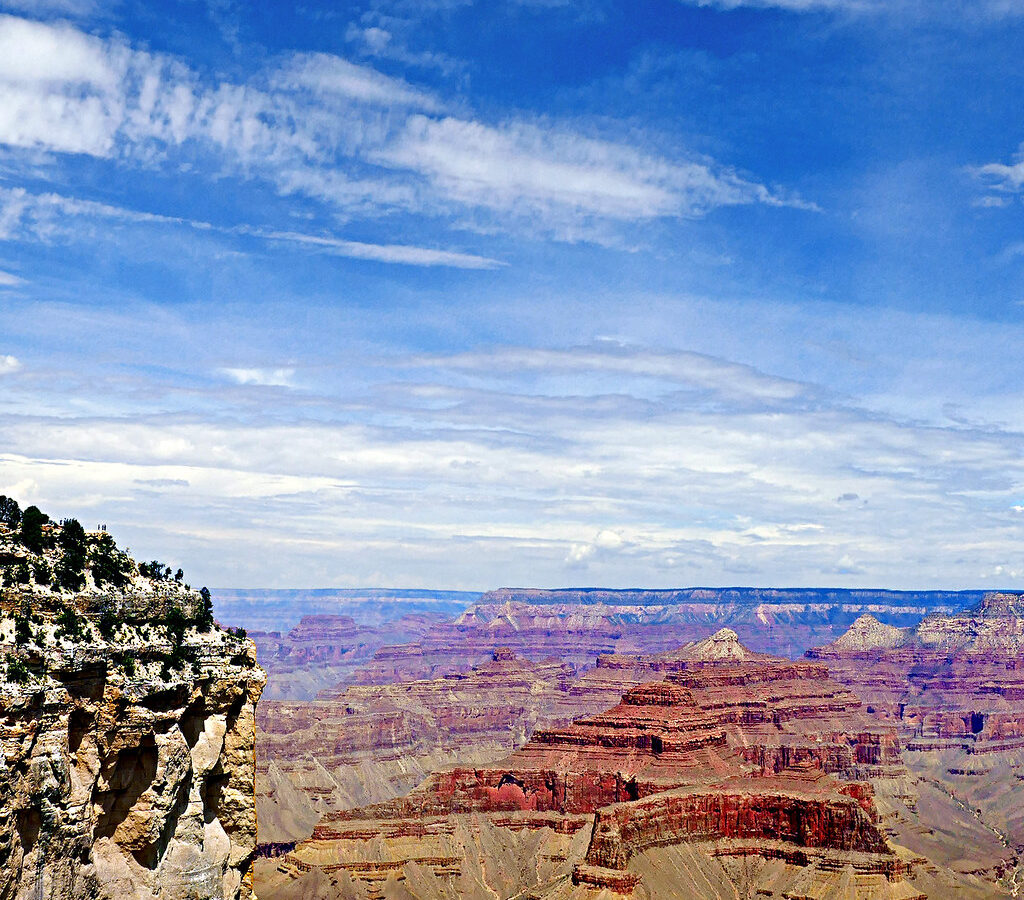
Photo: pom'. via Flickr (CC BY-SA 2.0)
Grand Canyon National Park is rewarding in summer if you plan around extreme temperature differences, large crowds, afternoon thunderstorms, and limited parking at the busiest South Rim locations. The rims provide comfortable mornings, long daylight hours, and broad access to roads and trails. The inner canyon can exceed 100°F, making long descents hazardous after sunrise.
Most first-time visitors use the South Rim, which sits near 7,000 feet and remains the park’s primary year-round destination. The North Rim rises above 8,000 feet, receives fewer visitors, and usually becomes accessible after winter snow clearing. Although the two rims are roughly 10 miles apart across the canyon, driving between them requires about 220 miles and at least four hours.
What to Expect at Grand Canyon National Park in Summer
Conditions change dramatically with elevation
Elevation controls nearly every summer decision. South Rim afternoons commonly reach the 80s°F, while mornings can feel cool enough for a light layer. Temperatures increase rapidly below the rim. Phantom Ranch, beside the Colorado River at approximately 2,460 feet, regularly experiences daytime temperatures above 100°F. A thermometer reading from Grand Canyon Village therefore says little about conditions several thousand feet lower on Bright Angel or South Kaibab Trail.
That vertical climate gradient explains why experienced hikers start before sunrise and turn around earlier than expected. Every descent creates a climb back to the rim, commonly in hotter conditions. Shade is scarce on the South Kaibab Trail, and exposed rock radiates heat long after direct sunlight moves away. Rim walks, scenic drives, and short viewpoint hikes are safer choices during the hottest part of the day.
Monsoon storms shape the afternoon
From roughly July into September, moisture moving into the Southwest can produce localized thunderstorms. Mornings may begin with clear skies before clouds build rapidly over the plateau. Lightning is the primary rim hazard because exposed overlooks, isolated trees, and open sections of the Rim Trail provide little protection. Heavy rain can also trigger rockfall, muddy trail surfaces, and flash flooding in narrow drainages far from where rain is visible.
At Ooh Aah Point on the South Kaibab Trail, the route suddenly rounds Cedar Ridge and the eastern canyon opens below your feet. Loose gravel shifts under boots, ravens ride the warm air overhead, and the river remains hidden among stacked cliffs thousands of feet below. The climb back begins immediately in full sun, which makes this 1.8-mile round trip feel substantially harder than its distance suggests.
How Summer at Grand Canyon National Park Compares With Other Seasons
A practical four-season comparison
Summer provides the broadest high-country access, particularly when the North Rim and seasonal roads are open, but it also brings the strongest heat below the rim. Spring and autumn generally offer better conditions for substantial day hikes. Winter creates quiet viewpoints and striking snow on the upper cliffs, although ice, storms, and road closures complicate travel.
| Season | Typical crowd pattern | Weather | Road and trail access | Best suited to |
|---|---|---|---|---|
| Spring | Moderate, rising around school breaks | Cool rim mornings, warming inner canyon, occasional late snow | South Rim open, North Rim commonly closed early in the season | Day hiking and mild temperatures below the rim |
| Summer | Highest around major viewpoints and midday shuttle stops | Mild to warm rims, extreme inner-canyon heat, monsoon storms later in summer | Broadest road access, with seasonal transportation controls | First visits, family sightseeing, sunrise and sunset viewing |
| Autumn | Moderate, easing after early fall | Cooler hiking weather, cold nights, possible early snow | Good access initially, followed by seasonal North Rim limitations | Longer hikes and photographers seeking clearer air |
| Winter | Lowest except around holidays | Snow and ice at the rims, comparatively mild inner canyon | South Rim accessible, North Rim road closed, traction often needed on trails | Solitude, snowy landscapes, and experienced cold-weather hikers |
Why summer still works for many visitors
Families tied to school calendars gain long days and access to ranger programs, scenic roads, and both rim regions when conditions allow. Summer is especially workable for travelers who treat the canyon as a rim-based destination. Walking the Trail of Time, visiting Yavapai Geology Museum, exploring Desert View, and using the shuttle system require far less heat exposure than descending thousands of feet.
Travelers focused on strenuous hiking should consider late spring or autumn instead. The canyon’s sedimentary layers record nearly two billion years of geologic history, but those exposed rocks also absorb intense solar energy. Even fit hikers can struggle with heat illness when climbing from the Colorado River through the Vishnu Basement Rocks, Tapeats Sandstone, Redwall Limestone, and younger formations toward the rim.
Summer Crowds, Road Access, and Reservations at Grand Canyon National Park
What crowds change at the South Rim
Summer congestion affects logistics more than the canyon views themselves. Parking near the visitor center and central Grand Canyon Village can fill early, while shuttle queues lengthen around sunset. Arriving before breakfast improves parking options and provides cooler walking conditions. Desert View Drive extends about 23 miles east from the village area, connecting overlooks such as Grandview Point, Moran Point, Lipan Point, and Desert View.
Hermit Road and shuttle-dependent viewpoints
Hermit Road reaches overlooks west of the village, including Hopi Point, Mohave Point, and Pima Point. Private vehicle access is restricted during much of the busy season, with park transportation carrying most visitors. Operational schedules, entrance fees, campground availability, water services, and road restrictions can change, so confirm current details on the official park site. Water availability deserves particular attention because infrastructure interruptions can affect the South Rim, as our South Rim water conservation update illustrates.
The quieter North Rim requires more planning
The North Rim receives a fraction of South Rim visitation and has a higher, cooler forest of ponderosa pine, white fir, aspen, and spruce. Bright Angel Point and Cape Royal provide contrasting perspectives into side canyons and toward distant South Rim landmarks. Summer road access depends on snow removal, wildfire conditions, and seasonal operations, while lodging and camping capacity are limited compared with the South Rim.
Driving to both rims rarely makes sense on a short trip. Visitors with two or three days should usually choose one rim and explore it thoroughly. The North Rim works best for travelers approaching from southern Utah or seeking quieter trails. The South Rim suits first visits, rail or highway approaches from Arizona, and itineraries that need the widest range of services.
Reservations and backcountry permits
Summer lodging and developed campgrounds can book well ahead, particularly around weekends and holidays. Overnight travel below the rim generally requires a backcountry permit, including corridor camps reached by Bright Angel, South Kaibab, and North Kaibab trails. Day hiking usually does not require that permit, but attempting a rim-to-river-to-rim hike in one summer day exposes hikers to prolonged heat and major elevation gain.
Choose the Right Grand Canyon National Park Summer Experience
Match the itinerary to your main priority
A useful summer plan starts with the activity that matters most, then assigns it to the coolest and least crowded part of the day. Sunrise favors east-facing viewpoints and early trail starts. Midday belongs to museums, shaded rim sections, meals, and rest. Sunset attracts concentrated crowds at famous overlooks, so walking a short distance along the Rim Trail often produces a quieter view.
- For a first visit: Base at the South Rim and combine Mather Point, the Trail of Time, village historic sites, and Desert View Drive.
- For short hiking: Descend only to Ooh Aah Point or Cedar Ridge, then return before intense heat develops.
- For fewer people: Choose the North Rim and allow extra driving time, limited services, and fewer backup options.
- For geology: Walk the 2.8-mile Trail of Time between Yavapai Geology Museum and Grand Canyon Village.
- For photography: Use sunrise for clearer air and lower storm risk, then scout sunset locations before afternoon crowds arrive.
Plan around heat rather than mileage
Trail mileage understates difficulty because elevation loss must be regained. Cedar Ridge is about 3 miles round trip from the South Kaibab Trailhead, with roughly 1,100 feet of climbing on the return. Bright Angel Trail offers some seasonal shade and emergency infrastructure along the corridor, but its switchbacks still become punishing in afternoon heat. Summer turnaround decisions should be based on temperature, water, energy, and climbing time rather than a planned landmark.
Build a Reservation Timeline Before Choosing Dates
Book the least flexible item first
Backcountry permits, inner-canyon lodging, North Rim rooms, and developed campgrounds have less capacity than South Rim lodging outside the park. Backcountry availability is released on a published schedule several months before travel, while some commercial lodging inventory opens considerably earlier. Start with the item that cannot be replaced, then arrange transportation and rim lodging around it. Keep at least one alternate date because holiday weekends and early summer periods often fill quickly.
- Choose the South Rim, North Rim, or an overnight route below the rim.
- Identify the applicable permit or reservation release date.
- Prepare alternate dates and campsites before applications open.
- Reserve lodging near the selected entrance only after the central booking is secured.
- Recheck trail access, water availability, and wildfire conditions shortly before departure.
Understand what seasonal access can change
State Route 67, the only paved highway into the North Rim, closes during the snowy season and reopens after plowing and facility preparation. Roads to Point Imperial and Cape Royal can face additional interruptions from wildfire, fallen trees, or storm damage. On the South Rim, Desert View Drive remains the principal scenic route beyond the village, but individual overlooks or trails can close after rockfall and infrastructure work. A closure on Bright Angel Trail can also alter corridor backpacking routes and permitted camps.
Plan Your Grand Canyon National Park Summer Schedule
Give the first hours to exposed terrain
Begin exposed walks around first light, especially on the South Kaibab Trail or open portions of the Rim Trail between Mather Point and the South Kaibab trailhead area. Temperatures rise quickly once sunlight reaches the upper switchbacks. Carry water before leaving the rim, but include salty food or an electrolyte source during sustained exertion. Drinking large amounts of plain water without replacing sodium can contribute to hyponatremia, a dangerous condition with symptoms that may resemble heat exhaustion.
Keep an indoor or shaded midday plan
From late morning through midafternoon, shift toward Yavapai Geology Museum, the historic buildings around Grand Canyon Village, or a shaded meal break. The Trail of Time allows visitors to divide a geology walk into short segments rather than completing the entire route during peak heat. Families should also build in recovery time. Children often descend willingly and then slow dramatically during the hotter return climb, particularly on steep trails where there is no quick vehicle pickup.
Respond early to thunderstorm development
Dark cloud bases, sudden wind, falling temperatures, and audible thunder are signals to leave exposed overlooks. Move into a substantial building or hard-topped vehicle rather than sheltering beneath an isolated ponderosa pine or shallow rock overhang. Allow time after the last thunder before returning outside because lightning can strike beyond the visible rain shaft. Backpackers should avoid narrow drainages when storms develop upstream, even when the immediate trail remains dry.
Choose a Season by Your Actual Priority
A decision matrix for common trip goals
The best season depends on which compromise creates the fewest problems for your itinerary. Summer favors broad road access and family schedules, while spring and autumn reduce thermal stress for serious hiking. Winter rewards flexible travelers who can accommodate icy trails and shorter daylight. Use the following comparison to decide whether a summer trip supports the activity you value most.
| Primary goal | Strongest season | Main advantage | Tradeoff to accept |
|---|---|---|---|
| Visit both developed rims | Summer | Best chance of seasonal North Rim road access | Long drive between rims and high demand for lodging |
| Complete a substantial inner-canyon day hike | Spring or autumn | Lower temperatures below the rim | Possible snow or ice near the trailheads |
| See snow on canyon temples | Winter | Low visitation and sharp visual contrast | North Rim closure and slippery South Rim trails |
| Plan a family sightseeing trip | Summer | Long daylight and broad activity access | Parking pressure and afternoon storms |
| Photograph quieter viewpoints | Late autumn or winter | Smaller crowds and often clearer air | Cold mornings and fewer daylight hours |
Know when another season is the better answer
Move the trip to October or late spring if a long descent below the rim is the central objective. Consider winter if solitude matters more than North Rim access and everyone in the group can use traction devices on icy trails. Keep summer when the itinerary emphasizes overlooks, geology exhibits, short dawn walks, and scenic driving. That choice preserves the season’s access advantages without making extreme inner-canyon heat the defining challenge.
Plan a Grand Canyon National Park Summer Visit Around Elevation and Time
Grand Canyon National Park works well in summer when each activity is assigned to the right elevation and hour. Reserve scarce lodging or permits first, reach popular South Rim areas early, and keep strenuous trail time within the cool morning window. Treat thunder as a reason to leave exposed ground immediately, and maintain alternatives for closures, wildfire smoke, or disrupted water service.
Most first-time visitors will get the strongest trip from one rim, two early starts, and a deliberate midday slowdown. Choose the North Rim for cooler forests and fewer people, or the South Rim for the widest selection of viewpoints and visitor facilities. A schedule built around heat, storms, and transportation leaves enough flexibility to experience the canyon’s scale without turning limited vacation time into a contest against summer conditions.
Want to keep exploring? Browse all our Grand Canyon guides and articles for more trip-planning tips and ideas.
Gear & Essentials
Tell us about your trip and we will add what else you will want:
The basics
Worth having in the car whatever the park.
For this trip
Traveling with kids
Bringing a pet
RVing
Backcountry
On the water
Photography
Accessibility
As an Amazon Associate we earn from qualifying purchases, at no extra cost to you.