Zion National Park in Winter: What to Expect and What to Do
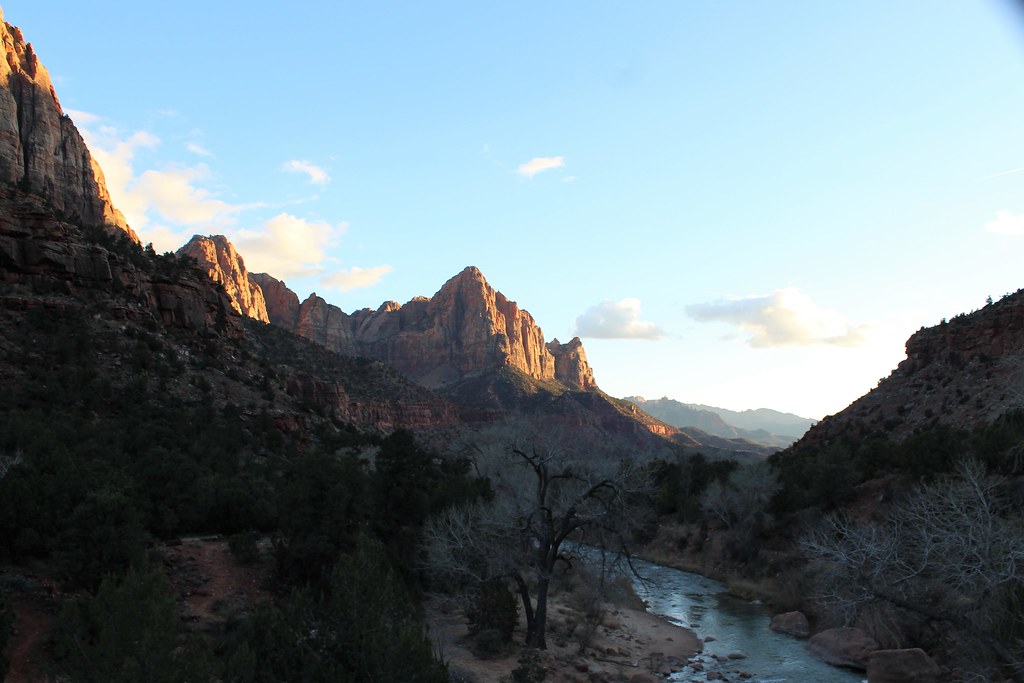
Photo: agcaddesigns.com Architectural Renderings via Flickr (CC BY 2.0)
Our Zion National Park Winter guide starts with the park’s defining seasonal fact: Zion Canyon sits near 4,000 feet, while surrounding plateaus rise above 7,000 feet, so one visit can include dry sandstone, shaded ice, and deep snow. Winter brings quieter trails, clearer parking conditions outside holiday periods, and striking contrasts between red Navajo sandstone and white canyon rims. It also shortens daylight, limits some services, and turns familiar trails into cold weather routes requiring traction and careful judgment.
This first half explains how winter compares with other seasons, what December through March usually feels like, and how roads, shuttles, permits, and trail access affect a practical itinerary. Conditions can differ sharply between Zion Canyon, Kolob Canyons, and the high country, even on the same morning.
What to Expect During a Zion National Park Winter Visit
Winter in Zion generally extends from December through February, with wintry conditions lingering into March at higher elevations. On the canyon floor, daytime temperatures commonly reach the 40s or 50s Fahrenheit, while nights frequently fall below freezing. Snow at lower elevations often melts quickly in direct sun, but ice can remain for days on north facing switchbacks, beneath cliffs, and near water crossings. The East Rim, Kolob Terrace, and other elevated areas receive considerably more snow.
Cold air, low sun, and dramatic temperature swings
Zion Canyon receives limited direct sunlight in winter because its walls rise roughly 2,000 feet above the Virgin River. A trailhead can feel bitterly cold at 8 a.m., then become comfortable once sunlight reaches exposed sandstone. Temperatures drop rapidly after the sun disappears behind the western cliffs. Carrying layers matters more than dressing for the forecasted afternoon high, particularly on Riverside Walk, Emerald Pools trails, and shaded sections of the West Rim Trail.
How winter changes the canyon’s appearance
Snow emphasizes Zion’s geology. White layers collect on horizontal ledges within the Navajo sandstone, while vertical walls shed snow quickly. Pinyon pine, Utah juniper, and ponderosa pine remain green against the cliffs, and cottonwoods along the Virgin River lose their leaves. Waterfalls may appear after rain or melting snow, although freeze and thaw cycles can also send ice and small rocks from cliff bands onto trails.
How Zion National Park in Winter Compares With Other Seasons
Winter suits travelers who value quieter paths, flexible access to Zion Canyon, and cool hiking temperatures. Spring brings stronger waterfalls and variable runoff. Summer has long daylight but intense heat, monsoon storms, and heavy visitation. Autumn usually provides stable hiking weather and changing cottonwood foliage. The tradeoff in winter is that snow, ice, short days, and reduced services narrow the margin for improvisation.
| Season | Crowds | Typical conditions | Access considerations | Best suited to |
|---|---|---|---|---|
| Winter | Low outside holidays | Cold mornings, possible snow and ice | Private vehicles often enter Zion Canyon when shuttles are not operating | Scenic drives, photography, cool weather hiking |
| Spring | Moderate to high | Variable temperatures, runoff, occasional storms | Shuttle operations and busy parking become more common | Waterfalls, wildflowers, moderate hikes |
| Summer | Very high | Hot afternoons, monsoon risk, long daylight | Shuttle dependence and crowded trailheads | Early starts, river routes, long itineraries |
| Autumn | High, then moderate | Warm days followed by cooler, stable weather | Busy canyon access during peak foliage periods | Long hikes, fall color, photography |
December through March at a glance
Early December often combines open low elevation trails with light visitation. Late December becomes busier during school holidays. January usually delivers the quietest overall atmosphere and the greatest likelihood of ice. February adds slightly longer days but remains wintry. March can feel springlike in Zion Canyon while snow still blocks or complicates high elevation routes, making elevation more important than the calendar.
When crowds still matter
Holiday weeks can fill parking near the visitor center and popular trailheads, especially when clear weather follows a storm. Outside those periods, winter reduces congestion on Riverside Walk, Watchman Trail, and the scenic drive. The practical gain is flexibility: photographers can wait for changing light, and hikers can start later without immediately encountering summer level queues. Angels Landing remains popular because its permit system limits access rather than eliminating demand.
Road, Shuttle, and Permit Changes in Winter
Utah Route 9 remains the principal route through southern Zion, connecting Springdale, Zion Canyon, the Zion Mount Carmel Tunnel, and the park’s east entrance. Snowplows prioritize major roads, but shaded pavement can refreeze overnight. The Kolob Canyons Road and Kolob Terrace Road climb into colder terrain and are more susceptible to snow closures. Drivers should carry winter equipment appropriate to their vehicle and avoid assuming that dry conditions in Springdale continue onto the plateaus.
Driving Zion Canyon without the main shuttle
During quieter winter periods, the Zion Canyon shuttle generally pauses and private vehicles may use Zion Canyon Scenic Drive. That allows direct access to locations such as Zion Lodge, the Grotto, Weeping Rock, Big Bend, and the Temple of Sinawava. Shuttle service may return during busy holiday periods, and operations vary by date. Entrance fees, road status, permit rules, and shuttle dates should be confirmed on the official park site before departure.
Permits and reservations that still apply
Winter does not remove the permit requirement for the chained section of Angels Landing. Visitors generally apply through seasonal or day before lotteries, with exact application windows set by the National Park Service. A top down Narrows trip also requires a wilderness permit and dependable river conditions. Most visitors should treat the bottom up Narrows as a technical cold water outing in winter, since immersion can become dangerous within minutes without suitable insulating equipment.
A pretrip access checklist
- Check Zion Canyon shuttle dates to determine whether you will drive or use park transportation.
- Review road conditions for Route 9, Kolob Canyons Road, and Kolob Terrace Road separately.
- Verify trail closures caused by ice, rockfall, construction, or high water.
- Apply for an Angels Landing permit before building an itinerary around the route.
- Check the Virgin River flow and flash flood forecast before considering the Narrows.
What to Do First in Zion National Park in Winter
Lower elevation hikes provide the most dependable winter options. Pa’rus Trail follows the Virgin River for about 3.5 miles round trip on a paved route. Watchman Trail climbs approximately 400 feet over 3.3 miles round trip to views across lower Zion Canyon. Riverside Walk covers about 2.2 miles round trip from the Temple of Sinawava, although shaded pavement and nearby rock can hold ice.
Choose trails by sun exposure, not mileage alone
Canyon Overlook Trail is only about 1 mile round trip, yet icy ledges can make it more consequential than its distance suggests. The trail begins east of the Zion Mount Carmel Tunnel and traverses exposed sandstone above Pine Creek Canyon. Watchman Trail often dries sooner because much of its route receives direct sun. Emerald Pools routes vary by closure and ice conditions, with mist from waterfalls freezing on shaded pavement and steps.
At Canyon Overlook, the path shifts from gritty sandstone to shaded alcoves where packed snow can become hard ice. The air feels colder beneath the overhangs, and traffic noise from Route 9 fades behind the rock. At the overlook, Pine Creek Canyon opens abruptly below, framed by the East Temple and layered cliffs. Winter light reaches deep into the canyon at a low angle, revealing terraces and drainage lines that appear flatter in midday summer light.
Build the day around limited daylight
Winter daylight leaves less room for delayed starts, long lunches, or route changes. Our team recommends placing the longest hike first, then reserving Pa’rus Trail, Court of the Patriarchs, or roadside viewpoints for the afternoon. Start with traction devices in the pack even when the trailhead is dry, carry a headlamp for every hike, and turn around early if ice slows the planned pace.
How Winter Crowds Change the Experience
Winter visitation concentrates around Christmas, New Year’s Day, holiday weekends, and clear Saturdays after fresh snowfall. The effect is highly localized. Parking may tighten near Canyon Overlook, the Grotto, and the Temple of Sinawava while pullouts farther east remain quiet. Arriving early still matters at compact trailheads because winter creates fewer usable parking spaces when plowed snow occupies shoulders. On ordinary weekdays, traffic noise drops quickly once you leave Route 9 or Zion Canyon Scenic Drive.
Where bottlenecks still form
Riverside Walk narrows between the Virgin River and canyon wall, so even modest groups can slow travel on icy sections. Canyon Overlook has limited nearby parking and no practical overflow area along the tunnel approaches. Angels Landing permit holders often reach Scout Lookout at similar morning hours, creating brief congestion on Walter’s Wiggles. Starting later can avoid that cluster, but only when daylight, weather, and personal hiking speed leave a comfortable return margin.
Finding quieter winter terrain
Kolob Canyons provides a different sense of scale when its road is open, with crimson fingers rising above La Verkin Creek country. The Timber Creek Overlook Trail covers roughly 1 mile round trip and looks toward the Kolob Terrace and Pine Valley Mountains. On Zion’s east side, roadside slickrock, pinyon woodland, and Checkerboard Mesa attract fewer pedestrians than Zion Canyon. Desert bighorn sheep are frequently seen in this higher, more open terrain, particularly near rocky slopes.
Building a Flexible One or Two Day Plan
A Zion National Park Winter itinerary should separate essential hikes from optional stops. Weather can turn an exposed morning route into an icy afternoon route, while overnight snow may delay access to higher trailheads. Keep one low elevation alternative ready and avoid stacking several time sensitive objectives into the same day. A forecast showing precipitation deserves special attention because rain on the canyon floor may fall as snow near Canyon Overlook or Kolob Terrace.
Use clear weather for exposed viewpoints
Prioritize Canyon Overlook, Watchman Trail, or permitted travel toward Angels Landing during the clearest part of the trip. A practical sequence is:
- Begin with the longest or most exposed hike shortly after daylight.
- Eat lunch near the canyon floor before temperatures begin falling.
- Use the afternoon for Big Bend, Court of the Patriarchs, or the east side pullouts.
- Finish before shaded pavement and wet sandstone begin refreezing.
Keep a storm day alternative
During active snowfall, the safest plan may center on short walks and viewpoints reached from maintained roads. Lower Zion Canyon offers views of the Great White Throne, Angels Landing, and the Towers of the Virgin without committing to exposed ledges. After precipitation ends, allow time for maintenance crews and sunlight to improve conditions. Sandstone can appear merely wet while holding transparent ice, especially on stone steps, bridge approaches, and polished sections compressed by earlier hikers.
Choose Your Winter Window by Priority
The best winter dates depend on the experience you value most. December provides the least daylight but may combine bare canyon trails with snow on the rims. January offers the strongest chance of solitude and persistent ice. February gives longer afternoons without spring visitation levels. March improves hiking range at lower elevations, although runoff, mud, and late snow complicate routes above the canyon.
A practical decision table
| Primary goal | Best general window | Main tradeoff | Planning priority |
|---|---|---|---|
| Lowest crowds | Nonholiday January weekdays | Cold mornings and frequent shaded ice | Carry traction and choose sunny trails |
| Snow photography | After December through February storms | Temporary road or trail disruption | Leave the schedule flexible |
| Longer hiking days | Late February into March | Mud, runoff, and variable high country access | Match routes to elevation |
| Flexible canyon driving | Quieter periods without shuttle service | Trailhead parking can still fill | Reach compact parking areas early |
Set reservations in the right order
Secure any Angels Landing permit before treating that hike as the centerpiece of the trip. Next, choose lodging in Springdale or another nearby community, allowing extra travel time if staying farther from the south entrance. Keep the remaining trail schedule adjustable until the short range forecast becomes useful. Visitors planning the Narrows should arrange proper cold water equipment through an outfitter and remain willing to cancel if river flow, ice, or flash flood potential makes entry unsafe.
Making the Most of a Zion National Park Winter Trip
Winter rewards a plan built around elevation, sunlight, and surface conditions rather than mileage alone. Lower canyon trails may be dry while shaded ledges hold ice and plateau roads remain snow covered. Choose exposed viewpoints for stable weather, retain a lower elevation fallback, and carry traction, insulation, water, and a headlamp even on short outings. Those choices preserve flexibility when temperatures or road conditions change during the day.
For solitude, target a nonholiday weekday in January. For longer hiking windows, look toward late February or March while accepting more mud and runoff. Travelers seeking snow covered cliffs should leave room to adjust around storms instead of fixing every hour in advance. With that framework, Zion National Park Winter travel becomes easier to judge: select the conditions that match your priorities, then build each day around the canyon’s light and elevation.
Want to keep exploring? Browse all our Zion guides and articles for more trip-planning tips and ideas.
Gear & Essentials
Tell us about your trip and we will add what else you will want:
The basics
Worth having in the car whatever the park.
For this trip
Traveling with kids
Bringing a pet
RVing
Backcountry
Winter conditions
On the water
Photography
Accessibility
As an Amazon Associate we earn from qualifying purchases, at no extra cost to you.