10 Best Summer Hikes in Zion National Park
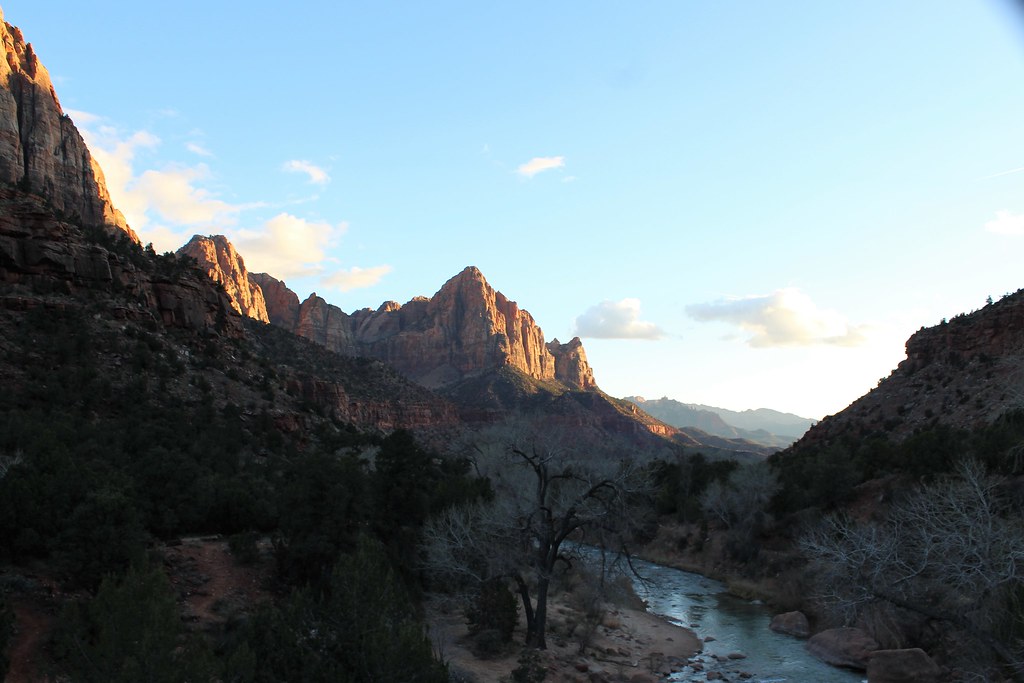
Photo: agcaddesigns.com Architectural Renderings via Flickr (CC BY 2.0)
Our 10 Best Summer Hikes in Zion National Park begin with a counterintuitive reality: midsummer is often the hardest time to hike the main canyon. Afternoon temperatures commonly exceed 100°F at lower elevations, exposed sandstone radiates heat, and monsoon thunderstorms can turn narrow canyons dangerous within minutes. Successful summer hiking depends on choosing the right elevation, terrain, and start time rather than simply following the park’s most famous trail list.
Zion spans roughly 3,700 to 8,700 feet in elevation, so conditions vary sharply between Zion Canyon, the east side, and the Kolob Canyons district. Our team uses shaded river corridors for hot afternoons, exposed climbs near sunrise, and higher plateaus when the canyon floor becomes oppressive. The selections below cover short walks, family options, water hikes, and strenuous routes across the park’s principal landscapes.
What Summer Conditions Mean on Zion’s Trails
Heat changes difficulty faster than mileage does
A three-mile climb such as the Watchman Trail can feel harder in July than a substantially longer route during October. Zion Canyon sits around 4,000 feet, where sparse shade, low humidity, and pale Navajo Sandstone intensify sun exposure. Start exposed trails around sunrise, carry more water than the mileage alone suggests, and reserve the middle of the day for the Riverside Walk, Pa’rus Trail, visitor facilities, or a break outside the canyon.
Heat illness frequently begins with headache, unusual fatigue, nausea, or declining coordination. Turn around at the first symptoms rather than waiting for shade that may be miles away. Salt-containing food or electrolytes can help replace what is lost through sweat, but they do not compensate for inadequate water. Dark slickrock and paved surfaces can also become dangerously hot for dogs, which are permitted on very few park trails.
Monsoon weather creates a separate afternoon hazard
From roughly July into September, thunderstorms can develop over Zion’s plateaus even when the canyon floor begins under blue sky. Lightning threatens exposed viewpoints, while runoff funnels through bare rock into slot canyons and the Virgin River. The Narrows, Orderville Canyon, and other confined drainages require particular caution because storms miles upstream can affect hikers who never see rain.
Check the day’s weather and flash-flood potential before entering a narrow canyon. Muddy water, rising flow, floating debris, or a sudden change in river sound are reasons to leave immediately. Thunder also makes Canyon Overlook and Angels Landing poor places to linger because both routes cross exposed sandstone with limited shelter.
The 10 Best Summer Hikes in Zion National Park at a Glance
Compare distance, effort, and summer strategy
| Trail | Approximate round trip | Summer character |
|---|---|---|
| Pa’rus Trail | 3.5 miles | Easy, paved Virgin River route suited to dawn or sunset |
| Watchman Trail | 3.3 miles | Exposed climb with broad lower-canyon views |
| Canyon Overlook Trail | 1 mile | Short east-side trail with ledges and a major viewpoint |
| Emerald Pools Trails | About 1.2 to 3 miles | Waterfall alcoves, connecting loops, and variable closures |
| Riverside Walk | 2.2 miles | Mostly shaded paved path leading to the Narrows |
| The Narrows | Variable, up to 9.4 miles | River hiking beneath thousand-foot canyon walls |
| Angels Landing | About 5.4 miles | Steep ascent, chain-assisted ridge, permit required |
| Observation Point via East Mesa | About 7 miles | Higher-elevation approach to a 6,507-foot overlook |
| Taylor Creek Trail | About 5 miles | Kolob finger canyon with creek crossings and historic cabins |
| Timber Creek Overlook Trail | About 1 mile | Short Kolob Canyons ridge walk with expansive views |
Matching the 10 Best Summer Hikes in Zion National Park to Your Priorities
Families and visitors acclimating to the heat should begin with Pa’rus, Riverside Walk, or Timber Creek Overlook. Canyon Overlook supplies the strongest view for the least mileage, although exposed drop-offs require close supervision of children. Watchman works well for hikers wanting a moderate sunrise climb without traveling deep into Zion Canyon.
Choose the Narrows for immersion in Zion’s geology, Angels Landing for exposure and steep climbing, and Observation Point for the broadest view over Zion Canyon. Taylor Creek provides quieter terrain among Kolob’s red cliffs. Emerald Pools occupies the middle ground, with route combinations that can be adjusted for time, heat, and trail conditions.
In the Narrows, every step lands on rounded river stones that shift beneath wet shoes. Cool water presses against the legs while reflected light moves across walls that rise hundreds of feet overhead. Conversation becomes difficult where the canyon tightens because flowing water fills the space with sound. Progress is much slower than ordinary trail mileage suggests, especially when water reaches above the knees.
How Summer Compares with Zion’s Other Seasons
A practical year-round comparison
| Season | Weather | Crowd effects | Typical access and activities |
|---|---|---|---|
| Spring | Cool mornings, warming afternoons, variable runoff | Heavy around spring breaks and weekends | Excellent exposed hiking, but high Virgin River flow may close the Narrows |
| Summer | Very hot low elevations, cooler high country, monsoon storms | Long shuttle lines and scarce east-side parking | Broad trail access, river hiking when flow and flood risk allow |
| Autumn | Mild days, cold nights later in the season | Busy early, gradually quieter | Strong conditions for long climbs and canyon photography |
| Winter | Cold, with ice or snow at higher elevations | Lowest visitation outside holidays | Quiet canyon walks, but traction and weather closures can limit routes |
Early, middle, and late summer are meaningfully different
June often brings dry weather and long daylight, but lingering spring runoff can keep the Narrows closed when the Virgin River is running too high. July usually delivers the most punishing canyon heat. It also marks the growing influence of the Southwest monsoon. August remains hot, with greater potential for afternoon storms and flash floods.
September can feel summery at lower elevations while producing cooler mornings on East Mesa and the Kolob plateau. Families tied to school calendars thin out after major holiday weekends, although Angels Landing, Canyon Overlook, and the Narrows remain busy. For long exposed routes, early June and September generally provide more forgiving temperatures than the core of July.
Planning Access for the 10 Best Summer Hikes in Zion National Park
Zion Canyon and east-side trailheads require different tactics
The Zion Canyon shuttle generally serves the Scenic Drive during the busiest part of the year, affecting access to Angels Landing, Emerald Pools, Riverside Walk, and the Narrows. Arrive early enough to account for entrance traffic and shuttle queues. Canyon Overlook, East Mesa, Taylor Creek, and Timber Creek Overlook are reached by road rather than the canyon shuttle, and their small parking areas can fill early. Confirm current fees, shuttle operations, trail closures, permits, and parking rules on the official park site.
The Zion-Mount Carmel Highway connects the south entrance with Canyon Overlook and the park’s east side. Summer traffic can slow near the historic 1.1-mile tunnel, where oversized vehicles require traffic control. Kolob Canyons is a separate district reached from Interstate 15, roughly 40 miles north of the main canyon by road, so Taylor Creek and Timber Creek Overlook work best as a dedicated half-day outing.
Permits and closures can determine your final route
Angels Landing
A permit is required for the chain-assisted section beyond Scout Lookout. The approach climbs the West Rim Trail through Refrigerator Canyon and Walter’s Wiggles before reaching the exposed ridge. Hikers without a permit can stop at Scout Lookout or continue farther up the West Rim Trail, gaining substantial views without entering the narrow chain section.
The Narrows and Emerald Pools
The bottom-up Narrows day hike begins at the end of Riverside Walk and does not follow a conventional dirt trail. Access depends on river flow, flash-flood risk, and water quality. Emerald Pools routes are more conventional, but bridge damage, rockfall, and maintenance can change which connections are available. Build enough flexibility into the day to substitute Riverside Walk or Pa’rus if conditions remove either option.
A summer trail kit should address heat and water
- Water and electrolytes: Carry enough for the route, with extra capacity for exposed climbs.
- Sun protection: Use a brimmed hat, sunscreen, sunglasses, and lightweight clothing that covers the shoulders.
- Footwear: Choose grippy hiking shoes for sandstone and supportive river footwear for the Narrows.
- Trekking pole: A sturdy pole improves balance against current and loose cobbles in the Virgin River.
- Offline navigation: Download maps before entering areas with unreliable cellular coverage.
- Weather layer: Pack a light rain shell for high-country wind and monsoon showers.
How Crowds Change the Hiking Experience
Congestion concentrates at a few predictable points
Summer crowds have their greatest effect at shuttle stops, narrow bridges, and confined trail segments. The Temple of Sinawava becomes especially busy because Riverside Walk and the Narrows share one access point. The first half mile of the Narrows can feel crowded as hikers adjust footwear, test water depth, and stop for photographs. Farther upstream, the river corridor usually spreads people out, although progress remains slow where the current strengthens.
Small adjustments create noticeably quieter hikes
Scout Lookout remains busy even when the Angels Landing permit system limits access to the chains. Continue north on the West Rim Trail and foot traffic often declines within several switchbacks. On Taylor Creek, many visitors turn around before Double Arch Alcove, roughly 2.5 miles from the trailhead. Observation Point also feels quieter after the opening stretch from East Mesa, particularly once hikers enter the ponderosa pine forest approaching the canyon rim.
Canyon Overlook presents a different problem because limited parking can control access before trail crowding does. Schedule that hike near sunrise, then move to a trail with more dependable transportation. Avoid circling repeatedly near the trailhead, since congestion along the Zion-Mount Carmel Highway can interfere with tunnel traffic and emergency access.
Build Your Day Around Temperatures on Zion’s 10 Best Summer Hikes
Use dawn for exposed sandstone
Watchman, Canyon Overlook, and the climb toward Scout Lookout belong in the first part of the day. Watchman gains about 370 feet across open slopes, while the West Rim Trail climbs roughly 1,500 feet to Scout Lookout through long switchbacks and the tight turns of Walter’s Wiggles. Starting near first light reduces direct sun exposure and leaves time to descend before sandstone walls begin radiating stored heat.
Shift to water and shade after lunch
Riverside Walk receives shade from the surrounding canyon walls, although the direction and amount change throughout the day. Lower Emerald Pools can provide relief beneath its alcove, but the connecting slopes to the Middle and Upper Pools remain hot and exposed. The Narrows keeps hikers physically cooler, yet cold river water can obscure dehydration because the body does not feel as sweaty.
Keep an evening route in reserve
Pa’rus Trail works well late in the day because it begins near the visitor center, follows the Virgin River, and avoids shuttle dependence. Use the following sequence when combining several of the 10 Best Summer Hikes:
- Complete one exposed climb shortly after sunrise.
- Rest during peak afternoon heat or choose a shaded river corridor.
- Check storm development before committing to another canyon route.
- Finish with Pa’rus Trail or a short Kolob overlook near sunset.
Choose Your Timing by Priority
Match the trip window to the experience you want
Summer provides long daylight and broad trail access, but each priority points toward a different portion of the season. June favors dry rock routes and sunrise photography, subject to lingering Virgin River runoff. July suits visitors prepared for extreme heat and very early starts. Late August and September bring somewhat cooler mornings, while thunderstorm planning remains essential.
| Priority | Strongest summer window | Best trail matches |
|---|---|---|
| Long exposed climbs | Early June or September | Angels Landing approach, Watchman |
| River hiking | After spring runoff, when conditions allow | The Narrows, Riverside Walk |
| Higher, cooler terrain | July through September mornings | East Mesa, Taylor Creek |
| Short scenic walks | Any summer month with an early start | Canyon Overlook, Timber Creek Overlook |
Separate permit plans from backup plans
Angels Landing permits are commonly distributed through advance seasonal lotteries and a limited lottery for the following day. The applicant named on the permit should be present with the required identification. Submit for several acceptable dates rather than building the entire trip around one morning. If unsuccessful, hike to Scout Lookout and continue on the West Rim Trail instead.
A bottom-up Narrows hike from the Temple of Sinawava differs from the approximately 16-mile top-down route, which requires wilderness authorization and considerably more planning. Keep those options distinct when researching permits. A practical backup set includes Riverside Walk for a Narrows closure, Watchman for an unavailable Angels Landing permit, and Taylor Creek when the main canyon feels saturated with visitors.
Plan the 10 Best Summer Hikes in Zion National Park Safely
The strongest summer itinerary combines one demanding objective with shorter routes that tolerate schedule changes. Pair Angels Landing or Observation Point with Pa’rus rather than attempting multiple exposed climbs. Give the Narrows most of a day because current, water depth, and unstable cobbles make hiking speed unpredictable. Reserve Kolob Canyons for its own outing so the drive does not consume the coolest hiking hours.
Use elevation, shade, transportation, permits, and storm exposure as your final decision filters. That framework turns the 10 Best Summer Hikes from a checklist into a workable plan. Start exposed routes early, retain at least one flexible alternative, and leave narrow canyons out of the schedule whenever upstream weather introduces unacceptable flash-flood risk.
Want to keep exploring? Browse all our Zion guides and articles for more trip-planning tips and ideas.
Gear & Essentials
Tell us about your trip and we will add what else you will want:
The basics
Worth having in the car whatever the park.
For this trip
Traveling with kids
Bringing a pet
RVing
Backcountry
On the water
Photography
Accessibility
As an Amazon Associate we earn from qualifying purchases, at no extra cost to you.