Zion National Park in Fall: What to Expect and What to Do
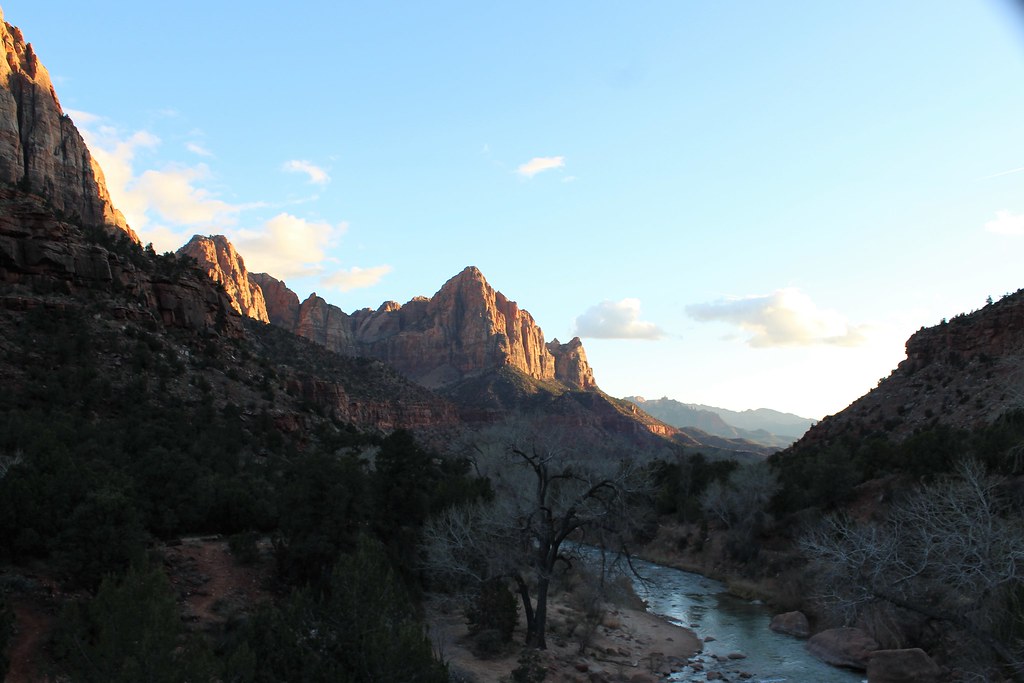
Photo: agcaddesigns.com Architectural Renderings via Flickr (CC BY 2.0)
For a Zion National Park Fall trip, October offers the best balance of comfortable hiking temperatures, reliable trail access, and changing cottonwoods along the Virgin River. September remains hot enough for river hiking, while November brings colder mornings, shorter daylight, lighter crowds, and the possibility of snow or ice at higher elevations.
Timing matters because Zion spans more than 5,000 feet of elevation, from roughly 3,666 feet at Coalpits Wash to 8,726 feet on Horse Ranch Mountain. Autumn reaches the high plateaus weeks before it reaches Zion Canyon. A single trip can therefore include warm desert sun near Springdale, freezing temperatures around Lava Point, and cold water in the Narrows.
Understanding Zion National Park Fall Conditions and Activities
Elevation controls temperature and foliage
Zion Canyon sits near 4,000 feet, enclosed by cliffs of Navajo Sandstone that rise approximately 2,000 feet above the Virgin River. These walls limit direct sunlight during autumn, especially at narrow locations such as the Temple of Sinawava. Morning temperatures can remain noticeably colder than readings from open areas near Springdale suggest.
Fall color generally begins in the park’s higher country, including the Kolob Terrace and areas around Lava Point. Canyon maples can turn red or orange in protected side canyons, while Fremont cottonwoods along the Virgin River usually provide the most visible lower canyon color later in the season. Peak timing varies with elevation, drought, wind, and early freezes, so visitors should plan for a progression rather than one parkwide peak date.
Zion National Park Fall Weather Can Change Quickly
September afternoons can still feel like summer on exposed trails such as Watchman Trail and the West Rim Trail below Scout Lookout. By October, daytime hiking becomes more comfortable, although shaded canyon floors may require a fleece at breakfast. November commonly brings freezing nights at higher elevations, with occasional snow creating ice on steep, shaded routes.
Autumn also overlaps with the later portion of the Southwest monsoon. Flash floods remain possible whenever thunderstorms affect the Virgin River watershed, including storms that occur beyond the visible canyon walls. The Narrows, Orderville Canyon, and technical slot canyons require particular caution because upstream rainfall can change water depth and flow far from where the rain falls.
A Month-by-Month Guide to Zion National Park in Fall
| Period | Typical conditions | Crowd pattern | Access and best activities |
|---|---|---|---|
| September | Hot afternoons at low elevations, cooler mornings, lingering thunderstorm risk | Busy on weekends and around major trailheads | Good for the Narrows when flow and weather are safe, plus early starts on exposed trails |
| October | Mild days, cold shaded mornings, increasing fall color | Often one of the busiest autumn periods | Strong all-around hiking conditions in Zion Canyon and the east side |
| November | Shorter days, cold nights, possible snow or ice at elevation | Lighter outside holiday periods | Good for lower trails, photography, and quieter canyon visits |
September favors river travel and early starts
September suits visitors who want warmer conditions for the Narrows. The standard bottom-up outing begins at the Temple of Sinawava, follows the paved Riverside Walk for about 1 mile, then continues directly through the Virgin River. Water temperatures can already be cold, and flow, bacterial advisories, flash flood potential, and closures must be checked before entering.
Exposed hikes demand an early departure. The 3.3-mile round trip Watchman Trail gains roughly 370 feet and receives substantial sun, while the climb toward Scout Lookout gains about 1,000 feet in two miles. Carrying more water than a cool morning seems to require prevents the common mistake of running short during a hot descent.
October delivers the broadest range of options
October usually provides the most versatile conditions for hiking Zion Canyon, the east side slickrock country, and lower sections of the West Rim. Canyon Overlook Trail covers approximately 1 mile round trip from the Zion Mount Carmel Highway and reaches a viewpoint above Pine Creek Canyon. Parking near the trailhead is extremely limited, so arriving early improves the odds of finding a legal space.
On the overlook trail, the path alternates between gritty sandstone, carved steps, and a shaded alcove where cool air lingers against the cliff. The final ledge opens abruptly over the Great Arch and the switchbacks below. Wind reaches the exposed viewpoint before it reaches the protected trail, and the temperature shift can be sharp enough to justify carrying a light layer even on a sunny afternoon.
November exchanges warmth for quieter trails
November is better suited to visitors comfortable with cold starts and limited daylight. Lower routes such as Pa’rus Trail, Canyon Overlook Trail, and the Emerald Pools system may remain accessible, but shaded steps can hold ice after a storm. Traction devices are useful when freeze and thaw cycles affect paved paths, sandstone ledges, or the climb toward Scout Lookout.
Late autumn color often persists along the Virgin River after exposed trees at higher elevations have dropped their leaves. The low sun also reaches less of the canyon floor, which affects both temperature and photography. Photographers can use reflected light on the sandstone walls, but should expect deep contrast between illuminated cliffs and shaded foregrounds.
Crowds, Shuttles, and Road Access in Fall
How crowds change the canyon experience
October crowds concentrate at the Zion Canyon Visitor Center, the Grotto, Zion Lodge, and the Temple of Sinawava. Their practical effect extends beyond busy viewpoints. Shuttle queues can delay a carefully timed hike, parking in Springdale and near the park entrance fills early, and narrow trails around Emerald Pools may move at the pace of the group ahead.
Starting with the first practical transportation option improves conditions, but late afternoon can also work for shorter hikes. Many day visitors leave before sunset. Avoid planning two time-sensitive trailheads on the same day, since transportation delays and limited parking can consume the margin between them.
Seasonal shuttle operations
Private vehicles are generally restricted from Zion Canyon Scenic Drive while the park shuttle is operating. Service patterns change during autumn, and Angels Landing permits, wilderness permits, current fees, trail closures, and oversized vehicle procedures through the Zion Mount Carmel Tunnel also require advance attention. Confirm current details on the official park site before fixing transportation and hiking times.
Roads connect several distinct parts of Zion
The Zion Mount Carmel Highway remains the primary route between Zion Canyon and the east entrance, crossing steep switchbacks and the historic 1.1-mile tunnel. Congestion near Canyon Overlook can slow travel. Kolob Canyons, reached from Interstate 15 northwest of the main canyon, provides access to a separate system of crimson cliffs and backcountry trails.
Kolob Terrace Road climbs from the town of Virgin toward high plateaus, Lava Point, and trailheads serving the western backcountry. Temperatures fall rapidly with elevation, and early snow can affect this road while Zion Canyon remains dry. Visitors should avoid treating conditions at the south entrance as representative of the entire park.
Choosing Fall Dates Around Your Priorities
Match the month to the main activity
- Choose September for warmer river conditions, long daylight, and early morning desert hikes.
- Choose October for the widest selection of trails and the best chance of combining mild weather with fall color.
- Choose November for lower crowd levels, low-angle light, and cool hiking below the high plateaus.
- Allow at least two full days if both Zion Canyon and the east side are priorities, since parking and transportation can make rapid sightseeing inefficient.
Build flexibility around permits and weather
Angels Landing requires a permit for the chained section beyond Scout Lookout. Seasonal lottery applications are handled in advance, with a limited day-before lottery offering another opportunity. Hikers without a permit can still reach Scout Lookout and continue along permitted portions of the West Rim Trail, which provide expansive views without entering the chained route.
Keep one alternate hike ready for rain, high river flow, ice, or a missed permit. Good substitutions include Watchman Trail, the Pa’rus Trail, Canyon Overlook, or an out-and-back hike on the West Rim below the permit checkpoint. Technical canyons require separate planning because route conditions, cold water, daylight, and wilderness permits all influence whether an autumn descent is reasonable.
How Fall Compares With Zion’s Other Seasons
Spring and summer bring different access challenges
Spring runoff can raise the Virgin River enough to close the Narrows, while melting snow leaves high routes muddy or snow covered. Wildflowers appear along Coalpits Wash and in lower desert areas, but temperatures vary sharply. Summer provides long days and dependable access to high country, although afternoon heat above 100 degrees Fahrenheit can make exposed trails hazardous. July through September also carries the greatest thunderstorm and flash flood concern.
Winter rewards visitors prepared for ice
Winter brings the lightest general visitation, except around holidays, and snow can outline the cross bedding of Zion’s sandstone cliffs. Ice frequently lingers on shaded switchbacks, including Walter’s Wiggles and portions of the Emerald Pools trails. The upper Kolob Terrace may become difficult to reach after storms. Winter hikers gain solitude but must carry traction, insulating layers, and enough daylight margin to accommodate slower travel.
| Season | Crowds | Weather | Access | Best suited for |
|---|---|---|---|---|
| Spring | Moderate to heavy near spring holidays | Variable temperatures, runoff, occasional storms | High trails may retain snow; Narrows closures are possible | Wildflowers and lower elevation hiking |
| Summer | Heavy | Very hot afternoons, monsoon thunderstorms | Broad trail access, subject to heat and flood closures | High country and carefully timed river trips |
| Fall | Heavy in October, easing in November | Mild days followed by cold nights | Usually broad access before early snow | Hiking, foliage, and photography |
| Winter | Generally light | Cold, with snow and shaded ice | Some high roads and trails may be difficult | Quiet canyon walks and snowy landscapes |
Zion National Park Fall travel works best for hikers seeking a compromise between summer access and winter solitude. The tradeoff is daylight. Zion receives roughly 12 and a half hours of daylight in early September but fewer than 10 hours by late November. Longer outings such as the West Rim require strict turnaround times, especially when shuttle transportation or a walk back to lodging follows the hike.
Reserve the Hardest Parts of the Trip First
Choose lodging around the entrance you will use
Staying in Springdale simplifies early access to Zion Canyon and reduces dependence on finding parking near the visitor center. Lodging farther west may cost less, but morning traffic adds uncertainty. Travelers concentrating on Kolob Canyons can base themselves near Interstate 15, while east side lodging provides a shorter approach to Checkerboard Mesa and trailheads beyond the Zion Mount Carmel Tunnel.
Plan permit applications before filling the itinerary
Enter the seasonal Angels Landing lottery before building a day around the chained section. A successful permit assigns a specific date and time window, so flexible travelers should request several acceptable options. If the seasonal lottery does not work, keep the day before lottery in the plan and schedule Scout Lookout as the fallback. Backcountry campsites and technical canyon routes use separate wilderness permits.
Protect weather dependent days
A Narrows day should remain movable until forecasts, river conditions, and water quality support entry. Avoid placing it immediately before a flight or long drive, since an unsafe forecast can erase the only available opportunity. Reserve a second day for a dry trail such as Taylor Creek, a roughly 5 mile round trip through the Kolob Canyons to Double Arch Alcove.
Turn Two or Three Days Into a Coherent Visit
A practical two day sequence
Use the first day for Zion Canyon while energy is high and transportation timing is familiar. Start with Scout Lookout or the West Rim, then descend before afternoon congestion. Spend the second day along the Zion Mount Carmel Highway, combining Canyon Overlook with stops at Checkerboard Mesa and shorter east side walks. This order keeps the most time sensitive day separate from limited roadside parking.
Add Kolob Canyons on a third day
Kolob Canyons deserves its own half day rather than a rushed detour. Taylor Creek passes two historic cabins before entering a narrowing finger canyon beneath sandstone walls. For a shorter outing, Timber Creek Overlook covers about 1 mile round trip and looks toward the Pine Valley Mountains. The higher, more exposed terrain can feel substantially colder than Springdale on the same afternoon.
- Place permitted hikes on their assigned dates.
- Keep the Narrows flexible for the safest weather window.
- Group Zion Canyon stops together to reduce transportation delays.
- Visit the east side or Kolob Canyons when canyon crowds are greatest.
- Carry a backup route for ice, high water, or full parking areas.
Deciding When to Visit Zion National Park in Fall
Choose September when warm river conditions and longer days matter most. Choose October for the broadest trail selection and the strongest likelihood of seeing color across multiple elevations. Choose November for quieter paths, colder photography sessions, and lower elevation hiking. In every month, treat Zion Canyon, the east side, Kolob Terrace, and Kolob Canyons as separate environments rather than assuming one forecast describes the entire park.
The strongest plan combines one priority hike, one flexible weather dependent activity, and one dependable alternative each day. That structure absorbs shuttle delays, permit outcomes, early snow, and changing river conditions without wasting the trip. Pack for a cold shaded morning and a warm exposed afternoon, set turnaround times before leaving the trailhead, and let elevation determine where each day begins.
Want to keep exploring? Browse all our Zion guides and articles for more trip-planning tips and ideas.
Gear & Essentials
Tell us about your trip and we will add what else you will want:
The basics
Worth having in the car whatever the park.
For this trip
Traveling with kids
Bringing a pet
RVing
Backcountry
Winter conditions
On the water
Photography
Accessibility
As an Amazon Associate we earn from qualifying purchases, at no extra cost to you.