

7 Best Spring Hikes in Arches National Park
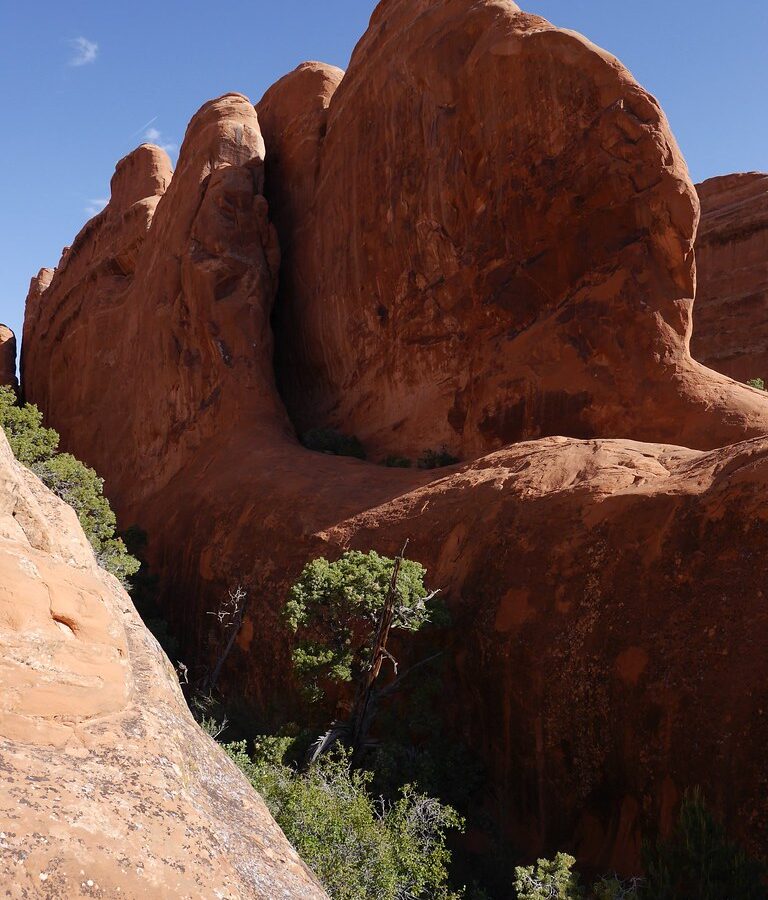
Photo: usareisetipps via Flickr (CC BY-SA 2.0)
The search for the Best Spring Hikes Arches has to offer begins at Delicate Arch just after sunrise, when cold slickrock grips your shoes, ravens call above the sandstone bowl, and the 52 foot opening frames the snow streaked La Sal Mountains. The final approach crosses an exposed ledge before the view opens suddenly, so hikers feel the scale of the arch before the rising sun warms the basin.
Spring combines manageable temperatures, longer daylight, blooming desert plants, and broad access to the park’s trail system. It also brings crowded parking areas, rapidly changing weather, and occasional timed entry requirements. Our team uses this guide to compare seven hikes, explain when spring performs better than other seasons, and help you choose routes according to distance, exposure, scenery, and trailhead logistics.
Why the Best Spring Hikes in Arches Start Early
Arches National Park occupies a high desert landscape north of Moab, with elevations ranging from roughly 4,085 feet near the visitor center to 5,653 feet on Elephant Butte. That elevation moderates spring temperatures but also produces sharp daily swings. A calm afternoon near 70°F can follow a frosty morning, while passing fronts may bring sleet, gusty winds, or brief snow showers to higher trails.
The Most Reliable Weather Window
March usually delivers the coolest hiking conditions, with freezing mornings still possible and exposed slickrock warming quickly under direct sun. April generally offers the best balance of mild afternoons and adequate daylight. By May, midday heat becomes a serious factor on Delicate Arch Trail, the Devils Garden Primitive Loop, and Tower Arch Trail, all of which have long, unshaded sections.
We recommend starting strenuous routes near sunrise and reserving shorter walks for later in the day. Spring thunderstorms can make sandstone slick within minutes, and runoff may collect in washes that appeared dry at the trailhead. Turn around when thunder develops nearby because arches, fins, and open slickrock provide little protection from lightning.
Spring Color Across a Stone Landscape
Moisture and temperature determine the timing of desert blooms, so displays vary substantially from year to year. Look for yellow prince’s plume, pink sand verbena, white evening primrose, and flowering claret cup cactus beside sandy paths. Biological soil crust also becomes conspicuous after moisture, appearing as dark, knobby patches between plants. Stay on rock or established tread because one misplaced boot can damage decades of crust growth.
How Spring Compares With the Other Seasons
Spring attracts hikers because most paved roads and established trails are normally accessible, while daytime temperatures remain safer than they are during midsummer. The tradeoff is competition for parking at Delicate Arch, The Windows, and Devils Garden. Arrival time directly affects the experience: a delayed start can mean circling a full lot, hiking in warmer conditions, or choosing a different trail.
A Four Season Decision Table
| Season | Typical trail conditions | Crowd pattern | Access considerations | Best suited to |
|---|---|---|---|---|
| Spring | Cool mornings, mild afternoons, wind, occasional rain or snow | Heavy around weekends, school breaks, and sunset | Main roads and trails generally accessible, with temporary weather closures possible | Long hikes, wildflowers, sunrise photography |
| Summer | Extreme midday heat, intense sun, monsoon storms later in the season | Busy at major viewpoints, quieter during the hottest hours | Heat limits safe hiking windows more than road access | Short dawn walks and scenic drives |
| Fall | Warm September days followed by cooler, stable conditions | Heavy during mild weather and holiday periods | Broad trail access under normal conditions | Long routes and camping |
| Winter | Cold mornings, short days, possible snow and ice on shaded rock | Lowest visitation outside holidays | Icy roads and slickrock may temporarily restrict access | Solitude and flexible itineraries |
What Crowds Change on the Trail
Crowds affect more than parking. The narrow Delicate Arch approach can develop two way bottlenecks, while hikers on the Devils Garden route may wait to cross sandstone fins safely. At The Windows, frequent foot traffic makes quiet wildlife observation less likely. Starting at first light reduces these conflicts and leaves time to shift to Park Avenue or Broken Arch if a preferred lot is full.
7 Best Spring Hikes in Arches National Park at a Glance
These seven routes cover the park’s major landscapes, from the Courthouse Towers monoliths to the closely spaced sandstone fins of Devils Garden. Distances are approximate because GPS readings can wander near cliffs and hikers often add mileage while exploring viewpoints. Difficulty reflects navigation, exposure, surface, and scrambling as well as distance.
Distance, Effort, and Features of the Best Spring Hikes in Arches
| Hike | Approximate distance | Difficulty | Primary feature |
|---|---|---|---|
| Delicate Arch Trail | 3 miles round trip | Moderate | Freestanding arch above a sandstone bowl |
| Devils Garden Primitive Loop | 7.9 miles | Difficult | Sandstone fins, scrambling, and multiple arches |
| Landscape Arch Trail | 1.9 miles round trip | Easy | An exceptionally long, slender natural arch |
| The Windows and Double Arch | About 1.6 miles combined | Easy to moderate | Large openings concentrated near one parking area |
| Park Avenue Trail | 2 miles round trip | Moderate | Courthouse Towers and a steep walled canyon |
| Tower Arch Trail | 3.4 miles round trip | Moderate | Remote arch in the Klondike Bluffs area |
| Broken Arch Loop | About 2.3 miles | Moderate | Open grassland, fins, and multiple arch views |
Choosing Among the 7 Best Spring Hikes in Arches National Park
For a First Visit
Pair Delicate Arch with The Windows and Double Arch. Together they show two different stages of erosion: a solitary arch standing along a sandstone fin, followed by massive openings formed where water entered vertical joints. This combination requires driving between trailheads, but it gives first time visitors the broadest geological introduction without committing to an all day route.
For Solitude or a Bigger Challenge
Tower Arch generally demands more logistical effort because its trailhead lies beyond the busiest scenic road corridor and access may involve unpaved roads. The Devils Garden Primitive Loop provides the strongest physical challenge, including route finding, steep slickrock, narrow fins, and deep sand. Hikers uncomfortable with exposure can turn around after Landscape Arch rather than continuing toward Double O Arch.
Planning a Day on the Best Spring Hikes in Arches
The paved park road extends roughly 18 miles from the entrance area to Devils Garden, and driving its full length takes considerably longer once viewpoint stops and traffic are included. Arches has no general public shuttle connecting its trailheads. A workable plan therefore groups nearby hikes and avoids repeatedly driving from one end of the park to the other.
Reservations, Permits, and Trail Access
Entrance arrangements and seasonal timed entry systems may change between visits. Fiery Furnace access also follows separate permit or ranger guided requirements, although that route is not included among these seven hikes. Standard day hikes generally require no individual trail permit. Confirm current fees, entry reservations, road conditions, and Fiery Furnace procedures on the official park site before committing to an arrival time.
What to Carry in Variable Spring Weather
Water remains the essential item even on cool days because dry air and steady wind conceal perspiration. Our team carries enough for the full route rather than relying on trailhead availability. A spring day pack should include:
- At least two liters of water per person for moderate routes, with more for Devils Garden or warm May afternoons
- A brimmed hat, sunglasses, and broad spectrum sunscreen
- A wind resistant layer and a light insulating layer
- Footwear with reliable traction on smooth sandstone
- A downloaded map or paper map for primitive routes
- Salty snacks and a compact emergency light
- A simple first aid kit, including supplies for blisters and abrasions
Using Crowd Patterns to Build a Better Route
Spring congestion follows a predictable geography. Delicate Arch, The Windows, and Devils Garden receive the strongest demand because each anchors a major sightseeing stop. Park Avenue has a smaller parking area, but many visitors remain at the upper overlook rather than descending the trail. Broken Arch spreads hikers across several connecting paths, while Tower Arch usually sees fewer people because reaching Klondike Bluffs requires extra driving and comfort with an unpaved approach.
Match Trail Length to the Busiest Hours
Begin with the hike that has the smallest margin for delay. Devils Garden Primitive Loop deserves the earliest start because afternoon heat, navigation, and nearly eight miles of travel can compound one another. Delicate Arch also benefits from an early departure, particularly when hikers gather near the arch for photographs. Save Landscape Arch for a shorter outing when the full primitive loop would push the day beyond your available light.
Use Nearby Alternatives Instead of Circling
If a trailhead is full, repeated laps waste fuel and move the hike into a hotter part of the day. Near Devils Garden, Broken Arch provides a practical substitute with open views toward the La Sal Mountains. Near The Windows, the Garden of Eden pullouts offer short explorations among balanced formations. Park Avenue works well near the entrance, though the one way version requires arranging a vehicle at Courthouse Towers or walking back uphill.
Where Spring Conditions Affect Access
The main paved road handles ordinary spring weather well, but localized closures can follow snow, ice, flooding, or maintenance. The approach to Tower Arch requires closer attention. Salt Valley Road and the Klondike Bluffs access roads are unpaved, and clay rich surfaces may become slick or impassable after rain. A passenger vehicle may manage dry conditions, while recent storms can make the same drive unsuitable regardless of ground clearance.
Sandstone, Sand, and Route Finding
Delicate Arch and Devils Garden place hikers on broad slickrock where painted markings or rock cairns indicate the route. Fresh snow can obscure those markers, and rain reduces traction on sloping sandstone. Tower Arch adds loose sand that increases effort, especially during its steep opening climb. Park Avenue follows a defined wash, but runoff can temporarily cover the easiest line through the canyon floor.
Trail Decisions After a Storm
Use the surface underfoot to decide whether to proceed. Mud collecting on boots indicates that travel may damage the tread, while flowing water in a wash signals runoff from terrain outside your immediate view. After rain, prioritize established paths such as Landscape Arch or The Windows and postpone primitive travel. The following checks take less than five minutes at any trailhead:
- Scan sandstone ramps for ice, standing water, or dark wet patches.
- Watch cloud movement over the La Sal Mountains and surrounding mesas.
- Confirm that painted route marks remain visible from one point to the next.
- Compare remaining daylight with the slowest hiker’s realistic pace.
- Turn back before wind, heat, or traction problems become emergencies.
A Decision Framework for the 7 Best Spring Hikes in Arches
Selecting among the Best Spring Hikes Arches visitors can attempt depends on more than mileage. A short trail with exposed ledges may feel harder than a longer maintained path, and deep sand can slow a strong hiker considerably. Use the table below to match terrain and timing with your group before driving to the trailhead.
Choose by Time, Exposure, and Experience
| Priority | Best match | Important limitation |
|---|---|---|
| Iconic sunrise | Delicate Arch | Exposed final ledge and limited shade |
| Easy arch viewing | Landscape Arch | Busy approach during peak periods |
| Several features in little time | The Windows and Double Arch | Parking pressure can shape the schedule |
| Long technical day | Devils Garden Primitive Loop | Scrambling, exposure, and route finding |
| Quieter backcountry character | Tower Arch | Weather sensitive unpaved road access |
| Canyon scenery | Park Avenue | Steep return climb on an out and back hike |
| Flexible moderate loop | Broken Arch | Open terrain offers little midday shade |
Build in a Backup That Solves the Same Need
Choose an alternative with similar scenery but fewer logistical demands. Landscape Arch can replace the Primitive Loop when wind or fatigue makes fin crossings unwise. Broken Arch substitutes for Tower Arch when the access road is muddy. Double Arch offers an imposing sandstone chamber when Delicate Arch parking disrupts the schedule. This approach preserves the purpose of the day without forcing a risky trail or losing hours to traffic.
Make Spring Work for Your Hiking Style
Spring provides the broadest combination of comfortable temperatures, long hiking windows, and access to the park’s varied terrain. The strongest plan pairs an early demanding route with a shorter nearby walk, accounts for cold wind and direct sun, and keeps one alternative ready. Trailhead conditions should guide the final choice, particularly on primitive slickrock and unpaved roads.
First time visitors can concentrate on Delicate Arch, The Windows, and Double Arch. Experienced hikers may devote a full day to Devils Garden or seek the quieter landscape around Tower Arch. Whichever route fits your group, protect biological soil crust, carry all necessary water, and turn around when weather or traction changes. Those choices make a spring visit safer while preserving Arches for the hikers who follow.
Want to keep exploring? Browse all our Arches guides and articles for more trip-planning tips and ideas.
Gear & Essentials
Tell us about your trip and we will add what else you will want:
The basics
Worth having in the car whatever the park.
For this trip
Traveling with kids
Bringing a pet
RVing
Backcountry
Winter conditions
On the water
Photography
Accessibility
As an Amazon Associate we earn from qualifying purchases, at no extra cost to you.