Stargazing in Bryce Canyon National Park: When and Where to See the Night Sky
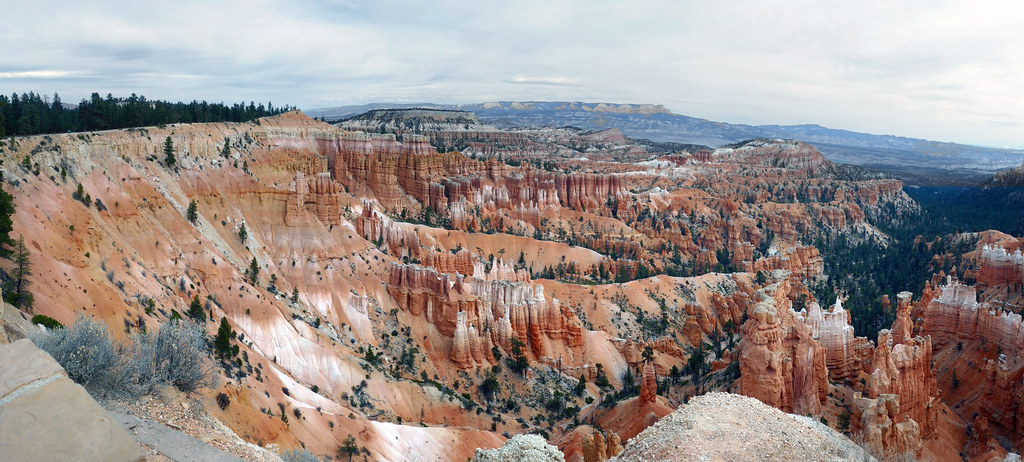
Photo: Bernard Spragg via Flickr (Public Domain Mark)
Stargazing Bryce Canyon National Park from Sunrise Point at 10 p.m. means hearing wind move through ponderosa pines while the hoodoos below fade into black silhouettes. The rim feels colder than the parking area, gravel shifts underfoot, and the eastern horizon opens so widely that stars appear to rise directly from the amphitheater.
Bryce combines high elevation, dry air, limited nearby development, and broad horizons. Its main viewpoints sit between roughly 8,000 and 9,100 feet above sea level, where thinner atmosphere and low humidity often sharpen stars, planets, and the Milky Way. Successful night viewing still depends on moonlight, clouds, wildfire smoke, temperature, and choosing a viewpoint that matches the part of the sky you want to see.
Why Bryce Canyon Produces Such Clear Night Skies
Bryce Canyon became a certified International Dark Sky Park in 2019, recognizing both its naturally dark setting and its work to limit unnecessary artificial light. The park occupies the eastern edge of the Paunsaugunt Plateau in southern Utah, far from a major metropolitan area. Light from nearby communities can affect portions of the horizon, but the overhead sky remains substantially darker than skies surrounding most cities and suburbs.
Stargazing Bryce Canyon National Park at High Elevation
Elevation improves transparency because observers look through less atmosphere, particularly when the air is dry. Sunrise Point and Sunset Point are close to 8,000 feet, Bryce Point rises to about 8,300 feet, and Rainbow Point reaches approximately 9,115 feet. Those elevations also produce rapid heat loss after sunset. A summer afternoon in the 70s can give way to a night requiring a fleece, warm hat, and gloves, especially when wind crosses the exposed rim.
How the Hoodoo Landscape Shapes the View
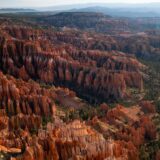
Bryce is a series of eroded amphitheaters rather than a single river carved canyon. Frost wedging and rainfall have cut the Claron Formation’s limestone, siltstone, and mudstone into fins, windows, and hoodoos. Along the main amphitheater, that erosion creates an unobstructed eastern horizon. It is particularly useful for watching the Moon, Jupiter, Venus, or a bright constellation rise above the formations.
When to Go Stargazing in Bryce Canyon National Park
The best date depends on your target. A moonless night reveals faint stars, meteors, and the Milky Way, while a bright Moon illuminates hoodoos and makes walking near developed viewpoints easier. Check moonrise, moonset, and lunar phase together. A crescent or quarter Moon that sets early can provide both illuminated scenery around dusk and darker observing later.
Choose Darkness by Moon Phase and Time
The darkest window generally falls around the new moon, especially after astronomical twilight ends. On summer nights, full darkness arrives relatively late. During winter it arrives much earlier, but snow, ice, and severe cold complicate access. A full Moon can wash out the Milky Way, yet the eastern facing amphitheater can be striking when moonlight gives the hoodoos visible depth and pale color.
Seasonal Conditions at a Glance
| Season | Night sky advantage | Conditions to prepare for |
|---|---|---|
| March through May | Earlier darkness and relatively quiet evenings | Late snow, freezing temperatures, and rapidly changing storms |
| June through August | The Milky Way’s bright central region is prominent during suitable moon phases | Late sunsets, afternoon thunderstorms, cool nights, and occasional wildfire smoke |
| September through October | Longer nights with the Milky Way still visible early in the evening | Sharp temperature drops and possible early snow |
| November through February | Long darkness and exceptionally crisp air between storms | Snow covered roads or paths, ice, wind, and temperatures well below freezing |
Milky Way and Meteor Timing
The Milky Way is visible year round, but its bright galactic center is best positioned during the warmer months. In late spring it rises late in the southeast. By midsummer it arches across the southern sky during the evening, while in early autumn the core drops toward the southwest earlier at night. Major meteor showers can be productive here, although the Perseids in August and Geminids in December are strongly affected by that year’s moon phase.
Where to See the Night Sky in Bryce Canyon National Park
Bryce’s paved scenic road runs approximately 18 miles from the entrance area to Rainbow Point. Most first time visitors should begin along the Bryce Amphitheater rim, where several overlooks are close together and the eastern horizon is broad. The southern scenic drive provides higher, quieter alternatives, but those locations require a longer nighttime return and may feel substantially colder.
Stargazing in Bryce Canyon National Park from the Main Amphitheater
The half mile section of Rim Trail between Sunrise Point and Sunset Point provides the simplest orientation. It is a developed corridor with expansive views, although darkness conceals drop offs and uneven edges beyond the most established areas. Sunset Point tends to receive more passing headlights. Sunrise Point often gives observers a clearer sense of the eastern sky, particularly for moonrise and pre dawn planets.
Inspiration Point and Bryce Point
Inspiration Point has multiple viewing levels above the densely packed Silent City hoodoos. Bryce Point extends farther east from the plateau and provides a broad view across the amphitheater toward distant plateaus. Both have steep exposed edges, so our team recommends completing the walk from the parking area before darkness and remaining on constructed paths once visibility declines.
Quieter Options on the Southern Scenic Drive
Farview Point opens toward distant landmarks including the Kaiparowits Plateau and Navajo Mountain on clear days, which translates into a spacious eastern sky after dark. Rainbow Point has the park’s highest roadside elevation and cooler, thinner air, although surrounding forest can frame portions of the horizon. Road conditions can change after snowstorms, and nighttime services are limited away from the developed northern area.
Build a Safe, Efficient Night Sky Plan
Arrive before sunset rather than searching for an overlook in full darkness. Daylight lets you identify cliff edges, trail junctions, restrooms, and the route back to your vehicle. It also gives your eyes time to adapt gradually as twilight deepens. Current entrance procedures, astronomy programs, road access, and facility availability should be confirmed on the official park site before departure.
A Practical Arrival Sequence
- Choose one primary overlook and one backup before entering the park.
- Reach the primary location 30 to 45 minutes before sunset.
- Walk the exact route between the parking area and viewing spot in daylight.
- Set phones and headlamps to their dimmest red light mode.
- Remain for at least 30 minutes after full darkness so your eyes can adapt.
- Leave slowly and watch for mule deer crossing the park road.
What to Carry Above 8,000 Feet
- Warm layers: Pack insulation for temperatures considerably colder than nearby lower elevation towns.
- Red light: A red headlamp preserves night vision better than a white beam, although it should still be aimed downward.
- Water: High elevation and dry air increase dehydration even when the temperature is low.
- Binoculars: A pair with 7x or 10x magnification can reveal star clusters, lunar detail, and several of Jupiter’s moons without requiring a telescope.
- Printed map: Mobile reception can be unreliable, particularly along the southern scenic drive.
- Traction aids: In winter and early spring, compact ice cleats can help on frozen paths near overlooks.
What to Look for After Darkness Settles
A telescope is optional at Bryce. The naked eye can trace the Summer Triangle, follow the Milky Way through Cygnus, and distinguish the hazy Double Cluster between Perseus and Cassiopeia. In winter, Orion, Taurus, and the Pleiades dominate the evening sky. A rotating star chart or an astronomy app downloaded for offline use helps identify these patterns without relying on mobile reception.
Match Celestial Targets to the Season
Earth’s orbit changes which constellations appear during convenient evening hours. Planets move on different schedules, so check a current ephemeris before building a trip around Saturn or Jupiter. For a broader Stargazing Bryce Canyon National experience, choose several fixed seasonal targets that remain dependable even when a planet is below the horizon.
| Viewing period | Useful naked eye targets | Binocular targets |
|---|---|---|
| Spring evenings | Leo, Virgo, the Big Dipper | Beehive Cluster and stars around Coma Berenices |
| Summer evenings | Scorpius, Sagittarius, Summer Triangle | Lagoon Nebula region and star fields near Cygnus |
| Autumn evenings | Pegasus, Andromeda, Cassiopeia | Andromeda Galaxy and Double Cluster |
| Winter evenings | Orion, Taurus, Gemini | Pleiades, Orion Nebula, and Hyades |
Use Binoculars Before a Telescope
Binoculars are easier to transport and operate in cold weather than an unfamiliar telescope. Brace your elbows against your chest or rest the binoculars on a railing without leaning over it. The Pleiades fill a binocular field with blue white stars, while the Andromeda Galaxy appears as an elongated glow under a dark, moonless sky. Jupiter’s four bright Galilean moons often appear as tiny points arranged beside the planet.
Photographing Stars Above the Hoodoos
Bryce’s rim offers recognizable foregrounds, but exposure differences complicate night photography. A bright Moon may illuminate the Claron Formation enough for a single exposure. Near a new moon, the hoodoos often require a separate longer exposure or careful low level lighting. Artificial light should remain dim, brief, and directed away from other visitors, wildlife, roads, and cliff edges.
Start with Reliable Camera Settings
For a wide lens between 14 and 24 millimeters, begin around f/2.8, ISO 3200, and 10 to 20 seconds. Review stars at high magnification. Shorten the shutter speed if they appear elongated, then raise ISO if necessary. Focus manually on a bright star using magnified live view. Autofocus commonly searches without locking once the landscape becomes dark.
Keep the Tripod Stable on the Rim
Wind can blur an otherwise sharp exposure, especially at Bryce Point and exposed sections of Inspiration Point. Keep the center column lowered, remove loose straps, and use a two second timer or remote release. Cold drains batteries rapidly, so carry a charged spare inside an inner pocket. Lens heaters can prevent condensation or frost during long sequences.
Protect Other Visitors’ Night Vision
- Compose and focus before nearby observers begin long exposures.
- Cover bright camera screens and reduce display intensity.
- Avoid sweeping the amphitheater with white flashlights.
- Ask before using any foreground light near another photographer.
- Do not place tripods across paths or established viewing areas.
Human eyes need roughly 20 to 30 minutes to regain strong dark adaptation after exposure to bright light. Even a short burst from a phone flashlight can erase faint Milky Way detail. Red light causes less disruption when kept dim, but an intense red beam still affects vision. Shield every light with your hand and point it directly at the ground.
Extend the Evening Without Adding Risk
A productive night does not require moving among several overlooks. One carefully selected location allows deeper dark adaptation and reduces driving on roads used by mule deer, pronghorn, and smaller nocturnal animals. If the horizon clouds over, wait 20 minutes before relocating. Localized clouds can cross the plateau quickly, particularly during the summer thunderstorm season.
Pair Sunset with a Single Night Viewpoint
Sunset Point works well for watching late light on the amphitheater before shifting attention overhead. Photographers seeking a broader foreground can establish themselves at Bryce Point while daylight remains. Avoid descending the Navajo Loop, Queen’s Garden, or Peekaboo Loop after dark unless your group has appropriate route knowledge and equipment. Those trails include steep grades, loose surfaces, switchbacks, and confusing junctions beneath the rim.
Consider Dawn as an Alternative
Pre-dawn observing often provides quieter conditions and a view of constellations associated with the coming season. Arrive about two hours before sunrise for meaningful darkness, then remain as the eastern sky brightens over the Aquarius Plateau. Venus, when it is a morning object, can become conspicuous well before sunrise. Temperatures usually reach their nightly minimum near dawn, so add insulation beyond what felt adequate at bedtime.
Plan Your Stargazing in Bryce Canyon National Park
The strongest plan combines a suitable moon phase, a forecast with limited cloud and smoke, and one viewpoint reached before daylight disappears. Sunrise Point and Bryce Point provide broad amphitheater compositions, while Farview Point and Rainbow Point trade convenience for quieter, higher elevation surroundings. Match the location to your target rather than driving the entire scenic road after dark.
Bring warm layers, water, red light, offline navigation, and binoculars before adding specialized equipment. Give your eyes time to adjust, keep illumination low, and select a few seasonal objects to find. That preparation turns a cold night on the Paunsaugunt Plateau into an efficient observing session with hoodoos below, an open horizon ahead, and a dark sky overhead.
Want to keep exploring? Browse all our Bryce Canyon guides and articles for more trip-planning tips and ideas.
Gear & Essentials
Tell us about your trip and we will add what else you will want:
The basics
Worth having in the car whatever the park.
For this trip
Traveling with kids
Bringing a pet
RVing
Backcountry
Winter conditions
On the water
Photography
Accessibility
As an Amazon Associate we earn from qualifying purchases, at no extra cost to you.