Where to Stay Near Arches National Park: Lodges, Campgrounds and Towns
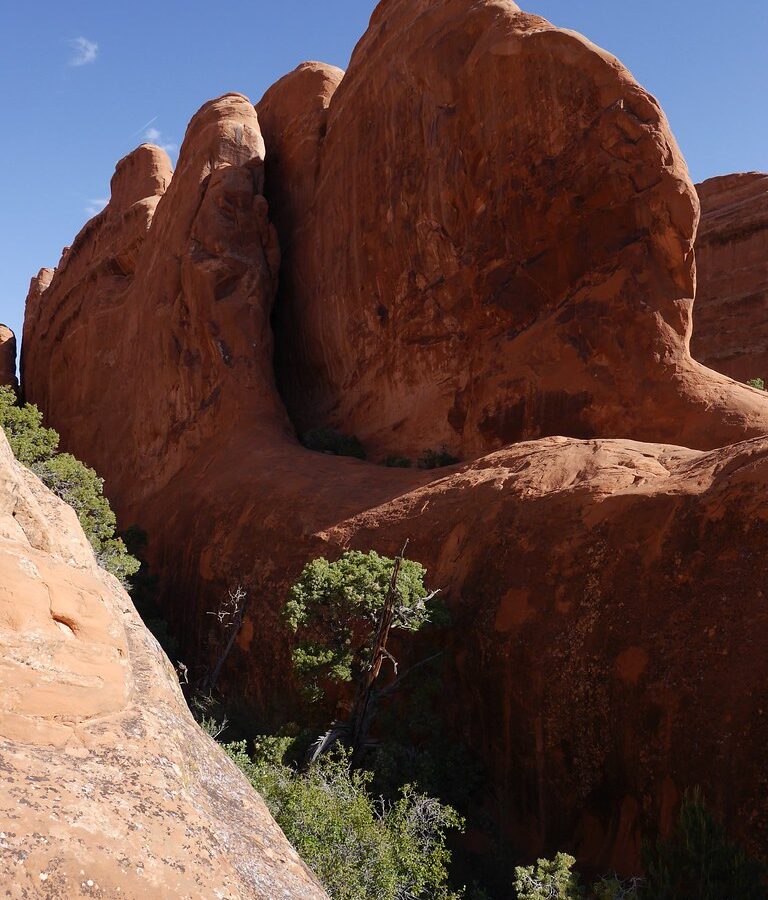
Photo: usareisetipps via Flickr (CC BY-SA 2.0)
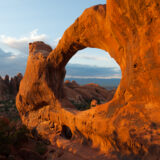
If “Where Stay Near Arches” is the search that brought you here, picture sunrise at Windows Road, where cold sandstone presses through your shoes and the first light turns the North and South Windows orange. The air at roughly 5,000 feet can feel surprisingly sharp, even after a warm day in Moab. Ravens call above the fins, and footsteps scrape across sand and slickrock before the road begins filling with cars.
Where you sleep determines how easily you can reach moments like this. Arches National Park has no lodge, hotel, or restaurant inside its boundaries, so most visitors choose between Moab accommodations, the park’s Devils Garden Campground, public land campgrounds along the Colorado River, or quieter towns farther away. Our overview compares those bases by driving time, access to signature trails, evening services, and the seasonal conditions that affect camping.
Where to Stay Near Arches National Park: Lodges, Campgrounds and Towns
Arches covers more than 76,000 acres north of Moab, but almost every first visit follows one paved corridor. The park road climbs from the entrance near US 191 through sandstone walls and high desert plateaus, reaching Devils Garden about 18 miles later. Balanced Rock, the Windows, Delicate Arch, and Devils Garden branch from that corridor, so lodging convenience depends largely on how quickly you can reach the entrance station.
There are no lodges inside the park
The absence of park lodging makes Moab the functional gateway. The town sits about 5 miles south of the entrance and has the region’s broadest selection of hotels, motels, vacation rentals, hostels, restaurants, grocery stores, fuel, and outdoor equipment. Staying there also places travelers between Arches and Canyonlands National Park’s Island in the Sky district, whose entrance is approximately 30 miles northwest of town.
Visitors seeking a traditional national park lodge should adjust their expectations. Accommodations around Arches are predominantly independent hotels, familiar roadside properties, condominium style rentals, cabins, and campgrounds. Views vary considerably. Some rooms face red cliffs or the Moab Rim, while others sit along the busy US 191 commercial corridor.
Where to Stay Near Arches National Park to Minimize Drive Time
Properties on the north side of Moab generally provide the quickest access to Arches. This location is useful for sunrise at Delicate Arch or an early Devils Garden hike because it avoids most downtown traffic. Central Moab works better for travelers who want to walk to restaurants after hiking. The southern end of town adds driving time but can offer easier access to Spanish Valley, the La Sal Mountains, and Canyonlands routes.
- North Moab: Best for repeated trips into Arches and departures toward Interstate 70.
- Central Moab: Best for dining access, gear shopping, and evenings without additional driving.
- South Moab and Spanish Valley: Best for larger rentals, quieter residential surroundings, and groups splitting time among several recreation areas.
Where to Stay Near Arches: Comparing Moab, Spanish Valley, and Other Towns
The nearest bed does not always produce the best trip. A family needing a kitchen and multiple bedrooms may prefer Spanish Valley, while a traveler crossing Utah on Interstate 70 may accept a longer morning drive from Green River. The table below compares the main bases using approximate distances to the Arches entrance. Travel times increase during holiday periods and when vehicles queue near the park.
| Base | Approximate distance to park entrance | Best suited to | Main tradeoff |
|---|---|---|---|
| North Moab | 2 to 4 miles | Early trail starts and short park commutes | Road noise near US 191 |
| Central Moab | About 5 miles | Dining, shopping, and first visits | Congestion during busy periods |
| Spanish Valley | Roughly 10 to 15 miles | Vacation rentals and larger groups | Fewer walkable services |
| Green River | About 45 miles | Interstate travelers and regional road trips | Longer sunrise commute |
Moab provides the most flexible base
Moab is the practical choice for first time visitors because it supports changing plans. If summer heat makes an afternoon hike unwise, travelers can return to an air conditioned room and reenter near sunset. Grocery access also matters because Arches has no food service within the park. Pack drinking water, trail food, and lunch before driving through the entrance.
Central versus north Moab
Central Moab favors evenings on foot, but north Moab reduces the number of traffic lights between a room and the park. Light sleepers should examine a property’s position relative to US 191, which carries early tour vehicles and freight traffic. Rooms facing away from the highway can make a meaningful difference after a predawn hike.
Spanish Valley suits groups and longer stays
Spanish Valley extends south of Moab beneath the Moab Rim and the La Sal Mountains. Its vacation homes and condominium style units often provide kitchens, laundry facilities, and gear storage, features that become valuable during a stay of four or five nights. The tradeoff is dependence on a vehicle for meals and a longer trip through town before reaching Arches.
Green River works for specific itineraries
Green River is most useful for travelers arriving from Salt Lake City, continuing toward Capitol Reef, or combining Arches with destinations north of Interstate 70. It is considerably less convenient for multiple park entries. A morning drive also adds fatigue before demanding routes such as the 7.8 mile Devils Garden Primitive Loop, where route finding and exposed slickrock require attention.
Where to Stay Near Arches: Comparing Campground Choices
Camping places visitors closest to the park’s dark skies and daily temperature changes. Arches lies in the Colorado Plateau high desert, where low humidity allows heat to escape quickly after sunset. Spring and autumn nights can be cold, while summer daytime temperatures frequently exceed 100°F. Shade is limited in both developed and dispersed sites.
Devils Garden is the park’s only developed campground
Devils Garden Campground occupies a sandstone fin landscape near the end of the park road, about 18 miles from the entrance. Its greatest advantage is immediate access to the Devils Garden Trail, including Landscape Arch, whose remarkably thin span stretches more than 290 feet. Campers also avoid the full entrance road commute when starting that trail early.
Distance from town is the principal drawback. Forgetting food, ice, or fuel requires a lengthy round trip, and cellular service should never be treated as dependable. Reservation procedures, seasonal availability, entrance requirements, fees, and campground services can change, so confirm current details on the official park site before building the trip around a campsite.
Colorado River campgrounds offer another close base
Developed public land campgrounds line Utah 128 northeast of Moab and Utah 279 west of town. Many occupy narrow corridors between the Colorado River and towering Wingate sandstone cliffs. They provide striking scenery and relatively direct access to Arches, although road noise, limited shade, rockfall exposure, and intense afternoon heat can influence which site feels comfortable.
These river corridors also place visitors near experiences outside the park, including the Grandstaff Canyon trail and the petroglyph panels along Potash Road. Travelers should distinguish developed sites from dispersed camping areas. Local rules protect fragile biological soil crust, the dark, knobby surface that stabilizes desert soil and supports mosses, lichens, and cyanobacteria.
Match the Overnight Base to Arches’ Signature Experiences
Lodging should support the hikes with the narrowest timing windows. Delicate Arch, the Windows, and Devils Garden draw heavy use, while summer heat makes exposed midday walking hazardous. A close base helps visitors use sunrise, evening, and cooler shoulder hours rather than forcing every activity into the hottest part of the day.
Delicate Arch rewards an early or late schedule
The Delicate Arch trail covers 3 miles round trip and gains about 480 feet. Much of the route crosses exposed sandstone with little shade, followed by a narrow ledge before the arch basin. North or central Moab lodging makes a predawn start manageable, while camping near the park shortens the return after sunset. Carry a headlamp because cairns and worn sandstone can be harder to follow in darkness.
The Windows works well on arrival day
The Windows area combines several major formations within a compact road stop. The Windows loop is about 1 mile, and nearby Double Arch requires roughly a half mile of walking. Travelers arriving too late for a longer hike can check into a Moab property, gather water and food, then use the final light for these short routes without committing to the longer drive to Devils Garden.
Plan Accommodation Around Desert Seasons
The practical answer to “Where Stay Near Arches” changes with temperature and daylight. March through May and September through October usually bring the most comfortable hiking conditions, along with stronger demand for rooms and campsites. Summer favors lodging with reliable cooling and easy midday retreat, while winter rewards flexible travelers who can handle freezing mornings, shorter days, and occasional snow or ice on shaded sandstone.
Spring and autumn require earlier planning
Spring days often warm quickly after cold mornings, and strong plateau winds can make exposed campsites uncomfortable. Autumn generally brings stable hiking weather, although overnight temperatures decline sharply by November. Holiday weekends and regional events place additional pressure on Moab lodging. Travelers with fixed dates should secure accommodation before constructing a detailed hiking schedule, particularly when Devils Garden or Delicate Arch is a priority.
| Season | Typical lodging priority | Camping consideration |
|---|---|---|
| Spring | Reserve early and seek flexible heating and cooling | Prepare for wind and cold nights |
| Summer | Choose strong air conditioning and a pool or shaded rest area | Expect extreme heat and limited afternoon shade |
| Autumn | Book early for mild hiking weather | Bring insulation for rapidly cooling evenings |
| Winter | Favor flexible cancellation terms | Expect freezing temperatures and possible icy surfaces |
Summer and winter change the value of proximity
From June through August, staying close lets hikers leave before sunrise, rest indoors through peak heat, and return near evening. Winter reverses that rhythm because later starts allow ice to soften on slickrock. A room in Moab becomes especially useful after cold hikes, while winter campers need sleeping systems rated below the forecast low. Useful seasonal equipment includes:
- A sunshade or reflective windshield cover for summer parking
- An insulated water container that can remain accessible in the vehicle
- Microspikes for icy winter trails, especially shaded ledges
- A wind resistant tent with secure stakes for sandy ground
Check Practical Fit and Quieter Trail Access
Room size and nightly price reveal only part of a property’s usefulness. Arches visitors routinely carry dusty footwear, hydration packs, trekking poles, coolers, and camera equipment. Ask where wet or sandy gear can be stored, whether parking accommodates a long vehicle, and whether breakfast is available early enough for a predawn departure. Vacation rentals should be evaluated for kitchen equipment, laundry access, and realistic vehicle capacity rather than bedroom count alone.
Evaluate the details that affect recovery
A west facing room can become hot late in the day, while highway facing rooms may pick up early traffic noise. Campers should study shade patterns, tent pad dimensions, and distance from parking before choosing a site. For either lodging type, prioritize the features that support the next morning’s trail plan:
- Refrigeration for food and electrolyte drinks
- Outdoor space for drying footwear and clothing
- Quiet hours or rooms positioned away from traffic
- Convenient parking for loading water before sunrise
Sand Dune Arch and Broken Arch favor a northern base
Sand Dune Arch sits between tall fins near the northern end of the park road. Its short approach, roughly 0.4 mile round trip, enters cool sand that may remain shaded when surrounding slickrock is hot. Broken Arch is about 1.2 miles round trip from the same area, with a longer loop available through Devils Garden Campground. Staying at Devils Garden or in north Moab makes these quieter morning walks easy to combine with Landscape Arch.
Tower Arch demands extra travel time
Tower Arch lies in the Klondike Bluffs area, separated from the main paved sightseeing corridor. The standard trail is approximately 2.6 miles round trip and crosses sand, broken rock, and exposed terrain before reaching the broad sandstone opening. Access involves an unpaved road whose condition can deteriorate after storms. Moab remains the sensible service base, but allow a dedicated half day rather than attaching Tower Arch to a tightly scheduled Delicate Arch visit.
Choose Where to Stay Near Arches to Maximize Your Park Time
Most first time visitors will get the greatest flexibility from Moab. North Moab shortens repeated drives to the entrance, central Moab simplifies meals, and Spanish Valley provides space for groups settling in for several nights. Green River works best as part of a broader Utah road trip, while Devils Garden gives campers unmatched access to the park’s northern trail system and night sky.
Build the decision around your earliest planned hike, tolerance for driving, and need for food, cooling, or indoor recovery. Then account for seasonal temperatures and the equipment each accommodation can handle. A carefully chosen base leaves more usable hours for Delicate Arch, the Windows, Devils Garden, and the quieter sandstone corridors that make Arches distinctive.
Want to keep exploring? Browse all our Arches guides and articles for more trip-planning tips and ideas.
Gear & Essentials
Tell us about your trip and we will add what else you will want:
The basics
Worth having in the car whatever the park.
For this trip
Traveling with kids
Bringing a pet
RVing
Backcountry
Winter conditions
On the water
Photography
Accessibility
As an Amazon Associate we earn from qualifying purchases, at no extra cost to you.