

Shenandoah National Park Camping Guide: Campgrounds, Reservations and Tips
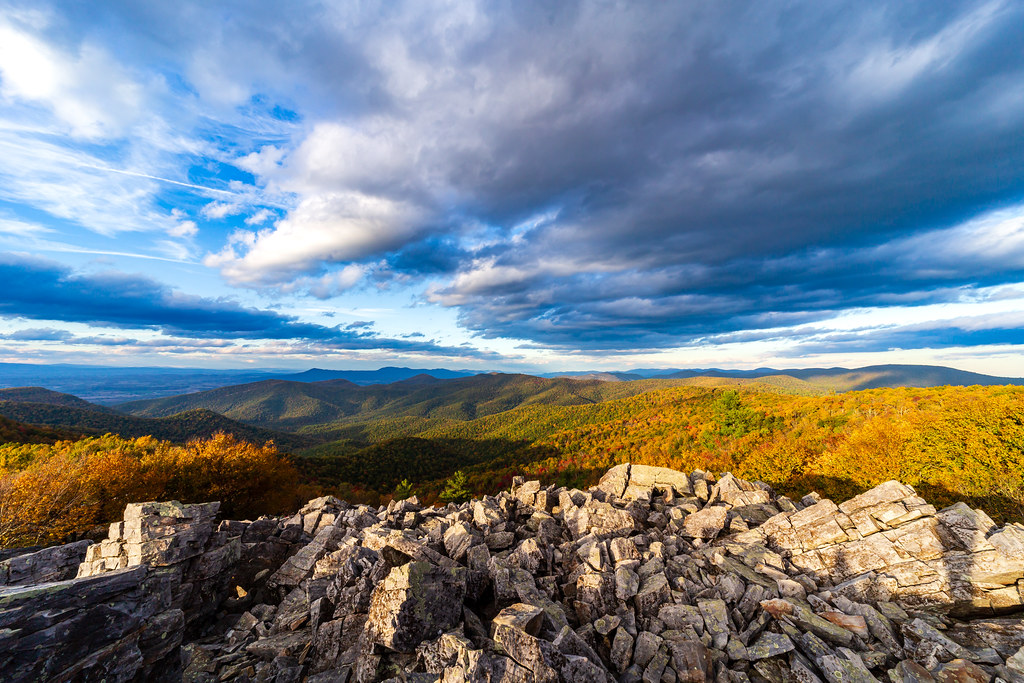
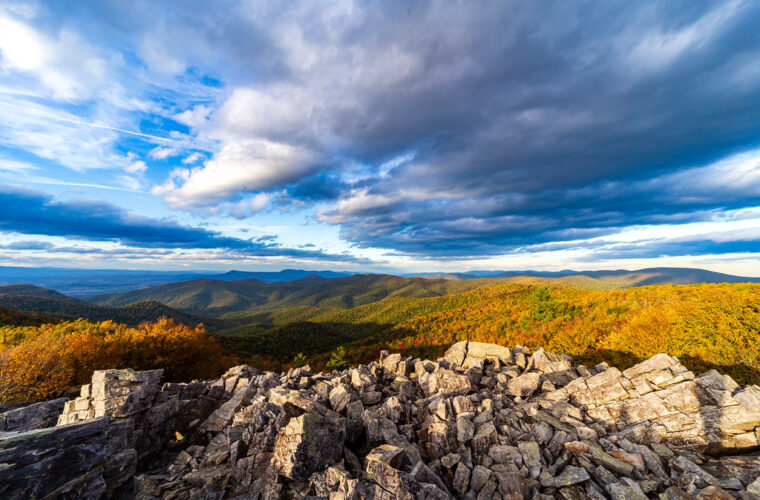
Photo: aparlette via Flickr (CC BY 2.0)
Shenandoah National Park camping works best when you choose a campground by Skyline Drive location, elevation, and rig size before searching for a site. The park has four developed family campgrounds, Mathews Arm, Big Meadows, Lewis Mountain, and Loft Mountain, plus the group-only Dundo Campground. None of the developed sites provides electric, water, or sewer hookups, so RV travelers must plan for dry camping.
All five campgrounds sit along the 105-mile Skyline Drive, the park’s main north to south road. The posted speed limit is generally 35 mph, and overlooks, wildlife, fog, and weekend traffic make progress slow. A campground that appears close on a map can require an hour or more of mountain driving, so our team recommends matching camp to the entrance station and trails you intend to use.
Shenandoah National Park Camping: Campgrounds at a Glance
Mathews Arm serves the northern district near Skyline Drive Mile 22.1. Big Meadows and Lewis Mountain occupy the central district near Miles 51 and 57, while Loft Mountain and Dundo sit farther south near Miles 79 and 84. Elevations around 3,000 feet keep nights cooler than in Front Royal, Luray, or the Shenandoah Valley below, often by roughly 10 to 15 degrees Fahrenheit.
How Shenandoah National Park Campgrounds Compare
The table provides a planning comparison rather than a site-by-site inventory. Individual parking pads differ in length and levelness, especially where camp loops follow the natural slope. RV owners should enter their complete vehicle combination when booking, including a tow vehicle or towed car, rather than relying on a campground’s general reputation for accommodating RVs.
| Campground | Skyline Drive area | Approximate elevation | Best suited to | Site character |
|---|---|---|---|---|
| Mathews Arm | Mile 22.1, northern district | 2,920 feet | Northern hikes, tents, smaller and moderate RVs | Wooded loops with substantial shade |
| Big Meadows | Mile 51.2, central district | 3,500 feet | First visits, families, larger camping setups | Busy, convenient, and close to trails and services |
| Lewis Mountain | Mile 57.5, central district | About 3,390 feet | Tents, vans, and travelers seeking a smaller campground | Compact, wooded, and comparatively intimate |
| Loft Mountain | Mile 79.5, southern district | About 3,300 feet | Appalachian Trail access and southern district exploration | Ridgetop loops with forest and some open outlooks |
| Dundo | Mile 83.7, southern district | About 2,760 feet | Organized groups | Group sites beside the Appalachian Trail corridor |
What developed camping includes
Sites generally provide a parking area, picnic table, and fire ring or grill, with shared restrooms located within each campground. Potable water, showers, laundry, dump facilities, and camp stores are not identical at every location. Seasonal opening dates, current fees, generator rules, reservation inventory, and available facilities should be confirmed on the official park site and Recreation.gov before departure.
What RV campers should expect
There are no hookups, and many pads were laid out before today’s longest motorhomes and fifth wheels became common. Trees, curved approaches, and sloping pavement can matter as much as listed pad length. Bring leveling blocks, conserve battery capacity, arrive before dark, and check the booked site’s vehicle restrictions carefully. Filling the freshwater tank before climbing Skyline Drive also reduces dependence on campground water points.
Choosing the Right Shenandoah National Park Camping Base
The most convenient campground depends on which entrance you will use. Mathews Arm is the logical choice from Front Royal and Interstate 66. Big Meadows and Lewis Mountain fit itineraries entering from Thornton Gap on US 211. Loft Mountain and Dundo work well from Swift Run Gap on US 33 or Rockfish Gap near Interstate 64.
Mathews Arm for the northern district
Mathews Arm places campers close to Overall Run, whose 93-foot waterfall is the park’s tallest. The campground has a traditional forest setting dominated by oak, hickory, and tulip poplar, with enough canopy to moderate afternoon sun. Its northern position also shortens the drive to Dickey Ridge, Compton Peak, and the Elkwallow area. Privacy varies because some loops place neighboring pads within easy view through the understory.
Big Meadows for trails and central access
Big Meadows provides the broadest base for a first trip. The Appalachian Trail, Dark Hollow Falls Trail, and routes toward Rose River begin nearby, while Hawksbill Mountain, Shenandoah’s highest summit at 4,051 feet, is a short drive south. The campground is popular and active, so campers prioritizing quiet should choose an outer loop site away from restrooms and major footpaths.
Step from the trees into Big Meadows near sunset and the landscape changes abruptly. Grass brushes your boots, the open sky replaces the oak canopy, and cool air settles across the plateau. Whitetail deer often feed along the meadow edge while wood thrush calls fade in the surrounding forest. Fog can erase the far tree line within minutes, making a headlamp and warm layer useful even on a summer walk.
Lewis Mountain, Loft Mountain, and Dundo
Lewis Mountain has fewer sites and a smaller physical footprint, qualities that suit tents, camper vans, and compact trailers. Loft Mountain spreads across a high ridge where campers can reach the Appalachian Trail directly and explore the less congested southern district. Dundo is designed for organized groups rather than individual families, and its group capacity and reservation structure should guide planning from the outset.
Shenandoah National Park Camping Reservations, Booking Windows, and Site Selection
Shenandoah’s reservable campsites are listed through Recreation.gov, commonly on a rolling window that opens up to six months before the arrival date. Group sites may use a different advance window. Some inventory or operating procedures can change between seasons, but spring wildflower weekends, summer holidays, and October foliage weekends consistently generate the strongest demand.
How to book a suitable site
- Select the district first. Base this choice on your entrance station, target hikes, and the amount of Skyline Drive travel you will tolerate.
- Enter accurate equipment dimensions. Include the full RV, trailer, and vehicle combination.
- Study the individual site record. Look for driveway length, surface, slope, generator restrictions, and tent capacity.
- Check the arrival route. Marys Rock Tunnel, south of Thornton Gap, has a posted clearance of 12 feet 8 inches, which matters for taller rigs.
- Save an offline copy. Mobile service is unreliable along much of Skyline Drive, including some campground loops.
Why site choice matters
A shaded tent pad helps during humid summer afternoons, but dense canopy also keeps fabric wet after rain. Open ridgetop sites dry faster and may catch a breeze, though they receive stronger sun and wind. For privacy, look for sites on the outside of a loop or at the end of a short spur. Families may prefer interior sites with shorter walks to shared facilities.
Conditions That Shape a Camping Trip
Shenandoah occupies a narrow Blue Ridge crest built from ancient basement rock and younger volcanic formations, including greenstone created from lava flows roughly 570 million years ago. Steep slopes shed water quickly, yet clay-rich campground soils can remain muddy after thunderstorms. Expect exposed roots, embedded rock, and uneven ground beyond the prepared tent pads.
Seasonal advantages and tradeoffs
Spring brings flowing waterfalls, emerging leaves, and cool nights, with freezing temperatures still possible at higher elevations. May adds woodland wildflowers, including trillium and pink lady’s slipper. Readers planning around peak bloom can also consult our coverage of Shenandoah’s annual Wildflower Weekend.
Summer produces the warmest camping weather, afternoon thunderstorms, high humidity, and active insects. Autumn offers crisp nights and changing foliage, but it also brings the year’s heaviest weekend traffic. Campground operations are seasonal, and winter camping in the park requires different planning because developed campgrounds generally close as freezing conditions arrive.
Rain, fog, and mountain temperatures
Weather can differ sharply between the Blue Ridge crest and the valleys. Fog frequently limits visibility on Skyline Drive, while thunderstorms can produce intense rain and falling branches. Pack a waterproof outer layer, secure a fitted rainfly with extra guylines, and place tents away from dead limbs. A sleeping bag rated below the forecast nighttime low provides a useful margin at elevation.
Camp Systems for a Damp, Bear Active Forest
Shenandoah National Park camping requires moisture control, secure food storage, and preparation for abrupt temperature changes. Condensation forms readily under dense tree cover, even when rain never reaches the campsite. Keep sleeping bags away from tent walls, vent the rainfly, and store spare clothing in waterproof sacks. Black bears, raccoons, skunks, and mice investigate unattended food, cooking equipment, coolers, trash, and scented toiletries. Secure every attractant whenever the site is unoccupied or campers are sleeping.
Gear matched to mountain conditions
A freestanding tent handles prepared pads and shallow soil better than a shelter that depends on long stakes. Bring several stake styles because a pad may combine compacted soil, gravel, and buried rock. RV campers should carry wheel chocks and enough leveling blocks for uneven pavement. The table identifies equipment that solves the most common campsite problems without adding specialized backpacking gear.
| Condition | Useful equipment | Planning benefit |
|---|---|---|
| Wet ground and condensation | Footprint, full rainfly, absorbent cloth, waterproof storage sacks | Keeps bedding dry and protects equipment during repeated showers |
| Cool ridge nights | Insulated sleeping pad, warm hat, layered sleep clothing | Reduces heat loss through the ground when temperatures fall after sunset |
| Uneven RV pads | Leveling blocks, wheel chocks, small bubble level | Improves sleeping comfort and helps absorption refrigerators operate correctly |
| Limited connectivity | Downloaded maps, printed reservation record, battery bank | Preserves navigation and booking information without cellular service |
Food and scented item checklist
- Place food, trash, pet food, coolers, cooking utensils, and toiletries in a hard sided vehicle or approved storage locker when available.
- Clean grills and tables immediately after meals rather than waiting until morning.
- Use campground fire grates only, and avoid transporting untreated firewood from distant areas because it can spread forest pests.
- Keep a clean set of clothes for sleeping if cooking smoke or food odors have collected on outer layers.
Water, power, and camp lighting
Dry camping makes daily consumption worth calculating. A practical baseline for drinking and basic cooking is approximately one gallon per person per day, with additional water needed for washing and pets. Rechargeable lanterns preserve RV batteries better than exterior fixtures, while red light modes reduce glare for neighboring sites. Campers using medical devices should calculate overnight power demand in watt hours and carry an independent battery system with sufficient reserve capacity.
Walks and Day Trips From Each Camp
Camping inside the park allows hikers to begin before overlook parking areas fill and before summer heat builds on exposed slopes. Keep daily plans within one Skyline Drive district whenever possible. A morning hike near camp, followed by a shorter sunset walk, usually produces more trail time than driving between the northern and southern ends. Carry water from camp because springs and streams require treatment and may run low during dry periods.
Short routes for arrival and departure days
Mathews Arm campers can use the 1.7 mile Traces Trail loop for a forest walk without committing to the steep Overall Run descent. Near Loft Mountain, the roughly 1.3 mile Frazier Discovery Trail climbs through woodland to west facing views, with enough elevation change to require sturdy footwear. Big Meadows campers can walk the meadow paths or connect with the Appalachian Trail, saving Dark Hollow Falls for daylight because its steep return climb is tiring after sunset.
Longer hiking days from the central and southern districts
From the central district, the Rose River circuit covers roughly four miles and passes cascades, pools, and a 67 foot waterfall. Bearfence Mountain offers a short rock scramble with broad views, but the exposed route is unsuitable during rain, ice, or thunderstorms. Southern district campers can combine Doyles River and Jones Run into a circuit of about 6.5 miles. That route descends to several waterfalls, then demands a sustained climb back toward Skyline Drive.
Plan a Camp Stay That Fits the Ridge
The strongest itinerary starts with geography: reserve Mathews Arm for northern objectives, Big Meadows or Lewis Mountain for central trails, and Loft Mountain for the southern district. Match the individual parking pad to the complete vehicle length, then prepare for dry camping, cool nights, wet vegetation, and limited cellular service. Securing food correctly and carrying dependable rain protection solve two of the most consequential campsite problems.
Allow one full day within your chosen district rather than treating the campground as a place to sleep between long drives. Early trail access, an unhurried meal, and a nearby evening walk make better use of a mountain campsite. With realistic driving times, suitable equipment, and a reservation chosen for the actual camping setup, Shenandoah becomes considerably easier to navigate from arrival through departure.
Want to keep exploring? Browse all our Shenandoah guides and articles for more trip-planning tips and ideas.
Gear & Essentials
Tell us about your trip and we will add what else you will want:
The basics
Worth having in the car whatever the park.
For this trip
- Camp lantern Etekcity Camping Lanterns 4-Pack LED
- Camping hammock Wise Owl Outfitters Camping Hammock
- Camping pillow Hikenture Inflatable Camping Pillow
- Lighter & matches BIC Maxi Pocket Lighters 10-Pack
- Shelter tarp Amazon Basics Waterproof Multipurpose Camping Tarp
- Tent Camping Tent 2-4 Person Easy Setup
Traveling with kids
Bringing a pet
RVing
Backcountry
Winter conditions
On the water
Photography
Accessibility
As an Amazon Associate we earn from qualifying purchases, at no extra cost to you.