



Where to Stay Near Shenandoah National Park: Lodges, Campgrounds and Towns
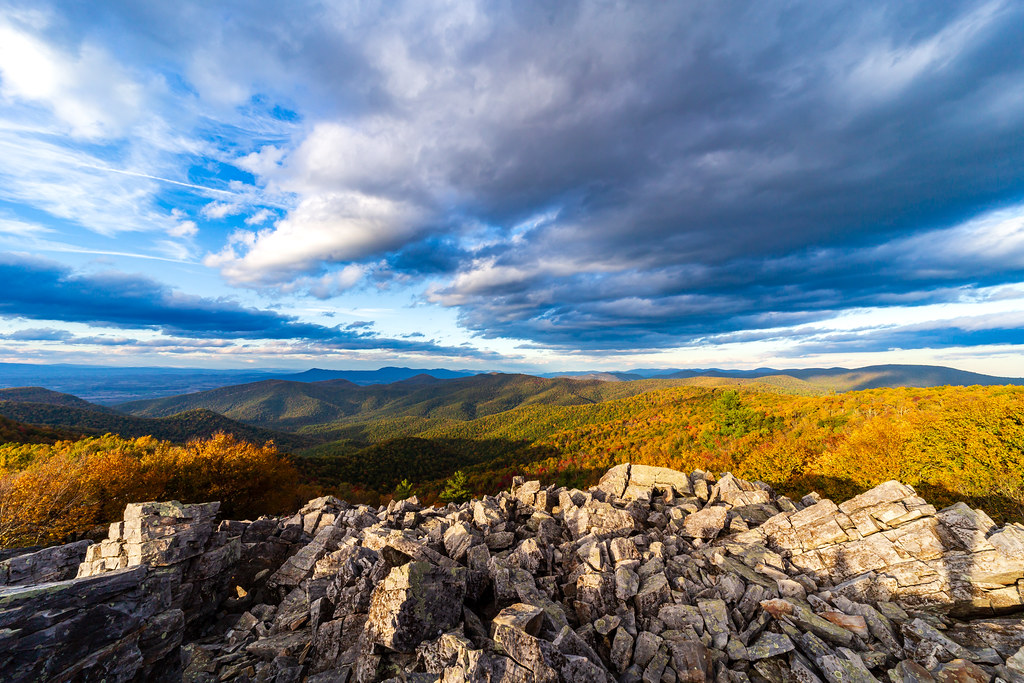
Photo: aparlette via Flickr (CC BY 2.0)
Deciding where stay near Shenandoah starts with the entrance and park zone you plan to use. Skyline Drive runs 105 miles along the Blue Ridge crest, and the park’s 35 mph speed limit makes distant trailheads slower to reach than a map suggests. For the shortest daily drives, stay inside the park or choose a town near Front Royal, Thornton Gap, Swift Run Gap, or Rockfish Gap. In-park lodges suit travelers who want sunrise overlooks and immediate trail access. Campgrounds provide the strongest connection to the forest, while gateway towns offer larger rooms, restaurants, and groceries.
In practical terms, in-park lodges suit travelers who want sunrise overlooks and immediate trail access. Campgrounds provide the strongest connection to the forest, while gateway towns offer larger rooms, restaurants, groceries, and easier access to attractions in the Shenandoah Valley. Most visitors should choose one park zone rather than commuting the full length of Skyline Drive.
Where to Stay Near Shenandoah National Park Starts With the Right Entrance
Shenandoah is a long, narrow park. Its northern boundary begins near Front Royal, while its southern end meets Interstate 64 near Waynesboro. The crest rises above valleys on both sides, with elevations ranging from roughly 600 feet near park boundaries to 4,050 feet on Hawksbill Mountain. That vertical relief affects temperatures, fog, leaf color, and driving conditions.
Match the Four Entrances to Your Plans
Front Royal Entrance serves the northern district and trails such as Compton Peak and Dickey Ridge. Thornton Gap, reached by US 211, provides the most direct approach to Marys Rock, Stony Man, Skyland, and Big Meadows. Swift Run Gap on US 33 works well for the central and southern districts. Rockfish Gap connects Skyline Drive with the Blue Ridge Parkway at the southern boundary.
| Entrance | Useful base | Best for | Approximate Skyline Drive mile |
|---|---|---|---|
| Front Royal | Front Royal | Northern overlooks, Dickey Ridge, shorter trips from Washington | 0 |
| Thornton Gap | Luray or Sperryville | Skyland, Stony Man, Marys Rock, central highlights | 31.5 |
| Swift Run Gap | Elkton or Harrisonburg | South River Falls, central and southern trailheads | 65.5 |
| Rockfish Gap | Waynesboro or Charlottesville | Loft Mountain, southern district, Blue Ridge Parkway | 105 |
Why Mileage Can Mislead
Driving the entire crest takes about three hours without lengthy stops, heavy traffic, wildlife delays, or hikes. Overlooks quickly add time, especially around sunset. A room near Thornton Gap may appear central on a regional map, yet reaching Loft Mountain still requires a substantial drive along a winding two-lane road. Travelers splitting time between north and south should consider changing accommodations midway through the trip.
Where to Stay Near Shenandoah for an In-Park Lodge Experience
Shenandoah’s developed lodging is concentrated along Skyline Drive rather than near its entrances. This location removes the morning climb from the valley and places guests close to trailheads. The tradeoffs are fewer dining choices, limited evening services, seasonal operations, and longer trips for groceries or fuel. Rooms also vary considerably because buildings were constructed and renovated during different periods.
Skyland and the High Central District
Skyland sits around mile 41.7 on the park’s highest developed ridge, with portions of the property near 3,680 feet. It is the strategic choice for Stony Man, Little Stony Man, Whiteoak Canyon, and Hawksbill. The 1.6-mile round-trip Stony Man Trail reaches a broad rock viewpoint, while Hawksbill Summit stands at 4,050 feet, the highest point in Shenandoah.
Step onto Stony Man’s exposed greenstone near evening and the practical benefit of sleeping on the ridge becomes clear. The rock underfoot holds the day’s warmth while cooler air rises from the valley. Below, farms look like narrow geometric patches, and the Massanutten range forms a second dark wall to the west. After sunset, the walk back passes beneath oak branches rather than requiring a winding drive up from town.
Big Meadows Lodge as a Trail Hub
Big Meadows Lodge stands near mile 51, close to the park’s largest open meadow and several central trail systems. Dark Hollow Falls begins nearby and descends roughly 440 feet over a 1.4-mile round trip. The return climb is steep enough to matter when planning breakfast or checkout. Longer routes connect toward Rose River Falls and the Appalachian Trail.
The meadow itself occupies a high, relatively level area created through a combination of geology, historic land use, and continued vegetation management. Deer commonly feed near its edges, while broad open skies make it one of the park’s useful stargazing locations. Fog can settle over the grass even when lower valleys remain clear.
Lewis Mountain for a Smaller Setting
Lewis Mountain, around mile 57.5, has historically provided a quieter cluster of cabins between Big Meadows and the southern district. It suits travelers who prefer a smaller development and expect to prepare simple meals or drive to other areas for dining. Its location also reduces travel time to Bearfence Mountain, South River Falls, and Swift Run Gap.
Where to Stay Near Shenandoah: Campgrounds Along Skyline Drive
The park’s principal campgrounds are spaced from north to south at Mathews Arm, Big Meadows, Lewis Mountain, and Loft Mountain. Their ridge settings provide cool nights and direct access to trails, but temperatures can be 10 to 20 degrees Fahrenheit lower than in nearby valleys. Campers should bring rain protection even when the regional forecast appears dry because clouds often collect along the crest.
Choosing a Campground by Park Zone
- Mathews Arm: Best for the northern district, including Overall Run Falls and access from Front Royal.
- Big Meadows: The most central choice, with access to waterfalls, the Appalachian Trail, and the meadow’s wildlife habitat.
- Lewis Mountain: A smaller base that works well for travelers seeking a quieter central location.
- Loft Mountain: The strongest campground for the southern district, including Doyles River Falls, Jones Run Falls, and Blackrock Summit.
Reservations, Food Storage, and Weather
Some sites may be reservable while others can operate under different seasonal procedures. Opening dates, current fees, generator rules, water availability, and reservation systems should be confirmed on the official park site. Summer and October weekends fill first, and arriving without a backup plan can mean descending from Skyline Drive to search for a room or private campground.
Black bears live throughout Shenandoah, so food, toiletries, cookware, trash, and scented items require secure storage. Never leave these items in a tent. Storms can also bring strong ridge winds and falling limbs. Before setting up, inspect the canopy for dead branches and avoid pitching in drainage channels where heavy rain can collect.
Where to Stay Near Shenandoah: Gateway Towns by Park Area
Town lodging provides air conditioning, private bathrooms, broader meal choices, and easier resupply. It can also cost less than staying on the ridge, particularly outside fall foliage season. The important calculation is the drive from the room to the entrance, followed by the additional mileage along Skyline Drive to the actual trailhead.
Where to Stay Near Shenandoah National Park’s Northern and Central Districts
Front Royal is the logical northern base and sits close to the park’s Skyline Drive entrance. It works especially well for Dickey Ridge, Compton Peak, and day trips that continue into the Shenandoah Valley. Travelers arriving from Washington, DC, often choose it to avoid adding a long ridge drive after navigating metropolitan traffic.
Luray lies west of Thornton Gap and gives visitors access to both the national park and the valley’s cave country. Sperryville lies east of the same gap and suits travelers approaching from northern Virginia. Either can serve Marys Rock and the central high country, although steep US 211 adds time and requires careful driving in fog or winter weather.
Southern Bases Around Swift Run Gap and Rockfish Gap
Elkton is the closest practical town for Swift Run Gap, while Harrisonburg provides a larger selection of lodging, restaurants, and grocery stores farther west. Waynesboro is the most convenient full-service base near Rockfish Gap. It also allows an easy transition between Shenandoah National Park and the Blue Ridge Parkway without retracing Skyline Drive.
Where to Stay Near Shenandoah: Cabins, Rentals, and Private Campgrounds
Travelers searching “Where Stay Near Shenandoah” often find cabins scattered across both sides of the Blue Ridge. These properties can work well for families, groups, and longer visits because kitchens reduce restaurant trips and separate bedrooms provide flexibility. Location requires careful scrutiny. A cabin described as near Shenandoah may still be 45 minutes from an entrance, and the nearest entrance may be far from the trails on your itinerary.
Choose the Correct Side of the Ridge
Cabins west of the park around Luray, Stanley, Elkton, and the Page Valley generally provide convenient access to Thornton Gap or Swift Run Gap. Eastern properties around Sperryville, Syria, Madison, and Crozet serve different trail systems. The mountains have relatively few through roads, so a rental directly across the ridge from a trailhead may require a long drive to reach it legally.
Private Campgrounds and RV Sites
Private campgrounds in the valleys are useful for larger recreational vehicles, electrical hookups, and trips outside the operating season of ridge campgrounds. They also avoid hauling a trailer along the full length of Skyline Drive. RV travelers should check site dimensions, road grades, and overhead clearance with the campground. Shenandoah has a tunnel south of Thornton Gap, and posted vehicle clearances should be checked before driving that section.
Match Your Bed to Shenandoah’s Signature Experiences
A successful lodging choice should shorten the drive to the experience that matters most. Central lodging favors famous summit and waterfall trails, while the southern district provides easier access to talus slopes, quieter Appalachian Trail sections, and paired waterfall circuits. Visitors interested in cultural history can prioritize the east central district and the trail into Rapidan Camp.
For Waterfalls and Steep Hollow Trails
Big Meadows, Skyland, Luray, and the Thornton Gap corridor work well for Dark Hollow Falls, Rose River Falls, and Whiteoak Canyon. These routes descend from the crest, which means the hardest climbing often comes at the end. Whiteoak Canyon contains six named falls along a steep gorge, while the Rose River circuit combines cascades, forest, and a sustained return ascent. An early start helps hikers avoid both heat and crowded parking areas.
For Geology and Quieter Southern Miles
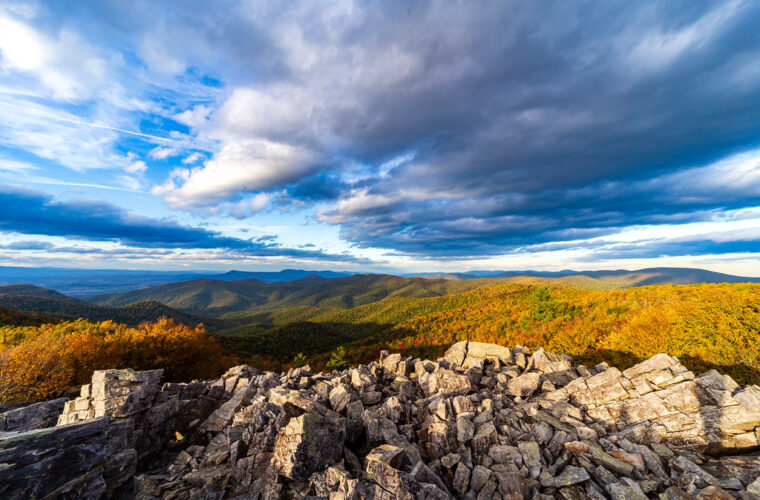
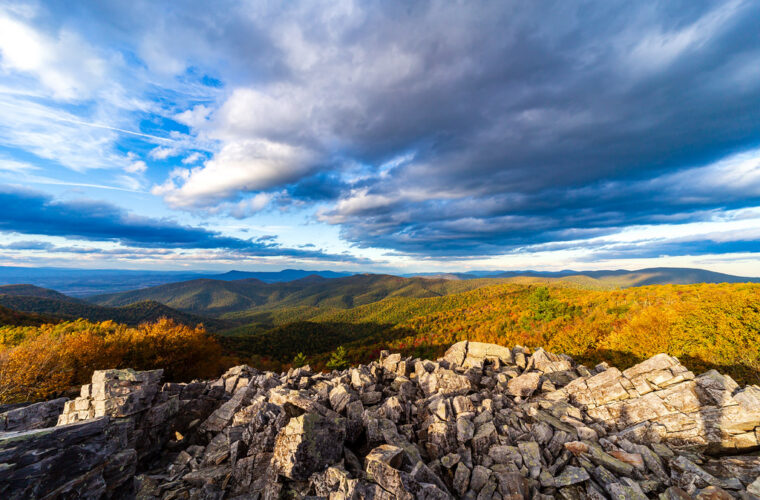
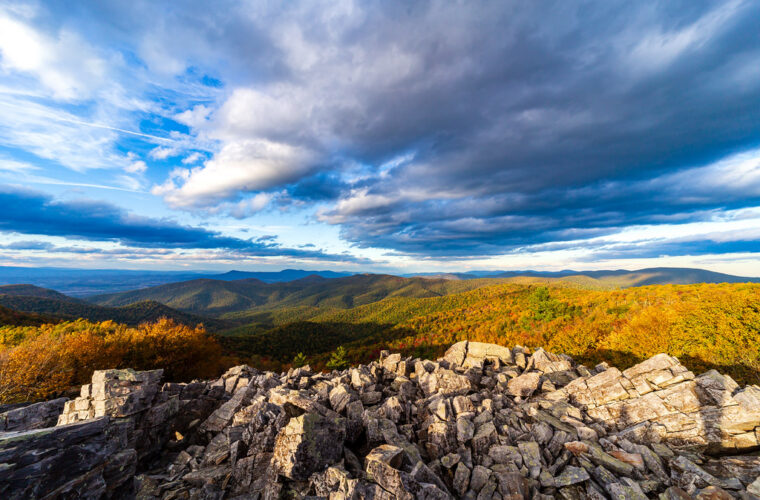
Loft Mountain, Waynesboro, and accommodations near Rockfish Gap provide the strongest bases for Blackrock Summit and the Doyles River and Jones Run waterfall loop. Blackrock Summit is a short Appalachian Trail side trip through a field of broken Erwin Formation quartzite. The pale, angular blocks form a broad talus slope with views across the Shenandoah Valley, offering a landscape quite different from the wooded summits farther north.
For Rapidan Camp and Presidential History
Lodging near Big Meadows or Swift Run Gap reduces the approach to the Rapidan Camp area. President Herbert Hoover established the mountain retreat in 1929 near the confluence of Laurel Prong and Mill Prong. Hikers can reach the preserved camp buildings by routes beginning near Milam Gap. The forest road and stream crossings make this a better choice for a half day than a quick roadside stop.
Build a Lodging Plan That Survives Real Conditions
Fog, autumn traffic, thunderstorms, and wildlife can change driving times along the crest. A practical plan places the final hike within the same park district as the final night’s accommodation. That prevents an exhausting drive after a steep descent and reduces the chance of navigating unfamiliar curves after dark, when deer and black bears may enter the roadway.
Where to Stay Near Shenandoah National Park by Trip Style
| Trip priority | Best lodging pattern | Main advantage | Primary compromise |
|---|---|---|---|
| First visit | Two nights near Thornton Gap or inside the central district | Short access to major summits and waterfalls | Busier trailheads |
| Full Skyline Drive | Split nights between central and southern bases | Less backtracking | Requires changing rooms |
| Family cabin trip | Valley rental near one entrance | Kitchen and shared living space | Daily climb to the ridge |
| RV visit | Private valley campground or suitable park site | Better control over vehicle needs | Longer trailhead drives |
Check the Details Before Paying
Map the property to the specific entrance rather than to the park boundary. Then calculate the Skyline Drive mileage to each planned trailhead. Review cancellation terms, kitchen equipment, heating or cooling, mobile coverage expectations, and the road surface leading to remote cabins. Mountain properties sometimes use steep gravel approaches that are manageable in dry weather but difficult after heavy rain or freezing conditions.
- Save offline maps before entering areas with weak cellular service.
- Buy groceries and fuel in the valley before climbing to the ridge.
- Keep hiking clothes accessible if check in occurs after an afternoon walk.
- Carry a headlamp for returning from sunset overlooks.
- Store food securely at cabins and campsites because bears also forage outside park boundaries.
Choose a Base That Gives You Time Back
The best answer to where to stay near Shenandoah depends on one entrance, one cluster of trails, and the type of evening you want. Skyland and Big Meadows maximize ridge time. Front Royal, Luray, Elkton, and Waynesboro provide practical services. Cabins offer space and kitchens, while campgrounds place the forest immediately outside the tent or camper.
Start by marking your highest priority hike, then work outward to the nearest suitable lodging area. Split the stay if the route spans the central and southern districts. Shenandoah rewards unhurried mornings, changing light, and stops at overlooks, so every mile removed from the daily commute creates more time for the park itself.
Want to keep exploring? Browse all our Shenandoah guides and articles for more trip-planning tips and ideas.
Gear & Essentials
Tell us about your trip and we will add what else you will want:
The basics
Worth having in the car whatever the park.
For this trip
Traveling with kids
Bringing a pet
RVing
Backcountry
Winter conditions
On the water
Photography
Accessibility
As an Amazon Associate we earn from qualifying purchases, at no extra cost to you.