Visiting Yellowstone National Park with Limited Mobility: Accessible Views and Trails
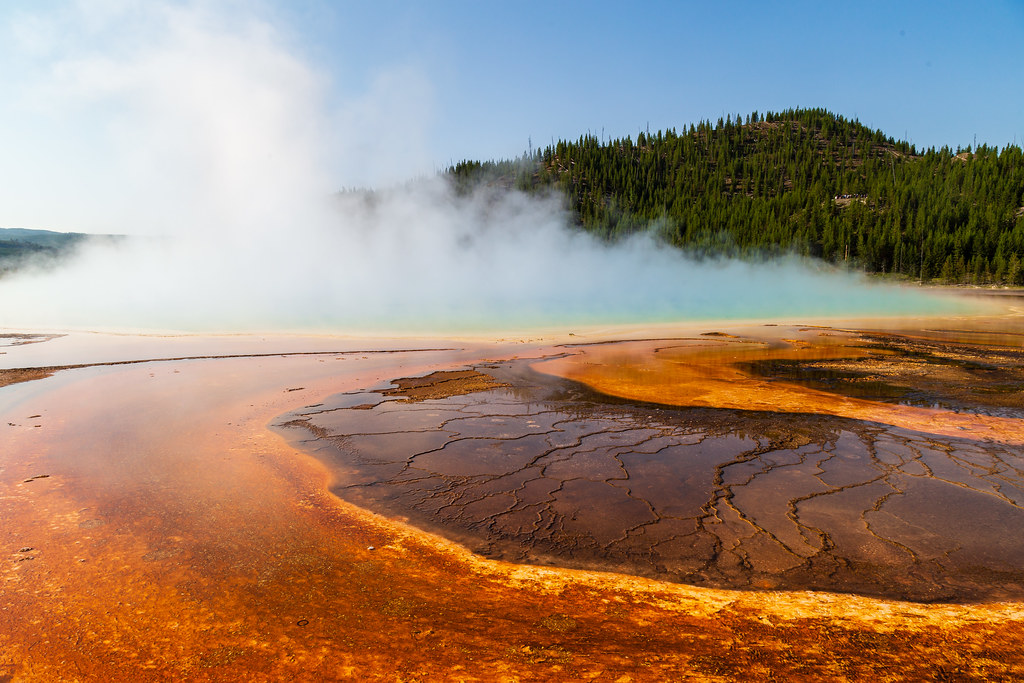
Photo: aparlette via Flickr (CC BY 2.0)
Visiting Yellowstone National Park with limited mobility can include close views of erupting geysers, enormous hot springs, wildlife valleys, and the Grand Canyon of the Yellowstone. Many of the park’s defining features sit beside paved roads or along boardwalks, although a route labeled accessible may still have slopes, cross-grades, crowded viewing areas, or gaps between planks that affect different mobility devices.
Yellowstone covers nearly 3,472 square miles, larger than Delaware and Rhode Island combined, so the primary challenge is distance rather than a shortage of reachable sights. Five entrances feed a road system shaped roughly like a figure eight. Building each day around one section of that loop reduces tiring transfers and leaves time for parking, rest stops, and unhurried movement through thermal basins.
Planning a Manageable Route When Visiting Yellowstone National Park
The park’s developed areas stand between roughly 5,300 and 7,800 feet in elevation. Old Faithful is about 7,350 feet above sea level, while Canyon Village is close to 7,900 feet. Visitors arriving from lower elevations may notice shortness of breath, fatigue, or slower walking speed. A realistic schedule pairs one major basin or canyon area with several roadside stops rather than attempting the entire Grand Loop in one day.
Visiting Yellowstone National Park with Limited Mobility, One Corridor at a Time
The western side concentrates the greatest number of hydrothermal features, including Old Faithful, Upper Geyser Basin, Midway Geyser Basin, and Fountain Paint Pot. The eastern side provides the most practical canyon overlooks and access to Hayden Valley. Mammoth Hot Springs and Lamar Valley occupy the northern road corridor. Driving between these zones takes longer than mileage suggests because bison jams, construction, narrow roads, and limited parking routinely slow traffic.
| Zone | Defining experience | Mobility considerations |
|---|---|---|
| Old Faithful and Upper Geyser Basin | Predictable eruptions and dense geyser concentrations | Paved approaches, seating near Old Faithful, longer boardwalk options |
| Midway Geyser Basin | Grand Prismatic Spring | Short boardwalk with an initial grade and frequent congestion |
| Canyon area | Waterfalls and multicolored canyon walls | Several roadside overlooks, but some paths are steep |
| Hayden and Lamar valleys | Bison, elk, bears, and wolves | Wildlife viewing from pullouts or inside a vehicle |
Road Openings Determine What Is Reachable
Most interior park roads close to ordinary vehicles in winter and reopen in stages during spring. Snow can delay access well into May at higher elevations, while early autumn storms sometimes interrupt travel. Check road status, accessibility information, construction, entrance requirements, and current services on the official park site before departure. Our report on Yellowstone’s seasonal entrance and road openings illustrates why an open entrance does not necessarily mean every interior corridor is available.
Visiting Yellowstone National Park at Old Faithful
Old Faithful is the most straightforward signature experience for many visitors with limited mobility. Parking areas connect to the geyser viewing area by paved routes, and benches line the broad arc around the vent. The geyser commonly erupts at intervals of roughly 60 to 110 minutes, with predictions posted locally. Choosing a viewing position early matters because the central sections fill quickly, especially around midday.
The Old Faithful Viewing Area
The main viewing area requires relatively little travel compared with Yellowstone’s other thermal attractions. From the benches, visitors can see the cone clearly without standing. During an eruption, a narrow white column builds above the dark vent, water strikes the basin with a heavy patter, and cool spray can drift across the pavement when the wind shifts. The boardwalk vibrates under moving crowds, while sulfur and damp mineral earth scent the air. Remaining seated often provides a better view than joining people clustered at the rail.
Upper Geyser Basin Beyond the Main Cone
Upper Geyser Basin contains the planet’s largest concentration of active geysers. Its paved paths and boardwalks continue past Castle Geyser, Grand Geyser, Riverside Geyser, and Morning Glory Pool. Reaching Morning Glory requires about 1.5 miles of travel each way from Old Faithful, making the full outing demanding for anyone with limited endurance. Shorter out-and-back excursions allow visitors to turn around after crossing the Firehole River or seeing several nearby springs.
- For minimal walking: Use the main Old Faithful viewing area and return after the eruption.
- For a short extension: Follow the paved basin path toward Castle Geyser, turning back before fatigue builds.
- For longer rolling access: Continue through Upper Geyser Basin only if boardwalk gaps, changing grades, weather exposure, and the return distance suit the mobility device and user.
Grand Prismatic Spring and the Limits of Boardwalk Access
Grand Prismatic Spring measures approximately 370 feet across, making it Yellowstone’s largest hot spring. Its blue center reflects the depth and clarity of extremely hot water, while orange and brown microbial mats occupy cooler margins. The spring lies in Midway Geyser Basin, about 7 miles north of Old Faithful, where a short boardwalk loop passes Excelsior Geyser Crater before approaching Grand Prismatic.
Visiting Yellowstone National Park at Midway Geyser Basin
The Midway loop is approximately 0.8 mile, but the distance understates its difficulty. The route crosses the Firehole River and climbs toward the basin, with limited shade and few places to pause without obstructing traffic. Steam can obscure the spring during cold mornings, while warmer afternoon air often reveals its color more clearly. Wheelchair users may require assistance on grades, and visitors using canes should expect wet boards and gusty crosswinds.
The Overlook and the Boardwalk Serve Different Needs
The Grand Prismatic Overlook begins from the Fairy Falls trailhead and requires roughly 1.2 miles of round-trip travel on a packed trail, including an uphill spur. It supplies the familiar elevated view of the spring’s colored rings, but its surface and climb are less suitable for many wheelchairs and walkers. The Midway boardwalk brings visitors to the spring’s edge instead, where steam, mineral runoff, and the scale of Excelsior Geyser Crater become the dominant experience.
Roadside Views of the Grand Canyon of the Yellowstone
The Yellowstone River carved a canyon roughly 20 miles long through hydrothermally altered volcanic rock. Iron compounds produce the yellow, orange, and red walls, while Lower Falls drops 308 feet into the canyon. Several overlooks provide substantial views without the stairways and steep descents associated with trails such as Brink of the Lower Falls. Conditions vary among paved routes, so evaluate the return grade before leaving each parking area.
Artist Point and the South Rim
Artist Point provides the classic upstream view toward Lower Falls, framed by canyon walls that reach approximately 1,000 feet in depth. The paved approach is short, but its slope can require assistance for some manual wheelchair users. Multiple viewing levels let visitors stop before the outermost railing if the final grade or crowd density becomes uncomfortable. Morning often places softer light on the canyon, while afternoon glare can reduce color and contrast.
Choosing North Rim Overlooks
Lookout Point faces Lower Falls from across the canyon and has a paved approach, although grades deserve attention. Grand View looks downstream into the canyon rather than directly at the waterfall, making it useful when busier waterfall overlooks are congested. Inspiration Point provides a broad canyon perspective from farther north. Skip the signed brink trails when steep switchbacks, stairs, or a strenuous uphill return conflict with your mobility needs.
| Overlook | Primary view | Practical consideration |
|---|---|---|
| Artist Point | Lower Falls and the canyon | Short paved route with grades |
| Lookout Point | Direct view of Lower Falls | Paved access, commonly crowded |
| Grand View | Downstream canyon walls | No direct waterfall view |
Wildlife Watching Without a Long Trail
Hayden Valley follows the Yellowstone River between Fishing Bridge and Canyon Village, while Lamar Valley occupies the northeastern corridor beyond Tower Junction. Both landscapes support bison, elk, coyotes, bears, and wolves. Hayden fits naturally into a canyon day. Lamar requires a dedicated outing, but its open slopes and long sightlines allow productive observation from roadside pullouts with minimal walking.
Use the Vehicle as a Viewing Blind
A vehicle provides seating, weather protection, and a physical barrier when animals approach the road. Bring binoculars with a wide field of view, such as 8×42 models, which are easier to hold steady than higher-powered optics. A window-mounted spotting scope can help visitors who cannot stand at a tripod. Scan meadow edges, sagebrush benches, and distant carcass sites rather than following roadside crowds without first parking completely beyond the travel lane.
Distance Rules Protect Visitors and Wildlife
Remain at least 100 yards from bears and wolves and 25 yards from bison, elk, and other large animals. A bison can run roughly three times faster than a person, and boardwalks or mobility devices do not provide protection. If an animal moves closer, retreat or stay inside the vehicle. Our coverage of Yellowstone grizzly bear research explains how actively the park monitors this wider ecosystem.
Managing Energy Across a Full Park Day
Visiting Yellowstone National Park often involves repeated transfers between a vehicle, wheelchair, scooter, or walking aid. Those short movements accumulate, especially above 7,000 feet. Place the most important stop first, then alternate exposed boardwalks with seated roadside viewpoints. Thermal basins offer little shelter from sun, wind, hail, or sudden temperature drops, even when nearby forests appear calm.
Pack for Boardwalk Conditions
Mobility equipment should be prepared for plank seams, wet surfaces, mineral grit, and long distances between charging opportunities. Cooler temperatures can reduce battery performance, while heat reflected from pale sinter increases dehydration. A compact kit should include:
- A charged backup battery or approved power solution for the device
- Water, prescribed medication, and quick snacks kept within reach
- A lap blanket or waterproof shell for rapid weather changes
- Sun protection, since thermal basins have sparse shade
- A small repair kit appropriate to the wheelchair, walker, or scooter
Turn Around Before Fatigue Becomes a Barrier
Boardwalk mileage must be doubled when following an out-and-back route. Set a turnaround time before starting and preserve enough strength for ramps, parking-lot cross-slopes, and the final vehicle transfer. Traveling with another adult also makes it easier to scout grades before committing a mobility device. If dizziness, headache, unusual breathlessness, or nausea develops at elevation, stop exertion, hydrate, and move to a lower elevation if symptoms persist.
Building an Accessible Yellowstone Visit with Manageable Views and Trails
The strongest itinerary connects one signature landscape with several low-effort stops. Old Faithful pairs well with a shortened Upper Geyser Basin route. Artist Point can anchor a canyon day with Hayden Valley wildlife viewing afterward. Lamar Valley and Mammoth Hot Springs work better as a separate northern excursion because combining them with the southern geyser basins creates excessive driving and transfer fatigue.
Accessible travel in Yellowstone depends on matching each route to the visitor’s endurance, balance, vision, and equipment rather than relying solely on an accessibility label. Prioritize paved overlooks, carry suitable optics for wildlife, and treat every boardwalk as a round trip. With deliberate pacing, limited mobility still allows close observation of erupting geysers, microbial hot springs, major waterfalls, and one of North America’s most complete large-mammal ecosystems.
Want to keep exploring? Browse all our Yellowstone guides and articles for more trip-planning tips and ideas.
Gear & Essentials
Tell us about your trip and we will add what else you will want:
The basics
Worth having in the car whatever the park.
For this trip
Traveling with kids
Bringing a pet
RVing
Backcountry
Winter conditions
On the water
Photography
Accessibility
As an Amazon Associate we earn from qualifying purchases, at no extra cost to you.