
Arches National Park in Fall: What to Expect and What to Do
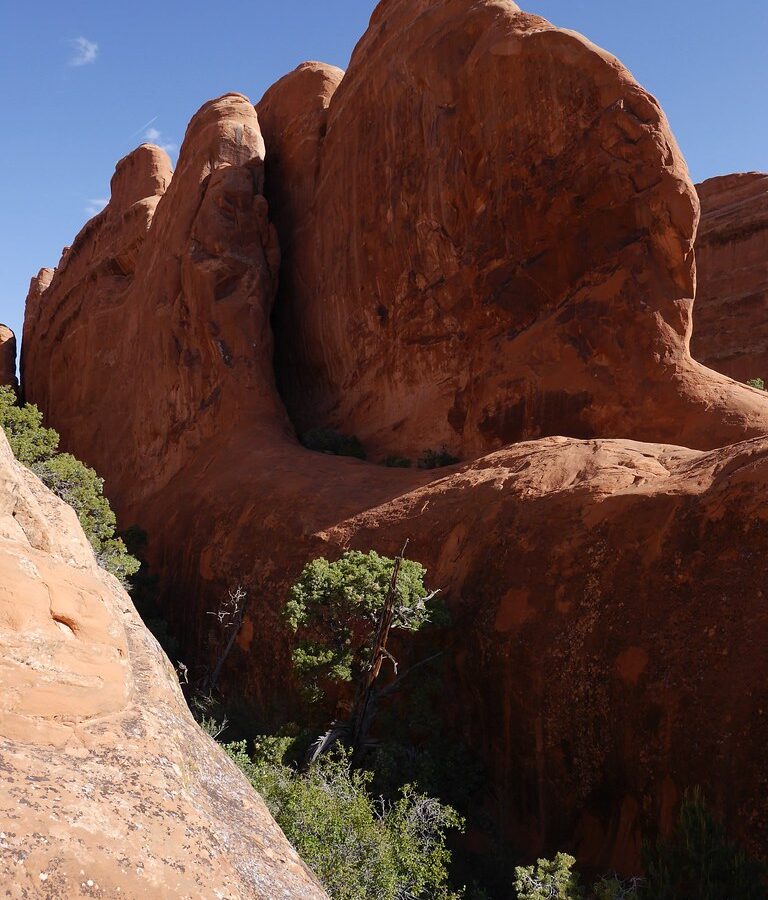
Photo: usareisetipps via Flickr (CC BY-SA 2.0)
Our Arches National Park Fall guide begins with the season’s practical advantage: cooler sandstone, longer hiking windows, and generally dependable access to the park’s main scenic road. September can retain summer heat, October usually delivers the best balance of comfortable days and manageable nights, and November brings shorter days, freezing temperatures, and the possibility of snow.
Arches protects more than 2,000 documented natural stone arches above the Colorado River near Moab, Utah. Most visitors follow the paved park road from roughly 4,000 feet near the entrance to Devils Garden, about 18 miles inside the park. This guide explains how fall conditions change month by month, how crowds affect parking and trails, and which access or reservation issues require advance planning.
Why Arches National Park Fall Conditions Are Ideal for Exploring
Fall reduces the most consequential hazard in Arches: sustained exposure to desert heat. Many major trails cross open slickrock with almost no shade, including the 3 mile round trip Delicate Arch Trail and the exposed sections of Devils Garden. Cooler weather makes longer routes more realistic, although dehydration and sun exposure remain concerns. The park’s elevation also produces large temperature swings, so a pleasant afternoon can be followed by a cold evening.
Elevation, rock, and desert weather
Arches lies on the northern Colorado Plateau, where layers of Entrada Sandstone rest above unstable salt deposits. Movement within those salt beds fractured and lifted the overlying rock, while water, ice, and erosion enlarged cracks into fins and arches. Fall’s repeated freezing and thawing continues that process. Rockfall is a normal part of the landscape, which is why visitors should respect closures around unstable formations.
The park entrance sits near 4,085 feet, while Elephant Butte reaches approximately 5,653 feet. That range allows measurable differences in wind and temperature across the park. A calm morning near Balanced Rock can become noticeably colder at Devils Garden, particularly after sunset or when a front crosses the plateau.
What Arches National Park in Fall Feels Like in October
On the final slickrock approach to Delicate Arch, boots grip coarse sandstone while the trail traverses a sloping ledge above a shallow basin. The rock radiates stored warmth late in the day, but wind reaches the exposed ridge without obstruction. Rounding the last corner reveals the 52 foot tall arch across a natural sandstone bowl, with the La Sal Mountains rising beyond it. Voices carry across the basin, and the return walk becomes colder quickly once the sun leaves the rock.
Arches National Park in Fall: What to Expect and What to Do by Month
Fall does not arrive all at once in southeastern Utah. September often behaves like an extension of summer, while late November can bring ice to shaded slickrock. Daylight also contracts rapidly, reducing the margin for long hikes and making an early start increasingly important.
September brings heat and summer style crowds
Early September afternoons commonly remain hot enough to limit exposed hiking around midday. Start Delicate Arch, Devils Garden, or Park Avenue early, and reserve the warmer afternoon for short walks such as Balanced Rock, the Windows loop, and Double Arch. Thunderstorms can still produce lightning, abrupt temperature changes, and flash flooding in washes.
Visitor volume often remains substantial, especially around weekends. The Delicate Arch trailhead and Windows area can fill during popular morning and sunset periods. Arriving early improves parking options, but it also creates a safer buffer before afternoon heat or storms develop.
October has the broadest range of hiking options
October typically provides cool mornings, mild afternoons, and relatively low humidity. Those conditions suit the 7.8 mile Devils Garden Primitive Loop, where hikers encounter narrow sandstone fins, uneven rock, route finding, and short scrambles. Landscape Arch can be reached on an easier 1.9 mile round trip route, allowing visitors to experience Devils Garden without committing to the full loop.
October priorities for a first visit
- Walk the 1 mile Windows loop and add the approximately 0.6 mile round trip to Double Arch.
- Hike Delicate Arch early or late, allowing extra time for its 480 feet of elevation gain.
- Drive to Devils Garden and stop at Skyline Arch on the return journey.
- Use Park Avenue as a 1 mile point to point walk if your group has two vehicles, or return the same way.
November rewards flexibility
November brings quieter weekdays, colder mornings, and noticeably shorter hiking days. Afternoon temperatures can remain comfortable in direct sun, while shaded areas hold frost or ice. Thin ice is especially consequential on sloping slickrock because ordinary hiking shoes may have little traction. Snow is possible, although prolonged winter conditions are less common than brief storms followed by clearing.
This is a useful month for photography because low sun emphasizes the texture of fins, arches, and distant mesas. Pack insulation for stops at overlooks, and complete longer hikes well before dusk. The park has limited artificial lighting, and trail markers can be difficult to follow after sunset.
How Fall Compares With the Rest of the Year
Fall combines broad trail access with lower heat risk, but October weekends can feel similar to busy spring periods. The best season depends on whether the priority is long hiking days, quiet roads, mild temperatures, or the possibility of snow on red sandstone.
| Period | Typical conditions | Crowd pattern | Access considerations | Best suited to |
|---|---|---|---|---|
| Spring | Cool to warm, windy, occasional storms | Heavy during holidays and weekends | Main routes usually accessible, wet weather can affect unpaved roads | Long hikes and wildflower searches |
| Summer | Very hot days, warm nights, monsoon storms | Busy mornings and evenings | Heat limits safe midday hiking, floods can close washes | Short walks, sunrise outings, night skies |
| September | Hot early, gradually cooling | Moderate to heavy | Generally broad access, storm hazards remain possible | Early starts and shorter itineraries |
| October | Cool mornings and mild afternoons | Busy on weekends | Usually excellent trail access | Full day hiking and scenic drives |
| November | Cold nights, possible frost or snow | Lower outside holiday periods | Ice can affect shaded rock and roads | Photography and quieter visits |
| Winter | Cold, with intermittent snow and ice | Lowest overall | Temporary road or trail hazards after storms | Solitude and snow covered scenery |
How Arches National Park Fall crowds change the day
Crowds affect more than atmosphere. Full parking areas can force visitors to continue driving, alter the order of an itinerary, or wait for a space to open. Congestion is concentrated at Delicate Arch, the Windows, Balanced Rock, and Devils Garden. Starting with the far end of the park can reduce backtracking, while short roadside stops are easier to fit around parking availability.
Choosing the right fall window
Choose September for longer daylight and warmer evenings, October for the widest selection of comfortable hikes, or November for quieter trails and lower tolerance for rigid plans. Families focused on short walks often benefit from October. Strong hikers may prefer late October or early November, provided they carry cold weather layers and traction suitable for unexpected ice.
Arches National Park Fall Access, Reservations, and Permits
The paved scenic road is the park’s transportation spine, ending at Devils Garden. There is no road connecting that area directly to another highway, so every visit requires a return drive toward the entrance. Snow, ice, flooding, construction, or emergency response can temporarily change access. Unpaved routes such as Salt Valley Road require greater caution because rain can make clay surfaces impassable.
Entrance planning and limited parking
Arches has used timed entry systems during busy periods, and the operating dates or booking process may change by year. Entrance fees, campground reservations, ranger programs, permit release schedules, and seasonal services also change, so confirm current details on the official park site before committing to an arrival time. A timed entry reservation, when required, does not guarantee parking at individual trailheads.
Activities requiring separate planning
Fiery Furnace access requires particular attention. This maze of sandstone fins contains narrow passages, dead ends, drops, and sensitive biological soil crust. Entry generally requires either a ranger guided program or a self guided permit, both of which have limited availability. Visitors should not treat it as an ordinary marked trail.
Devils Garden Campground is the park’s principal developed campground, and reservable periods can fill well ahead of popular fall weekends. The surrounding Moab area has additional campgrounds and lodging, but drive times increase during entrance congestion. Backcountry travel and technical canyoneering may involve separate regulations, depending on the route and activity.
Build a Fall Itinerary Around Distance and Daylight
The drive from the entrance to Devils Garden covers approximately 18 miles, but overlooks and parking searches can turn the out and back journey into most of a day. In November, complete exposed or route intensive trails first and save roadside formations for the final hours of light. Always note sunset time before leaving the trailhead. Sandstone fins can block the remaining light well before the sun reaches the horizon.
A focused one day route
Drive directly to Devils Garden in the morning and hike to Landscape Arch, whose slender span stretches 290 feet. Return south for Sand Dune Arch and Broken Arch, then stop at the Windows and Double Arch during the afternoon. Finish at Delicate Arch Viewpoint if the full Delicate Arch hike does not fit. The lower viewpoint requires only a short walk, while the upper viewpoint involves a steeper half mile round trip.
Using a second day effectively
A second day creates room for the full Devils Garden Primitive Loop or a permitted Fiery Furnace visit without sacrificing the Windows area. It also provides a weather buffer. Assign the clearest day to the longest hike, then use the other for Park Avenue, Balanced Rock, Courthouse Towers, and viewpoints along the scenic road. This structure avoids forcing a technical or exposed route into poor conditions simply because it was planned for a particular morning.
- Place fixed permit activities on the schedule first.
- Match the longest exposed hike to the coolest clear day.
- Keep several short roadside walks available as weather substitutes.
- Allow time to return from Devils Garden before darkness.
How Rain, Frost, and Wind Change Trail Access
Fall storms are often brief, yet their effects can outlast the rainfall. Water collects in potholes, flows through normally dry washes, and leaves shaded sandstone damp after sunny surfaces have dried. Wind can also make exposed fins uncomfortable and complicate balance on Devils Garden’s narrow rock sections. Check the sky across the entire horizon because storms can approach from beyond the park’s immediate cliffs and mesas.
After rain in washes and narrow passages
Avoid entering drainages when rain is falling upstream. Flash floods can arrive even when the ground at the trailhead remains dry. Courthouse Wash, Fiery Furnace passages, and low sections of backcountry routes deserve particular caution. Remain on rock or established paths when detouring around puddles. The dark, knobby biological soil crust beside many trails contains cyanobacteria, lichens, and mosses that stabilize desert soil but can take decades to recover from a footprint.
Frost and ice on slickrock
Delicate Arch’s sloping approach, the Devils Garden fins, and shaded steps around the Windows can become hazardous after a freezing night. Test traction before committing to a slope and turn around if ice covers the intended line. Small traction devices may help on level icy paths, but they do not make steep sandstone safe. Trekking poles provide limited support where their tips can find secure placement, although exposed rock often offers few dependable purchase points.
Carry these items after October cold fronts
- A headlamp for each person, with fresh batteries.
- Gloves that preserve enough dexterity for scrambling.
- A wind resistant outer layer and an insulating midlayer.
- Paper or offline maps for routes with faint markers.
- Water carried from outside the trail system.
Choose Your Fall Dates by Trip Priority
The strongest Arches National Park Fall plan begins with the activity that matters most, then selects dates around its constraints. Long routes benefit from cool weather and adequate daylight. Sunset photography requires warm layers and a safe return plan. Families need enough temperature flexibility to stop frequently without becoming cold. Visitors combining Arches with Canyonlands should also account for longer drives and higher elevations around Island in the Sky.
For photography and night skies
October and November provide earlier sunset times, making evening photography easier to combine with dinner and rest. Turret Arch can frame the North Window from certain positions, while Balanced Rock receives strong directional light near the ends of the day. Moon phase matters for night photography: a bright moon illuminates sandstone but reduces visible stars, while a moonless night reveals more of the Milky Way. Tripods must never block trails or damage soil crust.
For families and mixed ability groups
Base the day around short routes with clear turnaround points. Double Arch, Balanced Rock, Sand Dune Arch, and the Windows allow groups to adjust distance without abandoning the entire itinerary. Sand Dune Arch is cooler because its approach enters a narrow, shaded space between fins, which can feel cold late in fall. Keep children away from cliff edges and arch openings, since many viewpoints lack barriers and sandstone can crumble near exposed rims.
Plan Your Arches National Park Fall Visit
October gives most visitors the strongest combination of comfortable hiking temperatures, open roads, and enough daylight for a substantial route. September suits travelers prepared to organize the day around lingering heat, while November favors flexible visitors who value quieter trails and can respond safely to frost, wind, or an early sunset. The best choice depends on hiking distance, cold tolerance, and how much schedule flexibility the trip allows.
Reserve required activities early, identify backup walks, and organize each day geographically to reduce unnecessary driving. Carry water, insulation, navigation tools, and a headlamp even when the forecast appears stable. With those decisions settled before arrival, fall becomes an especially practical season for exploring Delicate Arch, Devils Garden, the Windows, and the park’s less crowded roadside formations at a deliberate pace.
Want to keep exploring? Browse all our Arches guides and articles for more trip-planning tips and ideas.
Gear & Essentials
Tell us about your trip and we will add what else you will want:
The basics
Worth having in the car whatever the park.
For this trip
Traveling with kids
Bringing a pet
RVing
Backcountry
Winter conditions
On the water
Photography
Accessibility
As an Amazon Associate we earn from qualifying purchases, at no extra cost to you.